| Author |
 Replies: 114 / Views: 12,604 Replies: 114 / Views: 12,604 |
|
|
|
CCF Master Historian of Commemorative Coins
  United States
12558 Posts |
This thread has been quiet over the six weeks, so I thought I'd try to give it a bit of a jump start with a few posts about Mercanti's work on the 50 States Quarter Program. The coins of the 50 State Quarters Program were issued in the order in which each state was admitted to the Union. As Delaware was the first to ratify the US Constitution, it had the honor of being the subject of the first quarter in the series. Pennsylvania was the second state, it joined the Union on December 12, 1787. It is with Pennsylvania's quarter that John Mercanti began his work in the series. For the first four years of the program (1999-2002), its guidelines requested the Governor of each state to submit design concepts accompanied by illustrations, sketches or photographs from which the Mint would develop the formal design art to be used on the quarter. From 2003 on, the guidelines were changed such that all design concept submissions were to be in a narrative format (i.e., written vs. artwork). Mercanti was involved with the program across both both approaches, so he worked on some designs aided by state-provided illustrations (1999 Pennsylvania and 2001 North Carolina) and some from written descriptions only (2003 Arkansas, 2004 Iowa and 2005 West Virginia). Starting off with the 1999 Pennsylvania quarter:1999 Pennsylvania State Quarter - Reverse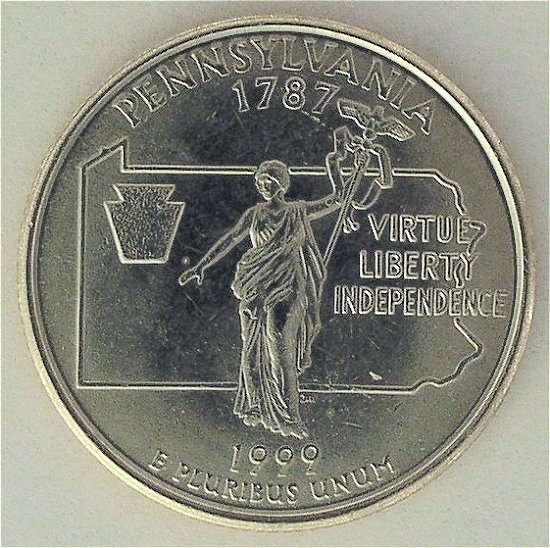 (Image Credit: The Coin Page, http://www.Coinpage.com (Image Credit: The Coin Page, http://www.Coinpage.com The reverse of the coin features an outline of the state in the background with a depiction of the statue Commonwealth in the center foreground. Next to Commonwealth (her left, viewer's right) is the Pennsylvania motto "VIRTUE / LIBERTY / INDEPENDENCE" and off to the viewer's left is a graphic nod to the States's nickname - "The Keystone State." The nickname comes from Pennsylvania's central role in the US' founding. Roland Hinton Perry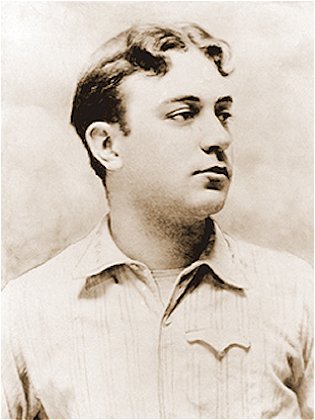 (Image Credit: Pennsylvania Capitol Preservation Committee, http://cpc.state.pa.us Commonwealth (Image Credit: Pennsylvania Capitol Preservation Committee, http://cpc.state.pa.us Commonwealth was sculpted by Roland Hinton Perry (1870-1941). He created the sculpture from drawings provided by Joseph Huston (the designer/architect responsible for the Pennsylvania State Capitol). It was mounted atop the dome of the Pennsylvania State Capitol in Harrisburg, PA on May 25, 1905 and has been there ever since (except when it was removed in 1998 for restoration). The allegorical female figure is meant to be symbolic of the Pennsylvania Commonwealth. In Perry's own words, "Commonwealth represents the symbolic embodiment of the Commonwealth of Pennsylvania. She represents Mercy and Justice, the principles upon which Pennsylvania was founded." Commonwealth Statue After Restoration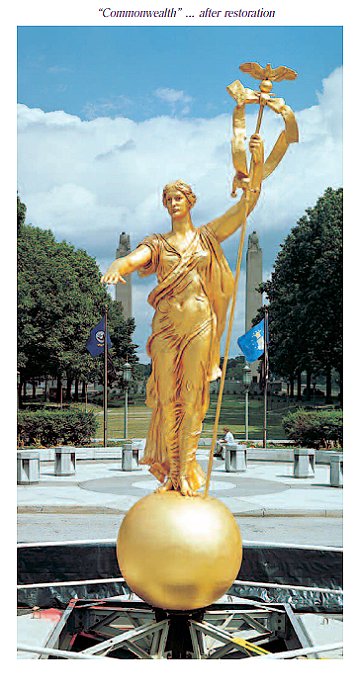 (Image Credit: Pennsylvania Capitol Preservation Committee, http://cpc.state.pa.us (Image Credit: Pennsylvania Capitol Preservation Committee, http://cpc.state.pa.us The statue is 18' 6" tall in total, including the 4' in diameter globe upon which Commonwealth stands. In her left hand is held a tall staff that features a ribbon representing "Justice" near its top; a Federal eagle with outstretched wings surmounts the staff. Commonwealth's right hand is held out with its palm faced down toward the ground, which is meant to symbolize "Mercy." Commonwealth Statue Atop Pennsylvania State Capitol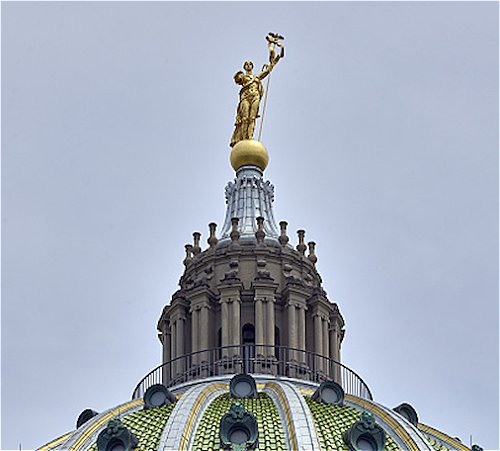 (Image Credit: Pennsylvania Capitol Preservation Committee, http://cpc.state.pa.us (Image Credit: Pennsylvania Capitol Preservation Committee, http://cpc.state.pa.us The statue at the top of the dome brings the total height of the Capitol to 272'. Next up...2001 North Carolina.Collecting history one coin or medal at a time! (c) commems. All rights reserved.
|
|
Moderator
United States
195810 Posts |
Very interesting!  Looking forward to seeing some other states.  |
|
CCF Master Historian of Commemorative Coins
United States
12558 Posts |
The 2001 North Carolina State Quarter incorporates a very popular theme within the state - the first flight of the Wright Brothers. Many residents are reminded of the event on a daily basis courtesy of the image and motto presented on the state's standard license plate. North Carolina Standard License Plate - Template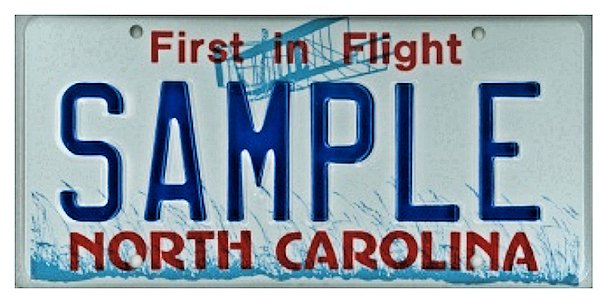 (Image Credit: NC Department Motor Vehicles, https://www.ncdot.gov/dmv/Pages/default.aspx (Image Credit: NC Department Motor Vehicles, https://www.ncdot.gov/dmv/Pages/default.aspxTo develop the coin's design, North Carolina Governor James B. Hunt assigned the task to the North Carolina Department of Cultural Resources (NCDCR). The NCDCR, in turn, created the North Carolina Commemorative Coin Committee ("Committee"). The Committee included NCDCR members, as well as a number of the state's coin collectors; a few of those selected were members of my local coin club, others were well-known figures within the state's hobby community. The Committee considered a number of design themes, including some that focused on the state's natural beauty (mountains in the west, beaches in the east), while others were centered on the Outer Banks, its wildlife and/or the Cape Hatteras Lighthouse. In the end, the state's most historic and far-reaching event was selected for the coin - the first Flight of the Wright Brothers - Orville and Wilbur. 2001 North Carolina State Quarter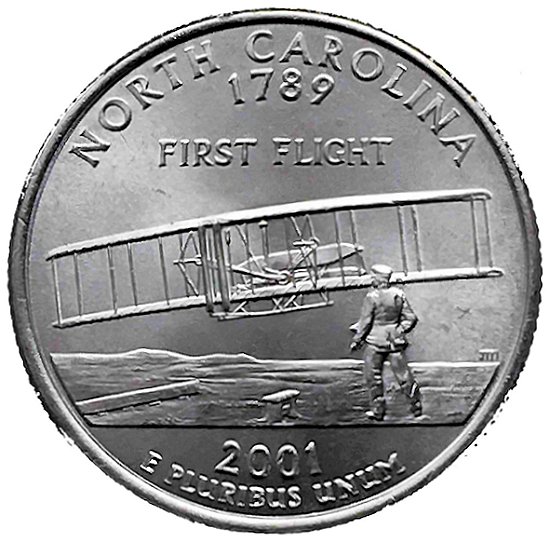 The Wright Brothers conducted the first flight of a self-propelled heavier-than-air machine on December 17, 1903 at Kill Devil Hills, NC. The event ranks among the greatest technological achievements in history and fulfilled man's age-old dream of flying. Though their first flight lasted only 12 seconds and traveled just 120 feet, and the longest of their three other flights on the same day covered just 852 feet and lasted only 59 seconds, Orville and Wilbur Wright permanently established their notable place in history - and North Carolina's as well. Historical side note 1: The Wright Brothers' first flight is often stated to have taken place at Kitty Hawk - this is incorrect. The first flight occurred about four miles away in an unnamed/unincorporated area that is today known as Kill Devil Hills.Historical side note 2: While it is true that much, but not all, of the development of the Wright Brothers' plane took place in Dayton, Ohio - a component of the state's "First in Flight" and "Birthplace of Aviation" claims - it is indisputable that the first flights of the aviation pioneers, Orville and Wilbur, took place in North Carolina.Historical side note 3: If you happen to be a Gustave Whitehead supporter, and believe him to be the first to fly a self-propelled, heavier-than-air machine, doing so in Connecticut in 1901, I direct you to: Smithsonian Institution: Wright Brothers vs. Gustave Whitehead.The design on the quarter is closely based on an actual photograph from December 17, 1903 with Orville at the controls; Mercanti's depiction is reasonably faithful to it. Wilbur is moved to a position directly behind the plane, however, to create a tighter overall image - he is off to the right in the photograph and to depict him in such a position would have required the plane to be noticeably smaller and less impactful. Mercanti's initials can be seen below the plane, at the right rim. Photograph of First Self-Propelled, Heavier-Then-Air Flight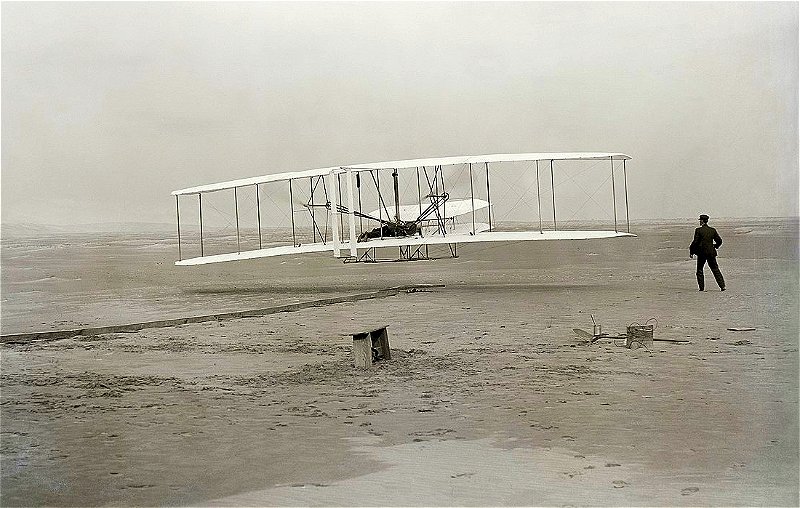 (Image Credit: Public Domain)NC Quarter Philatelic-Numismatic Cover (PNC) (Image Credit: Public Domain)NC Quarter Philatelic-Numismatic Cover (PNC)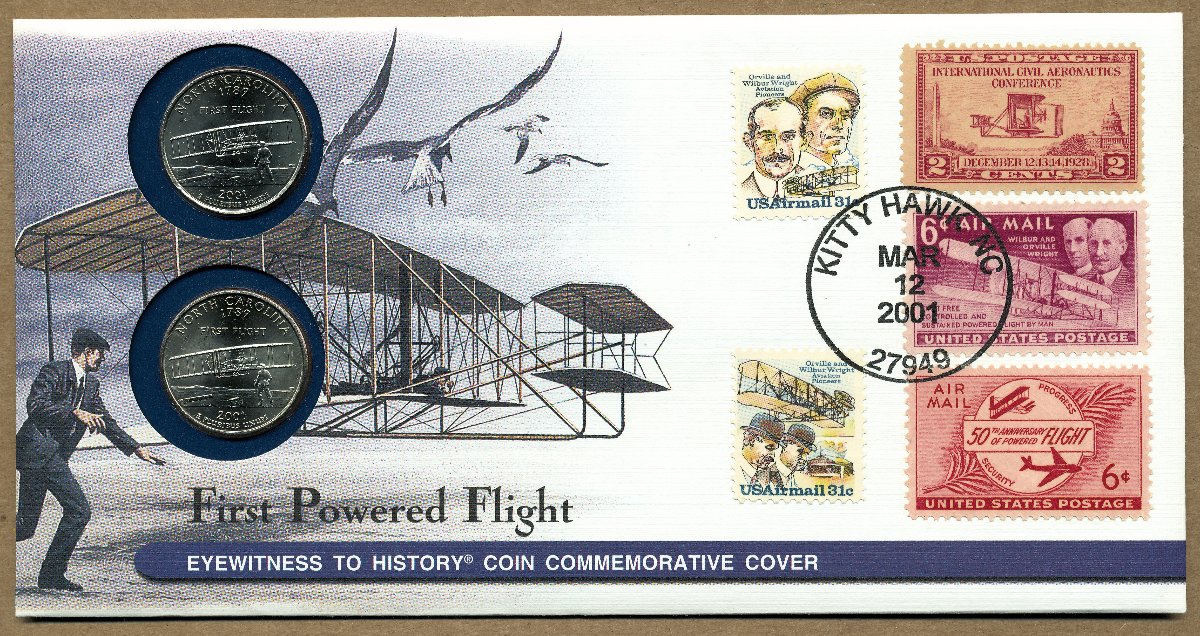 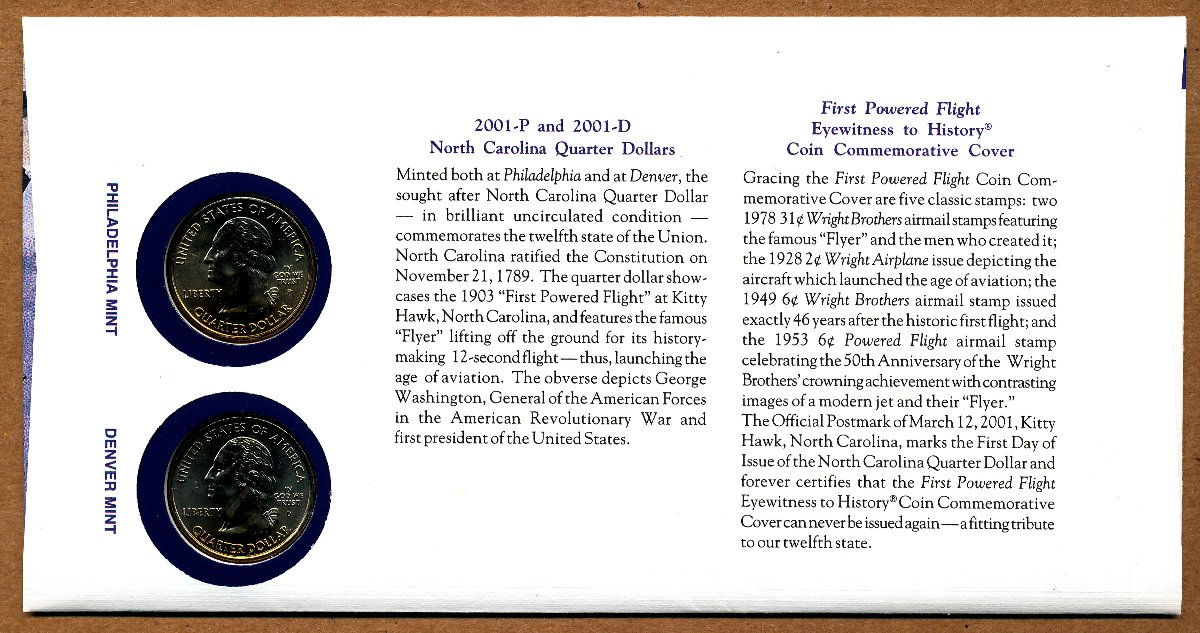 Next up, the 2003 Arkansas State Quarter. Next up, the 2003 Arkansas State Quarter.Collecting history one coin or medal at a time! (c) commems. All rights reserved.
Edited by commems
06/30/2021 10:36 pm
|
|
Moderator
United States
195810 Posts |
Fascinating! Love the history here. I had just recently learned about the Whitehead claims as well. |
|
CCF Master Historian of Commemorative Coins
United States
12558 Posts |
The 2003 Arkansas quarter was released on October 20, 2003. It was the fifth and final release of 2003, and was the 25th overall release, making it the coin that marked the halfway point for the State Quarters Program. Arkansas cast a very "wide net" for its approach to the selection of the design for its State Quarter. It began with Governor Mike Huckabee announcing, in January 2001, a statewide design competition - the Arkansas Quarter Challenge - that was open to all Arkansasans. The competition had a deadline of March 31, 2001. Arkansasans responded to the Governor's call, as 9,320 entries were reported to have been received by the deadline date. Governor Huckabee appointed a Committee to review the submitted designs and select what it believed to be the Top 100. From these entries, a panel of judges selected a Top 12 and, from these, Governor Huckabee selected three designs to send on to the US Mint. After the Mint prepared final designs for those submitted, Huckabee reviewed them again and selected the winner. The three finalists were Kathy Basler, Ariston Jacks and Dortha Scott; each received $1,000 for their efforts. Basler's design consisted of an outline of the state with a pine tree (the pine tree is the Arkansas State Tree), apple blossoms (the State Flower), ducks in flight, mountains and a banner with the official Arkansas nickname - "Natural State." Jacks' design depicted the State Capitol in the background. with a mockingbird (the Arkansas State Bird) and pine branches in the foreground. 2003 Arkansas State Quarter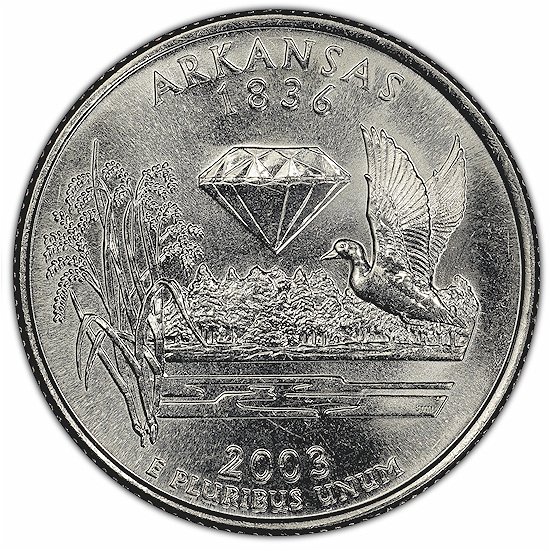 (Image Credit: PCGS CoinFacts, https://www.PCGS.com/coinfacts (Image Credit: PCGS CoinFacts, https://www.PCGS.com/coinfactsDortha Scott's design, the design ultimately selected for the quarter, included a central diamond (representative of Crater of Diamonds State Park - the state's public diamond mine; Arkansas is the US' largest diamond producer), symbols of Arkansas' vast natural resources - a mallard duck shown above a lake with trees and mountains in the background - and a few rice stalks (Arkansas is the US' largest grower of rice). John Mercanti adapted Scott's design for the coin; his initials are found within the lake, at the right, at about the 4:30 clock position. Early Arkansas Diamond Prospectors - Digging for Diamonds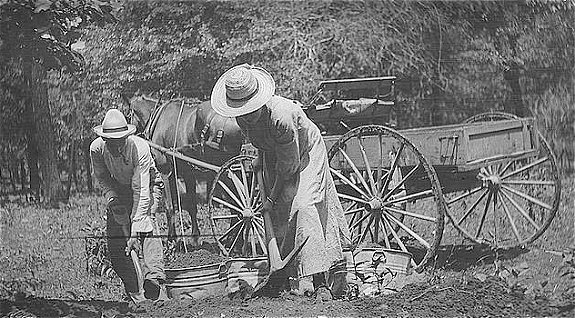 Early Arkansas Diamond Prospectors - Examining Diamonds Early Arkansas Diamond Prospectors - Examining Diamonds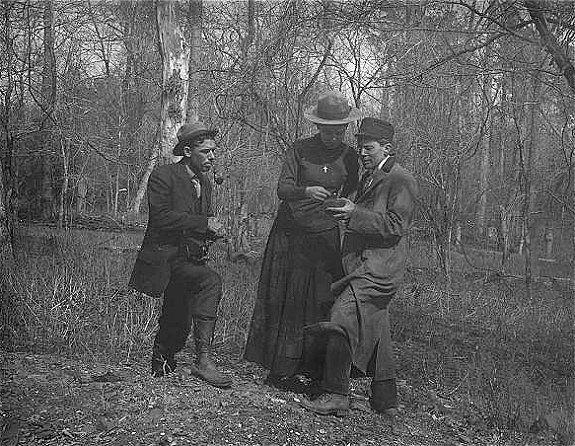 (Image Credits: Library of Congress, Prints and Photographs Division, https://www.loc.gov/pictures/ Public Domain.)Side Note: Some collectors assume the quarters for Washington, DC, Puerto Rico, Guam, etc. are an extension of the Statehood Quarters Program. They are not. The Statehood Quarters program includes 50 quarters, one for each state. The DC and US Territories Quarters Program was a separate program, authorized by separate legislation, and, while obviously closely related to the State Quarters Program, is not a simple extension of it. The Territories Program is a distinct follow-up program (the State Quarters Program is not even mentioned in the DC and US Territories Program legislation). (Image Credits: Library of Congress, Prints and Photographs Division, https://www.loc.gov/pictures/ Public Domain.)Side Note: Some collectors assume the quarters for Washington, DC, Puerto Rico, Guam, etc. are an extension of the Statehood Quarters Program. They are not. The Statehood Quarters program includes 50 quarters, one for each state. The DC and US Territories Quarters Program was a separate program, authorized by separate legislation, and, while obviously closely related to the State Quarters Program, is not a simple extension of it. The Territories Program is a distinct follow-up program (the State Quarters Program is not even mentioned in the DC and US Territories Program legislation).Collecting history one coin or medal at a time! (c) commems. All rights reserved.
|
|
Moderator
United States
195810 Posts |
Very interesting! Quote:Side Note: ... The Territories Program is a distinct follow-up program (the State Quarters Program is not even mentioned in the DC and US Territories Program legislation). True, although some of us just found it easier to add DCT pages to our existing Statehood Quarter albums.  |
|
CCF Master Historian of Commemorative Coins
United States
12558 Posts |
Quote:True, although some of us just found it easier to add DCT pages to our existing Statehood Quarter albums. If I had an album of the State Quarters, I'm fairly sure I would do the same as you for the DC and Territories Quarters! Collecting history one coin or medal at a time! (c) commems. All rights reserved.
|
|
Moderator
United States
195810 Posts |
It is not my only merger. Being uninterested in the varieties, my SBA dollars fit on a sixth page in the 7070. It filled the slack from not having the gold page.  |
|
CCF Master Historian of Commemorative Coins
United States
12558 Posts |
The Iowa State Quarter was released on August 30, 2004, it was the fourth release of that year. First day of release ceremonies were hosted by the Iowa Governor, Tom Vilsack, in conjunction with US Mint officials at the Iowa State Capitol in Des Moines on September 3, 2004; the event was attended by a large number of schoolchildren from local Capitol View Elementary School. From a US Mint Press Release describing the launch event: " The 34th Army Band of the Iowa Army National Guard and the Isisirettes Drill and Drum Corps provided the musical entertainment, and actor Tom Milligan portrayed renowned artist and Iowa native Grant Wood. Peter the Mint Eagle greeted children in the audience, and each received a free, new Iowa quarter-dollar. Adults participated in a quarter exchange after the ceremony."Governor Vilsack initiated the design selection process for Iowa in May 2002 via creation of the 16-member Iowa Quarter Commission. The Commission was instructed to engage the public through cooperative promotional activities with Iowa's libraries, banks and credit unions. As a result of its efforts, the Commission received nearly 2,000 design suggestions from state residents. The Commission grouped like concepts together, and eventually narrowed the potential concepts down to five themes: "American Gothic." "Foundation in Education," "Feeding the World," "Sullivan Brothers" and "Beautiful Land." Within these categories, the paintings of Iowa-born Grant Wood figured prominently. Three of his paintings: his classic, "American Gothic," as well as "Young Corn" and "Arbor Day" were considered for the quarter and among the design concepts submitted to the Mint. The designs developed by the Mint focused on the "Feeding the World" theme with three of the five designs submitted back to Governor Vilsack having presented this theme through use of a state outline and Iowa's agricultural products. A fourth design interpreted the "Beautiful Land" theme via Grant Wood's "Young Corn" painting. A fifth design, ultimately the winning design, followed the "Foundation in Education" theme via the use of Wood's "Arbor Day" painting as its foundation. 2004 Iowa State Quarter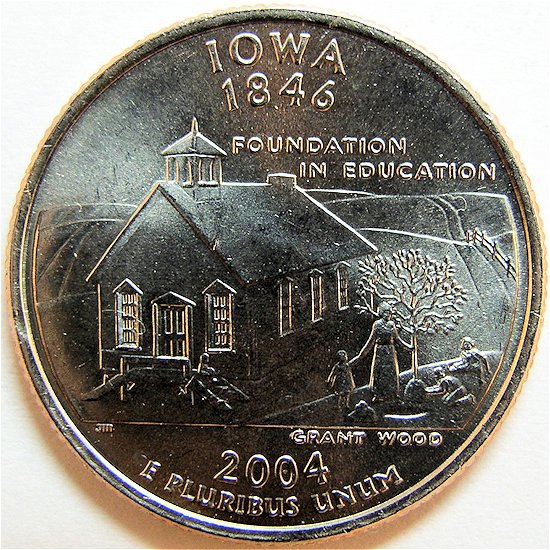 (Image Credit: The Coin Page, http://www.Coinpage.com (Image Credit: The Coin Page, http://www.Coinpage.comRegarding the selected design and its "Foundation in Education" theme, the Mint stated, "Iowans have had a commitment to education since the state's earliest days. When Iowa became a state in 1846, it already had a number of rural country schools in each of its counties. Iowa established its first high school in the 1850s, although high schools generally did not become widespread in the United States until after 1900. Private and public colleges also quickly took root in the new State.'Wood (1891-1942), was an American painter best known for his simple, serene presentations of the people and places of America's heartland. He created the "Arbor Day" painting under a 1932 commission from the Cedar Rapids (IA) School Board. The intent of the painting was to serve as a memorial to two of the school's teachers, one of whom who annually planted a tree on Arbor Day. (I'm still trying to track down the names of the teachers!) Grant Wood's "Arbor Day" Painting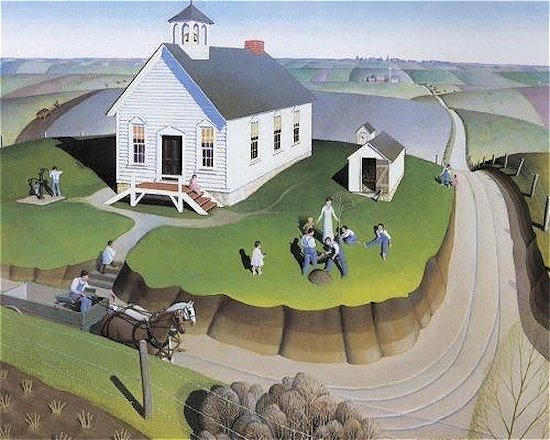 (Image Credit: WikiArt, https://www.wikiart.org/en/grant-wo...bor-day-1932. Fair Use.Grant Wood in His Studio with "Arbor Day" Painting (Image Credit: WikiArt, https://www.wikiart.org/en/grant-wo...bor-day-1932. Fair Use.Grant Wood in His Studio with "Arbor Day" Painting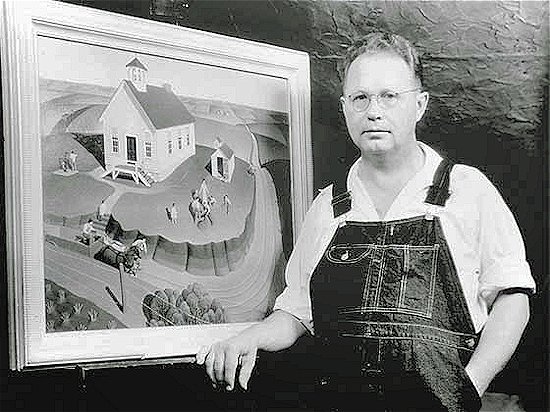 (Image Credit: Cedar Rapids Museum of Art, https://www.crma.org/collections/pe.../Grant-Wood. Fair Use. (Image Credit: Cedar Rapids Museum of Art, https://www.crma.org/collections/pe.../Grant-Wood. Fair Use.The painting depicts a one-room schoolhouse with a teacher and students outside of it engaged in the planting of a tree. The schoolhouse portrayed resembles the one-room Antioch schoolhouse near Anamosa, IA at which Wood was a student from 1896 to 1901. Though the schoolhouse in the painting is similar in style to Grant's childhood schoolhouse - as it is to many such small schoolhouse of the day - it is not a specific depiction of it. Wood's work is epitomized by the advice he would offer to his students, "learn to know your neighbors, let them know you and paint them at their daily tasks." This concept comes through front and center in Wood's paintings! The Iowa State Quarter was the 29th of the overall program. For his interpretation of Wood's painting, Mercanti changed the viewer's perspective and made a number of changes to the subjects of the original painting - the teacher and her students - to give them more prominence on the coin. Mercanti's initials - "JM" - can be seen on the coin's reverse, below the schoolhouse at its left edge. Next up, West Virginia!Collecting history one coin or medal at a time! (c) commems. All rights reserved.
Edited by commems
07/03/2021 09:04 am
|
|
Moderator
United States
195810 Posts |
Excellent! |
|
CCF Master Historian of Commemorative Coins
United States
12558 Posts |
I accidentally jumped over this one...The 2002 Louisiana Purchase State Quarter was the 18th release of the ten-year State Quarters Program, being released as the third coin of the fourth year of the series. The coin had its official launch ceremony on May 30, 2002 at the former New Orleans Mint Building (then and now a museum), with Mike Foster. Jr., the Louisiana Governor, Rosario Marin, the US Treasurer and Henrietta Holsman Fore, the US Mint Director, hosting the event. The coin was released to the Federal Reserve ten days earlier on May 20, 2002. The design selection process for Louisiana began with the establishment of the Louisiana Coin Advisory Commission by Governor Foster in 1999; the Commission had 16 members. The Commission was tasked with promoting a design selection program, for receiving and reviewing submissions from residents across the state and identifying the best designs to present to the Governor for his review. Response to the statewide request for design concepts was a bit underwhelming, as just 1,193 submissions were received. (I say "underwhelming" in consideration of the population of the state - it was approximately 4.5 million at the time!) Of the concepts received, over 900 of them were from schoolchildren. I think it's great that so many children participated, but I also realize that most were likely doing so in response to a class assignment. After completing its review, the Commission submitted 11 "finalist" designs to the Governor. Governor Foster, however, rejected most of the designs. He kept two from the group presented to him, selected three of the semi-finalist designs that he liked, added one that he received prior to the official launch of the design contest and included one that arrived after the contest deadline - seven selections in all Governor Foster made two specific requests of the Mint in terms of Louisiana's quarter design: 1) it must include a brown pelican, the State Bird, and 2) it should include an outline of Louisiana either alone or as part of the Louisiana Purchase. Interestingly, of the seven design concepts he submitted to the Mint, only three included both elements. (A bit of pre-selection of true contenders?) The Mint created five final design concepts for Governor Foster to review, four of which included an outline map; the one that did not featured a paddle wheel river ship. The design selected by the Governor was one of two nearly identical designs prepared by Mercanti - the difference being one had a trumpet at the top, the other did not. The Governor selected the version with the trumpet and thus identified the quarter's now-familiar design. 2002 Louisiana State Quarter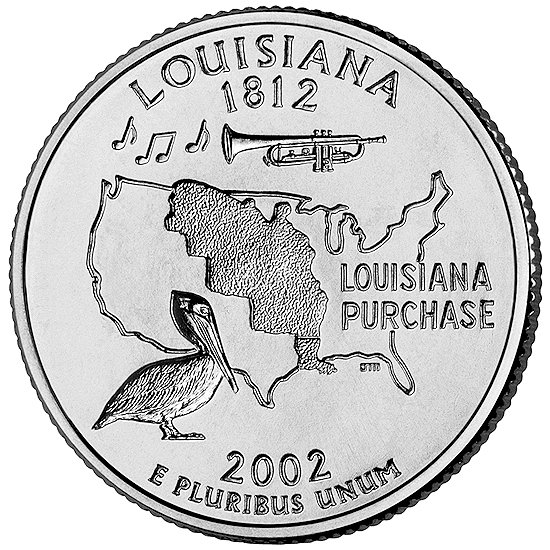 (Image Credit: US Mint, https://www.usmint.gov. (Image Credit: US Mint, https://www.usmint.gov.The design incorporates three core elements: 1) a full political map of the continental US that incorporates a textured marking of the Louisiana Purchase territory, within which an outline of State of Louisiana is clearly indicated, 2) a trumpet to represent the state's important jazz heritage and 3) a brown pelican, the official State Bird. Mercanti's "JM" initials are found below the Florida panhandle. Side Note: The brown pelican was seen in Louisiana, and throughout the Gulf Coast region, from the earliest days of European arrival in the region, but after decades of being over-hunted for its feathers (starting in the 1800s), having its food supply depleted by human over-fishing and the modern use of pesticides/DDT, the local population of brown pelicans had essentially been destroyed by 1966. A re-population effort by Louisiana began in 1968, using young pelicans from Florida. Though it took decades, the brown pelican is no longer endangered and has been designated as "Recovered" by the US Department of the Interior - it's a genuine conservation success story! 2002 Louisiana Purchase Commemorative Coin Cover w/ Louisiana State Quarter 
Collecting history one coin or medal at a time! (c) commems. All rights reserved.
|
|
CCF Master Historian of Commemorative Coins
United States
12558 Posts |
The 2005 West Virginia State Quarter is the second-to-last State Quarter in which John Mercanti took a lead role. West Virginia approached the selection of the design for its quarter a bit differently than most states. Instead of the WV Governor appointing a special committee or commission to judge design concepts submitted, the task was given to students from the Governor's School for the Arts. The students sifted through over 1,800 design submissions and decided upon five finalists to be reviewed by the Governor. The Governor's School for the Arts (GSA) was created in 1994 by then-Governor Gaston Caperton and Dr. Henry Marockie, the West Virginia State Superintendent of Schools at the time. Rachel Worby, who served as First Lady of West Virginia from 1990 to 1997 (she married Governor Caperton in May 1990 after his divorce earlier that year), was instrumental in the School's creation. She is a trained, professional musician with a strong interest in children's programs and continues to be active as the Artistic Director and Conductor of MUSE/IQUE a music-based performing arts organization in Pasadena, California. The GSA is a three-week, tuition-free summer program for school-age artists. When it was launched, it included specialized instruction in dance, instrumental music, theatre and the visual arts. Subsequently, the GSA added classes in creative writing, digital media art and vocal music. GSA students narrowed the concept themes to: "Appalachian Warmth," "Bridge Day at New River Gorge," "Mother's Day / Anna Jarvis," "New River Gorge" and "River Rafters." These were sent by Governor Bob Wise to the US Mint for development into coin-ready artwork. The Mint refined each of the submitted concepts and returned artwork for the five designs to Governor Wise for his selection. On March 31. 2004 Wise announced that he had selected one of West Virginia's most iconic sights - the steel bridge over the New River Gorge. The bridge was completed in 1977 and made it much, much easier to get across the river. Before the bridge was constructed, cars needed to travel down a winding, mountainside road in order to cross over a narrow bridge; the trip took approximately 40 minutes. Once the New River Gorge Bridge was in place, the same crossing was reduced to about one minute. 2005 West Virginia State Quarter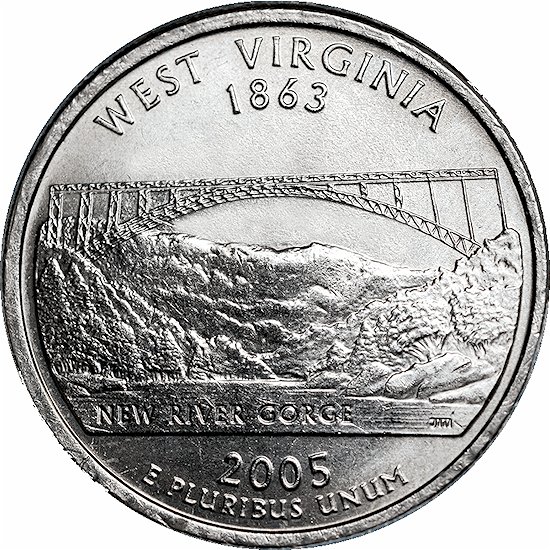 The quarter's design is a combination of West Virginia's natural beauty and a made-made symbol of human engineering ability. The bridge, within the New River Gorge National River unit of the National Park Service, is flanked by beautiful Appalachian Mountain forests. John Mercanti's "JM" initials can be seen at about the 4:30 clock position, below the bridge and near the rim. The official launch ceremony was held on October 14, 2005 and was presided over by West Virginia Governor Joe Manchin III and US Mint Acting Director David A. Lebryk; Bob Wise did not attend the ceremony, his term as Governor ended on January 17, 2005. The ceremony included a dramatic presentation by actors portraying President Abraham Lincoln and Mary Todd Lincoln; West Virginia joined the Union on on June 20, 1863, during Lincoln's administration. New River Gorge Bridge - Similar View to What is Seen on the Quarter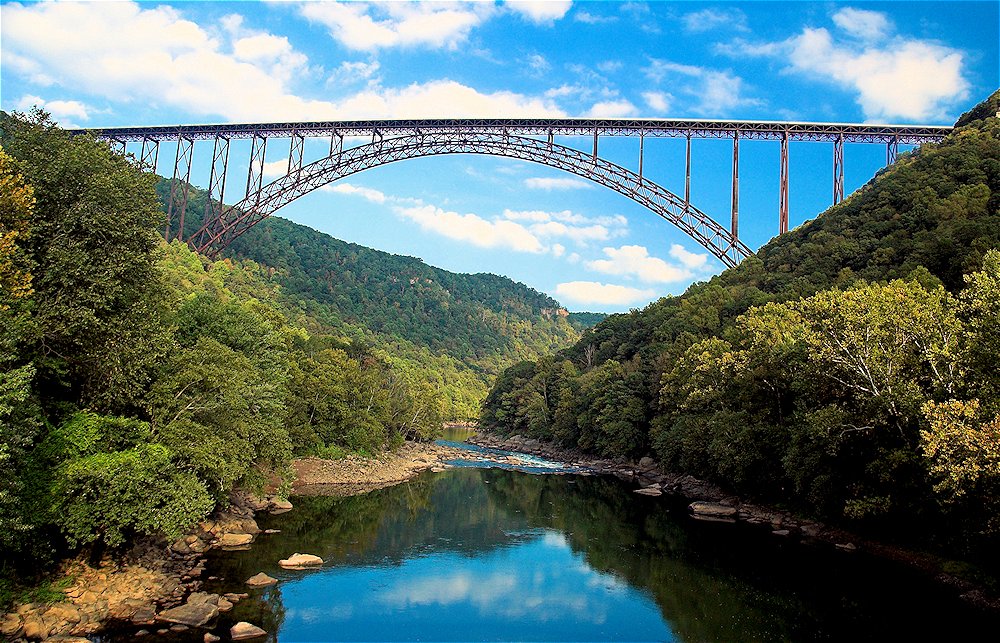 (Image Credit: Image courtesy of National Park Service, https://www.nps.gov/neri/planyourvi...gbridge.htm. Public Domain.)New River Gorge Bridge - Interesting View from Underneath Showing Closeup of Bridge's Steel Structure (Image Credit: Image courtesy of National Park Service, https://www.nps.gov/neri/planyourvi...gbridge.htm. Public Domain.)New River Gorge Bridge - Interesting View from Underneath Showing Closeup of Bridge's Steel Structure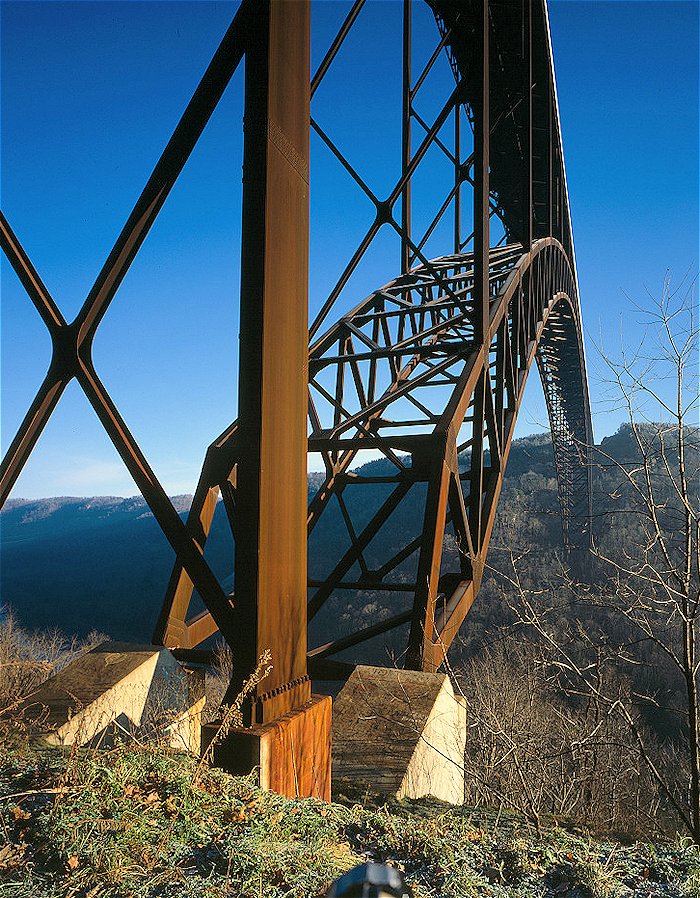 (Image Credit: Image courtesy of Library of Congress, Prints and Photographs Division, www/loc.gov.picture. Public Domain.) (Image Credit: Image courtesy of Library of Congress, Prints and Photographs Division, www/loc.gov.picture. Public Domain.) Collecting history one coin or medal at a time! (c) commems. All rights reserved.
|
|
Moderator
United States
195810 Posts |
A wonderful and informative pair of posts. |
|
CCF Master Historian of Commemorative Coins
United States
12558 Posts |
John Mercanti wrapped up his active design and engraving involvement with the State Quarters Program with the completion of his work on the 2006 South Dakota State Quarter. In 2006, Mercanti took on new responsibilities at the Mint, being promoted to Supervisor of Design and Master Tooling Development Specialist. It was essentially a promotion to Chief Engraver, but without the official title. On February 3, 2009, Edward Moy, the Mint Director at the time, resurrected the Chief Engraver title and assigned it to Mercanti; the Chief Engraver title had last been used with Elizabeth Jones who held it from 1981 to 1991 - it was vacant in the interim until Mercanti. In January 2003, the South Dakota (SD) Bureau of Administration assigned a Project Coordinator to oversee the State Quarter design selection process. In October of 2003, a five-member South Dakota Quarter Advisory Committee was created. It was comprised of three members selected from SD's Tourism and Economic Development Department, and two individuals from SD's private banking industry. South Dakota did not hold a statewide design contest to generate concept ideas, but did distribute a press release about the upcoming quarter. In response to the news release, the Committee received over 100 concepts from state residents via letter, telephone and email. The Committee reviewed the concepts received and decided on five themes for presentation to the US Mint: - Mount Rushmore National Memorial - American bison (buffalo) - Ring-necked pheasant - Mount Rushmore and a buffalo - Mount Rushmore and a ring-necked pheasant Clearly, incorporating the iconic Mount Rushmore into the design was a favored approach, with three of the five concepts including it. The Mint developed artwork from the concepts and returned its illustrations to the Governor's Office/Committee. After one review/update cycle, the Mint's final artwork was published by the Committee on the internet, as well as in SD newspapers and magazines; SD residents were asked to vote for their favorite. A dedicated internet site for voting on the SD Quarter designs was created for those with access, but paper ballots were also available. In the end, approximately 172,000 votes were counted by an independent company. The winning design tallied 65,766 votes (38.3%) and was the clear choice. The design, as seen on the SD Quarter, incorporates two single heads of wheat which flank a Chinese ring-necked pheasant in the foreground above and Mount Rushmore National Memorial in the background. The second-most popular design also featured Mount Rushmore National Memorial in the background, but with a right-facing bison in the foreground instead of a pheasant. The bison design captured 49,203 votes (28.6%). South Dakota State Quarter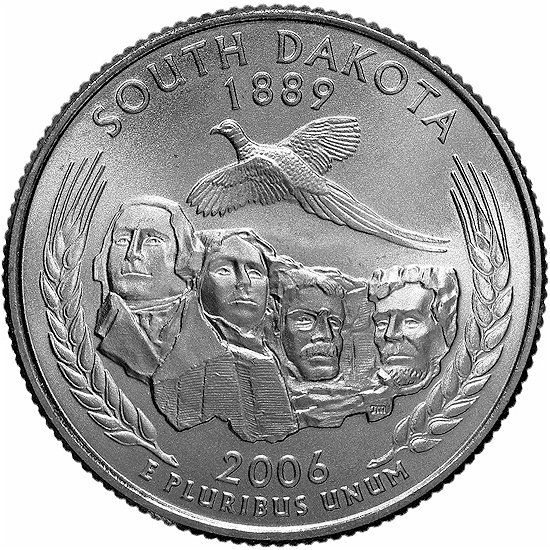 John Mercanti John Mercanti's "JM" initials are found below and slightly to the left of Lincoln. The official launch ceremony for the quarter was held at the Mount Rushmore National Memorial Amphitheater on November 13, 2006. US Mint Director Edmund C. Moy, South Dakota Governor M. Michael Rounds, South Dakota First Lady Jean Rounds and Rapid City Mayor Jim Shaw hosted the event. The SD Quarter was the last to be launched in 2006. Star Nation, a youth drum group started at local Stevens High School of Rapid City, SD performed during the ceremony. The group was formed to help preserve the Lakota culture by playing traditional Lakota songs that were heard at Native American ceremonies; it was started at the high school in 2005. The 2006 SD State Quarter was not the first time the Mount Rushmore National Memorial appeared on a US coin. Collectors may recall the three-coin commemorative coin program struck by the Mint in 1991 to help mark the Memorial's 50th anniversary; each of the coins in the program - gold $5.00, silver dollar and CuNi clad half dollar - included the Memorial in its design. Mount Rushmore National Memorial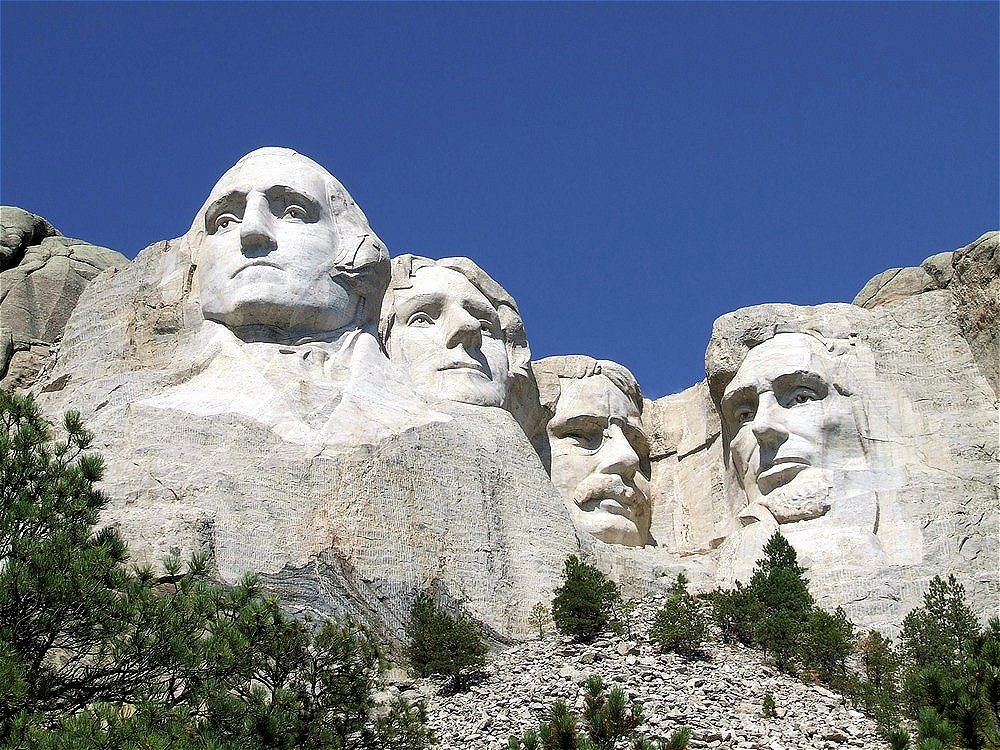 (Image Credit: Image courtesy of National Park Service, https://www.nps.gov/moru/index.htm. Public Domain. (Image Credit: Image courtesy of National Park Service, https://www.nps.gov/moru/index.htm. Public Domain.
Collecting history one coin or medal at a time! (c) commems. All rights reserved.
|
|
Bedrock of the Community
United States
37154 Posts |
Great presentation and information for each coin.
|
| |
Replies: 114 / Views: 12,604 |
To participate in the forum you must log in or register.
Disclaimer: While a tremendous amount of effort goes into ensuring the accuracy of the information contained in this site, Coin Community assumes no liability for errors. Copyright 2005 - 2026 Coin Community Family- all rights reserved worldwide. Use of any images or content on this website without prior written permission of Coin Community or the original lender is strictly prohibited.
Contact Us | Advertise Here | Privacy Policy / Terms of Use
|
| Coin Community Forum |
© 2005 - 2026 Coin Community Forums |
| It took 0.62 seconds to rattle this change. |
 |
|







 First Page
 Previous Page


 Posted 06/28/2021 3:16 pm





