| Author |
 Replies: 22 / Views: 2,616 Replies: 22 / Views: 2,616 |
Page 2 of 2
|
|
|
|
Valued Member
United States
405 Posts |
Quote:
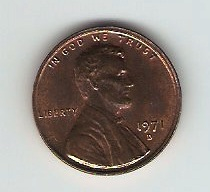
I suspect the reverse face was struck through a very thin, split-before-strike planchet Probably cheating to agree with Mike Diamond, but well, I agree with Mike Diamond :) Also, I would keep that guy. That's one of the more interesting error types you find. Edited by seattleMD
01/24/2013 12:10 pm
|
|
New Member
 United States
26 Posts |
Thanks so much for your expertise, now I remember why I started collecting coins. I forgot for a while but I am getting excited again! Here are some more pictures I took. I am using my iPad's camera. There is a sharp raised ridge around the obverse. 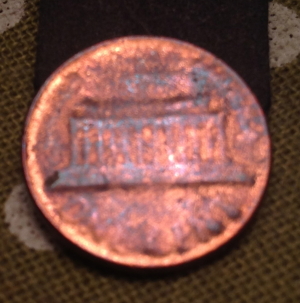 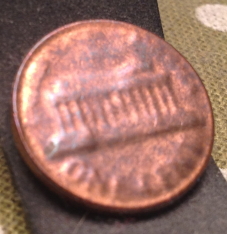 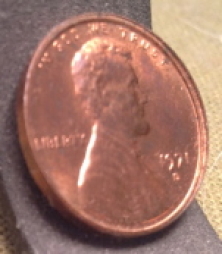 |
|
Bedrock of the Community
United States
12437 Posts |
The obverse has a sharp strike and the finned rim is a clue that there might have been something else in the coining chamber besides this planchet, similar finning(excess metal extruding between the die and collar) can also be seen on coins struck on overweight planchets. A die cap or split planchet in the coining chamber along with another normal planchet could create the same finning scenario.
|
|
New Member
United States
26 Posts |
Is this maybe a capped die strike? Is this what you mean when you say "very thin, split-before-strike planchet"?
|
|
New Member
United States
26 Posts |
Hello Mr. Biokemist, are you saying it's sort of a mystery?
|
|
Pillar of the Community
United States
3640 Posts |
I would go with a die cap as Bio mentioned being possible.
|
|
Moderator
 United States
14463 Posts |
sorry, but we really need clearer pictures, or maybe a scanned image  |
|
New Member
United States
26 Posts |
Here is one from my scanner. 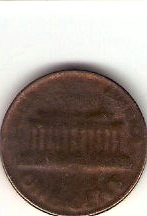 |
|
New Member
United States
26 Posts |
|
|
New Member
United States
26 Posts |
Unfortunately I think the scanner is worse than the camera.  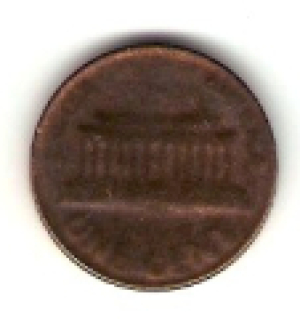 What do yinz think? |
|
Bedrock of the Community
United States
12437 Posts |
Quote:
Is this maybe a capped die strike? Is this what you mean when you say "very thin, split-before-strike planchet"?
A capped die strike will sometimes leave either a brockage(incuse mirror image from the die cap acting as a die) or a ghost outline of the die design showing through a thinning cap. The intermediate stages usually show very little detail on the affected face. I suspect that Mike Diamond's hypothesis is correct and I would base that on the relative strength of the fuzzy reverse details. A split planchet is basically a lamination on steroids, i.e. an entire face of a planchet splits off in a thin layer. In this case, the thin split planchet would have been in the coining chamber along with a normal planchet and the reverse of your coin was struck through the split planchet. In this scenario, there would also be a thin split planchet out in the wild somewhere with the fully struck reverse design. |
|
New Member
United States
26 Posts |
Thanks for that bio. That is really interesting, I think I'll start looking for that split planchet...but I'm busy this weekend I guess I'll find it on Monday. : )
|
|
New Member
United States
26 Posts |
I didn't see any quite like this on ebay, is this have good value in your opinion? Any comments are appreciated. |
|
Pillar of the Community
United States
1699 Posts |
I'd estimate somewhere around $30, depending on how you sell it.
|
|
New Member
United States
26 Posts |
sweet, but I'm holding on to it. I think it's pretty cool
|
|
Page 2 of 2
|
Replies: 22 / Views: 2,616 |
Page 2 of 2
|








 First Page


 Posted 01/24/2013 2:15 pm