| Author |
 Replies: 22 / Views: 3,267 Replies: 22 / Views: 3,267 |
Page 2 of 2
|
|
|
|
Pillar of the Community
United States
900 Posts |
|
|
Valued Member
 United States
144 Posts |
Can you educate me what to look for on the reverse if something like a Cud appears on the obverse? |
|
Bedrock of the Community
United States
12437 Posts |
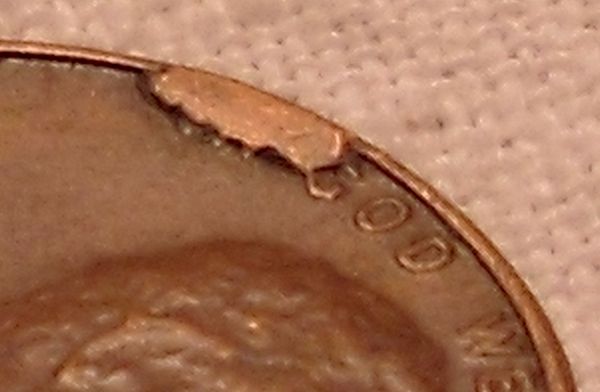
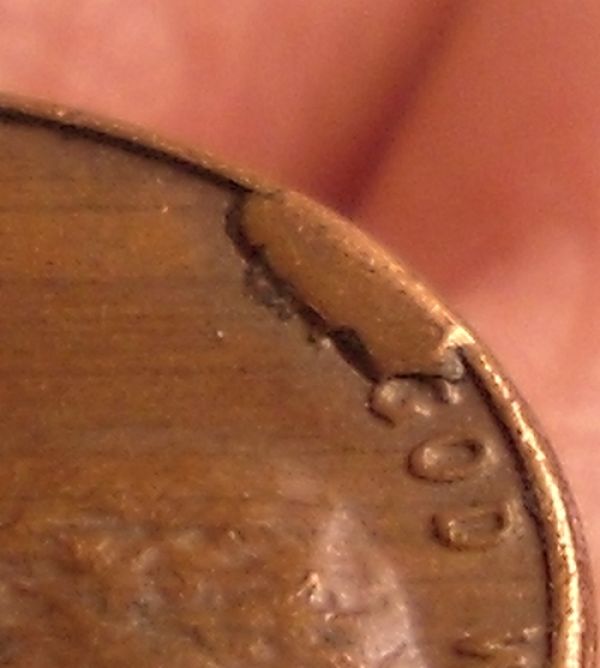
Large Cuds will typically have a corresponding area of weakness on the reverse caused by metal expanding into the section of broken die( Cud) and not the design detail. However, small Cuds like yours do not always display the opposing weakness. Nice find  |
|
Pillar of the Community
United States
1915 Posts |
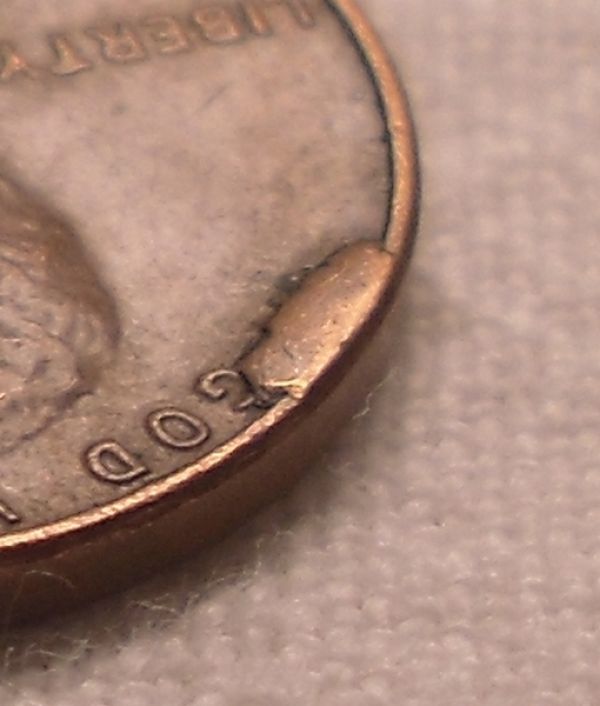
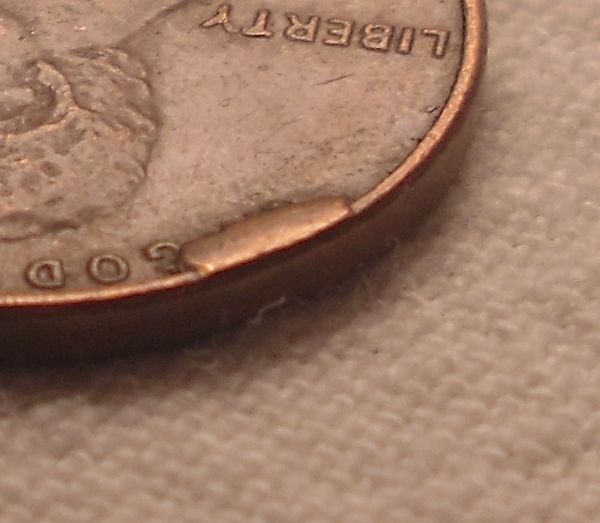
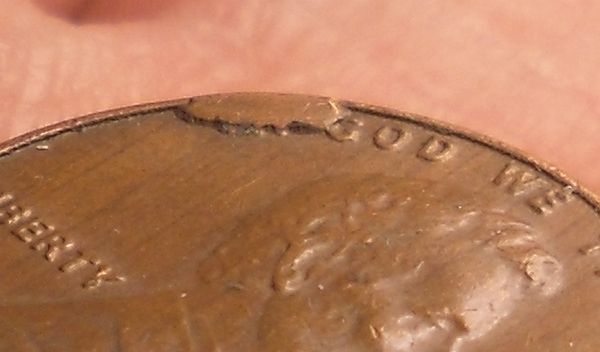
bookshelf, is there any possible way to get a photo from the side looking across the face of the coin towards the " Cud"? |
|
Valued Member
United States
144 Posts |
seal006, I will have a couple pictures focusing on the " Cud" in a short while. |
|
Valued Member
United States
144 Posts |
|
|
Pillar of the Community
United States
1812 Posts |
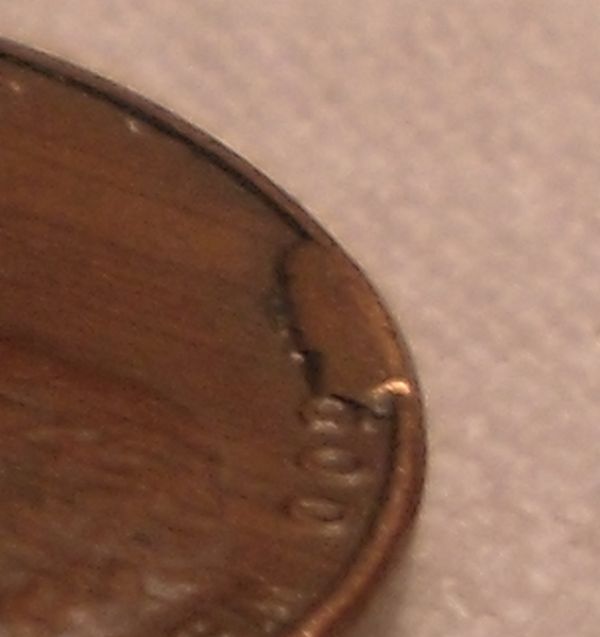
Exactly opposite the Cud on the reverse side of your coin should be almost no detail struck on the "N" in "ONE" as the added metal on the obverse Cud would remove the pressure needed to fully strike the "N".. I have a few Cuds and just checked my photobucket album to post some photos here, but unfortunately I didn't post the Cuds in any of the error albums. Edited by Broken-Coin
03/01/2013 01:36 am
|
|
Pillar of the Community
United States
1915 Posts |
As stated, I am not seeing this as a Cud. The metal is hanging over the lettering on the obverse. So how can a Cud happen after the coin is struck? This is starting to look more like PMD. |
|
Valued Member
United States
144 Posts |
Thank you for helping me become better educated on identifying errors on coins.
|
|
Bedrock of the Community
United States
12437 Posts |
Quote:The metal is hanging over the lettering on the obverse. So how can a Cud happen after the coin is struck? A Cud cannot happen after the coin was struck but that is not what happened anyway. You can still see parts of the peripheral devices because that part of the die did not break away, thus a portion of the letters were struck. |
|
Valued Member
United States
286 Posts |
|
|
Pillar of the Community
United States
1915 Posts |
What I see is that there does not seem to be any melding of the devices touching the anomaly. I would think that metal flow during the strike would cause more of a melding. I also see areas where the anomaly does not make contact with the field. How can that be if it is indeed a Cud? Edited by seal006
03/02/2013 1:17 pm
|
|
Pillar of the Community
United States
2189 Posts |
Congrats on finding a genuine Cud and a nice one at that.Not a big one but definably a Cud. These are really hard to find in the wild.In thirty years of searching I've only come across 2 |
|
Pillar of the Community
United States
1699 Posts |
Quote:
What I see is that there does not seem to be any melding of the devices touching the anomaly. I would think that metal flow during the strike would cause more of a melding This would make sense if you were talking about the side opposite the large die break, but not the face of the coin with the die break. I agree that it is genuine. |
|
Pillar of the Community
United States
1915 Posts |
Errorcoins, what I am talking about is it seems that this anomaly stops at the face of the lettering. If it were a true break there would be more of a flow from the anomaly to the fields, but this does not show that. It stops on the face of the letters fairly sharply.
|
|
Page 2 of 2
|
Replies: 22 / Views: 3,267 |
Page 2 of 2
|







 First Page


 Posted 02/28/2013 3:42 pm