| Author |
 Replies: 18 / Views: 3,932 Replies: 18 / Views: 3,932 |
Page 2 of 2
|
|
|
|
Pillar of the Community
United States
2639 Posts |
The numbers look like my 1796. 26.37 grams, but it has also been beaten to a pulp. 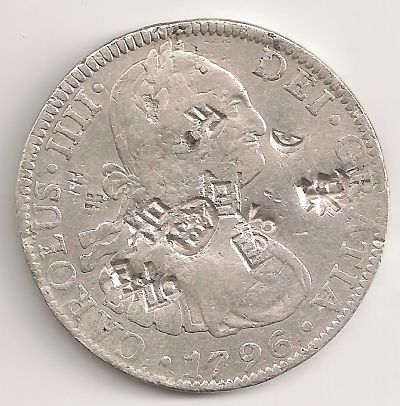 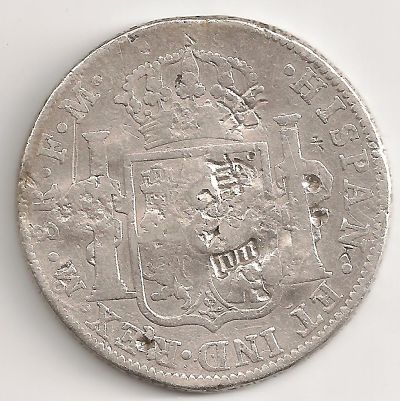 |
|
Valued Member
United Arab Emirates
283 Posts |
The 7 was just a little off its place if you look at an original one.
But after some thinking, this might actually be genuine!
|
|
Pillar of the Community
Canada
785 Posts |
Everything looks ok with it. As already pointed out the numbers do look a bit suspicious but with everything stated so far I would say it is most likely genuine. A great coin I would be happy to have in my collection if real.
|
|
Pillar of the Community
United States
1801 Posts |
Personally I do not like the edge, the nose or the mouth and would pass on this coin as "questionable".
|
|
Pillar of the Community
United States
5854 Posts |
I have limited experience and much of what I know has come from reading the posts of our resident experts. I don't like the edge either. Some of the circles look squared which I believe is a bad sign. I would have to say it is very suspicious.
|
|
New Member
 Singapore
23 Posts |
Thank you all for the comments. I rechecked the coin, the letter "R" in REX, seems has redundance, is it normal? Or it is a bad fake?
|
|
Valued Member
United Arab Emirates
283 Posts |
It is least probably an error, which probably isn't.
I am not sure though.
|
|
Pillar of the Community
United States
688 Posts |
jfransch I agree with your points and would go one step further, the coin is fake.
|
|
Pillar of the Community
United States
808 Posts |
For what it's worth HA.com recently added a 1798 Carlos IIII (VF, cleaned) for an upcoming auction. There's no edge photo available but the very high resolution obverse and reverse photos are nice for observing fine details. I've been comparing this coin to the OP's photos. I certainly don't have the expertise to make any assessment but the comparison has been an interesting learning exercise. |
|
New Member
Singapore
23 Posts |
coinwatch, thank you very much for your reply. I am growing believe that it is a genuine coin now after talking and checking with some friends.
|
|
Valued Member
United States
167 Posts |
Not an expert in Colonials but I am somewhat apprehensive about this one. The engraving of the date "1798" appears correct but I've seen none which have the "8" for 8R on the reverse looking quite like that. Also there appears to be a Cud or something on the R of REX reverse. The coin appears somewhat porous and is lacking in high relief detail. Of course this could be due to wear. Also there appears to be some sort of deposits in around the lettering. The coin appears that it could possibly be a cast made from a worn 1798 specimen. This would account for the Cud over the R as well as the porosity and deposits. How does it do on a ring test? I have an AU 1797 bought from CE Bullowa auction circa 1982 and also a high end 1795 bought from a Dan Sedwick auction. I'll try to look at my specimens and, if properly harassed, can get them out of the box & try to photograph them: particularly the edges. Edited by Gallienus
07/19/2013 12:06 am
|
|
New Member
Singapore
23 Posts |
Gallienus, thank you very much for your reply. Yes, please upload your pictures, so that we can compare to identify mine
|
|
Pillar of the Community
United States
1962 Posts |
I'm not seeing anything bizarre from the 1798's surfaces, honestly. Looks like the piece had a lot of crud on it, was improperly cleaned, scratched/tooled a bit as part that process (particularly around the rims, where that combined some leftover crud gives an odd appearance to certain features/lettering), and has generally been mishandled a bit. The central relief of this piece looks honest to me. Gallienus, the blob of extra metal on the R in REX... Someone else can chime in regarding what actually causes that. However, it is a common occurrence on the middle years of the Mex 8R of Charles IIII... both on pieces that are fairly well believed to be legit Spanish originals, but also on swamperbob's later bullion restrikes (which he's explained in multiple posts in this subforum). Point being, extra metal like that on this type doesn't particularly brand it as a modern numismatic cast/fake. Now, the edge pattern... a bit sloppy. Bob has made points in posts about various traits he's observed on different types of bullion restrikes... with a main theme of anything with non-"perfect" circles can almost automatically be deemed NOT a Spanish original. Defer to him for any specific expert commentary on what we have here. My Two Cents is that I've seen plenty of pieces with normal, textbook edge patterns, but also many Charles III/IIII Mex 8R where the edge pattern is basically a mess, yet the piece can NOT be anything but "old" based on the surfaces, patina, and overall character of the coin. Now, whether "old" means an original 1800-ish Spanish original, or a later 1800's bullion restrike... another story. However, the point - sloppy edge is not particularly indicative of a modern fake. |
|
Pillar of the Community
United States
1962 Posts |
|
|
Pillar of the Community
United States
3229 Posts |
 realeswatcher. |
|
Page 2 of 2
|
Replies: 18 / Views: 3,932 |
Page 2 of 2
|






 First Page


 Posted 07/03/2013 12:40 pm





QE9s3HG-1iBR6VHq0)rg~~60_12.jpg)


