| Author |
 Replies: 20 / Views: 3,591 Replies: 20 / Views: 3,591 |
Page 2 of 2
|
|
|
|
Bedrock of the Community
United States
12437 Posts |
Try out the tissue test first and if it is positive, then you should pursue the XRF analysis. |
|
Pillar of the Community
 United States
1476 Posts |
Well, I tried the tissue test with this coin, a known clad and 2 walkers and 2 ben's and they ALL look dark.  |
|
Moderator
 United States
23522 Posts |
I'm pretty sure Park Avenue Gold Exchange in Winter Park has XRF. You'd want to call to confirm and see if they're willing to test it for you first, of course. They may charge a couple bucks for the service.
|
|
Pillar of the Community
United States
1476 Posts |
Thanks SsuperDdave.   Any pre cautions I should take ? |
|
Bedrock of the Community
United States
62064 Posts |
Make sure the silver coins you use in the test are not darkened as this will not work correctly.
|
|
Pillar of the Community
United States
1300 Posts |
And only use tissue. OR single ply toilet paper put it with anything silver proof lens or blue ike anything will work good luck keep us posted!
|
|
Pillar of the Community
United States
1476 Posts |
Hey, I'm not sure what this means, Quote:
Make sure the silver coins you use in the test are not darkened as this will not work correctly. Do you mean the tissue test will only work on BU/UNC coins? Because this may be an AU coin but not a BU. Also the coins I used to do the comparison were two 1951 Ben halves and a 1940 and 46 Walker halves. They are also in Cir condition. |
|
Pillar of the Community
United States
1476 Posts |
O.K. this might not help but here are a few pictures of the coin. 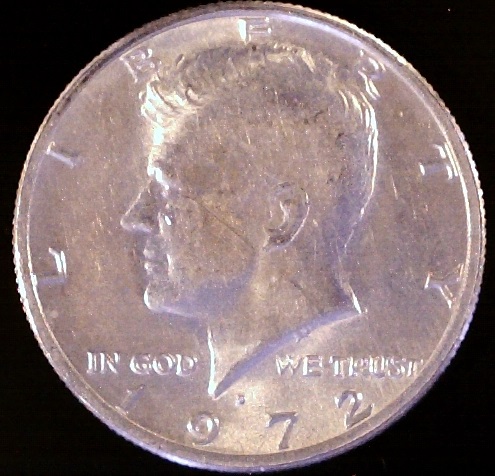 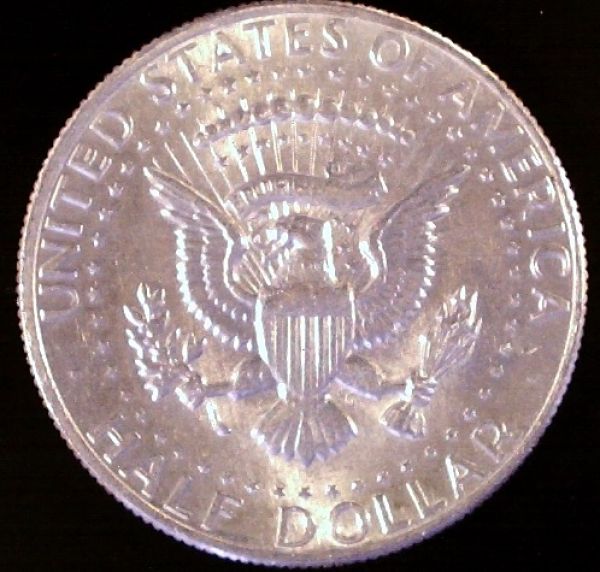 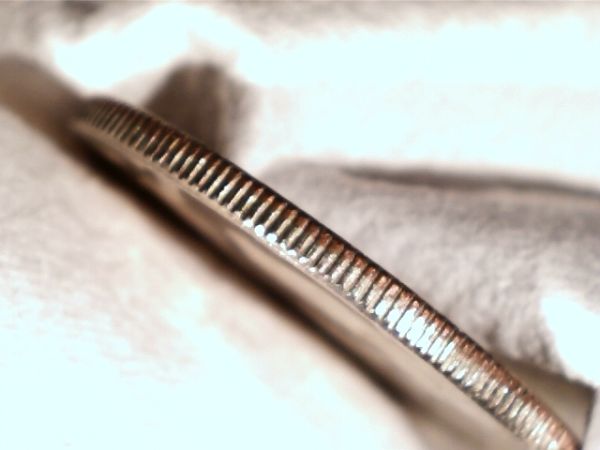 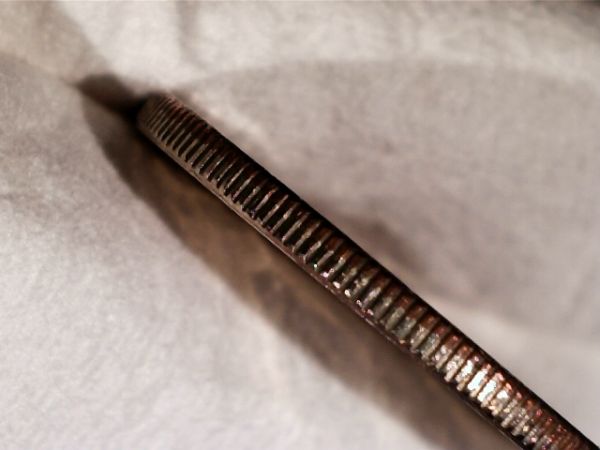 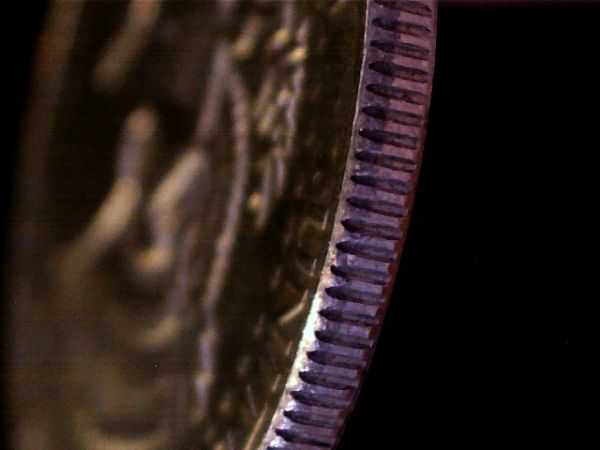 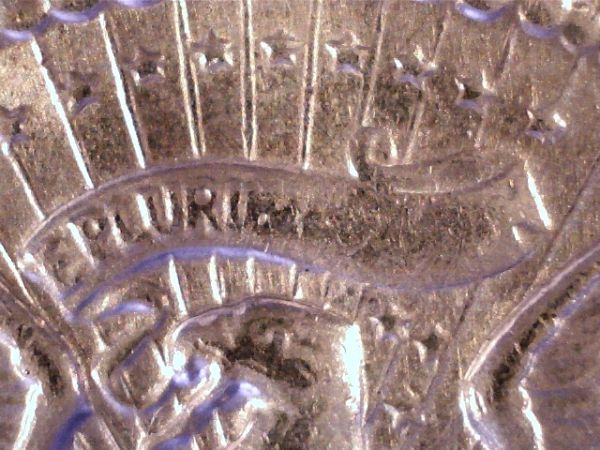 I posted the last one of the REV to show the banner. It seems that this are is actually Filled in and not just worn away. Even so, I don't believe it would account for the amount this coin is Over weight. Although again, This is my first attempt at really looking at Halves. What do you think? |
|
Pillar of the Community
United States
1300 Posts |
|
|
Pillar of the Community
United States
3640 Posts |
Thick stock. Clad coin not silver.
|
|
Bedrock of the Community
United States
62064 Posts |
On the 1965-1970 halves the rim look silver with no copper showing.
|
|
Bedrock of the Community
United States
17884 Posts |
Quote:
On the 1965-1970 halves the rim look silver with no copper showing Except for those that do. MS pieces usually don't show the clad layering, but circulated pieces often do because the low fineness core darkens more the high fineness outer layers. As I have said many times you can't use weight as a definitive test to tell clad and 40% silver halves apart. The tolerance range on both are to broad with too much overlap. A CuNi clad half can weigh anywhere from 10.88 grams to 11.79 grams. A 40% silver half can weigh from 11.1 grams to 11.9 grams. So a half dollar that weighs between 11.1 grams to 11.8 grams could potentially be either one. The only way to be really sure which it is would be the XRF or a specific gravity test. A 40% silver 1972 D would be VERY unlikely since the mint didn't make that many planchets in 1970 (only needed for collector sets) and none were made in 1971. While an old planchet could have been stuck in a tote bin or in a press somewhere for two years it is very unlikely. |
|
Pillar of the Community
United States
1476 Posts |
ok guys, Now I don't know What to do. I'll have to give this some more thought. I am at least going to see what the going rate to test it is, when I can get a hold of the place. |
|
Valued Member
United States
144 Posts |
Just drop it on the table. If it's a 40% half then the sound will be totally different. If you have a silver half and a clad half compare them, it's unmistakable. Then just drop the one in question. If it's silver you'll know by the sound.
|
|
Pillar of the Community
United States
523 Posts |
That is clad, 99.9% sure on it. The reason that I am not 100 is that I have missed some roll hunting till I get to the date. It is rare but it happens.
|
|
Page 2 of 2
|
Replies: 20 / Views: 3,591 |
Page 2 of 2
|





 First Page


 Posted 05/10/2014 6:03 pm





