| Author |
 Replies: 18 / Views: 2,506 Replies: 18 / Views: 2,506 |
Page 2 of 2
|
|
|
|
Valued Member
 United States
180 Posts |
The back of the holder is plastic, and after looking at it again I think whatever was used on the display side was sprayed onto the plastic.
|
|
Moderator
 United States
196702 Posts |
I would start with acetone.
|
|
Pillar of the Community
United States
7734 Posts |
Work with the least valuable coin first.
Before getting started read all warning labels on the solvent you are about to use, wear proper protective wear (gloves, safety glasses, etc) and use in a well ventilated area. (Whatever you do ...be smart and safe!)
Start off using a "weaker" solvent like alcohol and let the coin soak in it for a few minutes. Rinse well in cold running water. Did any of the "stuff" come off? Did it alter the underlying appearance of the coin? If that does not give you the results you want then step up the game by soaking it again for a longer time. Repeat as necessary.
If alcohol did not work try using paint thinner or Acetone. Generally speaking, the more volatile the solvent, the more aggressive it is at attacking the stuff you are trying to remove. Side effect is that the stronger it is, the more chances you have of damaging the coin surface and appearance. You just have to be patient as this crap can be removed.
Back in the 70's, when these holders were made, appearance was everything. The marketers could care less about long term storage. All they wanted was a pretty holder that was cheap and had eye appeal and would help sell the coins.
Good luck!
|
|
Valued Member
United States
180 Posts |
Hadn't even thought about alcohol, I'll give that a try first, thanks Westernsky.
I'll be sure to post follow up pics.....
|
|
Valued Member
United States
180 Posts |
|
|
Pillar of the Community
United States
7734 Posts |
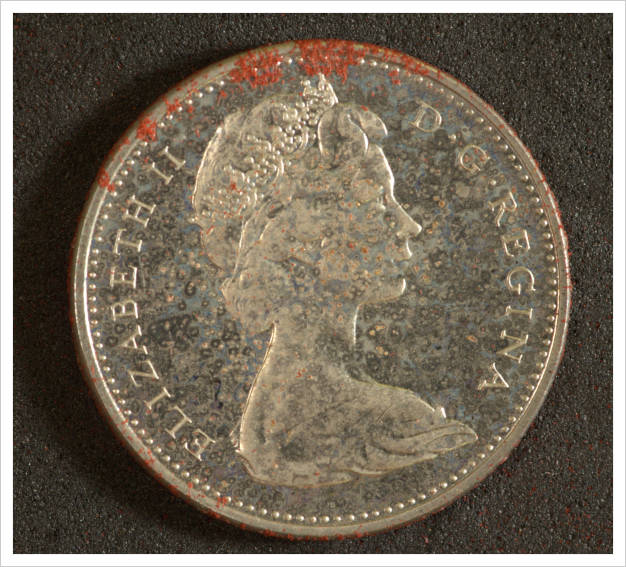
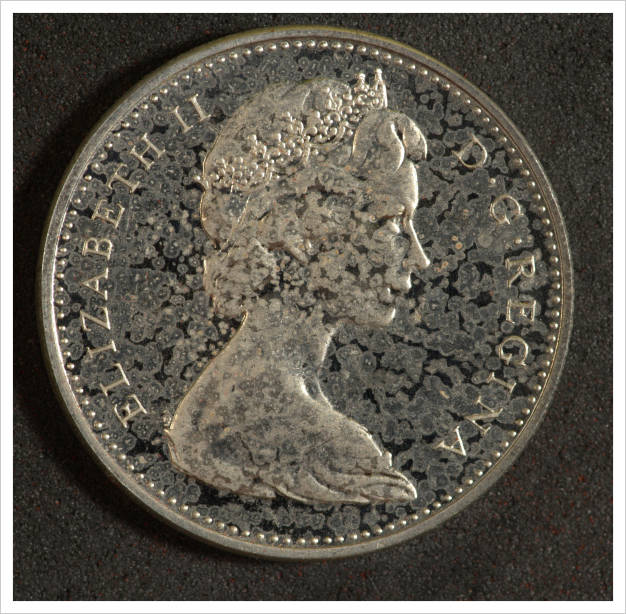
Most likely, the 40-year contact with the felt, and the out gassing of the glue, has caused a chemical reaction that attacked the metal on the nickel. You will probably see the same thing to varying degrees on the other coins.
|
|
Moderator
United States
196702 Posts |
Ouch.  |
|
Pillar of the Community
United States
7734 Posts |
BTW - If these had been stored in a high temperature/high humidity environment that will just accelerate the damage to the coins.
|
|
Valued Member
United States
180 Posts |
Don't like to admit it but it's kind of a hit on me, should have pulled and checked those coins when I first got them. |
|
Pillar of the Community
United States
1158 Posts |
That sucks! I'm sorry man. You'd assume a mint set would be in a coin safe holder. However I think the damage was done over decades not in the time you've had it.
Edited by tkbslc
07/17/2014 8:50 pm
|
|
Valued Member
United States
180 Posts |
Yes I keep coins in safe with humidity control, don't think I've had those 6 or 7 months yet.
|
|
Pillar of the Community
 Canada
9909 Posts |
Sadly this damage is all too typical for Canadian specimen sets of the era.
"Dipping" is not considered cleaning...
-from PCGS website
|
|
Pillar of the Community
Canada
2805 Posts |
Felt and foam are murder for coins after a few years. Once I saw some nice American large cents and other old coppers that had been left loose in a box with foam padding for 20 years... they had bonded... when it was removed with acetone, the coins were pink and pitted where they had touched.  |
|
Bedrock of the Community
United States
17884 Posts |
Quote:
You'd assume a mint set would be in a coin safe holder. You might think that, but a lot of foreign mint and proof sets from the 60's and 70's often used materials that would damage the coins. Especially things like heavily plasticized PVC. I've seen many a world mint set with the coins covered with heavy green slime. |
|
Pillar of the Community
Canada
2805 Posts |
Japanese mint sets from that era have mostly all turned green.
|
|
Page 2 of 2
|
Replies: 18 / Views: 2,506 |
Page 2 of 2
|




 First Page


 Posted 07/17/2014 12:02 pm