| Author |
 Replies: 19 / Views: 3,264 Replies: 19 / Views: 3,264 |
Page 2 of 2
|
|
|
|
Valued Member
 Canada
306 Posts |
Hello john100
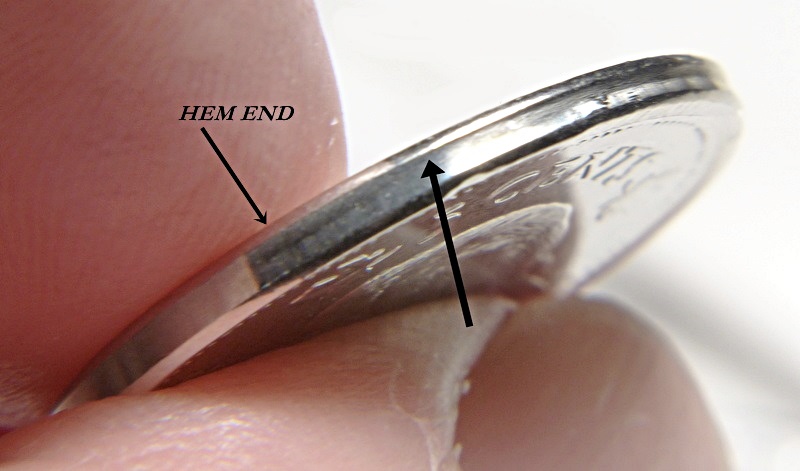
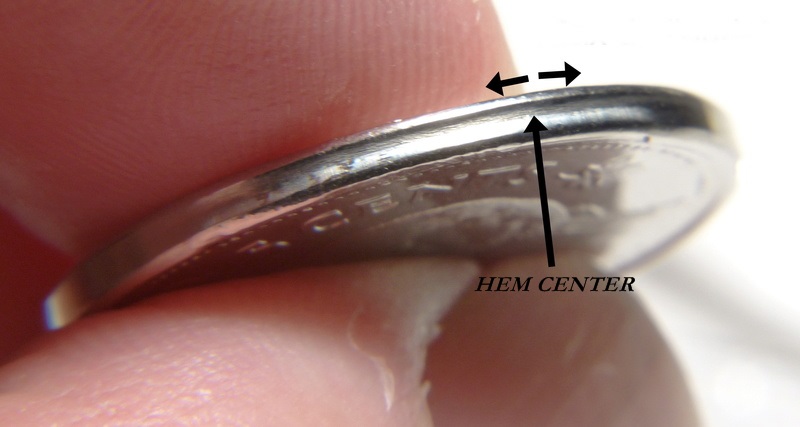
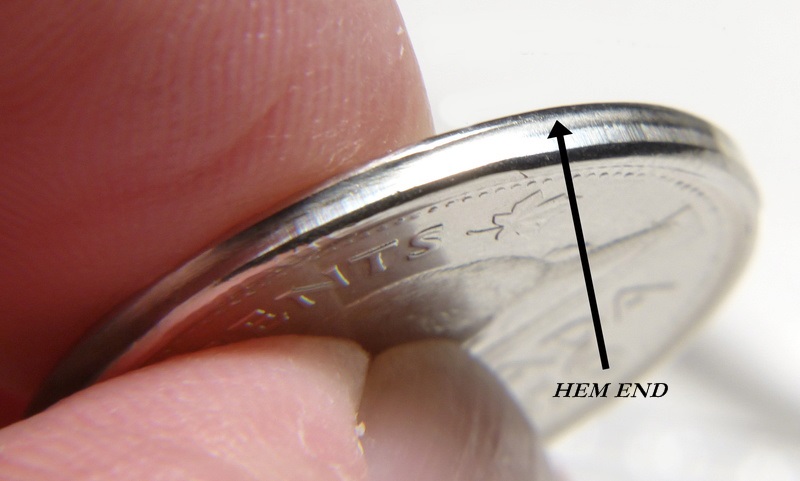
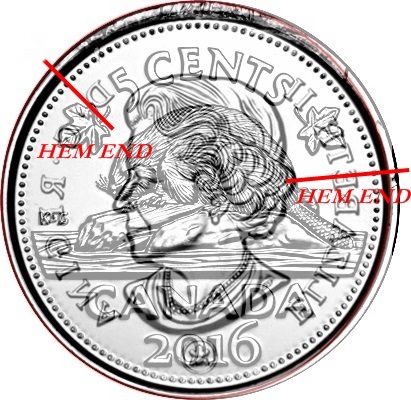
So, how to explain that a flawed planchet creates a hem on the side of the andvil die?
|
|
Moderator
 Canada
10476 Posts |
Are you able to take another photo of the rim, from a different angle? I would like to see the top of the obverse without arrows and lines drawn in it... The modern coin presses in Winnipeg still operate with the hammer die coming down on the anvil die, but the collar die mechanism has evolved over the years. What I think I see is a fully struck coin, but partially in collar. 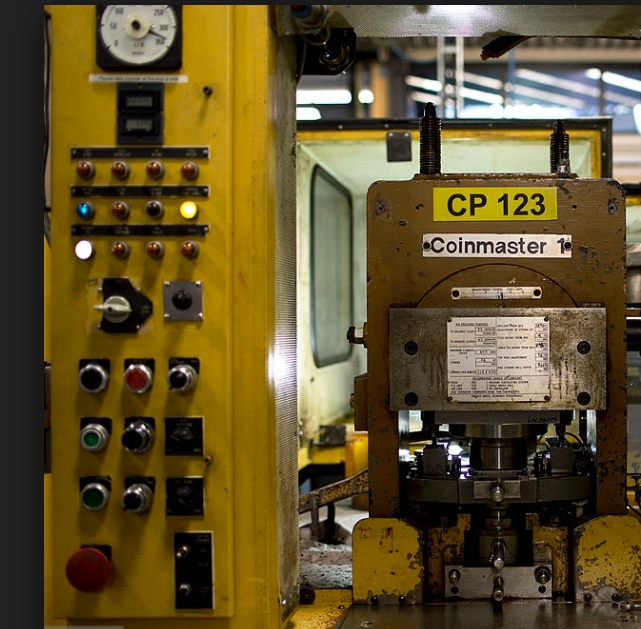 "Discovery follows discovery, each both raising and answering questions, each ending a long search, and each providing the new instruments for a new search." -- J. Robert OppenheimerContent of this post is licensed under a Creative Commons Attribution-NonCommercial 3.0 Unported License. See: http://creativecommons.org/licenses...0/deed.en_USMy eBay store
|
|
Valued Member
Canada
306 Posts |
|
|
Pillar of the Community
Canada
2430 Posts |
I was thinking the same thing SPP but I do think more pictures or a "In Hand" view would be better.
A possible Red Flag I see is damage on the top of the coin on both the obverse and reverse which coincidentally is where the so called error is.
Just my opinion.
|
|
Pillar of the Community
Canada
5342 Posts |
Thinned bevel planchet from the edge of the rolled stock maybe?
|
|
Pillar of the Community
United States
2589 Posts |
Looks like a partial collar error, we find them here occasionally in the USA on our own nickels.
|
|
Pillar of the Community
Australia
7096 Posts |
I don't believe that I have ever seen a partial collar error quite like this one.  Usually there is a raised portion on the edge of the coin and not a groove like this coin has. The damage on both the reverse and obverse of the coin that corresponds to the groove may be the "Key" to solving this mystery  |
|
Pillar of the Community
 Canada
9903 Posts |
Partial collar.
"Dipping" is not considered cleaning...
-from PCGS website
|
|
Moderator
Canada
10476 Posts |
Looks like it could be a partial collar strike, on a Type 1 planchet (the planchet bypassed the upset mill). The medial groove looks like it could be from the shearing of the planchets being punched (which is removed when the Type 1 planchets are milled into Type II planchets). There was still enough metal to form the rims, but only partially in collar.
I have some 1-cent coins from the 1980s strike partially in collar on a Type 1 planchet, which have a similar look to them...
What is the weight of the coin? Another alternative is that it could it have been struck on a slightly larger or thicker foreign planchet?
"Discovery follows discovery, each both raising and answering questions, each ending a long search, and each providing the new instruments for a new search." -- J. Robert OppenheimerContent of this post is licensed under a Creative Commons Attribution-NonCommercial 3.0 Unported License. See: http://creativecommons.org/licenses...0/deed.en_USMy eBay store
|
|
Valued Member
Canada
306 Posts |
Quote:
SPP-Ottawa
What is the weight of the coin?
3.9 Gr.
Hello and thank you all for your comments. I put my question back at the beginning because I think it seems to be misunderstood. Quote:
Castor wrote:
Question:
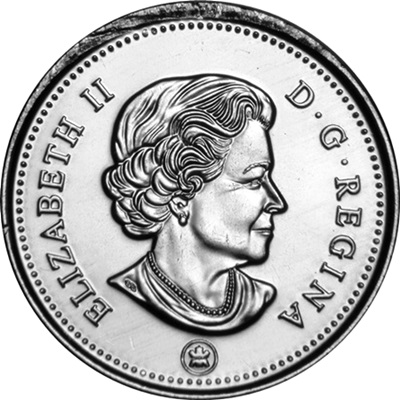
How can he have this hem, when it is known that the anvil die is surrounded by the wall of the collar die? Unlike the USA, in Canada the anvil die is always the obverse and the hammer die is always the reverse. For the hem on the piece which I present, it must be understood that it is on the side of the anvil die, or observe. When we see a partial collar, it is on the reverse side and not on the side of the observe. As many speak of partial collar, which is normally of the reverse side, I thought it good to make this drawing so that all place well the place of this defect. This hem being of the side of the anvil, how this hem could be formed as the metal is stopped by the wall of the collar die? There is the question! 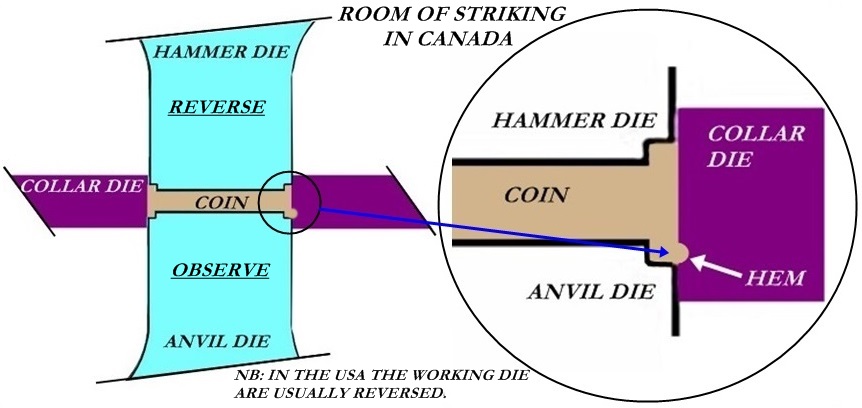 |
|
Moderator
Canada
10476 Posts |
Quote:
When we see a partial collar, it is on the reverse side and not on the side of the observe. This is not a true statement, I have seen both. Think of how anvil die caps are formed... The collar die encloses around the coin, the planchet does not rest against it before the strike. This is especially true with the newer presses in Winnipeg. "Discovery follows discovery, each both raising and answering questions, each ending a long search, and each providing the new instruments for a new search." -- J. Robert OppenheimerContent of this post is licensed under a Creative Commons Attribution-NonCommercial 3.0 Unported License. See: http://creativecommons.org/licenses...0/deed.en_USMy eBay store
|
|
Pillar of the Community
United States
2752 Posts |
It doesn't look like a partial collar. Part of it seems to show the contours of a groove. Among US coins, "groovy" nickels and quarters are known, although the mechanism is unknown. Also unclear is when it occurs (it could be post-strike damage). Arnie Margolis suggested it's caused by a worn groove in the upset mill. I have my doubts. Wish I could be more helpful. Error coin writer and researcher.
|
|
Moderator
Canada
10476 Posts |
What if never went through the upset mill Mike? I have 1c coins that look just like this, and were struck on Type I planchets.
"Discovery follows discovery, each both raising and answering questions, each ending a long search, and each providing the new instruments for a new search." -- J. Robert OppenheimerContent of this post is licensed under a Creative Commons Attribution-NonCommercial 3.0 Unported License. See: http://creativecommons.org/licenses...0/deed.en_USMy eBay store
|
|
Pillar of the Community
United States
2752 Posts |
Are you sure they were struck on blanks (T1 planchets)? It can be hard to tell when a coin is fully struck. I have personally never seen a coin struck on a blank which presents with this sort of edge. If struck in-collar, I look for remnants of the cut-and-tear texture along with an unusually wide edge (vertically, that is), and a poorly formed design rim. I see none of these diagnostics in the lead-off coin.
Error coin writer and researcher.
|
|
Valued Member
Canada
306 Posts |
Quote:Mrs Diamond wrote: It doesn't look like a partial collar. Part of it seems to show the contours of a groove. Among US coins, "groovy" nickels and quarters are known, although the mechanism is unknown. Also unclear is when it occurs (it could be post-strike damage). Arnie Margolis suggested it's caused by a worn groove in the upset mill. I have my doubts. Wish I could be more helpful. Thank you Mrs Diamond for answering my request. And I understand very well that this defect is not easy to define. |
|
Page 2 of 2
|
Replies: 19 / Views: 3,264 |
Page 2 of 2
|








 First Page


 Posted 02/23/2017 3:50 pm