| Author |
 Replies: 319 / Views: 82,466  |
|
|
|
|
Pillar of the Community
United States
1794 Posts |
https://www.ebay.com/itm/3983736098...erson+nickelSo it can be confusing. Sintered yet glossy with a cartwheel? How? Sintered planchet errors exist on a spectrum. In mild cases, the alloy particles bond imperfectly during strip production, creating microscopic voids and slight compositional irregularities, yet the blank remains dense enough to strike normally and retain much of its original luster. These pieces may show only unusual color, subtle granularity under magnification, or a slightly different surface texture while still exhibiting cartwheel effect and strong design detail as in this ebay ANACS specimen. At the severe end of the spectrum, incomplete bonding produces extensive porosity, oxidation, and a rough, sponge-like surface. These coins often appear dull, dark, and heavily textured because light is scattered by countless microscopic pits and voids. An improperly annealed "Black Beauty" differs in that the metal itself is generally sound; the abnormal appearance results primarily from oxidation and furnace-atmosphere issues during heat treatment rather than inadequate metallurgical consolidation of the planchet. Thus, a mildly sintered blank can retain significant luster, whereas a severely sintered blank tends to look porous and lifeless. Some Black Beauties my appear dark gray, charcoal, bronze, or blue-gray appearance while preserving enough original flow lines to produce a subdued or even fairly strong cartwheel effect. I guess this is why a Sintered Planchet in a TPG confirmed is REQUIRED candidate.
|
|
Pillar of the Community
United States
1794 Posts |
https://www.ebay.com/itm/3071864713...ckel&etmp=noSo a rainbow toned Jefferson from the 1950's or from 1958-P or 1959-P how does this compare to a UNC Sintered Glossy piece as previously seen? So the five candidates previously mentioned sound required in this study? Seems so ... don't get me wrong TPG services seem today to know the differences between a BB or improper annealing, sintered, environmental damage & normal rainbow toning. IMO.
|
|
Pillar of the Community
United States
2850 Posts |
Quote:
Major grading companies no longer use the term sintered planchet in their current attribution vocabulary*, and you will not see it on modern labels. PCGS, NGC, ANACS, and CACG all use improper annealing as the standardized designation. The shift happened as TPGs aligned terminology with metallurgical accuracy: U.S. Mint planchets are not powder metal, so "sintered" was always a misnomer. I thought we established that "sintered" planchets are a misnomer so why include these for study? Quote:
So that I get a clearer picture of what is bothering you guys on these BB's While this study will be interesting I don't see how it ends the confusion in determining these errors. The main source of confusion is the term "Black Beauty" which was never scientific and locks collectors into looking for one shade of a multi shade phenomenon. It also inadvertently includes obvious environmentally damaged coins into question. As Spru pointed out (page #8 here), 15 years before this topic started a book (2002) was published describing what was causing the errors. In 2010 Mike Diamond published a response from the US Mint affirming annealing as the cause. The main question this topic was meant to answer was already answered over a decade prior and yet the confusion persists. Without access to SEM/EDS analysis collectors and TPG's will have to rely on visual clues to determine these errors for years to come and mistakes will be made. I'm not against this study being done. I'm very interested in seeing the SEM/EDS results on IAP errors. My point is focusing the study on an old term which is increasingly being phased out will maintain the confusion rather than clear it up. Including IAP nickel examples with the red/coppery tone will give a fuller picture of the atom migration within these errors. I know my 1959 example is not eligible but why not include these examples in your study request? |
|
Pillar of the Community
United States
1794 Posts |
My mistake Coin HI. I forgot Sintered was an obsolete TPG current term. Its eliminated from this study. What then are these so-called sintered coins currently in TPG holders? I guess you can say each one needs to be examined on a case by case basis. For another day. The reason I can not use your PCGS, NGC or ANACS coins as the coin must exist in Raw Form. A coin generally cannot be analyzed by SEM/EDS while encapsulated in a plastic slab, because the electron beam must directly strike the coin's surface inside a vacuum chamber. The slab physically blocks access to the surface, and the plastic itself would contribute carbon- and oxygen-rich signals unrelated to the coin. The primary limitation is not plasticizers, but rather the inability of the SEM/EDS system to directly image and analyze the metal surface through the holder. By contrast, XRF analysis can often be performed through a slab, as X-rays can penetrate many grading-holder plastics with only modest attenuation of the signal. While raw coins typically provide the most accurate XRF results, slabbed XRF is routinely used in numismatics and museum studies. SEM/EDS generally requires the coin to be removed from the slab, whereas XRF frequently does not but for this study I prefer raw coins even for the XRF preliminary analysis to totally avoid any plasticizer issues in the final assay. You are right without more sophisticated equipment in all collectors hands we will still witness the chaos currently on ebay on what is a BB and what is simply environmental damage/corrosion/heavily toned BLACK due to environmental exposure ONLY. But this is one reason I may include a BLACK/Porous environmental damage coin in the study. So a Black Environmental Damaged Coin + Rainbow Toned still seems reasonable with the two BB's of 1958-P & 1959-P. An improper annealed coin outside of 1958-P and 1959-P may also be beneficial? I like to limit this study to 5 coins to keep it manageable so that now sintered is OUT perhaps an improperly annealed Jeff other than 1958-P or 1959-P for obvious reasons? Are BB's just hyped up improper annealed coins for these two years? Probably. Lets confirm it. Edited by colonialjohn
10/13/2026 8:31 pm
|
|
Pillar of the Community
United States
2850 Posts |
I completely understand needing a raw example. I have this raw nickel I could send you for the study. If you don't want to use it, having a red/coppery version of these IAP errors would be beneficial for the study imo. 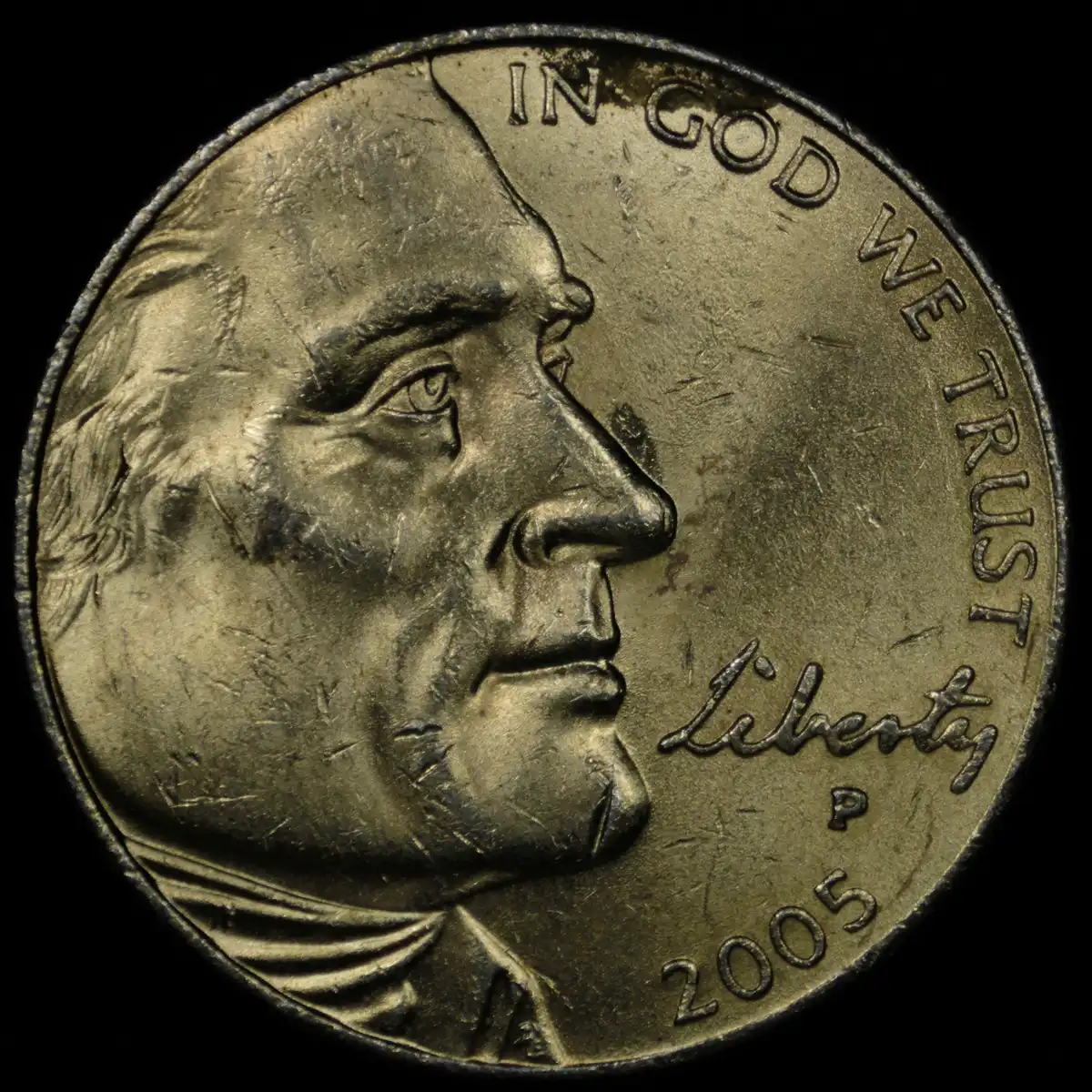 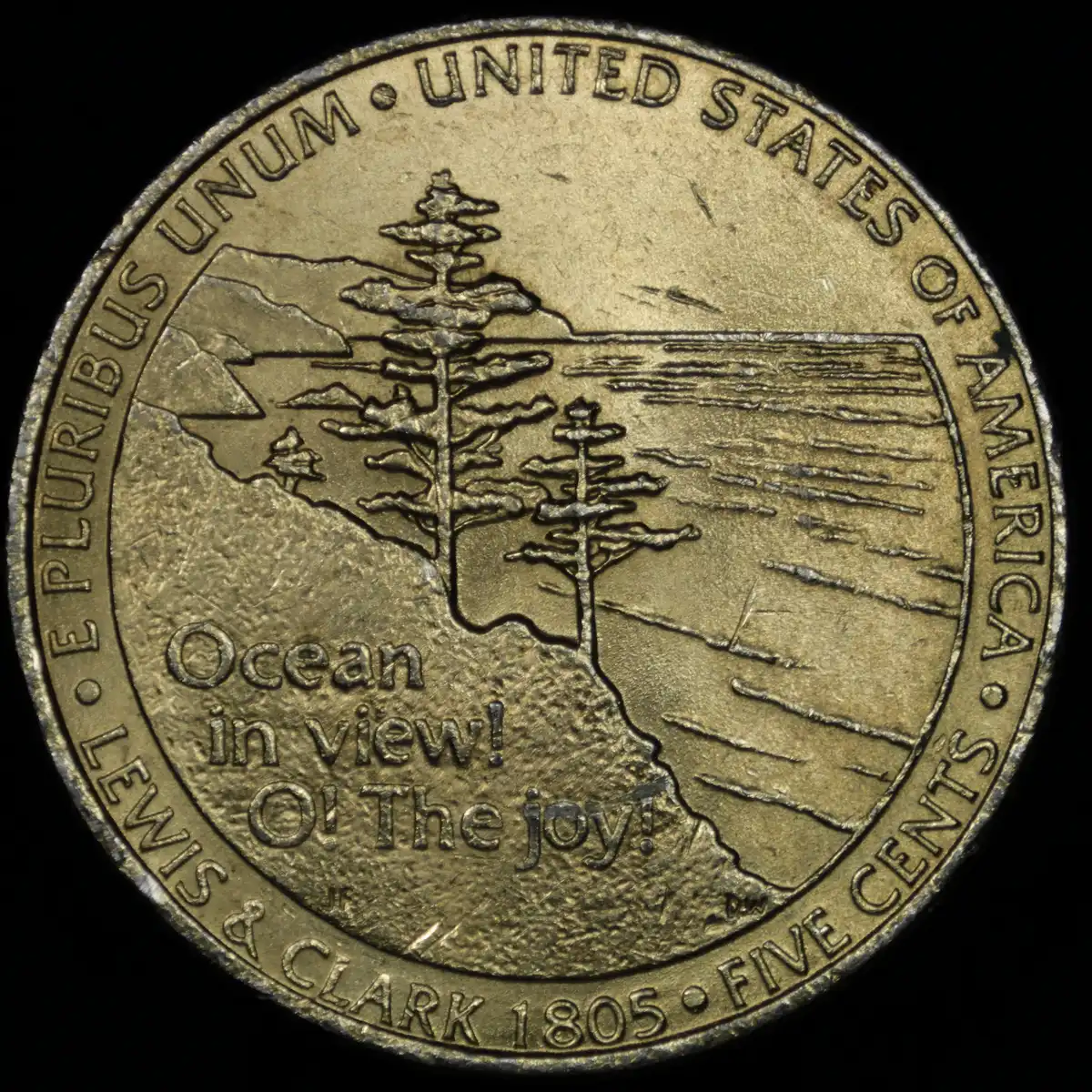 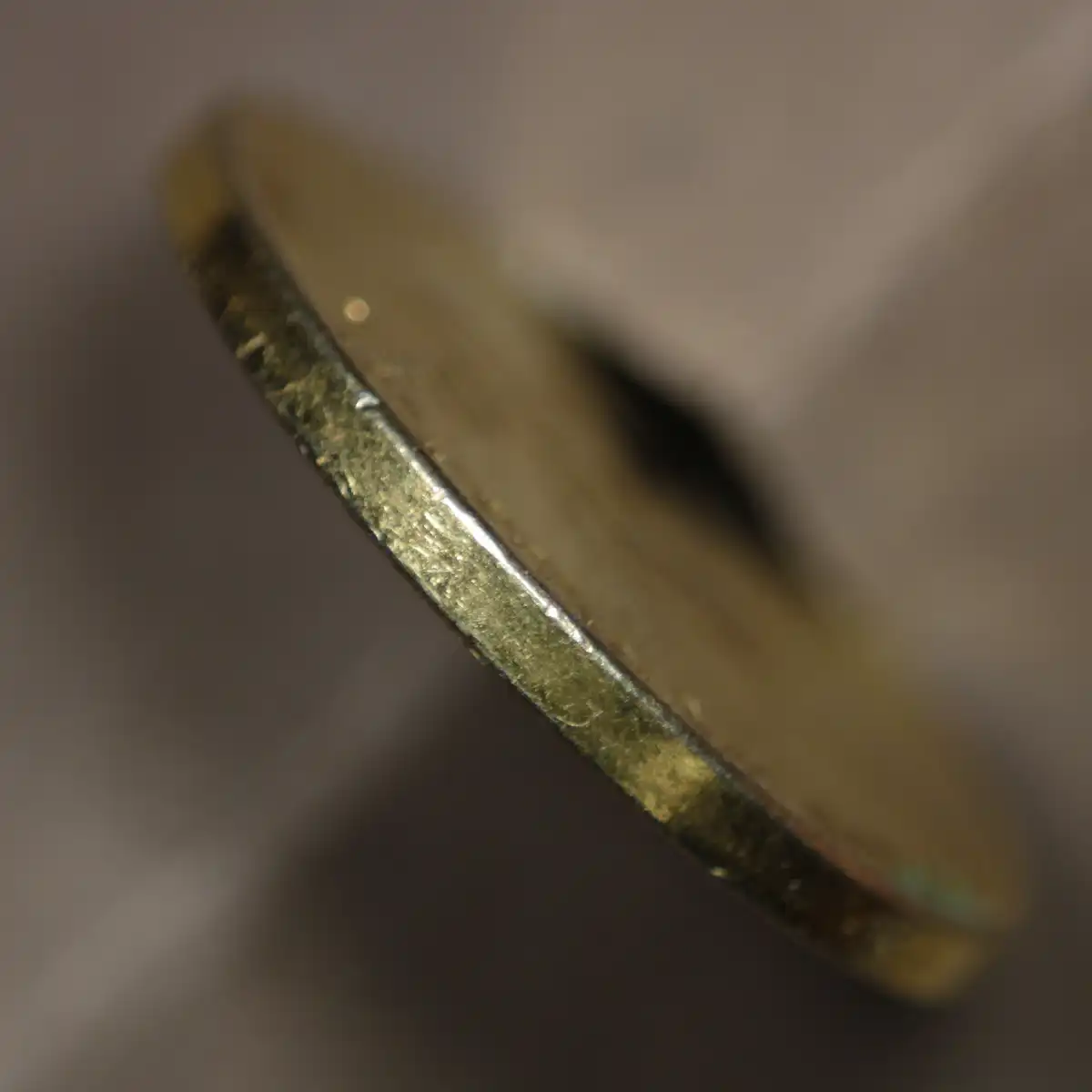 |
|
Pillar of the Community
United States
1794 Posts |
Excellent piece HI just E-Mail me and I will give you my address to send. Tropicalbats has also offered some pieces for preliminary examination. So lets review: 1. 1958-P BB. Confirmed. Acquired. Ready for Analysis. 2. 1959-P BB. Confirmed. Acquired. Ready for Analysis. 3. T o be Acquired (TBA) = Black Environmental Damaged Jeff 5C. 4. (TBA) Improperly Annealed Jefferson 5C outside of 1958-P/1959-P. AU/UNC. Your coin HI. Possibly. 5. Normal nickel 1958- P UNC Rainbow toned. Acquired. Ready for Analysis. https://www.ebay.com/itm/2370107417843&4 to be supplied from outside sources at this time.I see no point in analyzing an untoned 1958-P or 1959-P in glossy UNC as this study is about just comparing these toned and environmentally damaged surfaces of 1-5 above. I plan to do a polished edge analysis on the 1958-P UNC Rainbow toned #5 specimen above which will supply close to the Red Book type of assay. JPL Edited by colonialjohn
10/14/2026 12:34 pm
|
|
Moderator
 United States
112075 Posts |
This is my raw example of what I believe to be a Black Beauty - 1958-P (I posted this one back on Feb 04, 2022) Here is a link to that conversation: Found A Nice 1958-P Black BeautyThere is quite a nice argument there as to weather it is or not. but here are the pictures of it: 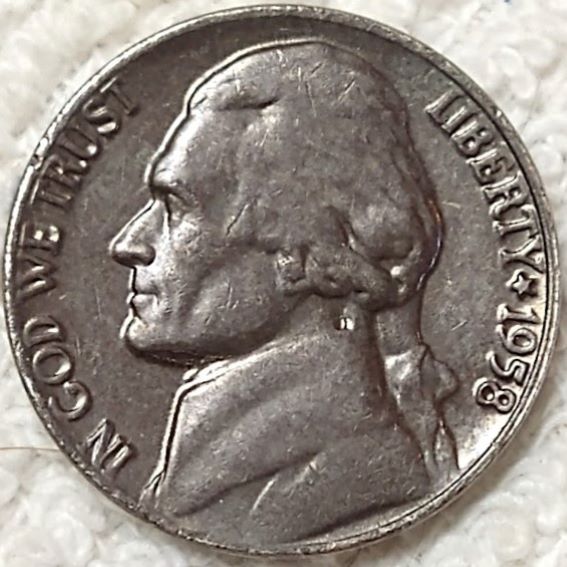 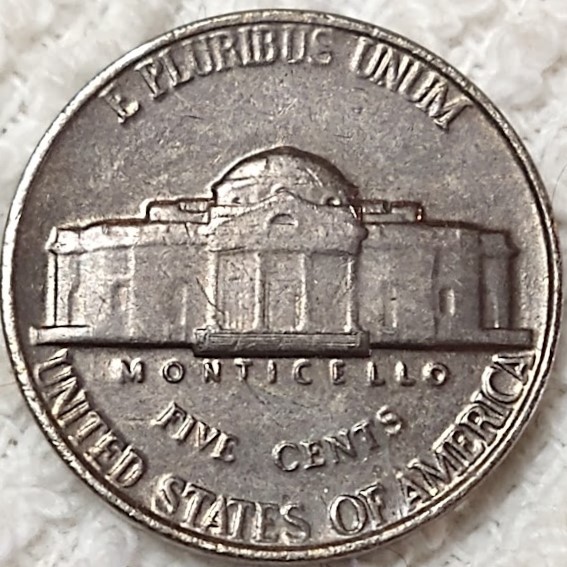 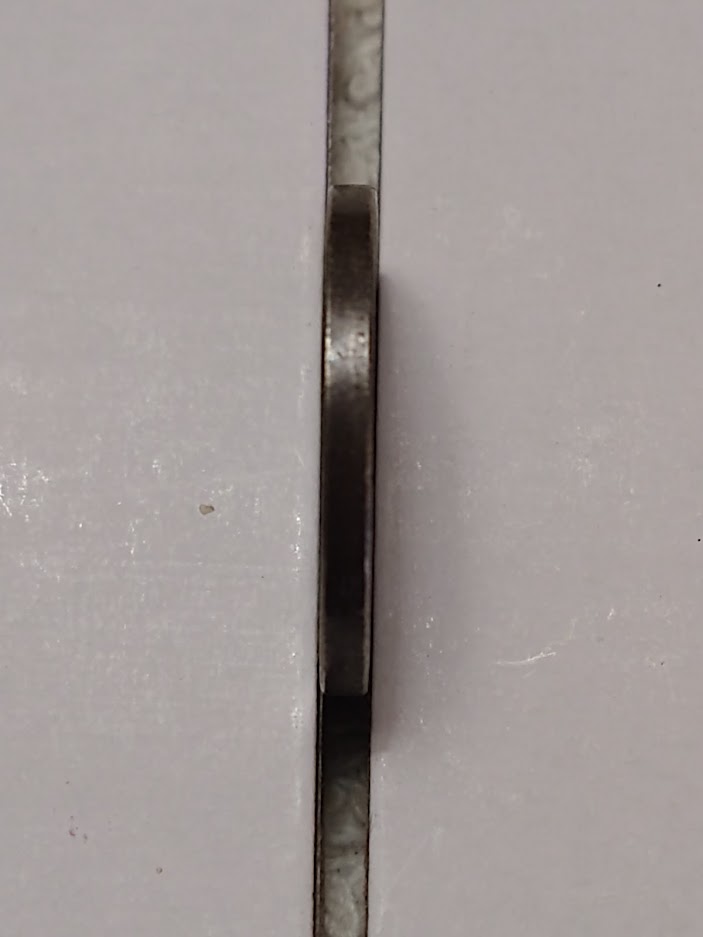 Here it is (in the middle) along side 2 normal nickels 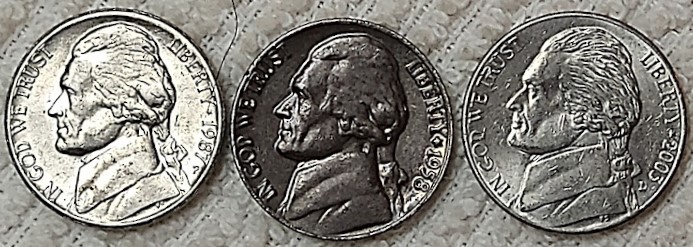 |
|
Pillar of the Community
United States
1794 Posts |
PART V. Planchet Errors:
Annealing Errors:
Improper Annealing:
Definition: For decades error collectors have puzzled over copper-nickel and Cu-Ni clad coins struck on planchets with a layer of copper on the surface. In times past, these errors were called "copper wash" and "sintered plating" errors. The 1962 nickel shown below is a typical example. It has a thick layer of peeling copper on the right side of the obverse face. The rest of the obverse face and all of the reverse face is black. Copper, red, black, brown, and gray are colors typically found in these errors. Coverage can be complete or incomplete. The copper can range from a slight tinge to a thick coating.
In recent years, eyewitness testimony has convincingly pointed to annealing as the specific step in the planchet preparation responsible for the surface copper. In light of this testimony, these errors are now generally labeled "improper annealing" errors by the major grading services.
In 2010 Mike Diamond contacted US Mint officials with convincing evidence which in the end supported his hypothesis that copper and nickel atoms in the 75% Cu / 25% Ni alloy were migrating and segregating themselves into layers of relative purity. In response to an inquiry first made to Tom Jurkowsky, the Mint's Director of Public Affairs, an answer came henceforth. Michael White, a spokesman for the Office of Public Affairs, consulted with the Mint's technical staff who reported a mechanism very similar to the first scenario Mike Diamond laid out. The atoms are migrating to the surface and rearranging themselves into uniform layers. The proximate cause, according to Mr. White, is prolonged exposure to heat, a failure to maintain an oxygen-depleted atmosphere in the annealing oven, or a combination of both. Here is Mr. White's verbatim explanation:
Dear Mr. Diamond:
"I've consulted with our technical experts regarding the cause of the appearance of the coins in the photographs attached with your e-mail.
The samples shown in the photos were the result of a loss of protective atmosphere or being stuck in the annealing furnace for a prolonged period of time, or both.
This would result in migration of the copper and nickel to the surface of the blank. Since there is three times as much copper then nickel in the outer layer of these coins, the diffusion of copper to the surface will be significantly greater than the diffusion of the nickel, resulting in the reddish appearance noted.
Depending on the time the blank sits in the annealer, and whether it is exposed to oxidizing conditions, various reactions can occur. This will result in the type of phenomenon shown in the photos, where a distinct layer of material forms on the blank surface (primarily copper, with a high degree of oxidation), which is quite brittle, and will break off in pieces. This will expose the original blank surface, which would also be oxidized, but closer in color to the original alloy. We have seen these types of blanks but only infrequently.
I hope you find this information useful."
I find this information VERY USEFUL.
Edited by colonialjohn
10/14/2026 9:13 pm
|
|
Valued Member
United States
285 Posts |
Dear Colonialjohn,
I posted a pic of one of my coins on this thread that may, or may not, be of interest to you. It's of 1962 vintage; it's on page 15. The date of my post, I note, was In December of 2020. The coin is raw. I surmise I stuck It somewhere ( in some album?} almost 7 years ago. I'd be glad to send it to you for study, but please be sure you're interested before you take me up on this. Looking for a coin I put away 7 years ago won't be much fun. On the other hand subjecting it to your study; exposing its secrets, regardless of what the exposure brings, promises to be considerable fun of the sort that first attracted me to coin collecting. Be advised, my collection is large. Though I'm certain I still have it, my search could end up in hours of futility without result.
|
|
Pillar of the Community
United States
1794 Posts |
KCM thanks for your assistance but we are good. Have both 1958-P and 1959-P BB's. Interesting bluish undertones in this Black Beauty. One of the investigative questions with BB's does Cobalt (Co) really play that much of a part in creating the BB? We will soon know in 2027. Over the last month I do believe now I have a pretty good analytical strategy in explaining all the answers collectors need to know on this improperly annealed error. As for the Sintered Label TPGs I think some top end error sellers like Mr. 97 (Its what I call him who always ends his prices with $0.97 has it CORRECT - really all sintered planchets are actually improper annealed planchets). Depending of course from this top seller to novice collectors we then find many environmental damaged pieces called improperly annealed on ebay currently and how does rainbow toning differ on the SEM/EDS analytical analysis platform to this BB toning phenomenon. All to be addressed. JPL |
|
Pillar of the Community
United States
1794 Posts |
 THe selection of samples is almost complete. I left a couple of openings (i.e., 2-3 pieces) in the ten for analysis. THe cut-off is December 31 or so - several people have contacted me. Ten coins will be sent for XRF Triplicate Analysis. XRF as it usually does will be looking ONLY to confirm that improper annealing is a surface effect from improper temperature, oxygen levels & time. XRF's job will be looking for any unusual impurities such as cobalt in BLack Beauties. Some numismatists have inferred this possibility as some are blue toned/BLACK/DARK BROWN-BLACK (take your pick) which may just be optic effects instead of elevated levels of Co IMO. Currently six specimens have been selected for SEM/EDS analysis including a Proof ~65 Gem Environmental Toned raw example to compare its makeup to improperly annealed pieces. In the article we will talk about Mike Diamond's 2010 U.S. Mint's contact/correspondence involving IA/Sintered which is the main reason the word sintered was eliminated as an error category moving forward from that event. Will talk about the Fred Weinberg Principle a past PCGS Forum comment so hence this term in my paper where on the edge for outer clad layer coins the red stripe should be present on genuine IA examples but there may be exceptions in severe IA examples where its not uniform 360* around or bright red but overcome also withe same level of tone as on the obverse/reverse - AGREE?. We will talk about Gould Inc. sintered experimental patterns made with powder technology which YES - are true sintered made tokens/medals. See the book. Taking more inquiries as I have been full time on this for about two straight months. It's a bit complex and I feel I made some big breakthroughs with these complex errors. More pics are welcome here or privately. I have a pretty good collection/database of raw and TPG pieces. I welcome any more comments/concerns/confusion/suggestions for improvement. I am asking this as Error Collecting is just a sideline for me in numismatics. There may be some subject items I miss that may be important for the 2027 paper. XRF Analysis will occur in December 2026/SEM/EDS Analysis in January/February 2027. Edited by colonialjohn
10/30/2026 11:09 am
|
|
Pillar of the Community
United States
2850 Posts |
Colonialjohn- I know it's not the denomination you are looking for but I think it's a solid example of a moderately circulated IAP error that I'd be willing to get further testing on. If you read through the topic I did get some XRF readings on the coin. https://goccf.com/t/431416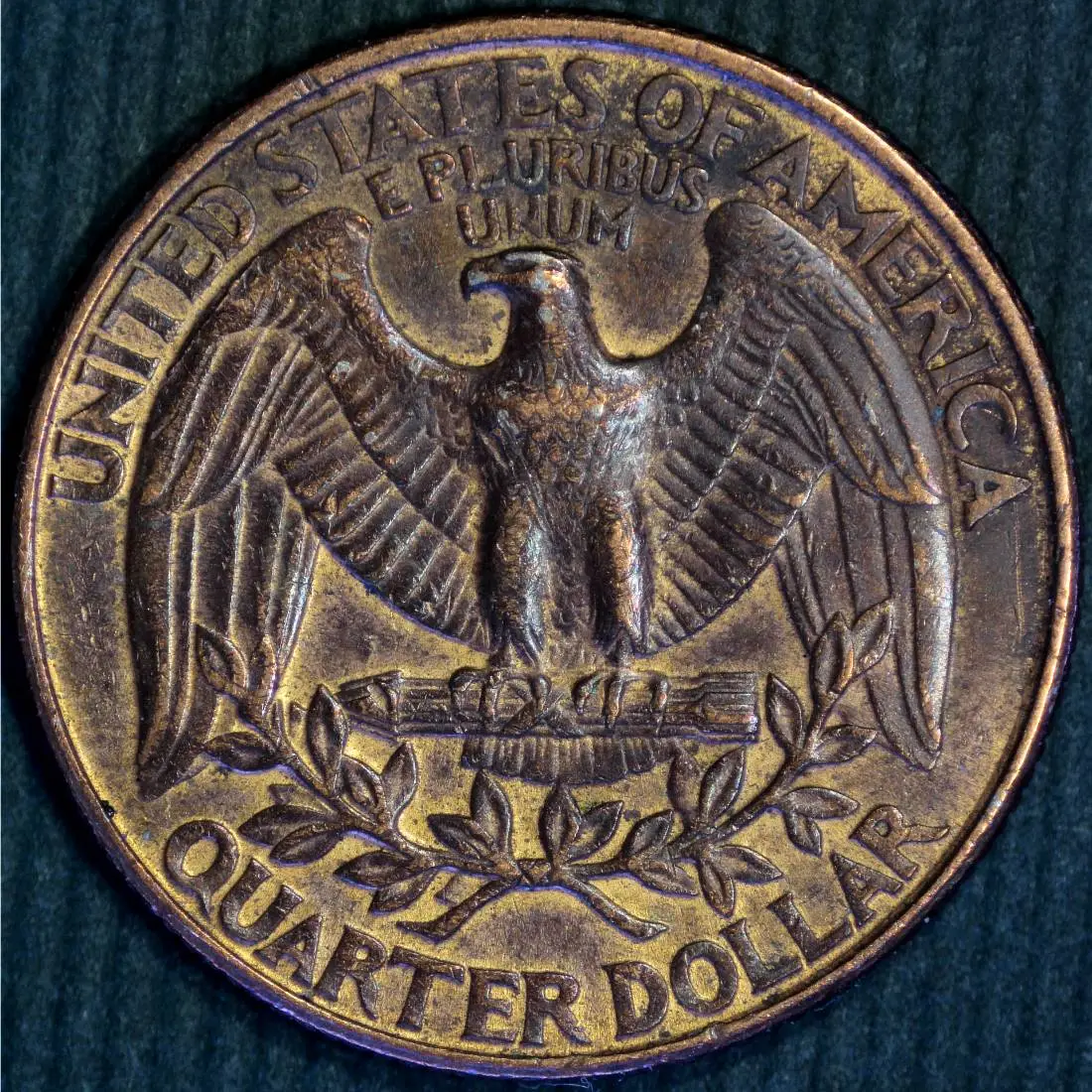 "Pride is yoked with callous behavior, as humility is with compassion." St. Gregory Palamas Top Finds - 1969-S 1c FS-101 http://goccf.com/t/477681 1976 D WQ FS-101 http://goccf.com/t/382777 - 1968 D 1c FS-801 http://goccf.com/t/422254Cool clashed dies - 1972 D 1c http://goccf.com/t/429855&SearchTerms=CCLStruck-In Rim Burr - 1969 S 1c http://goccf.com/t/425587&SearchTerms=burrFloating (Type II) Counterclash - 1978 D 1c http://goccf.com/t/434991&SearchTerms=1978 |
|
Pillar of the Community
United States
1794 Posts |
A clad Washington quarter contains an outer 75% copper/25% nickel layer of approximately (~290 microns) thick on each side of its inner copper core. By comparison, a typical handheld XRF analyzer has an effective analytical depth of only about 10-50 microns in Cu-Ni clad coinage. As a result, an XRF gun generally examines only the outer portion of the clad layer, representing roughly 3-17% of its total thickness, rather than the entire clad layer or underlying copper core. This relationship helps explain why XRF and SEM/EDS often produce different results when studying improperly annealed clad coins. SEM/EDS is highly surface-sensitive, typically analyzing only the upper few microns where oxidation, copper enrichment, and color-producing compounds are concentrated. XRF, by averaging over a deeper volume of material, provides a more bulk composition of the outer clad region. Consequently, surface oxidation effects that strongly influence SEM/EDS results may appear diluted in XRF data, while both techniques can provide complementary information about the coin's metallurgical condition and oxidative state. Why the readings did not match 75% Cu/25% Ni - perhaps due to copper surface enrichment or the surface was not purely homogenous which is likely. Indeed XRF is WORTHLESS by itself to assay oxide films on IA error coins. Hence the three page merry-go-round of responses on your XRF gun analysis thread. HI be aware my study will involve ALL DENOMINATIONS from nickels to dollars as the outer clad layer has the SAME Cu/Ni %'s as the entire homogenous binary alloy composition Jefferson nickel. So the same IA oxidative effects on Jeff 5C's are identical to its higher denominations with their outer clad layers higher denominations. Here we see a Quarter with what I call an early oxidative state golden hue and it progresses to a dark brown/black in other areas of a later oxidative state. Its a 100% confirmed IA error coin. Why then do an associated XRF preliminary analysis with Winston Zack? HI just to confirm Cobalt (Co) is not a player or is a player in Black Beauties giving it a blue hue or is it just optics/lighting. Also to confirm metal impurities are or are not responsible for the IA color effects seen on IA error coins. They do follow a distinct oxidative color pathway as verified by other research studies which has been verified by observing over several hundred proposed IA error coins raw and in TPG's. No need to use this example in my paper. I have it covered by other examples with similar early/late oxidative states. Keep the inquires coming ... |
|
Pillar of the Community
United States
2850 Posts |
Thanks for the reply John. Quote:
or the surface was not purely homogenous which is likely Could you explain this statement? What Cu/Ni XRF readings would you expect from a non IA clad quarter for comparison? "Pride is yoked with callous behavior, as humility is with compassion." St. Gregory Palamas Top Finds - 1969-S 1c FS-101 http://goccf.com/t/477681 1976 D WQ FS-101 http://goccf.com/t/382777 - 1968 D 1c FS-801 http://goccf.com/t/422254Cool clashed dies - 1972 D 1c http://goccf.com/t/429855&SearchTerms=CCLStruck-In Rim Burr - 1969 S 1c http://goccf.com/t/425587&SearchTerms=burrFloating (Type II) Counterclash - 1978 D 1c http://goccf.com/t/434991&SearchTerms=1978 |
|
Pillar of the Community
United States
1794 Posts |
For a normal clad quarter (75% Cu / 25% Ni surface) with original surfaces and no improper annealing effects, SEM/EDS readings outside of Cu and Ni might reasonably appear as: UNC Gem (Original Mint Surface) O (Oxygen): 0-1 wt.% C (Carbon): 0-3 wt.% Si (Silicon): ND-0.1 wt.% Fe (Iron): ND-0.1 wt.% S (Sulfur): ND-0.05 wt.% Cl (Chlorine): ND-0.05 wt.% XF (Extremely Fine) O (Oxygen): 1-3 wt.% C (Carbon): 1-4 wt.% Si (Silicon): 0-0.2 wt.% Fe (Iron): 0-0.2 wt.% S (Sulfur): 0-0.1 wt.% Cl (Chlorine): 0-0.1 wt.% Fine-12 O (Oxygen): 2-5 wt.% C (Carbon): 1-6 wt.% Si (Silicon): 0-0.3 wt.% Fe (Iron): 0-0.3 wt.% S (Sulfur): 0-0.2 wt.% Cl (Chlorine): 0-0.2 wt.% Environmental Interpretation Oxygen (O): Surface oxide formation; generally increases with exposure and age. Carbon (C): Airborne hydrocarbons, handling residue, storage films, and environmental contamination. Silicon (Si): Dust, soil particles, abrasives, and silicate contamination. Iron (Fe): Environmental contamination, steel contact, or microscopic particulate transfer. Sulfur (S): Atmospheric sulfur compounds, paper products, cardboard, envelopes, album materials, and toning reactions. Chlorine (Cl): Salt exposure, PVC contamination products, environmental chlorides, and handling-related contaminants. A pristine UNC Gem quarter may show almost no measurable sulfur or chlorine, whereas environmentally toned or contaminated pieces often show elevated S and/or Cl associated with external chemical exposure. By contrast, a true improper annealing progression would be expected to show a more systematic increase in oxygen tied to metallurgical oxidation, while sulfur and chlorine may remain low or inconsistent. This is one of the reasons O, S, and Cl can be valuable variables when attempting to distinguish a Mint-origin oxidation pathway from post-mint environmental toning. This is included in my 2027 study. A Proof GEM 65 Jefferson nickel with rainbow toning compared against IA examples. We don't expect IA errors to be high in S & Cl in high grades above XF or AU. Edited by colonialjohn
10/31/2026 10:39 pm
|
|
|
Replies: 319 / Views: 82,466 |
|





 First Page
 Previous Page


 Posted 10/13/2026 5:39 pm


