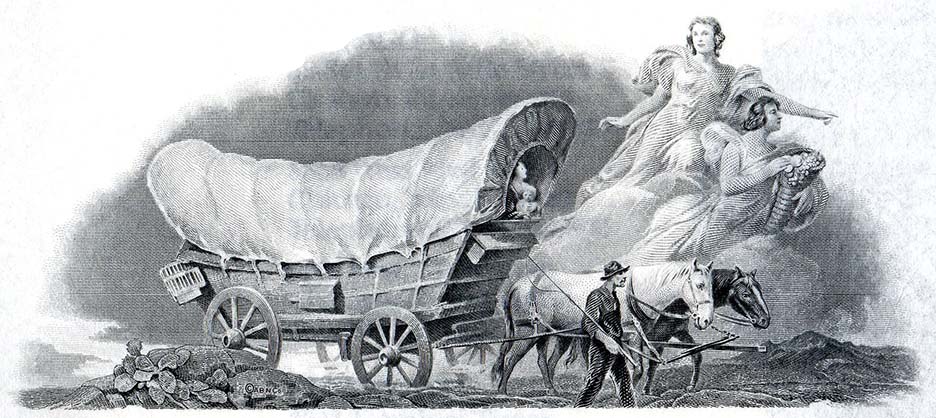
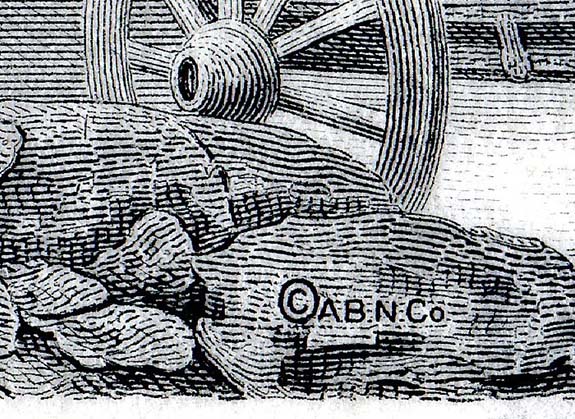
| Author |
 Replies: 19 / Views: 11,547 Replies: 19 / Views: 11,547 |
Page 2 of 2
|
|
|
|
Pillar of the Community
 United States
844 Posts |
|
|
Bedrock of the Community
Australia
21794 Posts |
I would imagine that super micro printing is an absolute pushover for modern banknote counterfeiters.
The ability to print many thousands of electronic components onto a computer chip would suggest to me
that high quality micro printing for counterfeit banknotes would be comparatively easy.
That would be despite the fact the printing techniques for banknotes is quite different.
That does not mean that fake banknotes cannot be exposed.
As with ancient coins, the best fake banknotes have to be made with the same production technologies as per the genuine article.
|
|
Pillar of the Community
 United States
5029 Posts |
|
|
Pillar of the Community
United States
844 Posts |
Quote:
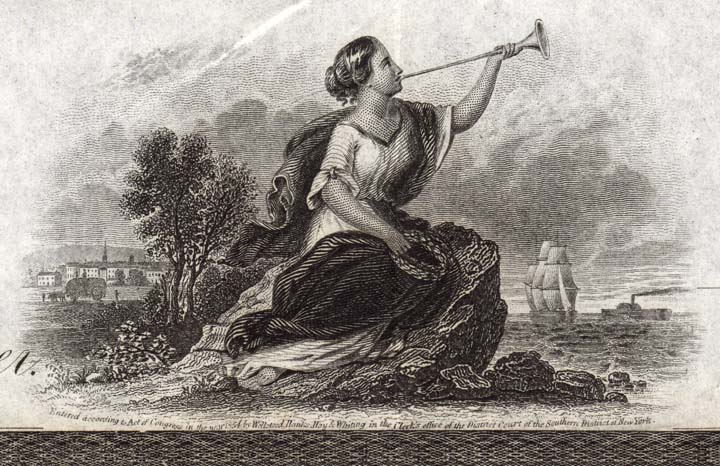
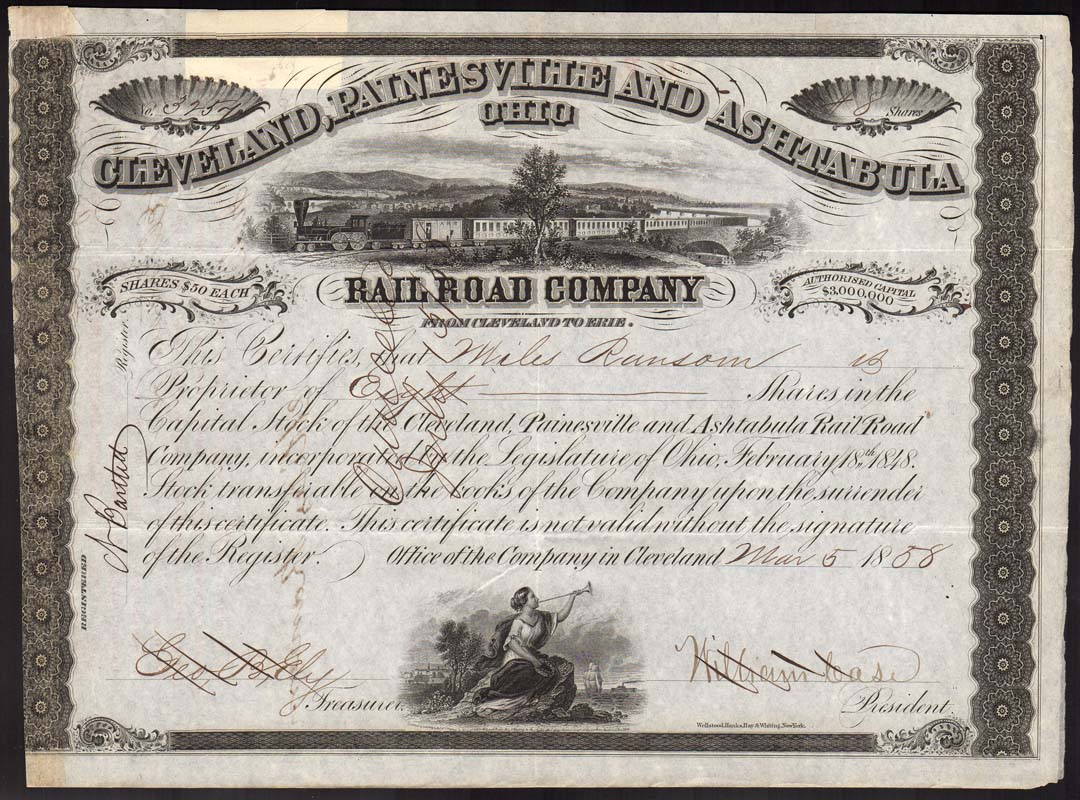
I would imagine that super micro printing is an absolute pushover for modern banknote counterfeiters. I think you are correct from a design standpoint. It's easy these day to shrink type using the computer. I'm not sure it's so simple on the execution side, when you are talking about intaglio (steel engraving) printing. That kind of "raised ink" printing requires technology few counterfeiters possess. It's possible, but you'd have to have a lot of experience in the banknote printing field to be able to do it. Here's another example of modern microprinting that I found framing a USDA food coupon printed in 2000. This is about the same size type as the first image I posted. 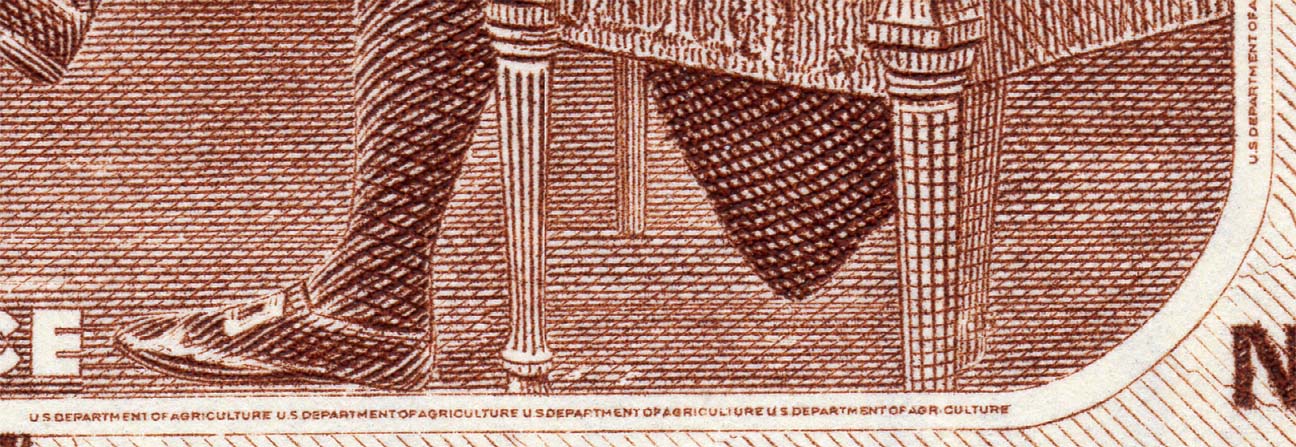 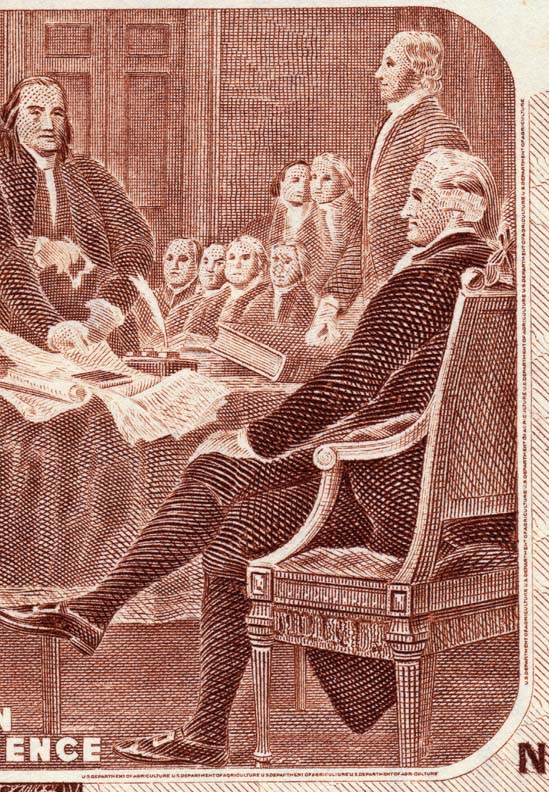 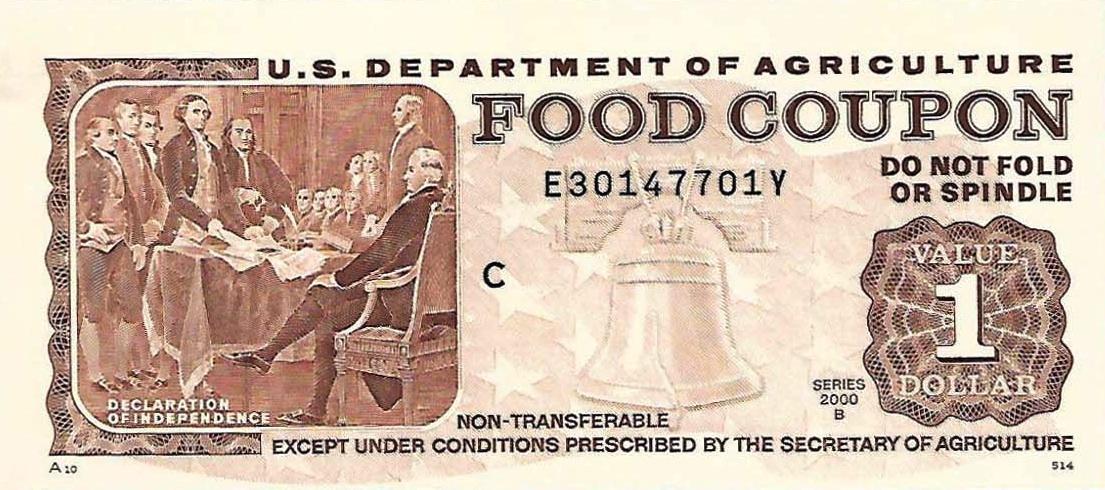 |
|
Pillar of the Community
United States
844 Posts |
I found a couple more amazing examples of hand-engraved micro-lettering. The first is from an 1871 bank check from the Vinton County Bank in McArthur, Ohio. Not only does the upper right vignette have the copyright disclaimer along the bottom, but the tiny Ohio map includes the names of every county in the state! 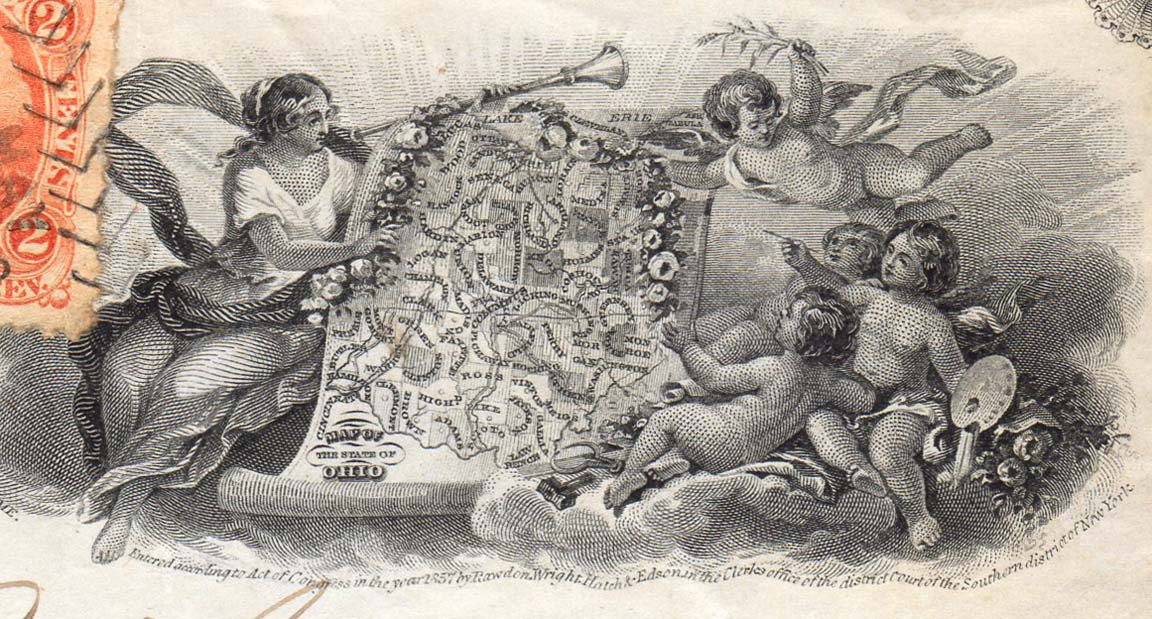 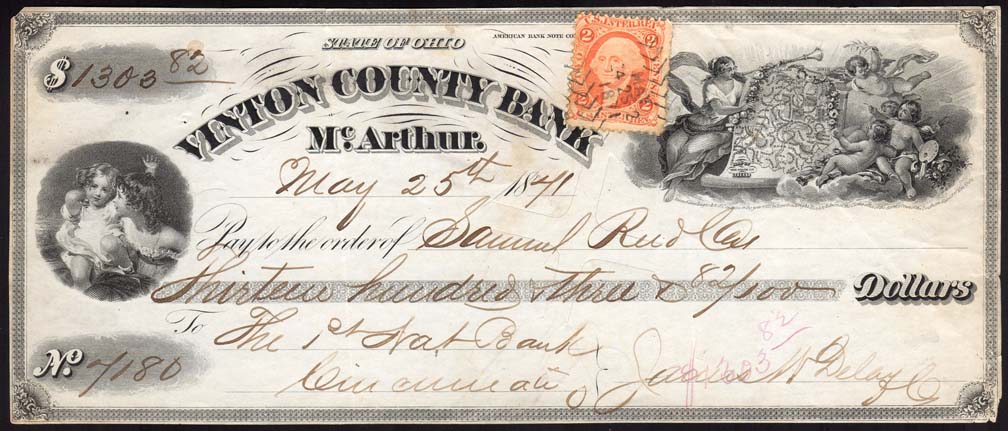 But here is the mother of all micro-printing. In 1840, Charles Toppan, well known as a letter engraver, produced a remarkable engraving, perhaps as a challenge to to see how small he could go. He managed to fit the entire text of the Declaration of Independence into a space about 1-3/4 x 3/4" The actual engraving is a little larger, because he framed the type with the state seals of the original 13 states and portraits of Washington and Jefferson. The whole thing measures 2.5 x 1.5 inches. And under magnification you can read every word. American Bank Note used this frequently as a business card sized promotional tool. My copy was printed on a souvenir card that ABN produced for the 1975 plate printers' union convention. 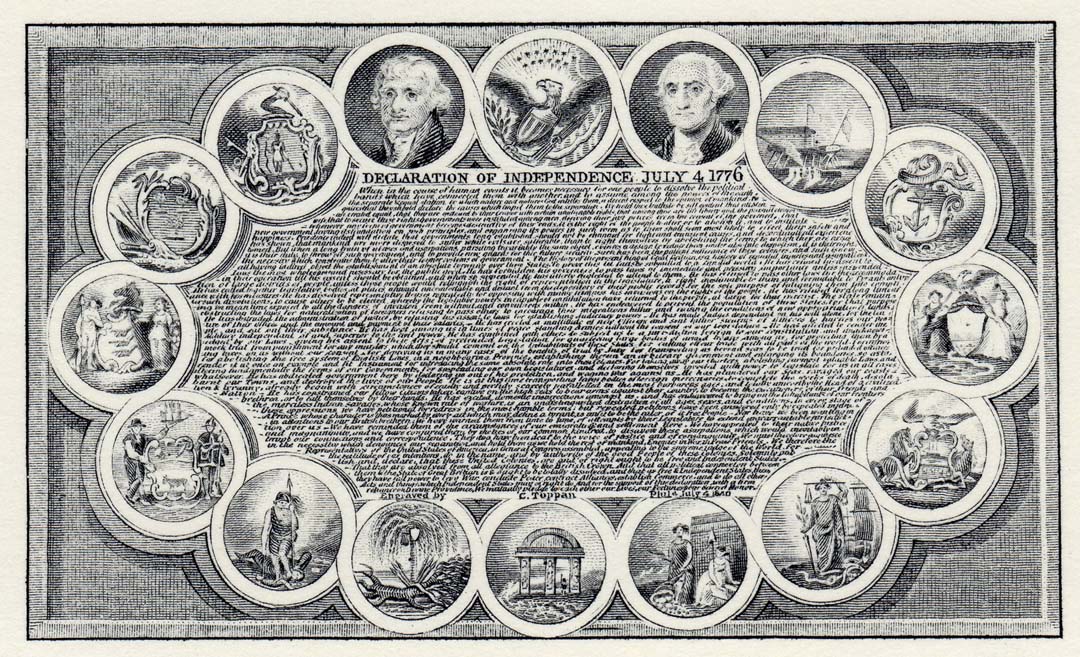 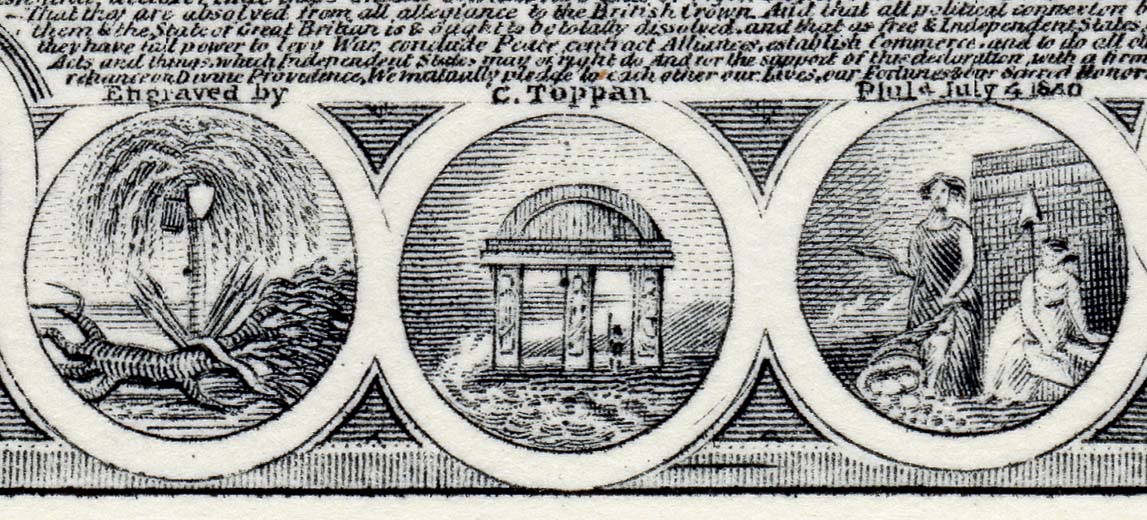 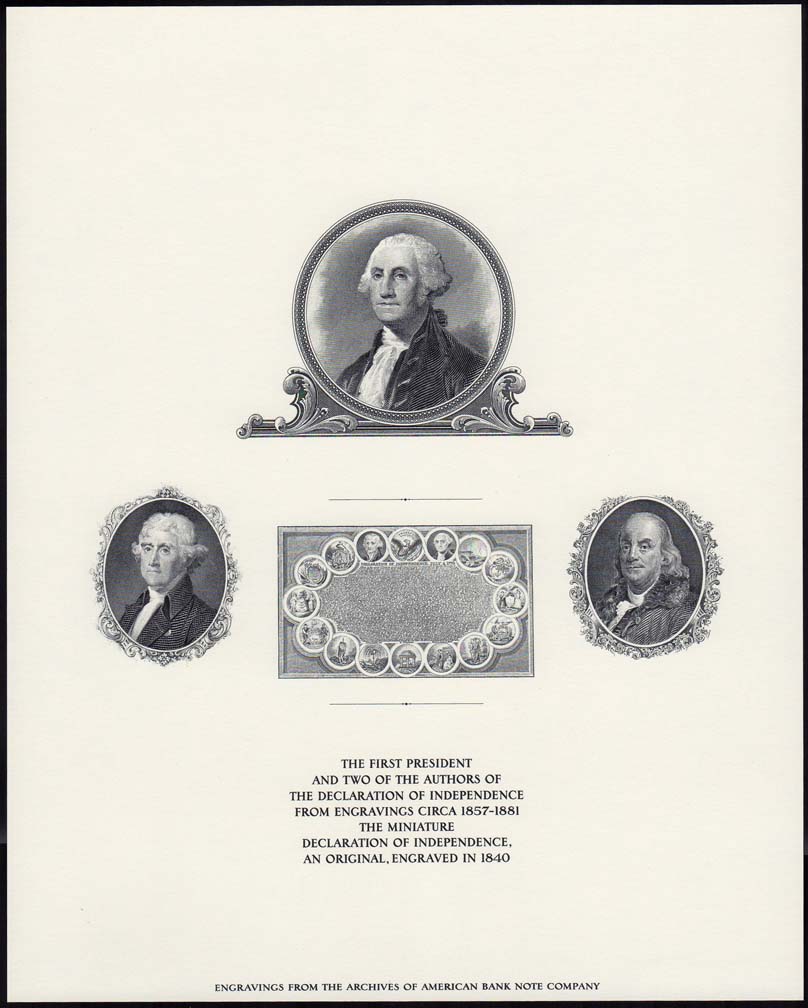 Edited by GregAlex
01/28/2018 9:06 pm
|
|
Pillar of the Community
United States
844 Posts |
As I continue to delve into microprinting I was able to piece together a neat story, hidden away on two railroad vignettes, both from 1861. The first is a pastoral scene is entitled "The Crossing" and it appears on several stocks from the period. (My example is from a more recent American Bank Note souvenir card.) "The Crossing" was done by one of the foremost engravers of his day, James Smillie. In the far right of the vignette is a tiny sign. After scanning this section at 2400 dpi, you can make out the text. My print is a bit light on ink, but it reads "Look Out for Bell-Ring" -- a warning to anyone crossing the train tracks. Talk about attention to detail! 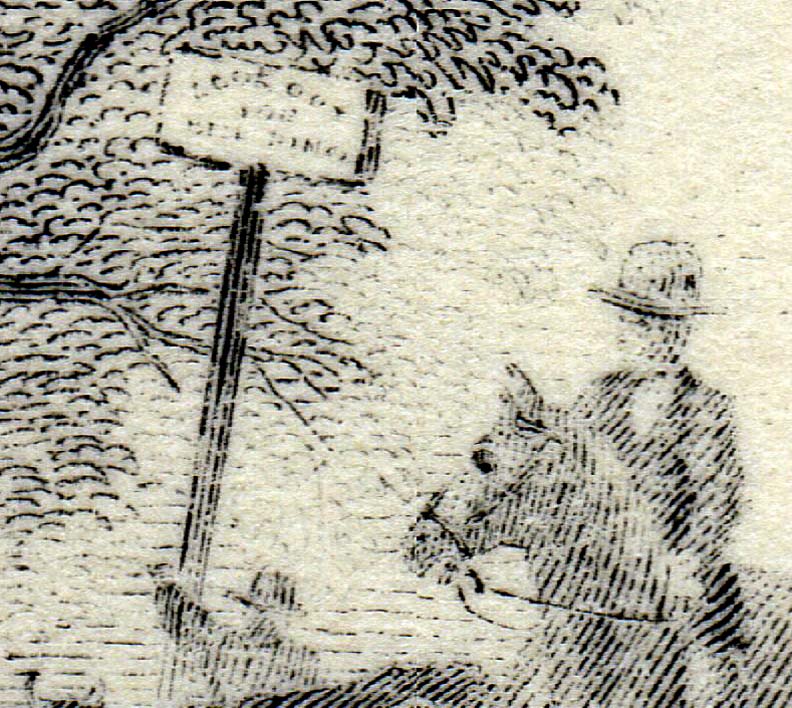 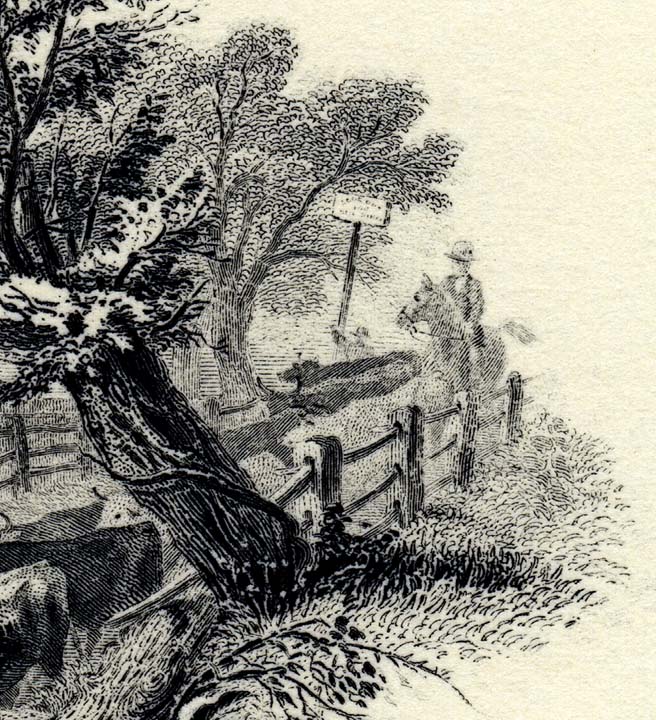  The other example is a vignette in the center of a stock certificate for the United New Jersey Rail Road and Canal Co. Again, at the far right of the vignette, there are a couple notices posted next to the depot door, with what appears to be writing on them. This also required a 2400 dpi scan to see what was written. One sign says (I think) "J.D.S. Re engraved March 19 1861" and the other "ABN Co Wall St. N.Y." 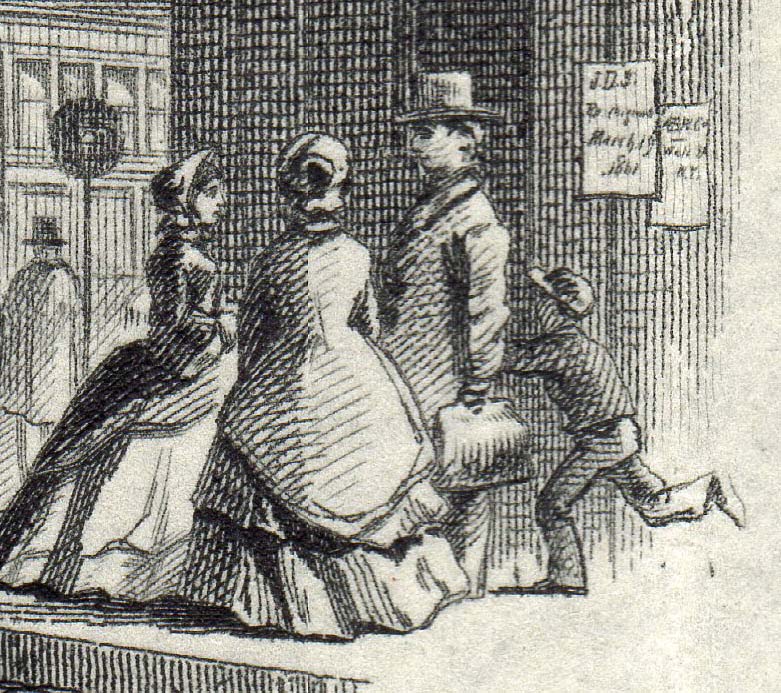 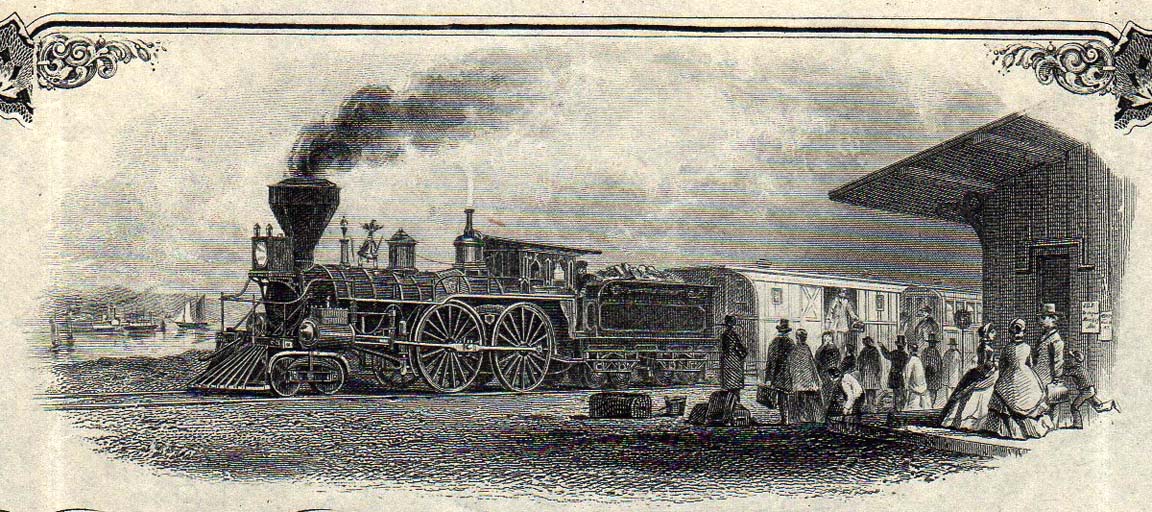 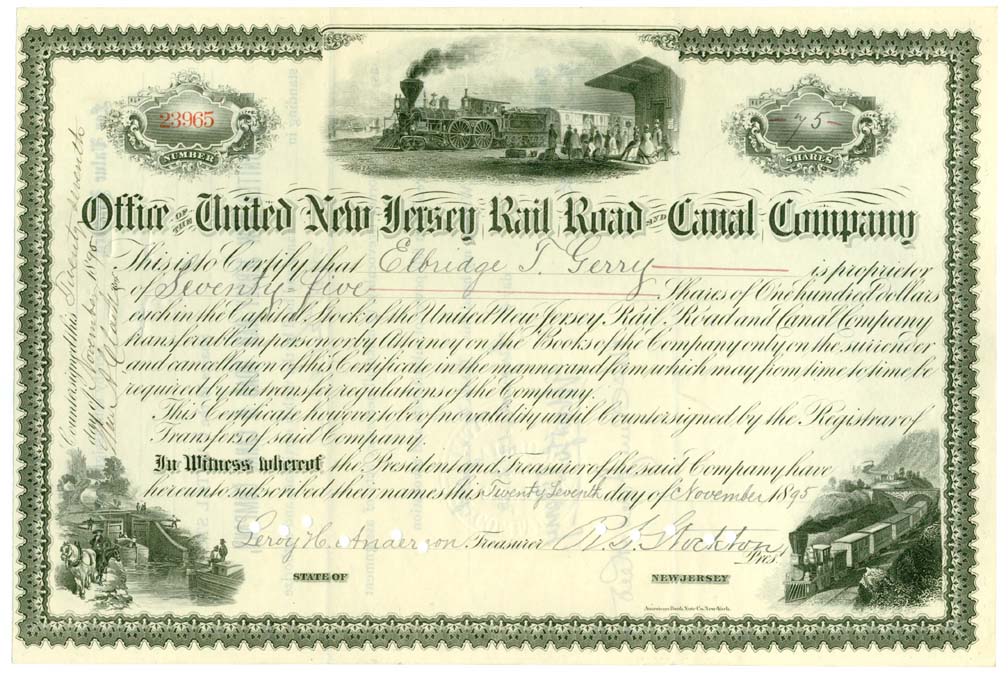 J.D.S. are almost certainly the initials of James David Smillie -- James Smillie's son! In 1861, the elder Smillie worked for National Bank Note Co., the younger for competitor American Bank Note. While there's no solid proof of this, and I don't know which vignette was produced first, I'd be willing to bet that these micro-signs were a challenge and an answer in a friendly rivalry between father and son to see who could engrave the smallest letters! Edited by GregAlex
03/26/2018 7:46 pm
|
|
Bedrock of the Community
Australia
21794 Posts |
Great to see this thread. Some really nice vignettes to be posted and seen on our computer screens.  |
|
Pillar of the Community
United States
844 Posts |
More micro-printing! I'm in the process of scanning a huge number of souvenir cards for a project that I'll publicize later. I noticed on the info sheet for one card that the lettering on a revenue stamp was the smallest legible lettering ever achieved by engravers at the BEP. I don't think it's as small as the computer-reduced lettering found on later items, but it's definitely super tiny. 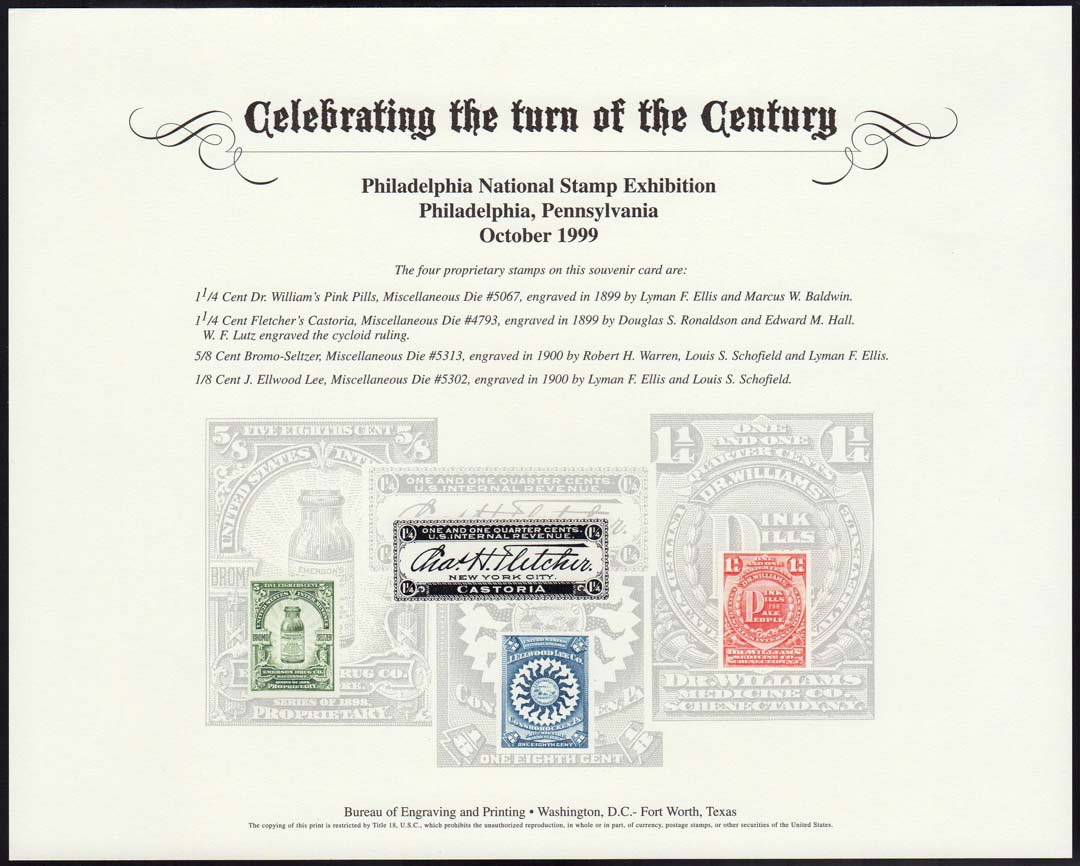  |
|
Moderator
United States
198004 Posts |
Very interesting! |
|
Pillar of the Community
United States
844 Posts |
Here's another micro-printing Easter egg I recently spotted. Rawdon, Wright, Hatch & Edson produced a couple tiny portraits of Franklin and Washington in the 1830s for use on banknotes. These were cropped into ovals, re-engraved a bit, and used on the first U.S. postage stamps in 1847, Scott catalog #1 and #2. Here's a comparison, though these are not equal in scale. 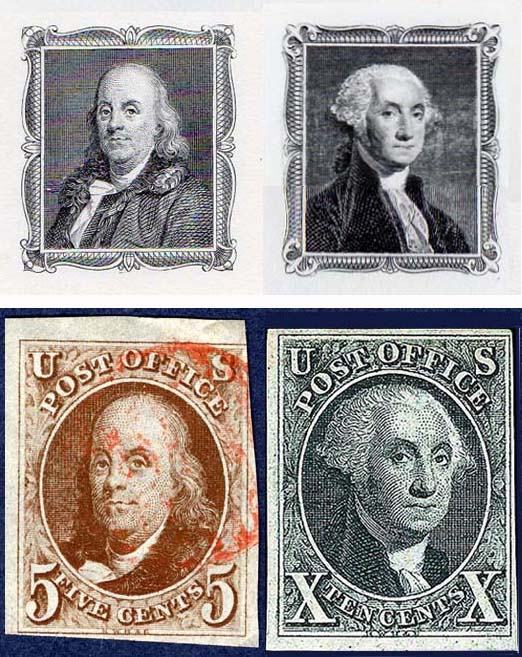 The company discretely included their company initials in the design: RWH&E. If you strain your eyes you can see this at bottom of the stamps, but I'll enlarge this for older eyes. The letters are only a little larger than the Bromo Seltzer stamp posted above. 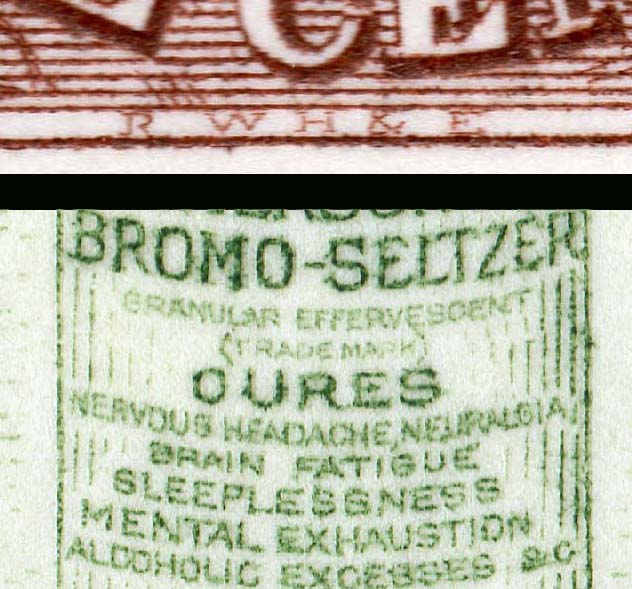 I don't own copies of Scott 1 and 2 -- they are a bit pricey. But in 1947 they were reissued in blue and orange to commemorate their 100th anniversary and I do have a copy of this souvenir sheet. But as I was examining the initials I was surprised to discover that the Bureau of Engraving and Printing had changed more than just the colors. They had swapped out their own initials: B. E. & P. 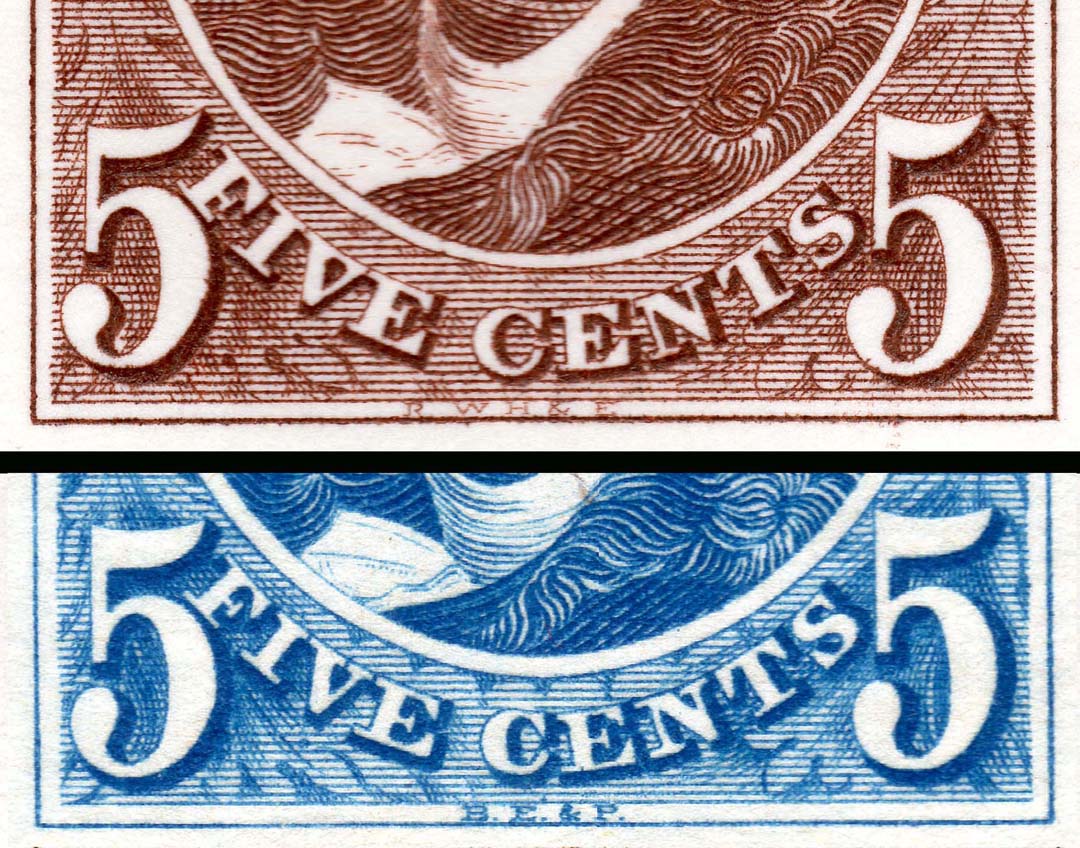 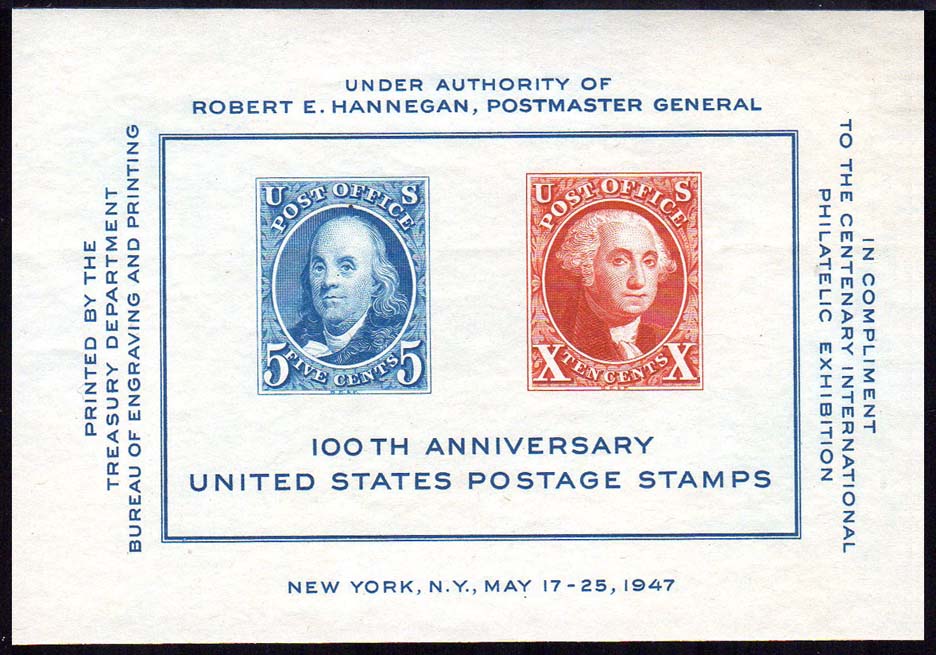 Edited by GregAlex
03/10/2019 11:08 pm
|
|
Moderator
United States
198004 Posts |
Very nice! |
|
Pillar of the Community
United States
5029 Posts |
Very interesting Greg! |
|
Pillar of the Community
United States
844 Posts |
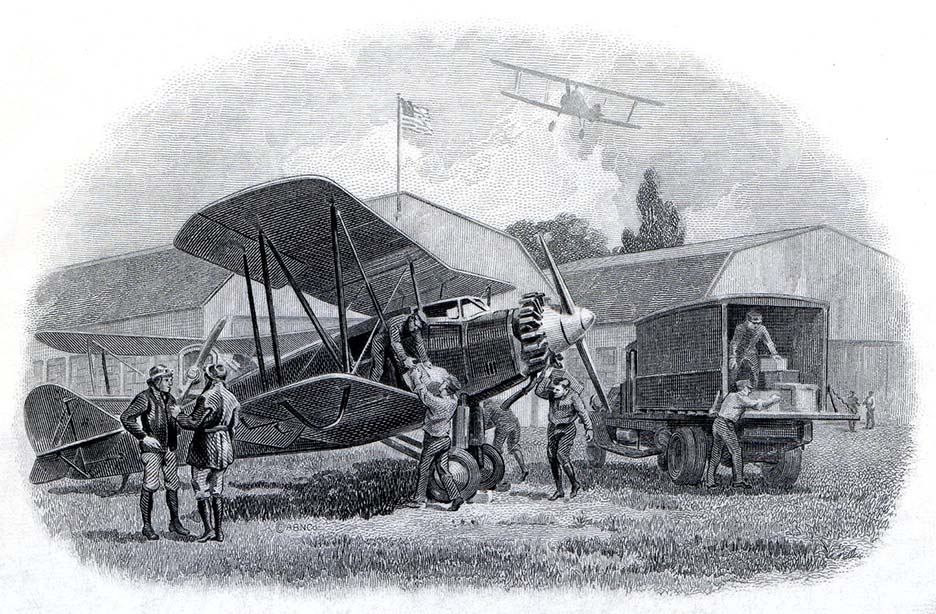
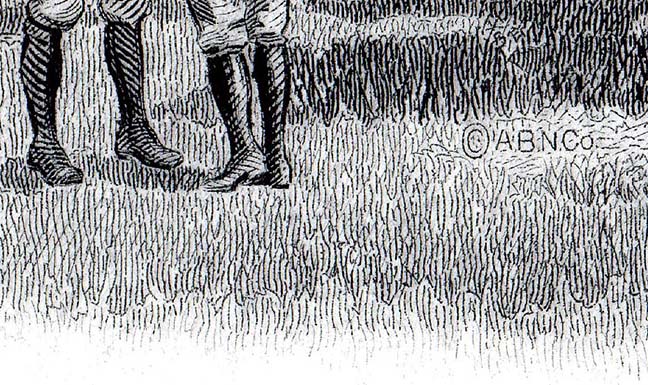
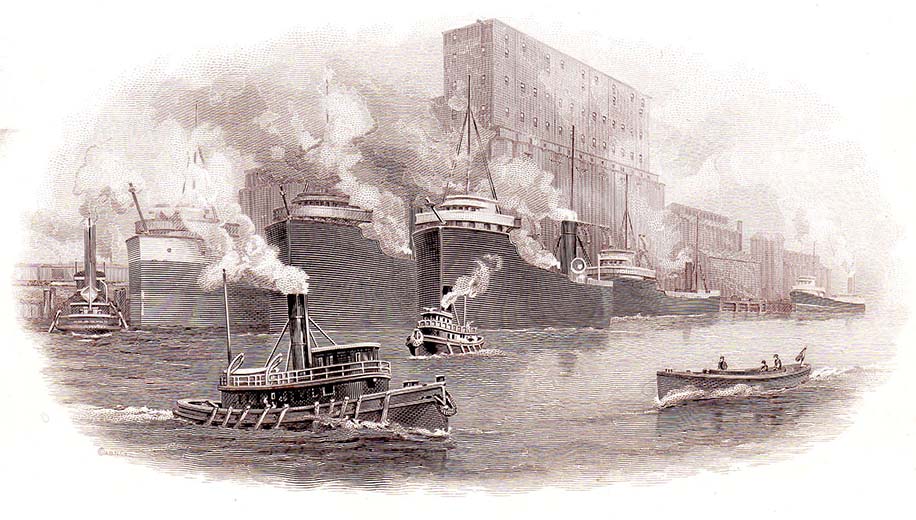
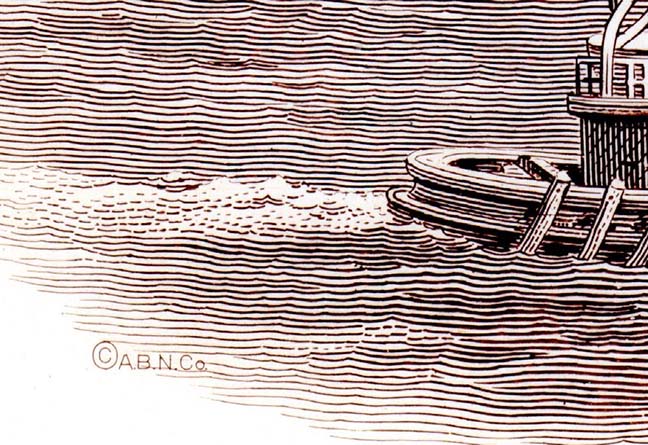
|
|
Pillar of the Community
United States
9811 Posts |
I like how the early Colonial notes were using anti counterfeiting techniques. Benjamin Franklin printed money for Pennsylvania, New Jersey, and Delaware and beginning in 1739, in efforts to throw off counterfeiters, Franklin would deliberately misspell Pennsylvania on the bills. With the idea at the forefront that any person attempting to recreate the new currency would believe the real bill was a fake, they would then correct the spelling on their phony money. To further protect the integrity of the new paper currency, Franklin had lead casts made of actual leaves, which he used to print the said foliage's' image onto the back of the bills. The leaves also contained finely detailed copper engravings of the intricate veins in leaves chosen for this revolutionary idea. His ingenious creation was not discovered until the 1960's when a historian stumbled across the information and shed light to the public. 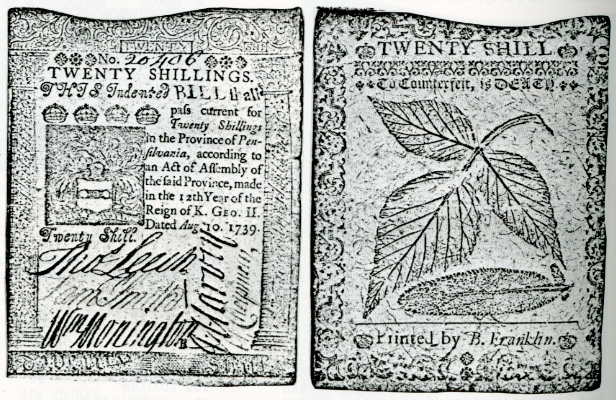 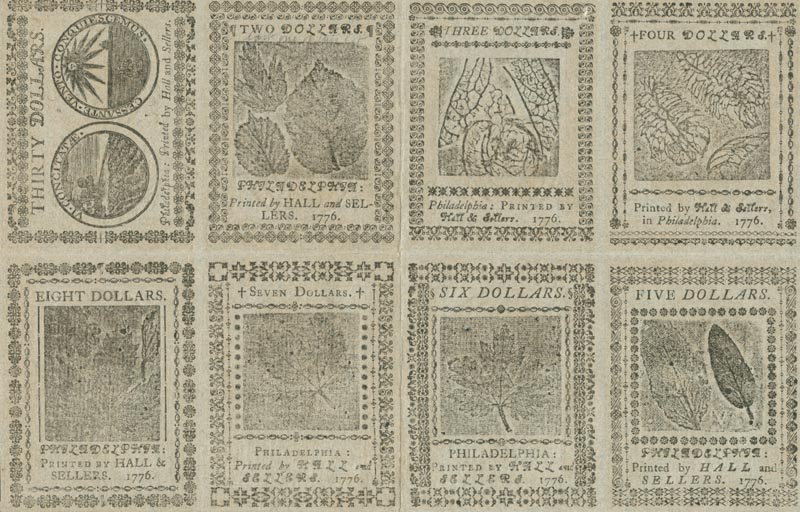 Not quite micro-printing of words, but in a similar vein! Those little veins were awfully tiny for a printer to pull off in the 1700's. I know the older $100 used micro-printing around the portrait of Franklin, the current $20 has some micro-printing just to the left of Jackson's shoulder in the frame. I'm sure there are many current uses today, but to get print that was legible and that small in the 1700-1800's is pretty amazing! Some neat vignettes shown. "Buy the Book Before You Buy the Coin" - Aaron R. Feldman - "And read it" - Me 2013! ANA Life Member #3288 in good standing since 1981, ANS, Early American Coppers Member (EAC), Colonial Coin Collectors Club member (C4), Conder Token Collector Club member (CTCC), Civil War Token Society (CWTS) member, Liberty Seated Collectors Club (LSCC) & Numismatic Bibliomania Society member (NBS), USMex, Member in good standing, 2¢ variety collector. See my want page: http://goccf.com/t/140440 |
|
Moderator
United States
198004 Posts |
Fantastic examples! |
|
Page 2 of 2
|
Replies: 19 / Views: 11,547 |
Page 2 of 2
|





 First Page




 Posted 01/19/2018 12:44 am