| Author |
 Replies: 18 / Views: 6,418 Replies: 18 / Views: 6,418 |
Page 2 of 2
|
|
|
|
Valued Member
United States
270 Posts |
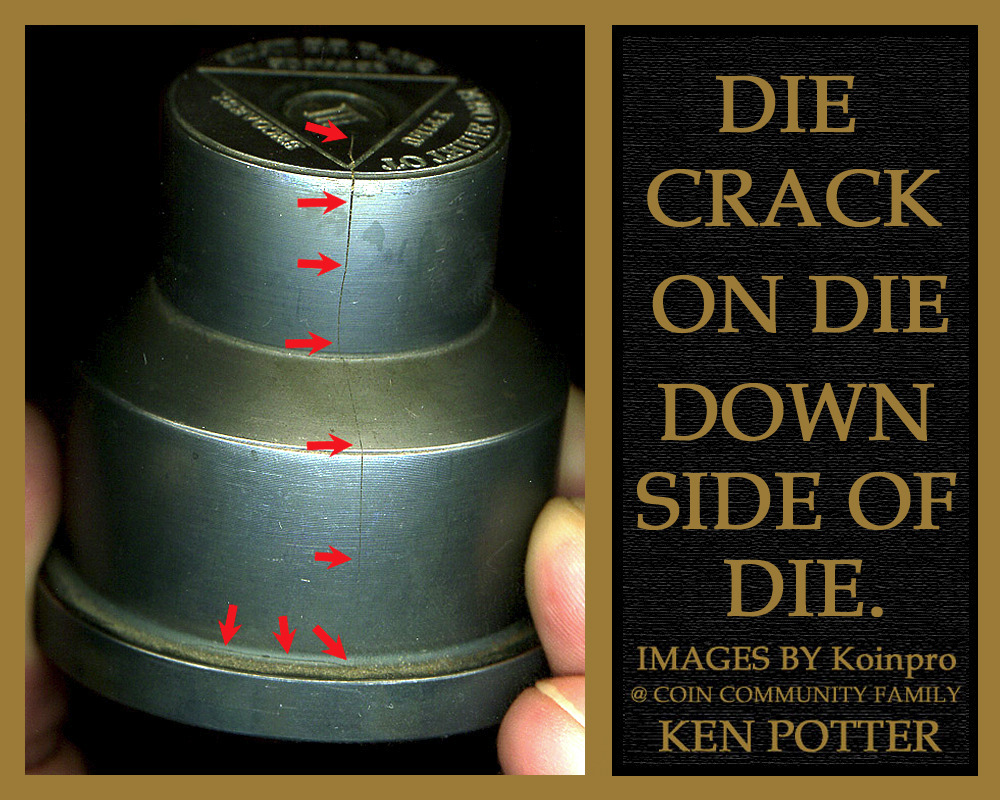
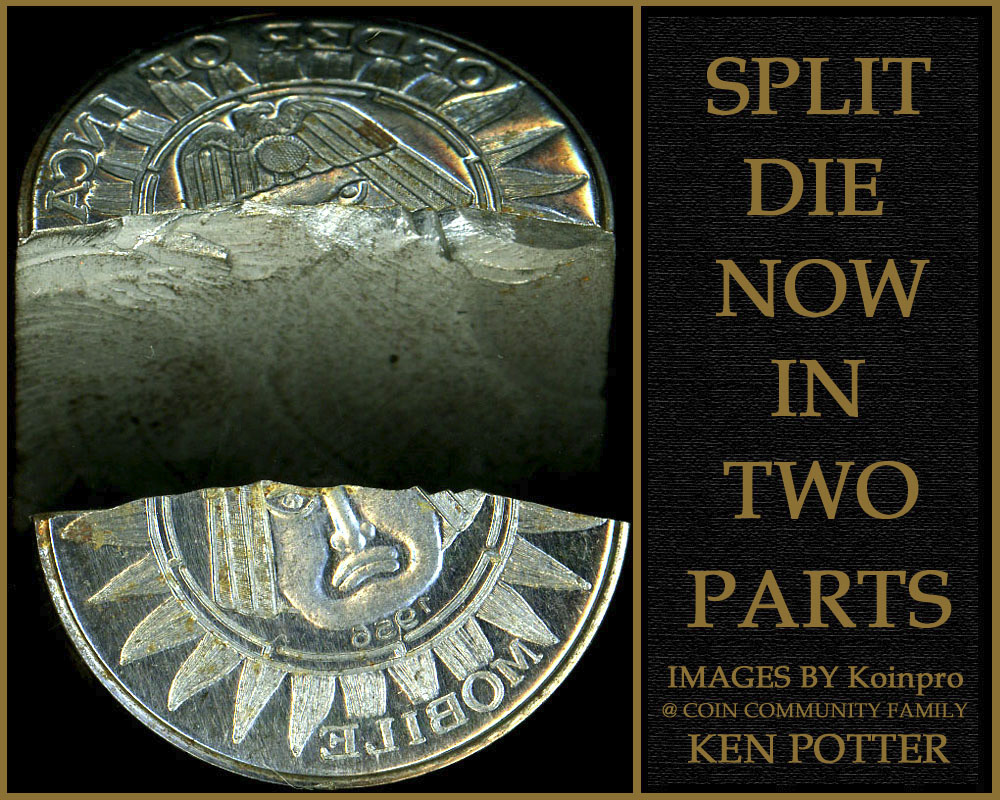
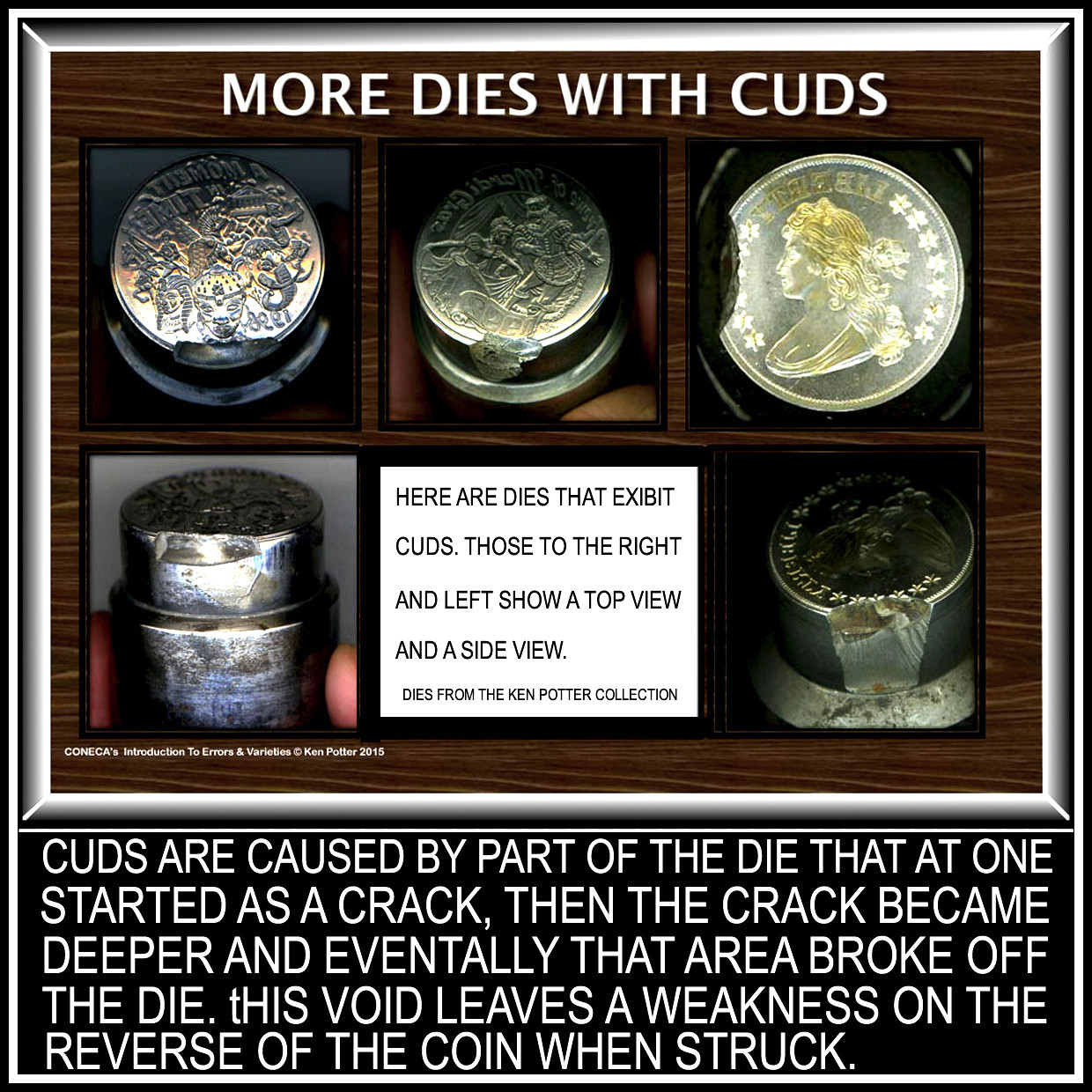
I love the photo of the broken die. That's the first one I've seen. Is there a site that covers photos of broken dies?  |
|
Bedrock of the Community
United States
62064 Posts |
|
|
Bedrock of the Community
United States
62064 Posts |
Edited by coop
09/14/2018 3:25 pm
|
|
Bedrock of the Community
United States
62064 Posts |
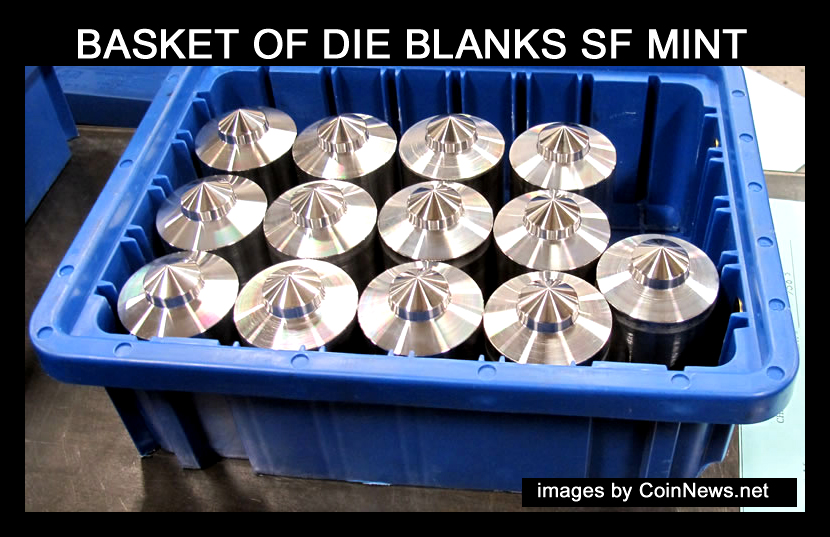
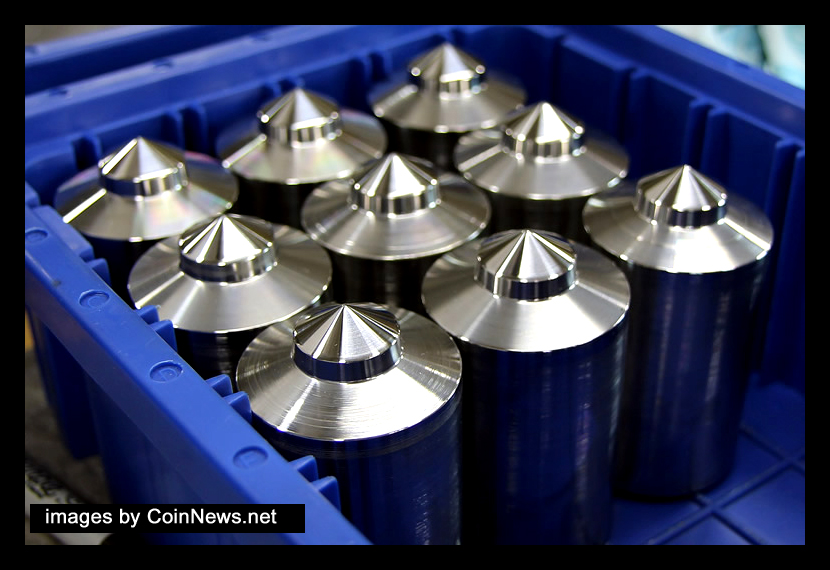
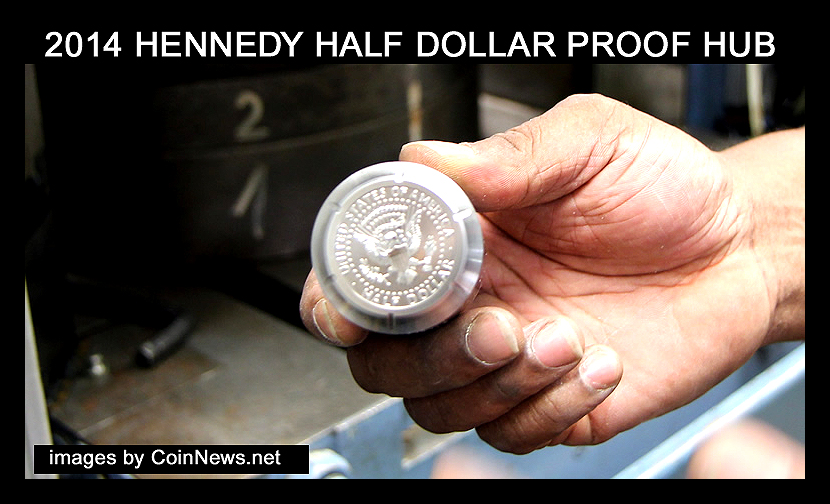
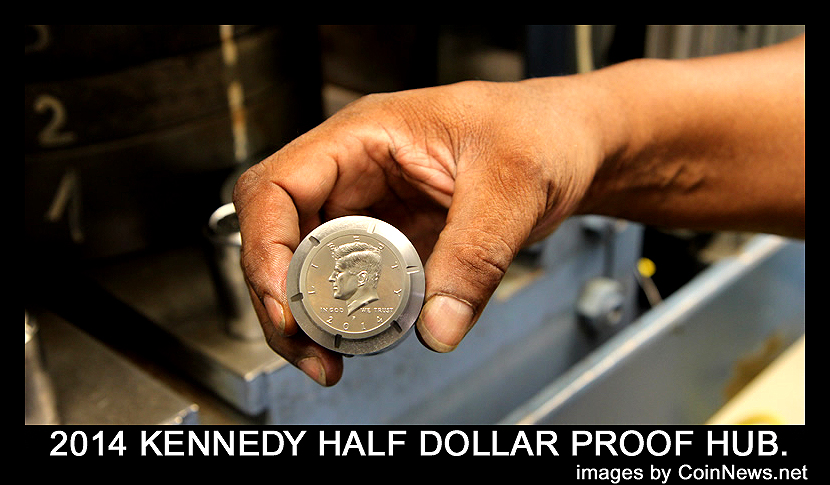
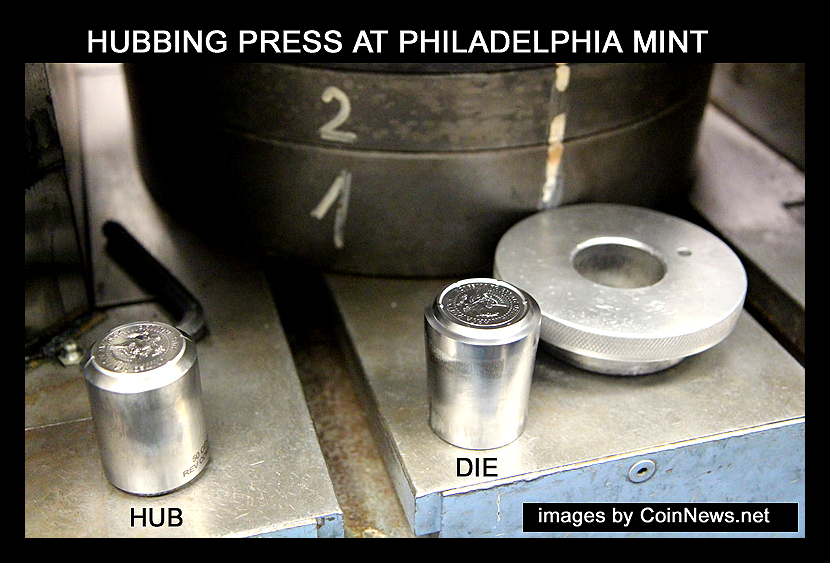
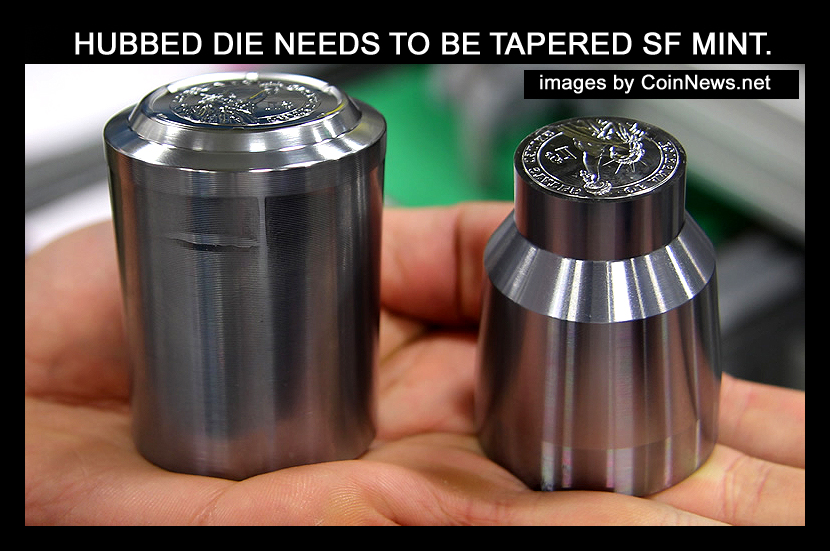
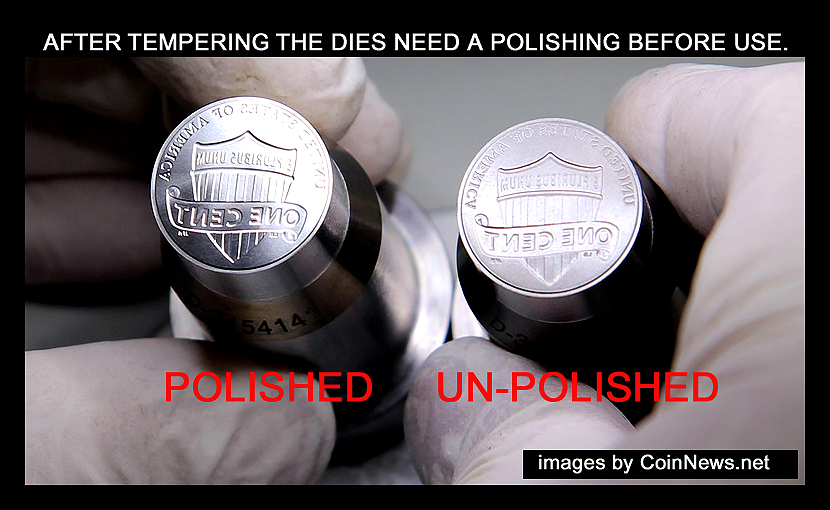
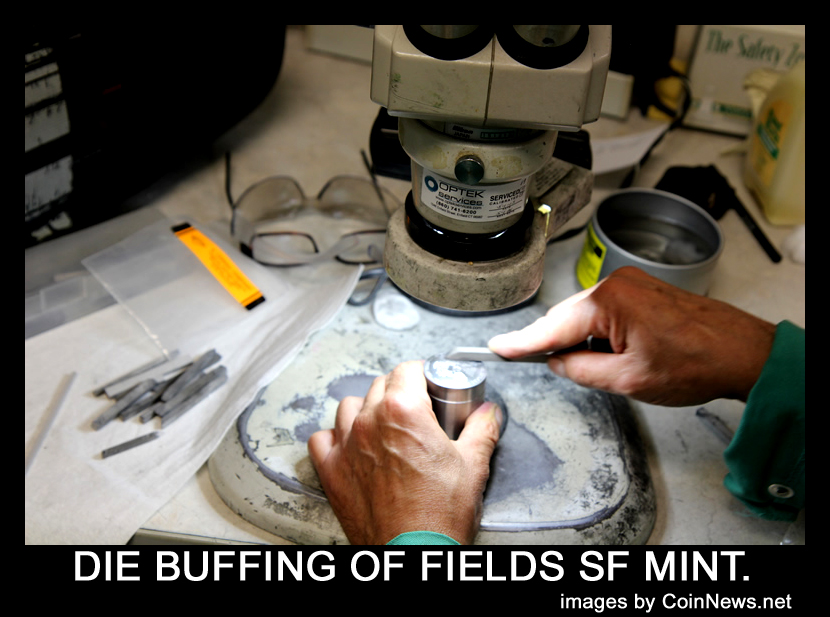
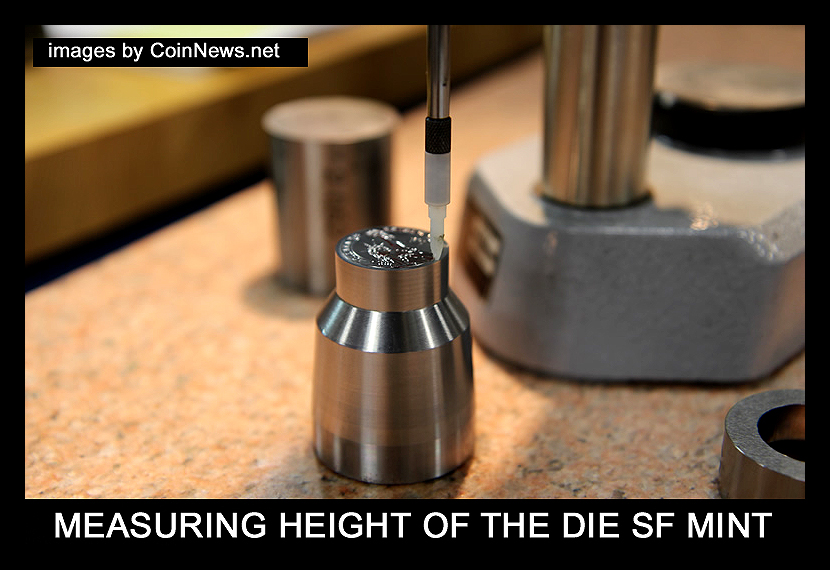
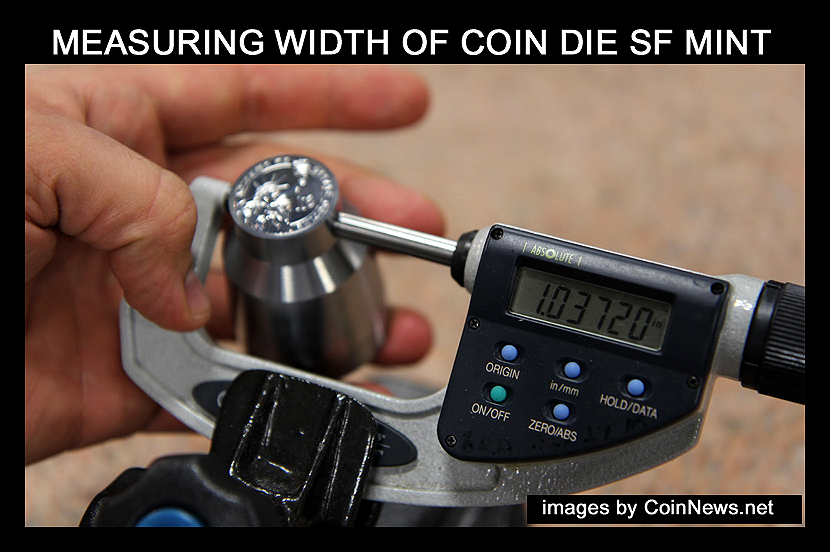
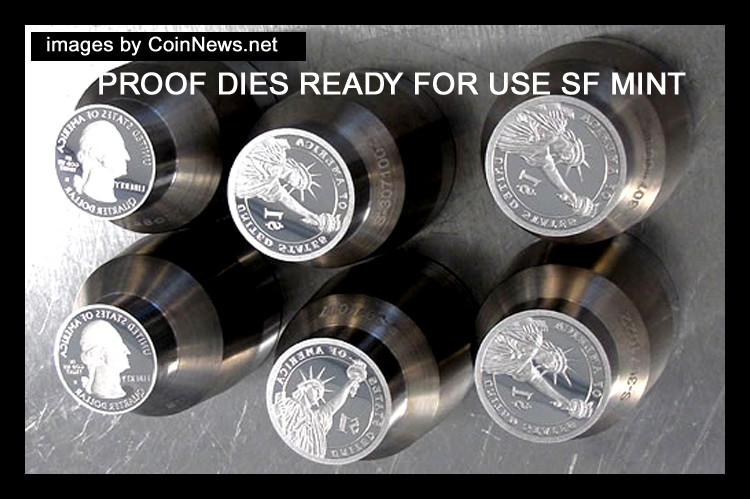
A few more then we are out of the die create area: Hammer and Anvil dies: 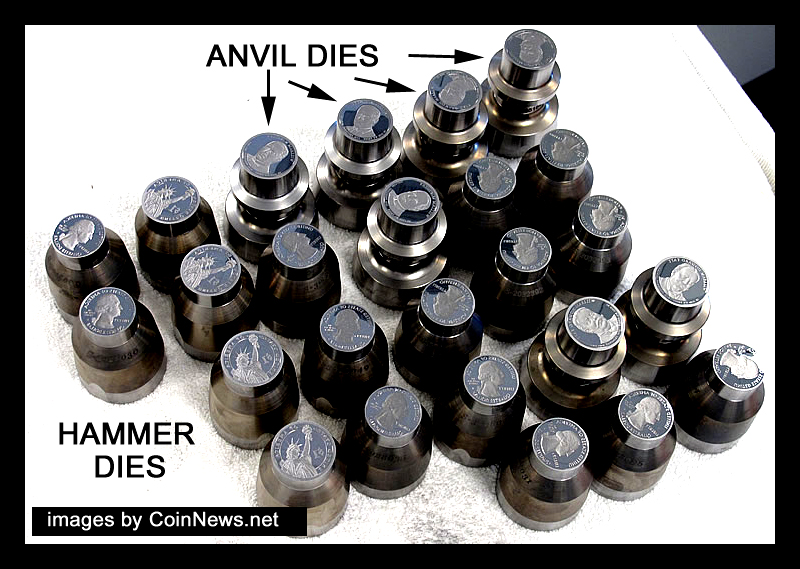 Die storage to prevent the dies from getting damaged: 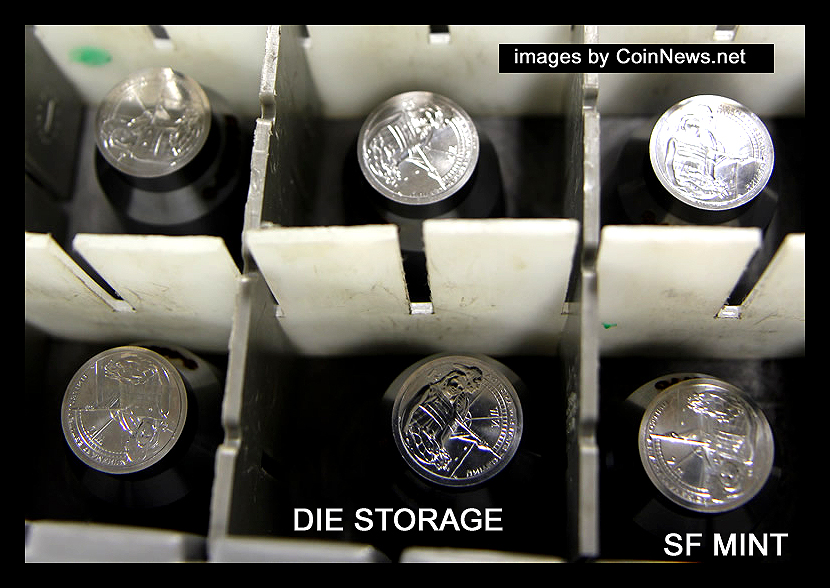   CoopHome CoopHome :dies and creation of them |
|
Bedrock of the Community
United States
94367 Posts |
Coop - Great explanation as always.  |
|
Pillar of the Community
United States
7599 Posts |
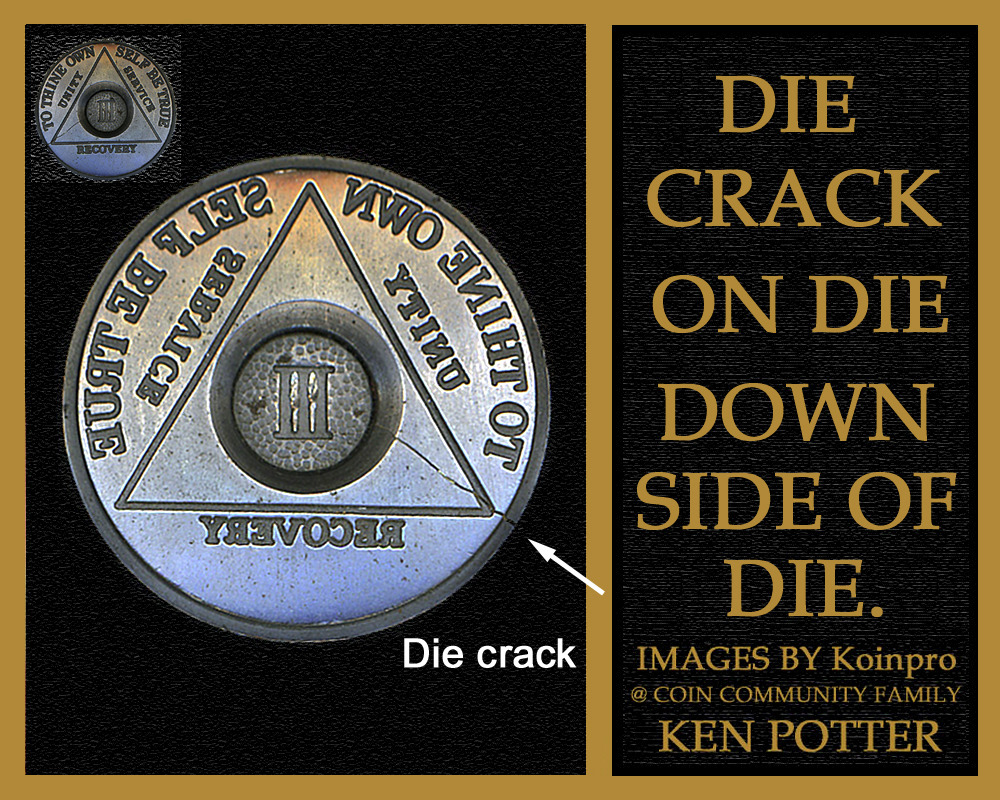
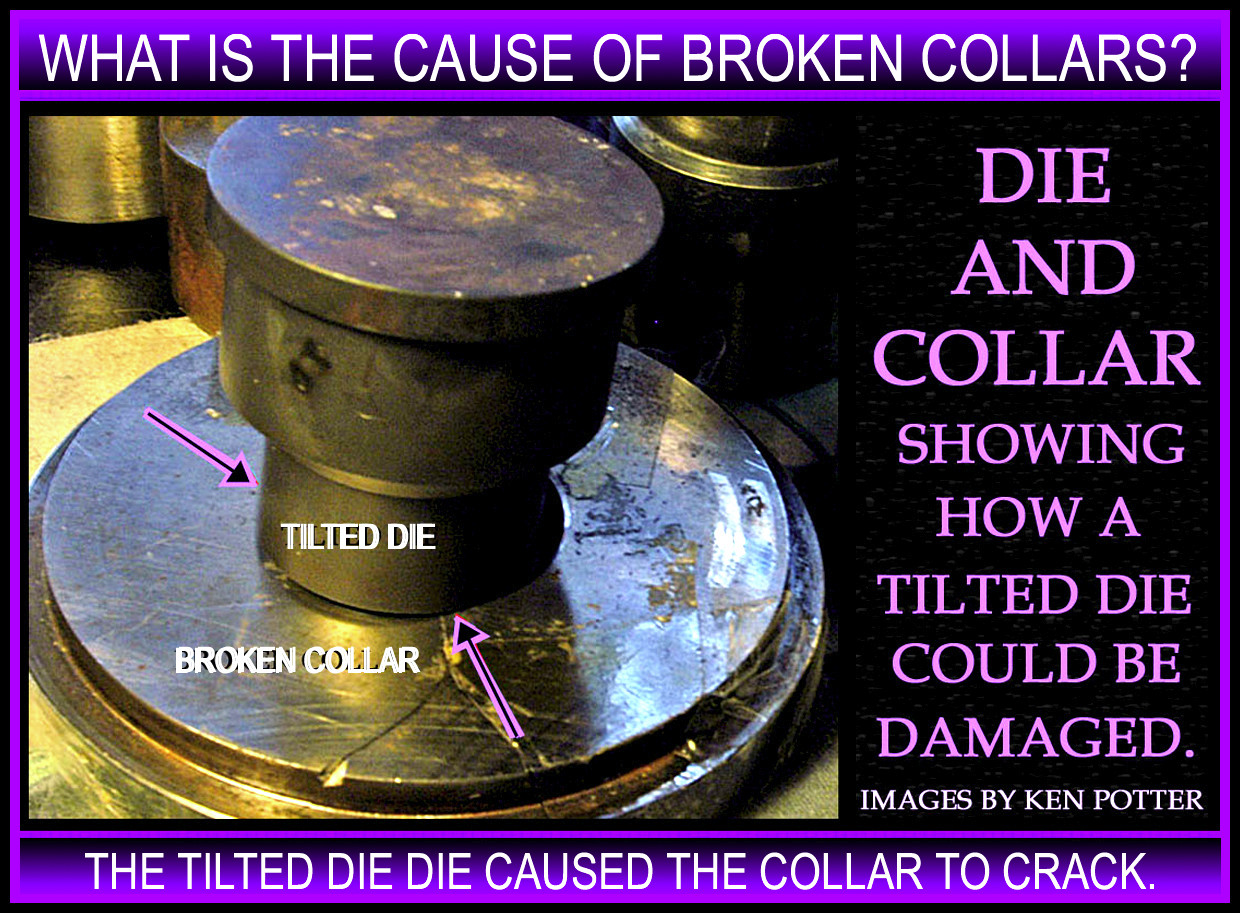
Coop, This is very refreshing and immensely interesting ( a much needed break away from it is a DD ,DDD,MD, PMD, PSD,PDD, Etc....) Thank you for providing these awesome images,just by looking at them it becomes so clear how Die cracks and Cuds and other die deficiencies occur. |
|
Bedrock of the Community
United States
62064 Posts |
They are die events that happen to the die during its life. Some die chips on coins can last till the end of the line till it retires. So if the chip happened at the LDS level, as many as 500,000 coins could have that same chip or one that keeps breaking out and more and forces the die to retire earlier. That is why I'm not excited about die event coins. The sheer number is too large for them to be worth more than face. Cuds are different for me, it is the end of the line event for that die.  Another thought about this last segment: The first image of the hammer and anvil dies that look different? Couple that with the last image of the frosting? You see a dollar Obverse being created. But note the dies is an anvil die. So they they must be rotated setup on this series with the obverse as the anvil and the reverse as the hammer. Caught that when posting this section. Edited by coop
09/14/2018 2:16 pm
|
|
Pillar of the Community
United States
7599 Posts |
Quote:
So they they must be rotated setup on this series with the obverse as the anvil and the reverse as the hammer. Excellent observation, I see what you are referring to, very interesting. So now, after Revs. & Obvs. of the Presidential dollars are struck, they go through a separate edge lettering machine? |
|
Bedrock of the Community
United States
17884 Posts |
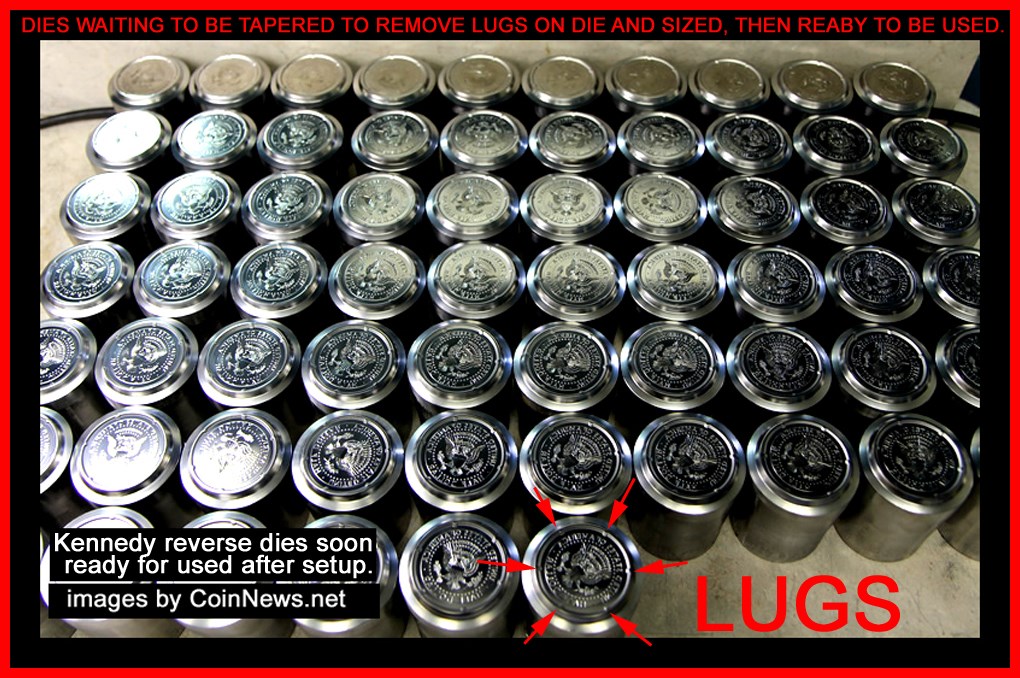
Coop, on the image labeled "Half Dollar dies ready for use". Those are not ready for use, they are ready to be put on the lathe and tapered.
|
|
Bedrock of the Community
United States
62064 Posts |
Got it Condor101. Thanks.
|
|
Bedrock of the Community
United States
79477 Posts |
Quote:
Is there a site that covers photos of broken dies? There is. It's called cuds-on-coins.com. Scroll to the bottom, and they'll show you what the dies look like, after the piece broke off. http://cuds-on-coins.com/cuds/Here's another good thread that I created. It's information about a retired die, that I purchased on ebay last year. http://goccf.com/t/302961Errers and Varietys.
Edited by Errers and Varietys
09/14/2018 3:44 pm
|
|
Pillar of the Community
United States
2775 Posts |
Quote:Die Cud on the 3 o'clock position on the reverse From my end, I personally can't tell one way or the other if its a rim Cud or not. Is it raised? Is there anything on the design rim or edge suggesting pushed up material from a post strike hit? Close up of both may help. Thanks, Doug. |
|
Valued Member
United States
92 Posts |
WOW!! awesome pics and well explained. Thank you Coop for another awesome learning reply.
|
|
Bedrock of the Community
United States
62064 Posts |
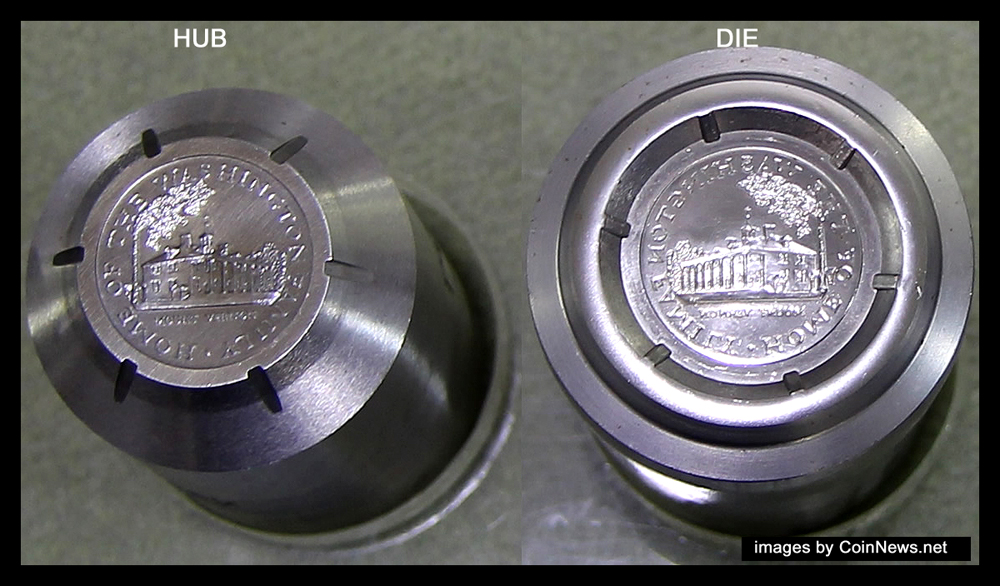
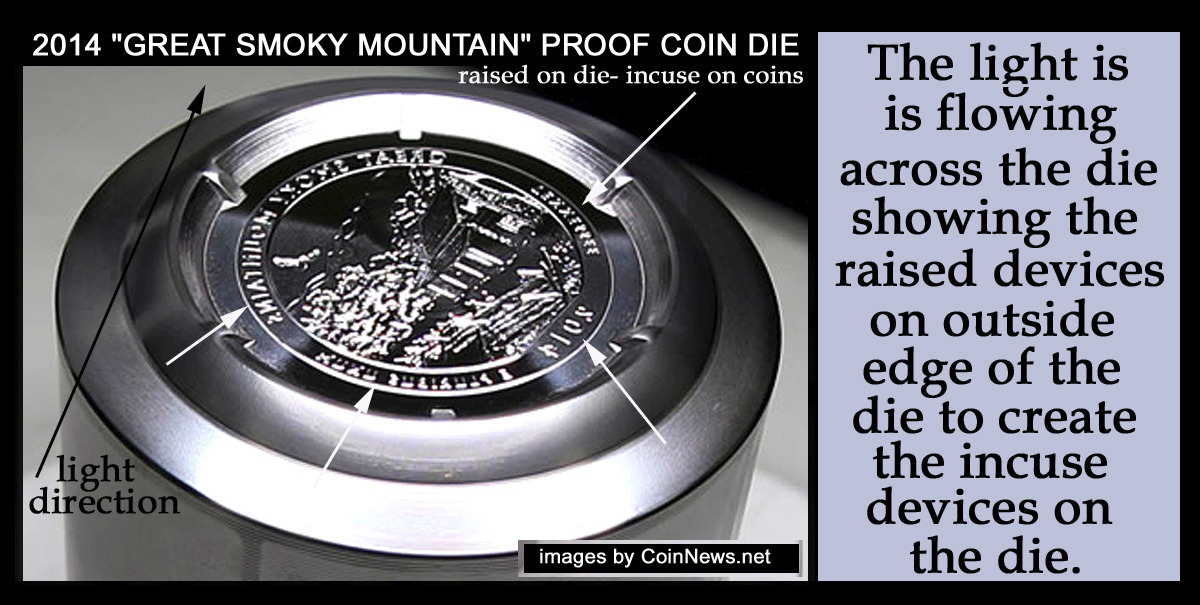
Understanding a die will help here is one: 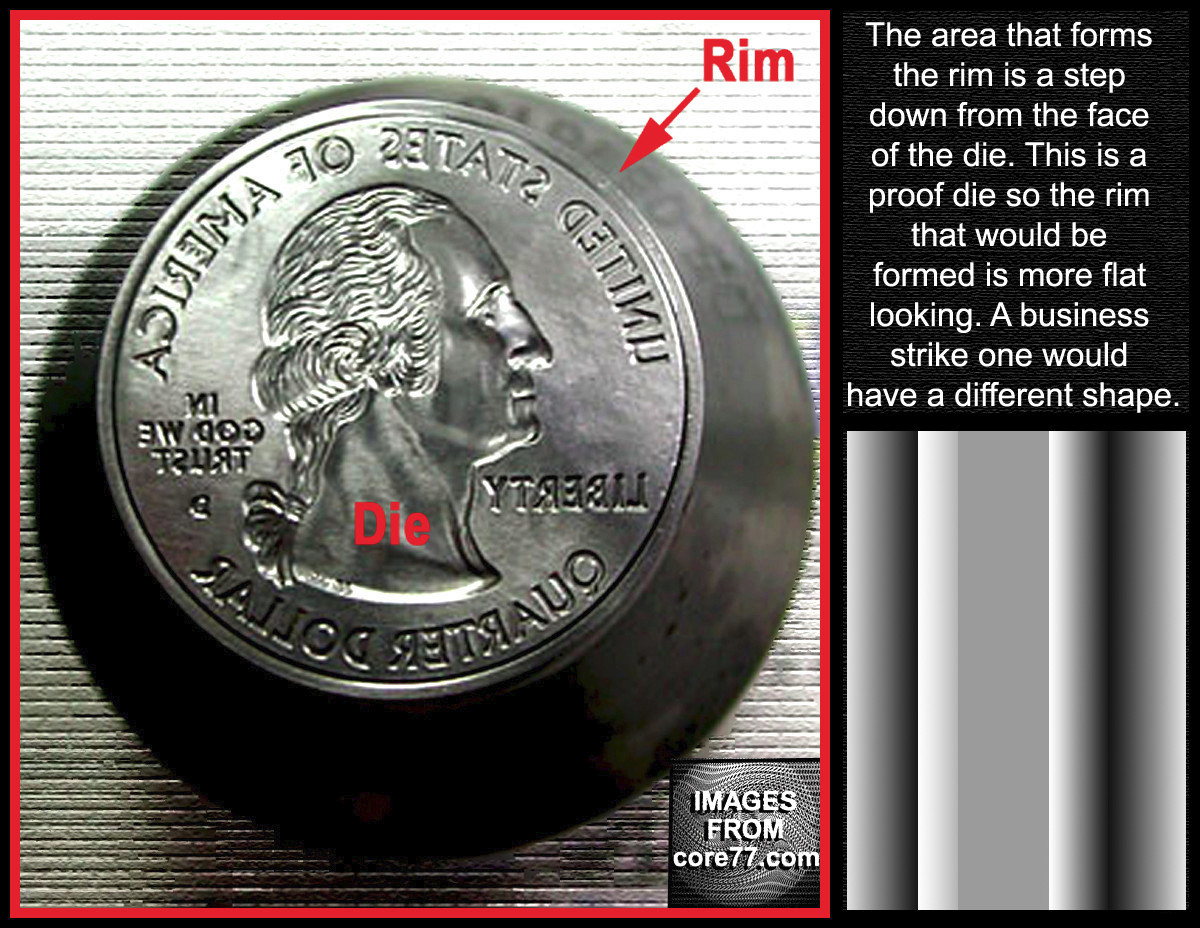 Note the flat area on the top of the die. That is called the field area. On the coin, that is the background of the devices and design. Note the area marked rim? There is a small channel around the die that is lower than the fields. So what does that mean to a coin? Dies are negatives. If something is lower on the die, then they will be raised on the coin. If it is lower than the field, it will be raised higher on the coin. Note the mirrored letters on the die, they are incuse on the die, but raised on the coin. The field. If a part of it breaks off leaves a void. 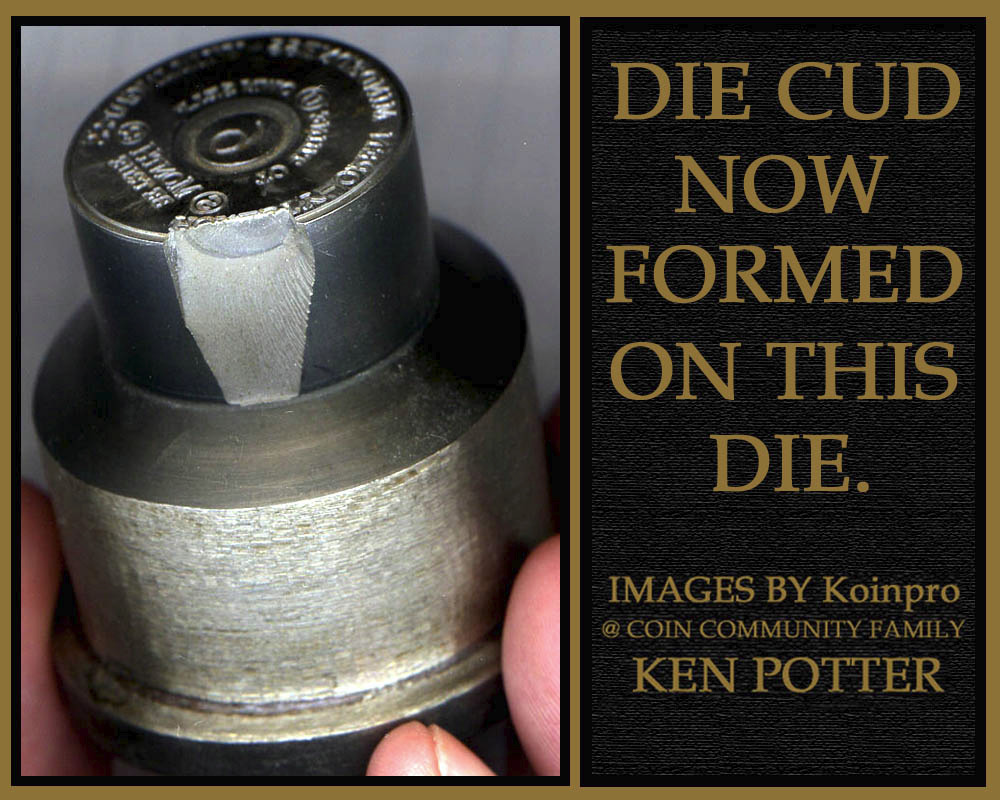 This void on the die will be filled with as much material is allowed during the strike. leaving a Cud above the field area. 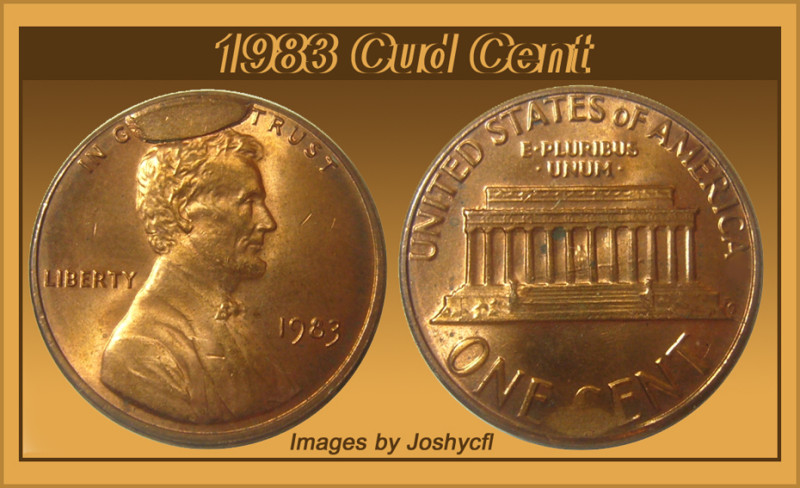 Not how this Cud is inside the rim area. Thus that circular area of the die face, if broken off will raise hight then the face and often above the rim when the rim chips off with contact will the collar: 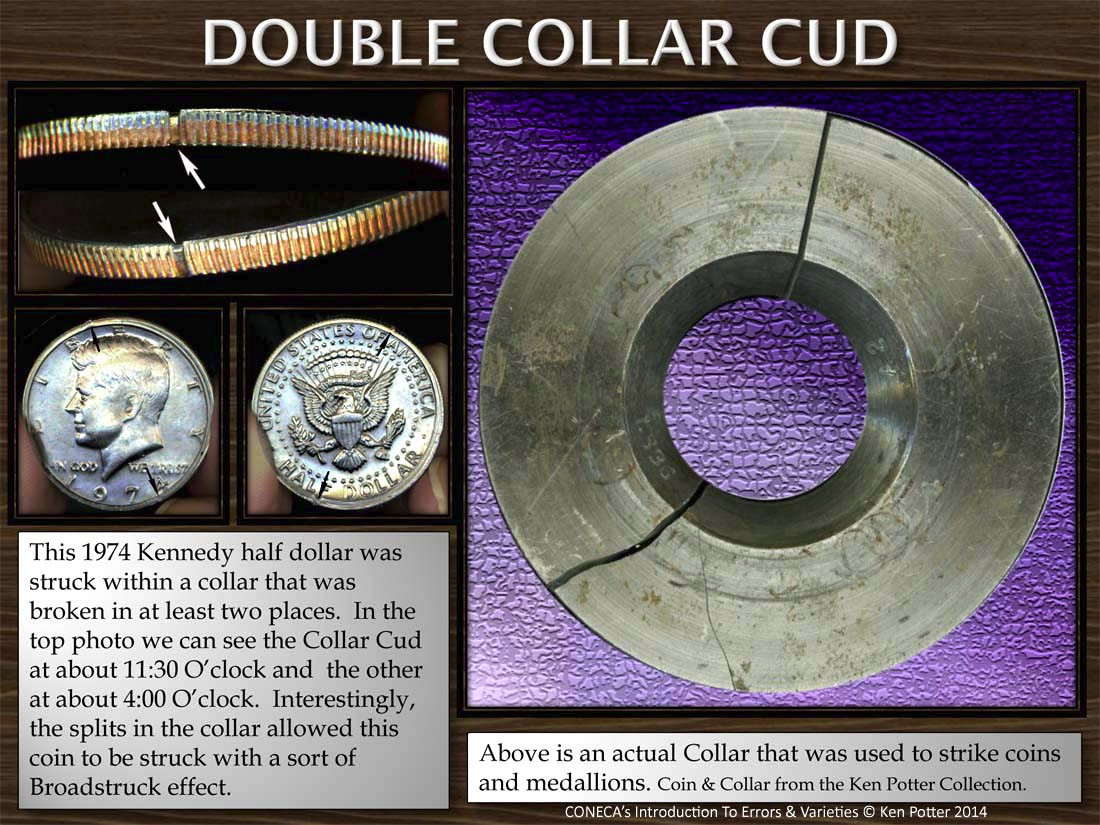 But like your coin if that area is raised it us just a baby rim chip. It only affect the rim area and not the die face. 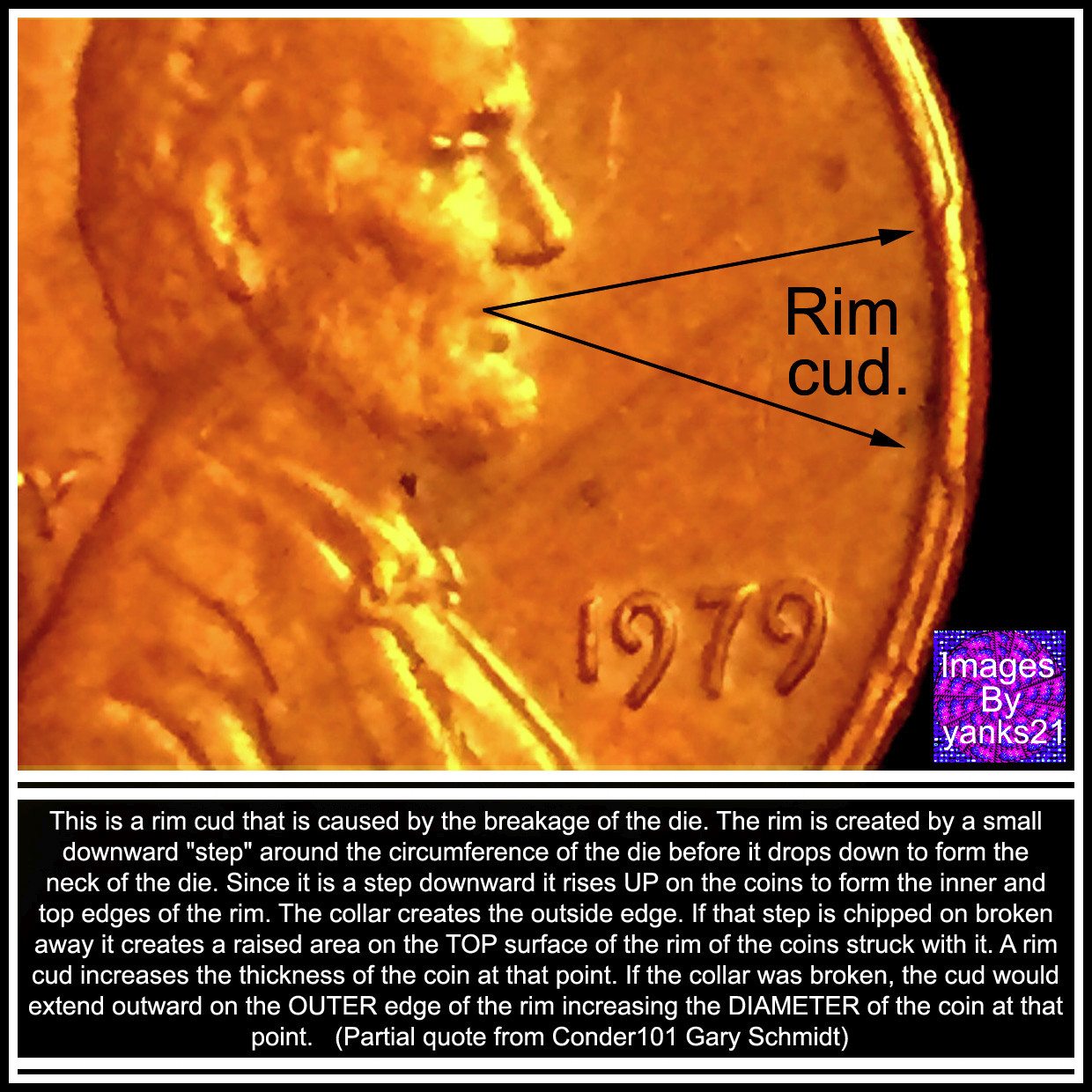 Often they are larger than your coin. But the metal only goes into the void so far and looks curled at the top on the coin. So the difference between a rim Cud and a Die Cud are that the field area is affect on a Die Cud and something the rim breaks off a bit. On a rim Cud just that lower channel get broken off and that is why it is taller than the rim. Hope this helps CoopHome : Difference between Die Cud rim Cud? |
|
Bedrock of the Community
United States
79477 Posts |
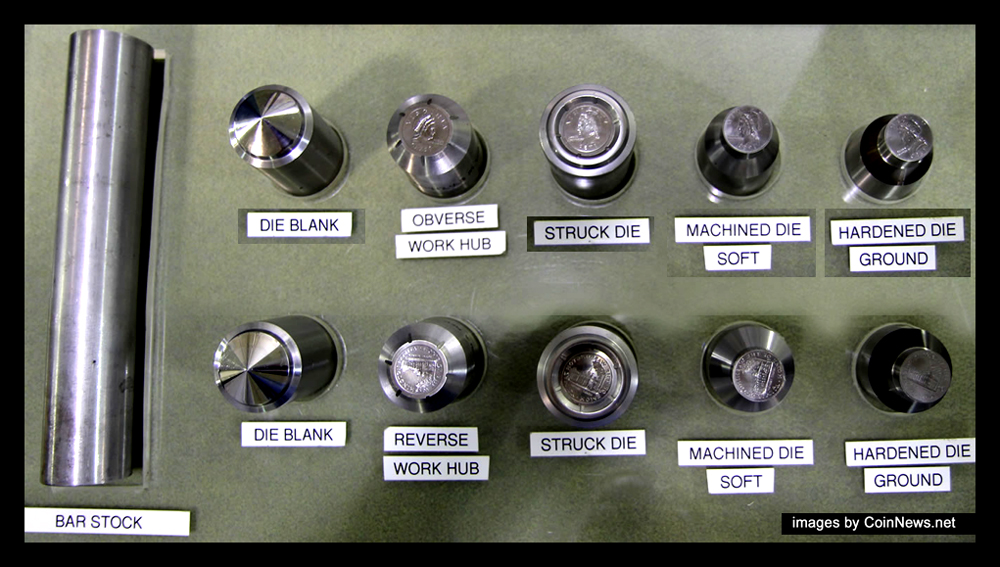
Coop, I would like to thank you very much for providing those pictures of the Die Cracks, Collar Cracks, Collar Cuds, Cuds, Rim Cuds, and the pictures showing the steps of the minting process! It helped me understand it better tremendously! Now I know how some of the stuff happens and works! I have saved your images for personal use, and I'll make sure to credit you and Ken Potter for it, if I use them on CCF.   Errers and Varietys.
|
|
Page 2 of 2
|
Replies: 18 / Views: 6,418 |
Page 2 of 2
|








 First Page

 Posted 09/14/2018 11:54 am