| Author |
 Replies: 28 / Views: 4,753 Replies: 28 / Views: 4,753 |
Page 2 of 2
|
|
|
|
Moderator
 United States
195559 Posts |
Excellent!  |
|
Pillar of the Community
Canada
2630 Posts |
Quote:
100,000 pengo, this time from the following year (1946), different colours & signatures. -very interesting how they changed the colour scheme on the same denomination (from grey to green). I really admire the 1930's designs but these also have real old world charm. |
|
Pillar of the Community
United Kingdom
901 Posts |
A 10,000 adopengo hyperinflation note from post-WWII Hungary (1946) 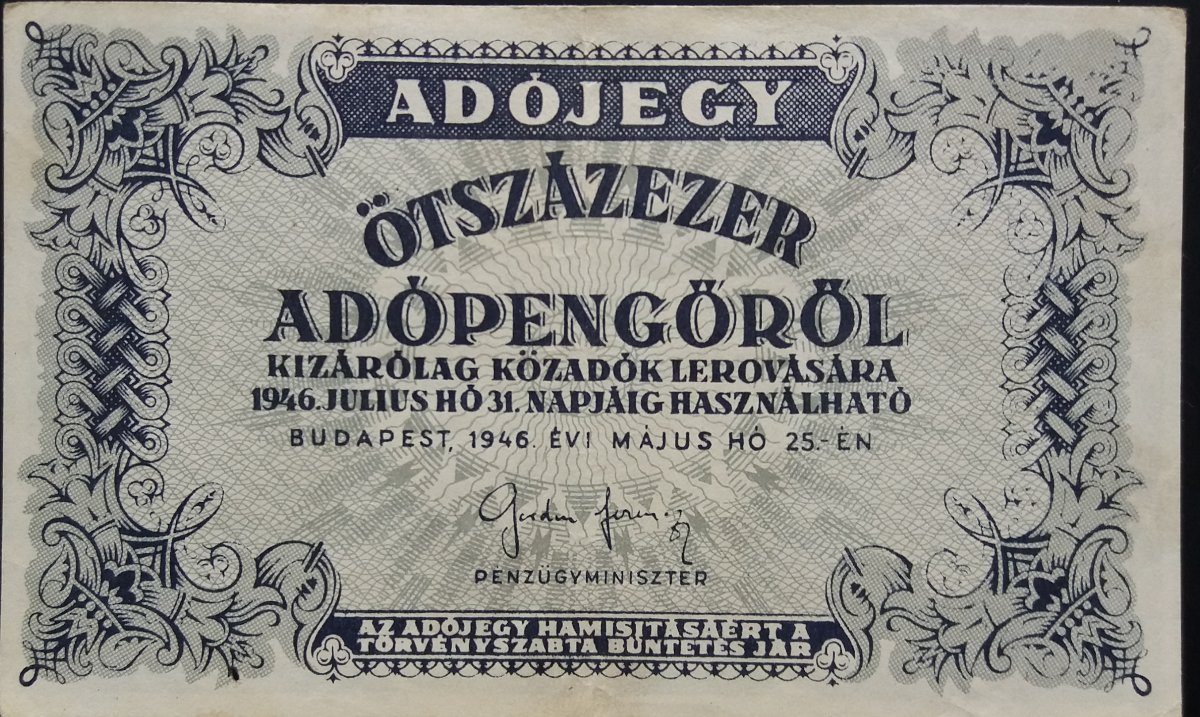 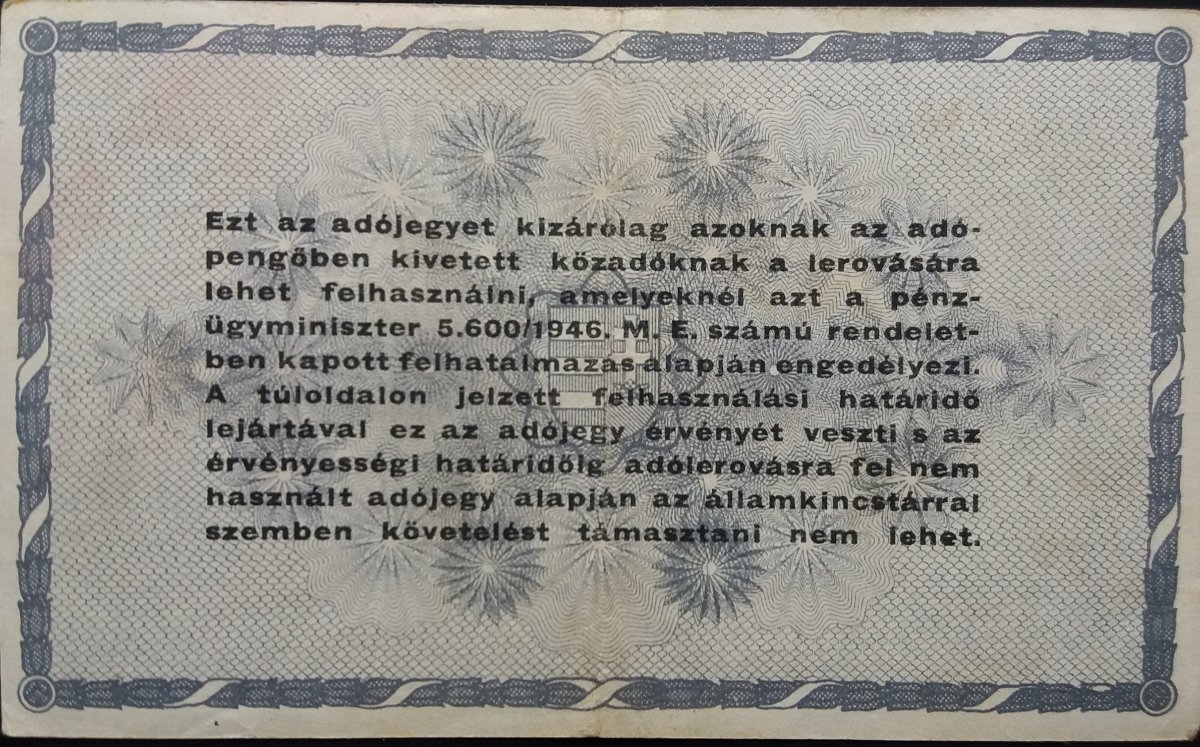 |
|
Moderator
United States
195559 Posts |
Quote:
A 10,000 adopengo hyperinflation note from post-WWII Hungary (1946) Very nice! |
|
Pillar of the Community
United Kingdom
901 Posts |
Thanks jbuck, here's a Hungary 1 million adopengo, same year 1946. Hyperinflation was in full swing. Really not the prettiest series of banknotes. 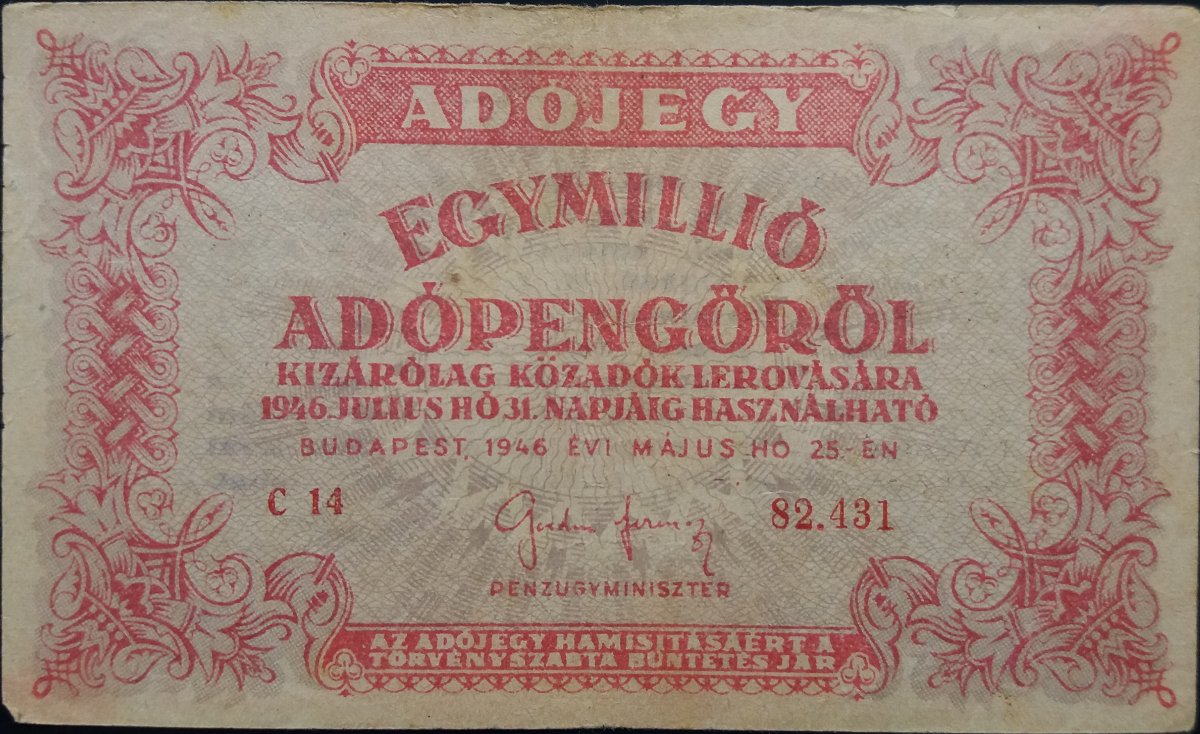 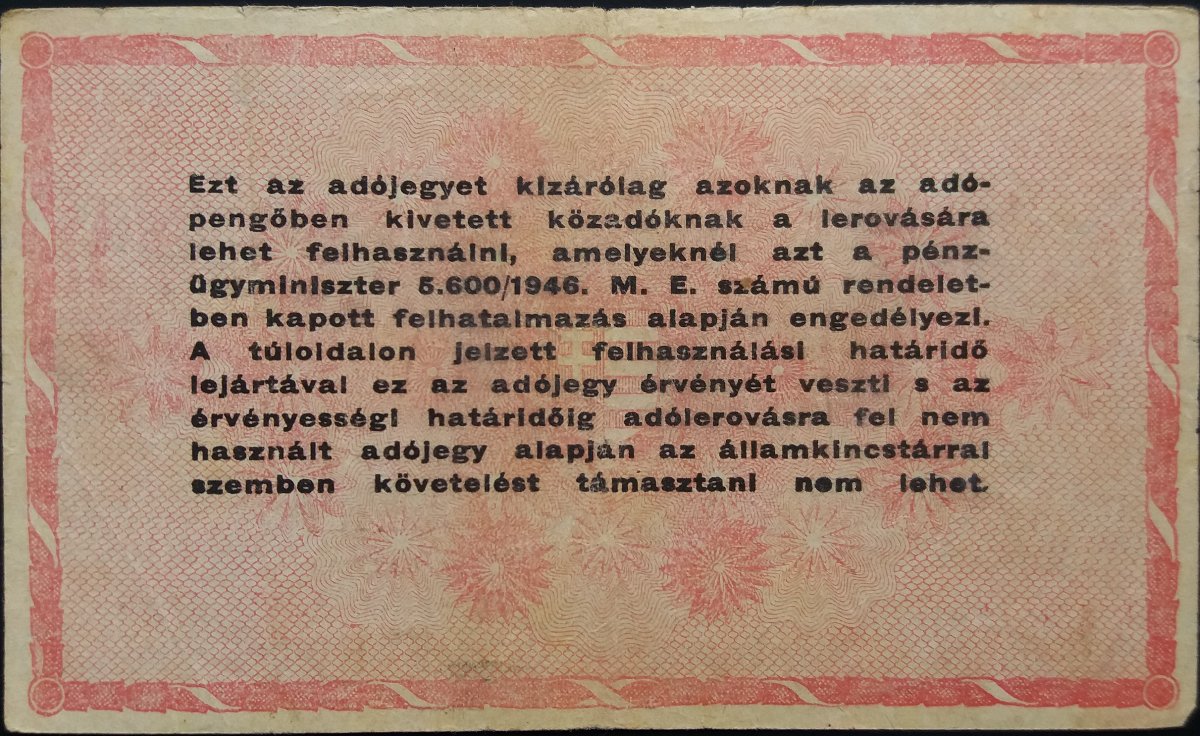 |
|
Moderator
United States
195559 Posts |
Quote:
here's a Hungary 1 million adopengo, same year 1946. Hyperinflation was in full swing. Nice example! |
|
Pillar of the Community
United Kingdom
901 Posts |
|
|
Moderator
United States
195559 Posts |
Quote:
Picked up these two old Hungarian notes recently Lovely adds! |
|
Pillar of the Community
United Kingdom
901 Posts |
Picked up these two Hungarian notes from ebay recently. 10,000 Pengo (1945) 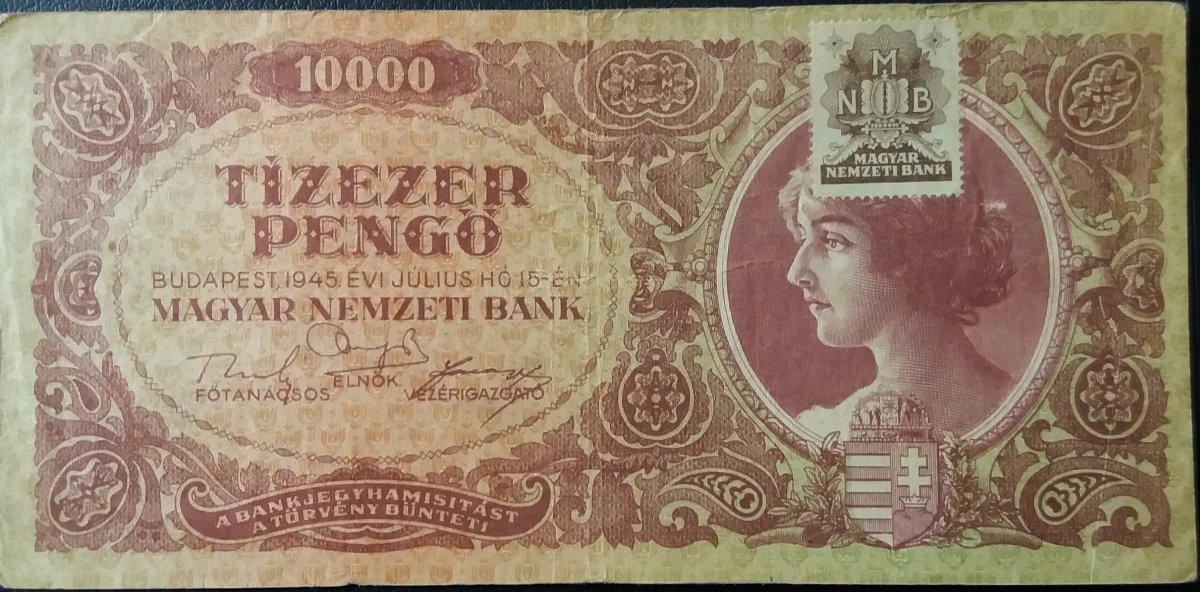 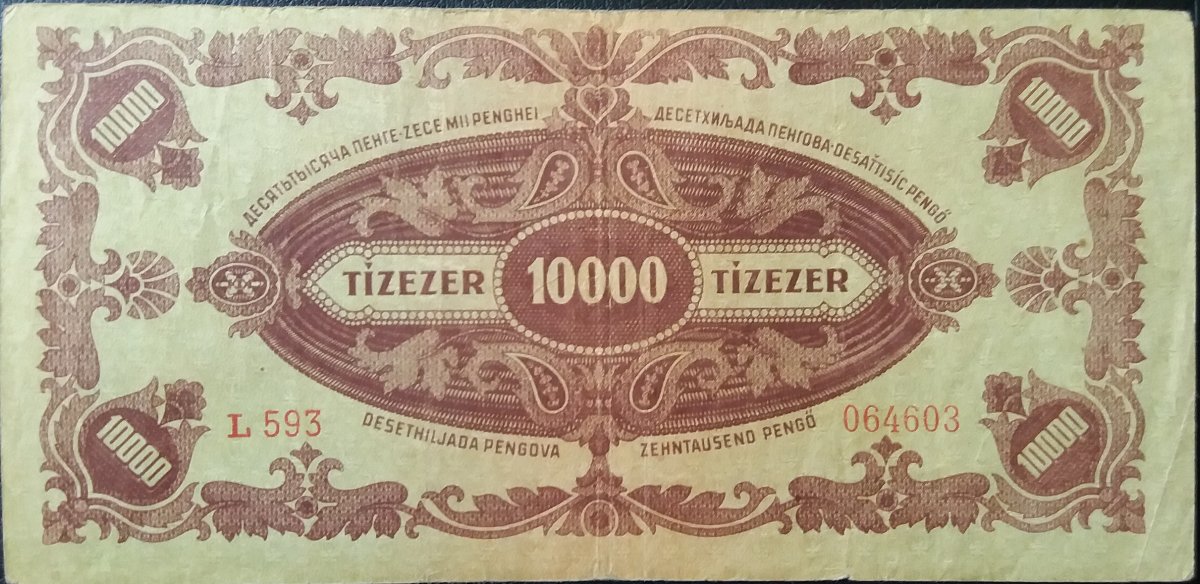 10,000 milPengo (1946) 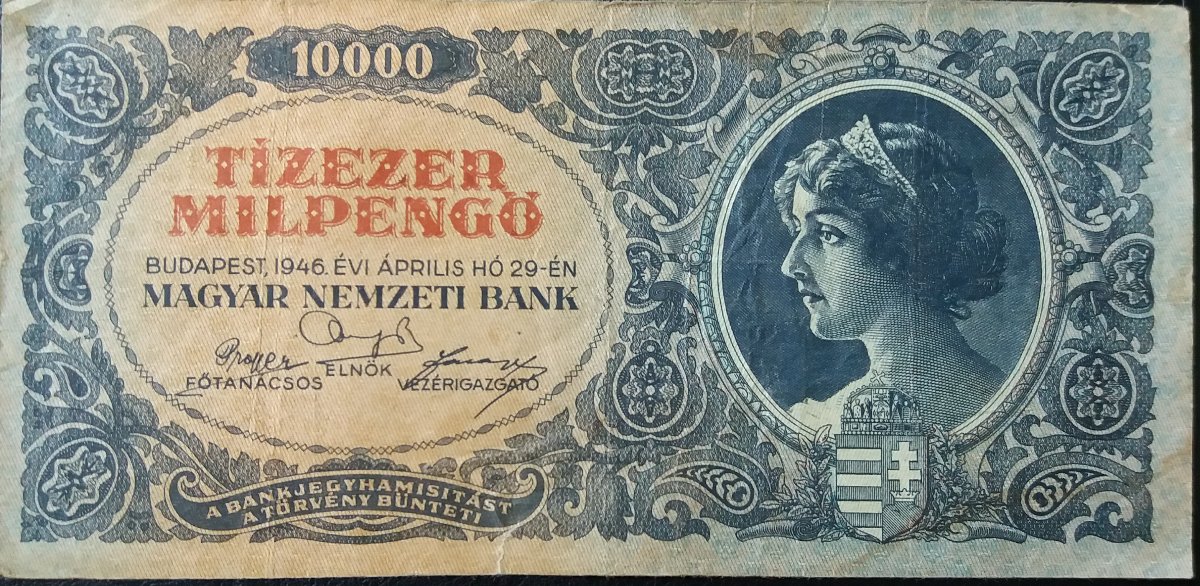 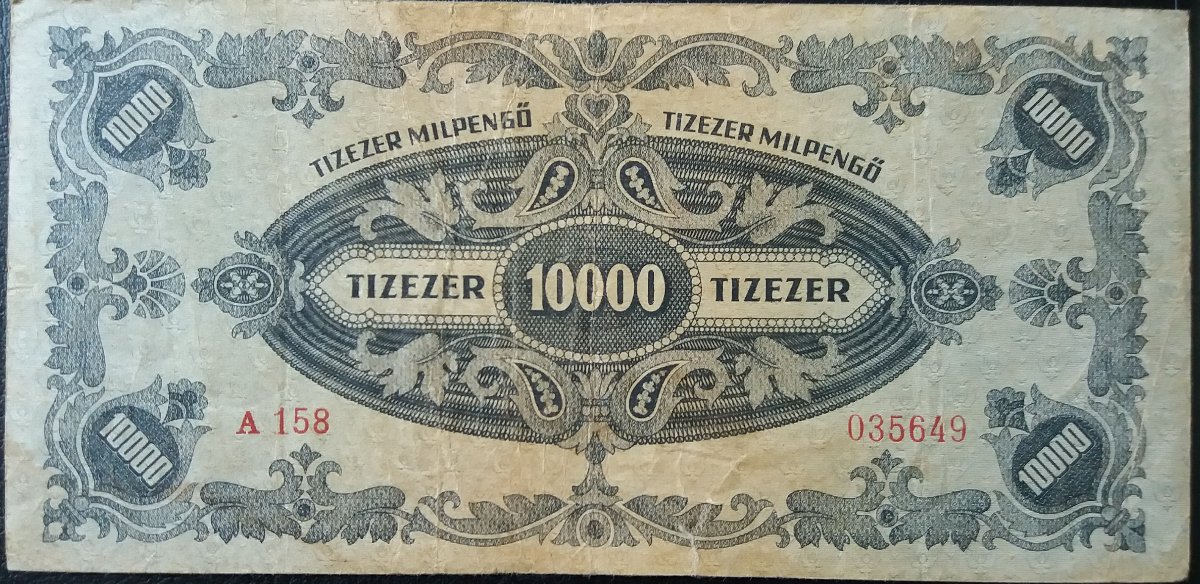 Edited by ScotsGreyhound
06/12/2020 5:00 pm
|
|
Pillar of the Community
United Kingdom
709 Posts |
The denominations are not the same. The second note is in milpengo, which is millions of pengo. So this note is ten thousand million, or 10 billion (US) pengo. There were even notes designated in b-pengo, or billions of pengo. This was the European billion ( 1,000,000,000,000 ). The reason for this was the huge inflation rate. By using designations like this they could re-use the designs, just changing the colour.
Edited by Anaximander
06/12/2020 3:25 pm
|
|
Pillar of the Community
United Kingdom
901 Posts |
Thanks Anaximander.
I shall amend my post, thanks for pointing that out.
Why did they attach the little stamps on certain Hungary banknote issues around that time?
I've also seen the little stamps affixed to Russian banknotes from around the early 1990's.
|
|
Pillar of the Community
United Kingdom
709 Posts |
In December 1945 the government declared a once-only tax on 1000 10,000 and 100,000 pengo notes. The holders of the notes had to pay three times the value of the note, upon which the note received a stamp. After a set time stamped notes retained their face value and unstamped notes were worth only a quarter of the face value. It was an unsuccessful attempt to slow down inflation. I don't know about the Russian notes.
Note that there were two issues of the 100,000 note. Blue notes were subject to the stamps as described above. Brown notes were issued at the end of December and were not subject to the stamps. I assume this would be about the time the stamp procedure ended. I would be interested to hear if anyone can add to this, as I have a fair number of Hungarian notes from this time.
Edited by Anaximander
06/12/2020 7:08 pm
|
|
Moderator
United States
195559 Posts |
Nice adds! |
|
Pillar of the Community
United Kingdom
901 Posts |
Thanks jbuck  Thanks for the great info Anaximander. Eta - the Russian ruble note I'd seen with the little stamp, has the image of Alexander Suvurov on for use in the Transnistria region. (1994) 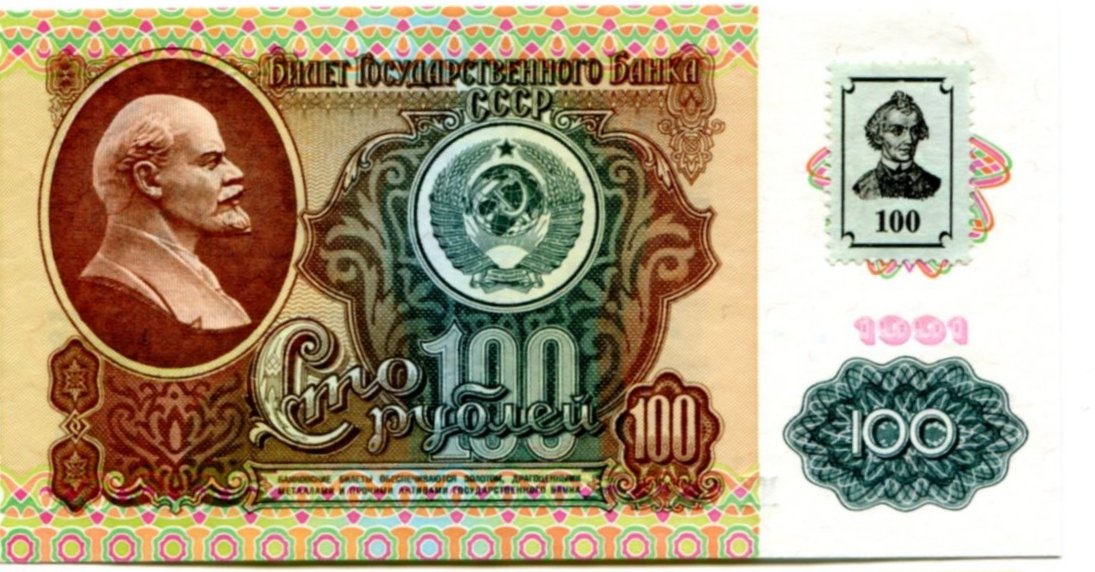 |
|
Pillar of the Community
United Kingdom
709 Posts |
I can only find general information on this, so what follows is only my understanding of the situation. I would love to hear from anyone with more info, especially if they can suggest English/French language sources. I am severely limited by knowing no Russian!
When Transnistria declared its independence they initially used ordinary Russian banknotes. One of the triggers for hyperinflation is an unrestricted money supply. So to prevent the flood of Russian notes from outside the area causing this, they introduced these stamps. In 1994 they introduced their own notes. But inflation occurred anyway, as can be seen on the 1994 notes with overprinted values.
Sorry this is so brief. Hope it helps.
|
|
Page 2 of 2
|
Replies: 28 / Views: 4,753 |
Page 2 of 2
|






 First Page


 Posted 10/24/2019 5:46 pm