Coin Community Family of Web Sites Join Thousands of Coin, Bullion, & Money Collectors
Royal Estate Auctions - $1 Coin Auctions300,000 items to help build your collection! Coin, Banknote and Medal Collectors's Online Mall Join Thousands of Coin, Bullion, & Money Collectors Royal Canadian Mint products, Canadian, Polish, American, and world coins and banknotes. Vancouvers #1 Coin and Paper Money Dealer Specializing in Modern Numismatics


Username:
Password:
Save Password
Forgot your Password?


This page may contain links that result in small commissions to keep this free site up and running.

Welcome Guest! Registering and/or logging in will remove the anchor (bottom) ads. It's Free!

Colonial Coin Detector Find

To participate in the forum you must log in or register.
First Page  Showing last 15 replies.
Author Previous TopicReplies: 17 / Views: 4,092Next Topic Page 2 of 2
Valued Member
Canada
363 Posts
 Posted 01/03/2020  2:59 pm  Show Profile   Bookmark this reply Add ironhorse to your friends list
Pistareen echoes my thoughts on this one...flattened musketball..weight more than anything led me in that direction.
I'm still in the lead camp on this one
New Member
United States
45 Posts
 Posted 01/03/2020  4:14 pm  Show Profile   Bookmark this reply Add Detectorist to your friends list
Here's the thing. I have large strong hands and trying my best I cannot deform or bend this disc. It has none of the powdery residue of lead. I find plenty of musket balls and early lead projectiles so I have some experience with period lead.

I just ran a VDI test using my White's Spectra 3Vi, their best machine and the one I located these artifacts with. Using a 3" decorative disc of lead I found on a colonial site, the machine gives me a VDI of 39. Scanning an 1801 Draped Bust Cent I get a VDI reading of 78. Scanning an 1831 Capped Bust half dollar gives me a reading 85 VDI. So I will concede the composition may lean heavier towards copper but not pure copper. Iron does poorly in our soils.

This disc is not clipped in the typical sense. It's edges are ground smooth. I think if someone wanted to make something utilitarian like a chip or button or player piece they would have used wood or bone. Someone had the ability, the capability to measure, and motivation to create a coin like disc of exactly one troy ounce, the British standard for precious metals weights officially adopted during the 1500's. Why tie up a scarce and valuable metal on a purpose which would devalue it? And why fashion it to be coin-like?

So rather than focus on solely why this couldn't be coin, I like to examine why it could be. If you read colonial New England accounts common folks were desperate for coinage or any specie. These colonists were far from Boston or NY or any prominent cities. Looking at the US Coastal Survey of 1836-9 which shows agricultural clearing and structures, little was happening here. Yes, they did have access to world commerce through the oceans. But life for these Puritan settlers was apparently not easy. When I look at their small scattered family plots it seemed a miracle to live past 40. Maybe they resented Kings and Gods on their coins. Blacksmiths were important integral parts of these settlements and could transform metals into whatever they needed.

I like to think outside of the box and consider that not all circulating coinage had neatly impressed logos, dates, and rulers on them. As I search more maybe I will find some answers which is both fun and exciting.
New Member
United States
45 Posts
 Posted 01/03/2020  4:19 pm  Show Profile   Bookmark this reply Add Detectorist to your friends list
I forget to note the mystery disc gives me a VDI of 64, midpoint in the copper range.
New Member
United States
45 Posts
 Posted 01/03/2020  5:21 pm  Show Profile   Bookmark this reply Add Detectorist to your friends list
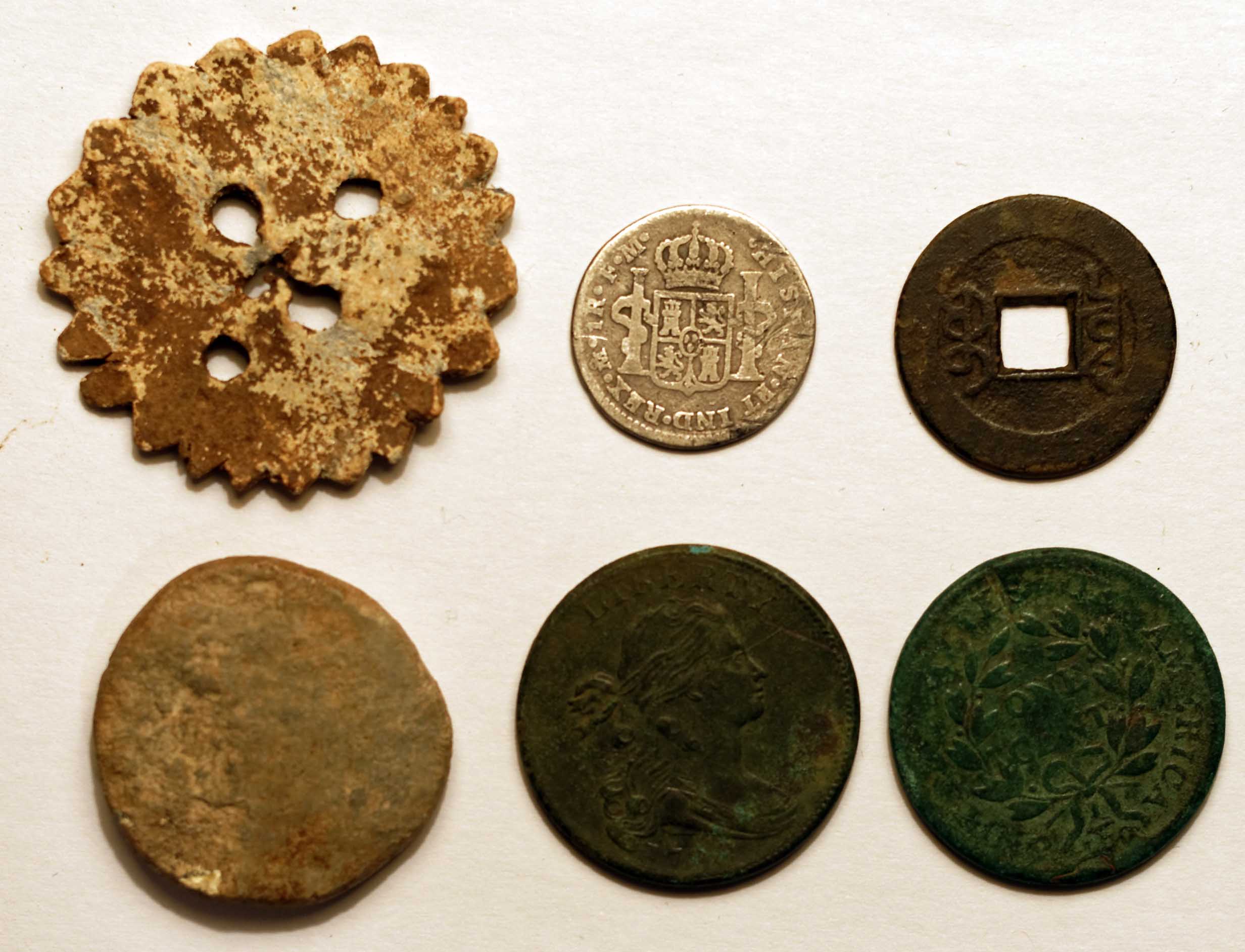
I do want to say thank you for the replies I am here to learn. And your answers are making me think. Just frustrated with this find. I'm drawn to colonial american artifacts but the settlers in my area had so little to lose and apparently didn't lose much. Literally 100's of hours searching through deep woods. I was considering the possibility it was a weight. Also now considering some lead might be in the mix. Here is metal tonal sample of finds I have made in this area, all over 4" deep and not cleaned: a lead disc with maybe some copper in it which exfoliates powder, a one Real silver Spanish coin from 1770's (last digit not readable, and Draped bust Cents from 1798 and 1801.
New Member
United States
45 Posts
 Posted 01/03/2020  5:22 pm  Show Profile   Bookmark this reply Add Detectorist to your friends list

Colonial-Coin-Detector-Find
New Member
United States
45 Posts
 Posted 01/03/2020  5:35 pm  Show Profile   Bookmark this reply Add Detectorist to your friends list
Even the 1 cash coin of the emperor Kao tsung (1736-1795) made of brass or copper holds up pretty well in our soils.Modern clad coins go to crap quickly.

I'm curious, do bale seals sometimes come standardized in a one troy ounce size? To hit 31 grams even seems beyond coincidence.

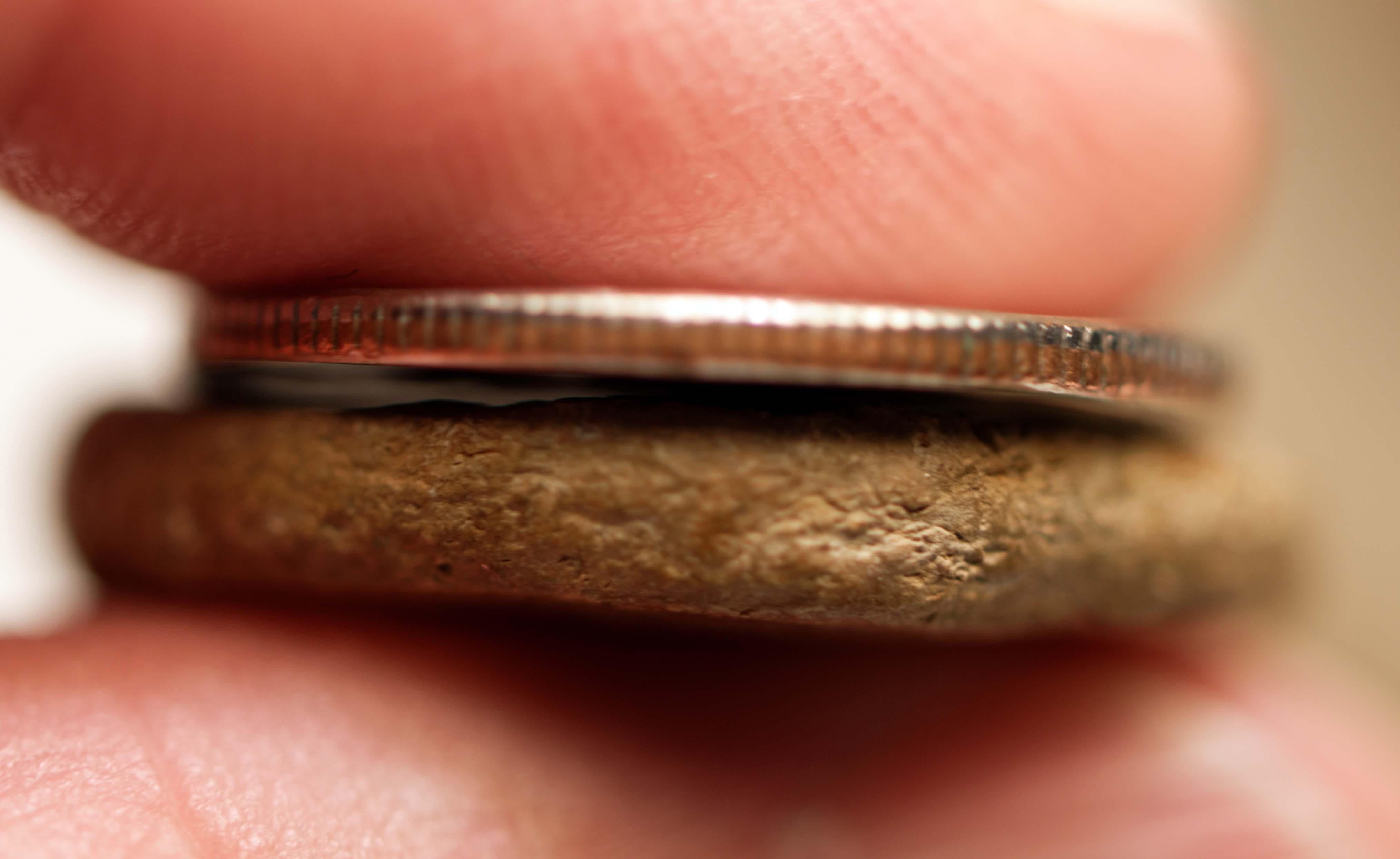
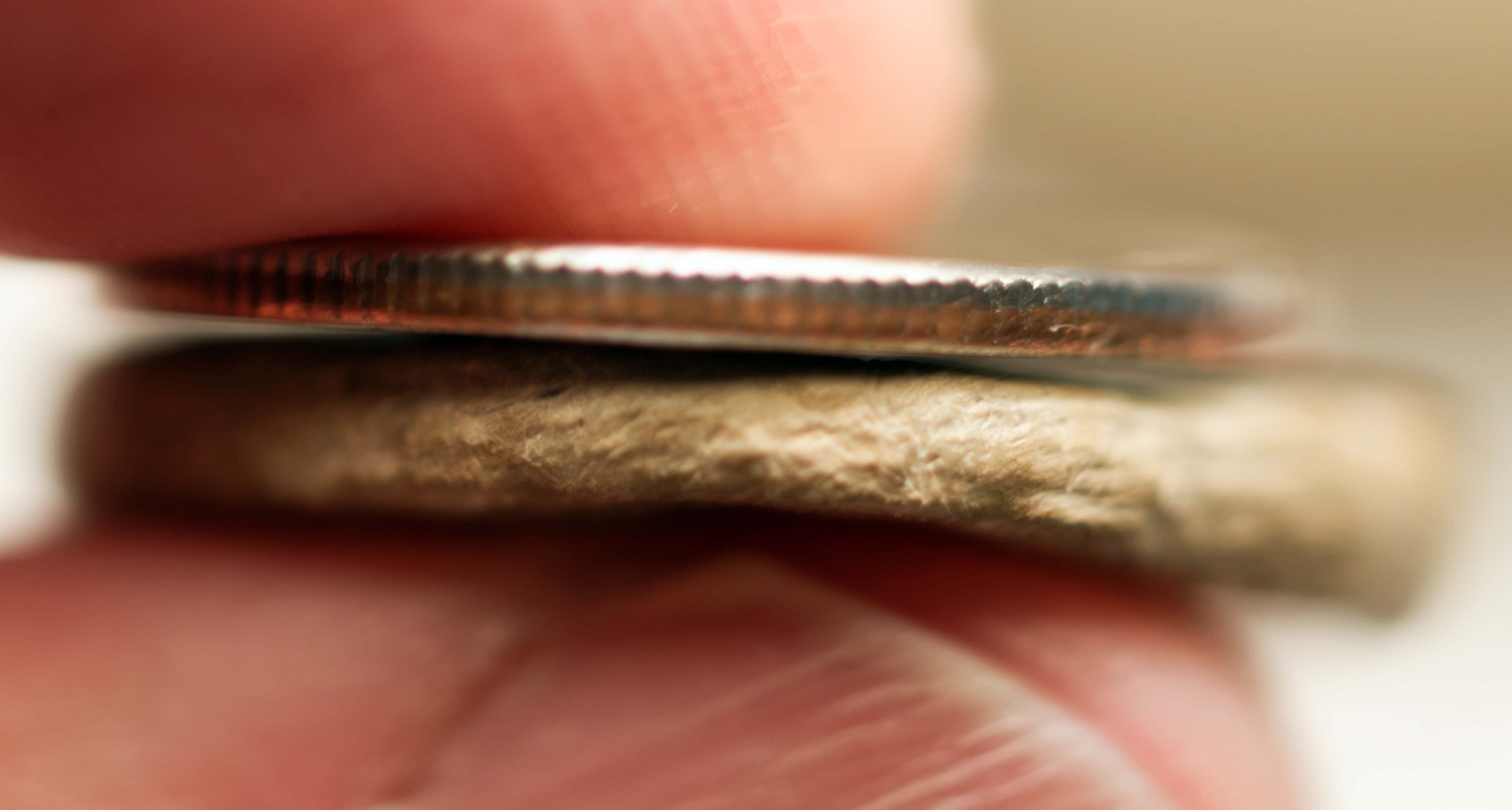
More shots of the disc
Colonial-Coin-Detector-Find
New Member
United States
45 Posts
 Posted 01/03/2020  6:24 pm  Show Profile   Bookmark this reply Add Detectorist to your friends list
The 31 grams of the mystery disc is equal to 478.40 grains. A .69 lead ball weighs in at 429.4 grains.
Valued Member
Canada
363 Posts
 Posted 01/03/2020  7:50 pm  Show Profile   Bookmark this reply Add ironhorse to your friends list
Detectorist, I've learned so much researching my own detecting finds over the years(25 now) and one thing I've learned is that our forefathers were geniuses in their own individual ways no doubt; but they weren't ones to fuss over complex situations...simplicity ruled their actions and the simplest answer probably was the right one

everyone had a musket as a household appliance in colonial days and therefore musketballs..lead was used a lot...probably a lot of other metals in some less refined mixes I would suspect too making it sometimes harder to bend than today's more refined product

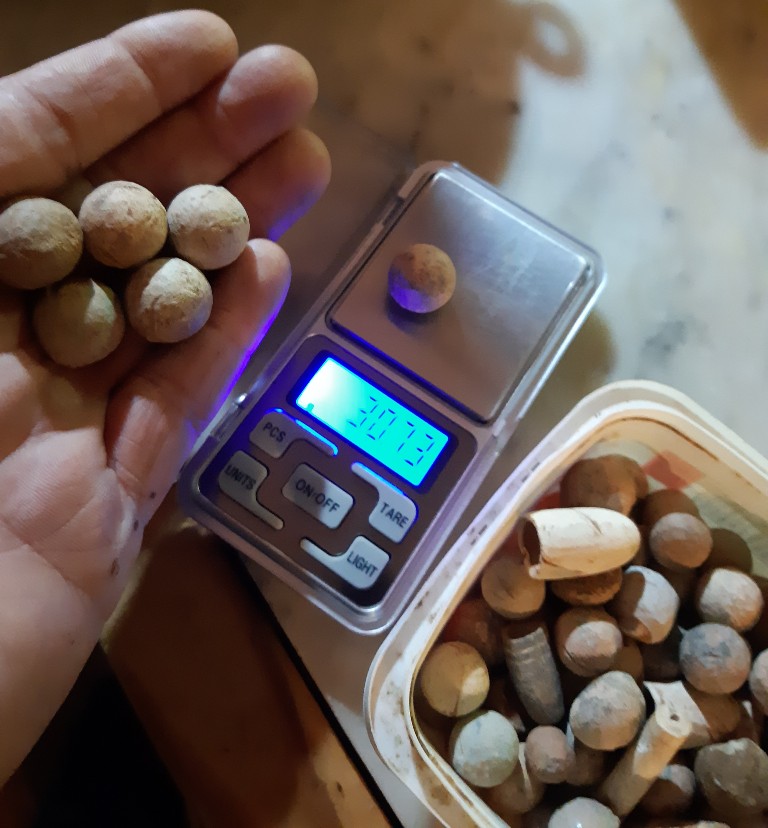
just for fun I grabbed my bullet finds from this year a took a sampling of the larger English sized balls
measured example was close and the others were all within a half a gram or so of thirty grams
the Weight Tolerances on musket ball can vary not like the Coin World, it tends to be a little exact
I hope this helps you get closer to iding your find


Colonial-Coin-Detector-Find
New Member
United States
45 Posts
 Posted 01/03/2020  8:50 pm  Show Profile   Bookmark this reply Add Detectorist to your friends list
Thank you for your post. I enjoy researching what I find and others help me take big steps. I have been finding projectile lead and pools of lead castings. I need to learn more.

I know I really want to believe this is coin. But my gut feeling was when I found it, and even now, this is a form of currency. It has that feel in the hand. And having it weigh one troy ounce spot on has to be beyond coincidence.

It compels me to keep searching despite coming home empty-handed many days. I think there is something special about collecting coins where you know the exact provenance, added value beyond supply and demand formulas. My 1798 Draped Bust Cent is a beauty. But someday I will be showing this forum an extraordinary find.
Bedrock of the Community
United States
12057 Posts
 Posted 01/03/2020  8:50 pm  Show Profile   Bookmark this reply Add paralyse to your friends list
31 grams is substantially heavier than any circulating Colonial issue I can think of. I'm inclined to think it's a weight. My opinion only.

Vermonts, Connecticuts, Fugios and New Jerseys weighed about half that much or less, and the Massachusetts copper penny / halfpenny (1/2 and 1/4 as much); British coins of William / George II / George III did not approach 31 grams on the main except for the 2d cartwheel (see below)

Boulton's Soho Mint "cartwheel" pennies of 1797 were thick and heavy copper issues but even they only weighed in around 28.7g (the twopence cartwheel coins are much heavier at 55-56 grams and very large!)

A base metal alloy round (bronze, lead, copper, whatever) weighing nearly a troy ounce would make more sense as a moneyers' or merchants' weight than as a coin.
Member ANA - EAC - TNA - SSDC - CCT #890

"Most of the things worth doing in the world had been declared impossible before they were done." -- Louis D. Brandeis
New Member
United States
45 Posts
 Posted 01/03/2020  9:15 pm  Show Profile   Bookmark this reply Add Detectorist to your friends list
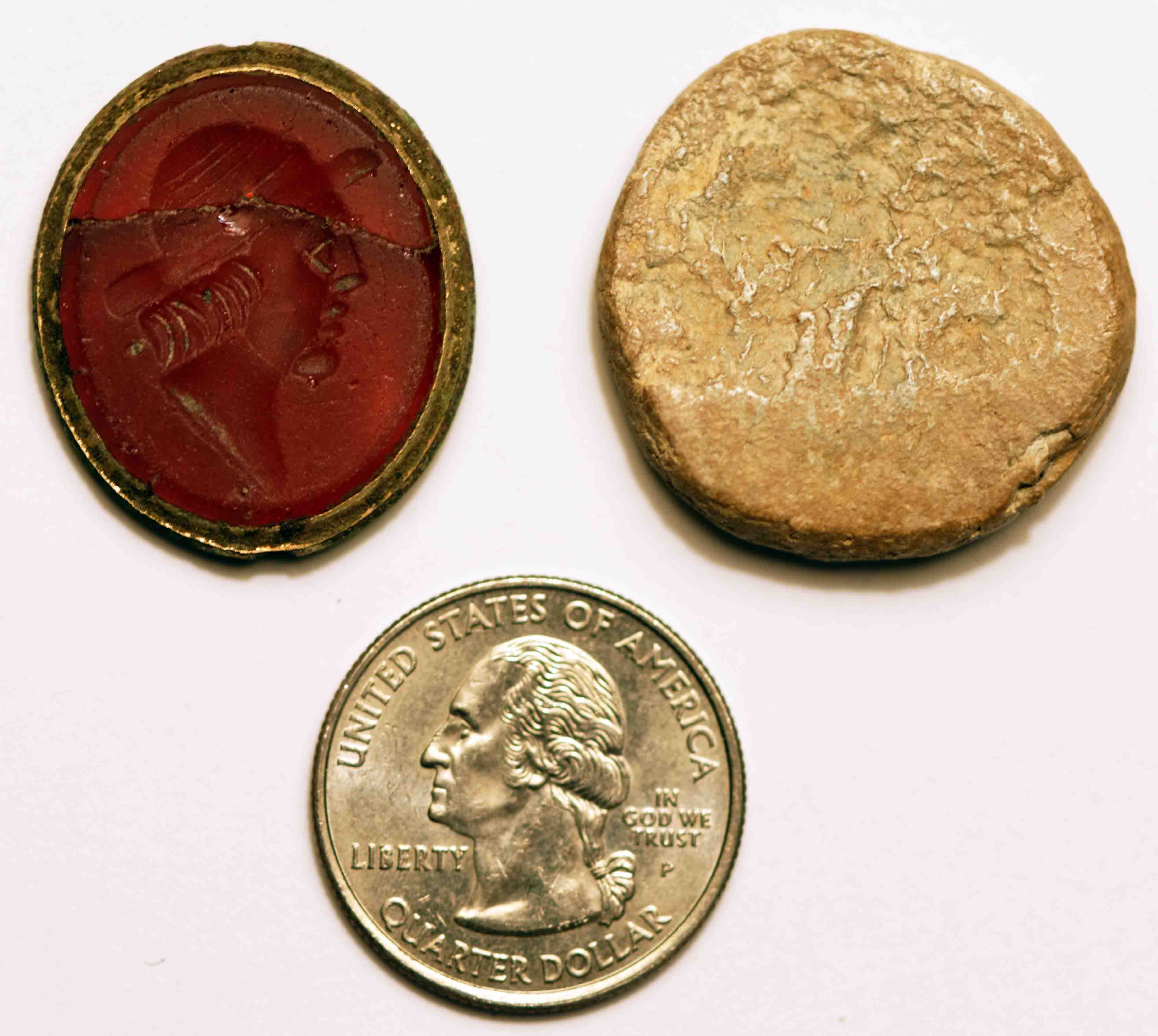
I agree with the weight possibility. Not far from this coin and a colonial brass shoe buckle I found a third item. Some may think it is a watch fob or piece of jewelry, but given mounting holes only at the top and bottom, believe this could be a carnelian intaglio wax seal stamp. Deciphering that is another challenge. The hat has lines which could represent a Georgian era straw hat. Men of status usually wore tricorns and fluffy collars. I spent considerable time searching this area and nothing else to be found.
New Member
United States
45 Posts
 Posted 01/03/2020  9:22 pm  Show Profile   Bookmark this reply Add Detectorist to your friends list

Colonial-Coin-Detector-Find
Pillar of the Community
United States
789 Posts
 Posted 01/04/2020  10:16 am  Show Profile   Bookmark this reply Add joecoin to your friends list
Pillar of the Community
United States
1381 Posts
 Posted 01/04/2020  10:22 am  Show Profile   Bookmark this reply Add DoctorBurnzy to your friends list
You may be on to something there, joecoin.
New Member
United States
45 Posts
 Posted 01/04/2020  3:16 pm  Show Profile   Bookmark this reply Add Detectorist to your friends list
Supposing it is a weight, the troy ounce was first used in England in the 15th century, and was made official for gold and silver transactions in 1527. So if not a type of coin currency itself, as a weight it would have been used specifically to weigh precious metals.
Page 2 of 2   Previous TopicReplies: 17 / Views: 4,092Next Topic Page 2 of 2
First Page  Showing last 15 replies.
To participate in the forum you must log in or register.


Disclaimer: While a tremendous amount of effort goes into ensuring the accuracy of the information contained in this site, Coin Community assumes no liability for errors. Copyright 2005 - 2026 Coin Community Family- all rights reserved worldwide. Use of any images or content on this website without prior written permission of Coin Community or the original lender is strictly prohibited.
Contact Us  |  Advertise Here  |  Privacy Policy / Terms of Use

Coin Community Forum © 2005 - 2026 Coin Community Forums
It took 0.36 seconds to rattle this change. Forums