| Author |
 Replies: 22 / Views: 3,939 Replies: 22 / Views: 3,939 |
Page 2 of 2
|
|
|
|
Valued Member
United Kingdom
179 Posts |
We can't know the complete history of coins, especially those hundreds of years old. We don't know at the end of the day how damage to coins happened. We can only use our experience to make educated guesses. The use of terms such as wear, bag marks and unc/au etc. Are used to help us communicate go we have interpreted the condition of a coin.
If you can think of something (mark or mint error) that might be displayed on a coin, there is probably a word for it. Use your experience to make good judgements and post your examples here to start a discussion/ get answers. This is how we all learn :)
|
|
Pillar of the Community
Canada
5287 Posts |
That's a very good question and I think that some may be missing the point. Damage to silver dollars jostling around a bag from the mint,moving around a bank repeatedly-that is considered bag marks, etc. (which is called accumulated damage) is considered different than the damage once it leaves the bag and goes into a sock drawer or your pocket and gets jostled around there (which is called wear).
Yes, I understand perfectly that this is the theory, but can they always be told apart? That is, heavy damage from being in a bag for a long time vs. damage from being in your pocket for a short time? technically the first is UNC and the second is circulated. However, I am not convinced that they can always be told apart at that level.
This is what I would like clarified. Can heavy bag marks always be told from light wear?
|
|
Pillar of the Community
United States
608 Posts |
The line between AU-58 and MS-60 is so thin that any two individuals may grade a single coin differently.
Until we use A.I. for grading the subjectiveness will come into play.
|
|
Pillar of the Community
United States
4085 Posts |
I think that in general, the marks that coins leave when they come into contact with other coins look different than the marks that fingers or jostling around in your pocket do. Bag marks tend to be metallic looking abrasions on a particular part of the coin - and not necessarily the high points. While circulation wear tends to be more evenly distributed across the coin and is focused on the high points of the design.
Are there coins that never circulated that get mis-graded because it looks like they did? Or vice-versa? Sure, nobody knows what's going on in that sock drawer except the socks and their coin and other guests. But in general I think you can tell the difference in MOST cases.
Edited by KenKat
03/22/2020 8:11 pm
|
|
Moderator
 Australia
16953 Posts |
There is a difference in appearance between "bag marks" and "wear", caused by their different methods of creation. Bag marks are caused by single impacts. They look like dints and scratches. Wear is caused by friction, or rubbing. It looks like a loss of lustre and fine detail from the high points of a coin. It does not matter how the damage is obtained, if it "looks like wear" then it is treated like wear. Your hypothetical Morgan dollars will acquire wear, from friction, sliding back and forth in the drawer. This is not unlike the "cabinet friction" seen on old-collection coins, stored in old-fashioned coin cabinets for decades or even centuries. As a result, those Morgan dollars will acquire wear, and will thus at some point no longer be "uncirculated". It works the other way too. If you receive a coin in change, and the shopkeeper giving it to you took it out of a Mint roll and handled it carefully, and you handled it carefully, it would still be "uncirculated" - even though, technically, you obtained it from circulation, so logically it shouldn't be "uncirculated". If it looks uncirculated, then it's classified as uncirculated. Don't say "infinitely" when you mean "very"; otherwise, you'll have no word left when you want to talk about something really infinite. - C. S. Lewis
|
|
Rest in Peace
United States
18456 Posts |
Quote:
it would still be "uncirculated" - even though, technically, you obtained it from circulation, so logically it shouldn't be "uncirculated". If it looks uncirculated, then it's classified as uncirculated.   |
|
Bedrock of the Community
United States
20753 Posts |
Kind of a state of mind. IF you really want a coin to be uncirculated, just say it is. Unless your selling it, no one can say anything else.  |
|
Bedrock of the Community
United States
17884 Posts |
Quote:
Obviously a coin can have wear and still be considered uncirculated. Only from a grading service. Quote:
Bag marks and rim dings and abrasions all can happen in the minting process or as coins get bagged or stored, after all, that's why there are MS grades from 60 to 70. All mint state coins yet with different amounts of wear. Bag marks, dings and scrapes are not wear. They can result in the coin being at some point in the 60 to 70 range but they are still MS/uncirculated. Quote: Heck if you had a stack of uncirculated Morgan dollars in your dresser drawer and you opened that drawer everyday to get out a pair of socks, they would show some slight high point wear and yet never have been in circulation. Yes and that high point wear IS wear even though they have never been in circulation. They would still be "circulated", but a grading service, especially if the are a scarce of rare date would probably still call them MS. (they used to call it "cabinet friction" now they call it "rub".) Quote:
You talk about uncirculated Silver dollars in your sock draw , who in their right mind would store them loose with out holders in a drawer. LOTS of people. Remember all of them were MS at one time but for many many years to most people they were just spending money, a cash stash. Also collectors used to keep their coins in trays in cabinets on little pieces of felt. Pulling the trays out and putting them back in would often cause the coins to slide back and forth, hence the term "cabinet friction". Edited by Conder101
03/23/2020 3:09 pm
|
|
Pillar of the Community
Canada
1082 Posts |
@bill069 "The line between AU-58 and MS-60 is so thin that any two individuals may grade a single coin differently.
Until we use A.I. for grading the subjectiveness will come into play."
100% agree; AI might help but is that really where we need to go? I personally dislike the term 'uncirculated'. The only coins I believe it for are collector sets that come encased in plastic and don't ever hit a cash register. For routine collectors I would argue that it's outdated and that the term 'mint state', which does not assume that a coin has never been used in a transaction - it's just about what kind of shape the thing is in.
|
|
Pillar of the Community
United States
608 Posts |
Silver101, It's only a matter of time until someone develope an A.I. to grade coins. The companis that do it now will profit by limited personnel needed to grade. Profit will be the driving force to this end.
|
|
Pillar of the Community
Canada
1082 Posts |
Could be but then there will be other companies that offer artisanal, bespoke coin grading by actual humans - and they will charge a premium for the service!
|
|
Pillar of the Community
 United States
612 Posts |
I've read a number of people stating that bag marks look different then wear and therefore aren't considered wear ........... OK, I'll buy that, they do, but a near pristine AU-58 Morgan vs this MS-60, graded ........ Oh yes, officially graded by PCGS because it is after all Un-circulated and and MS coin. I think there's something wrong with this grading system then. 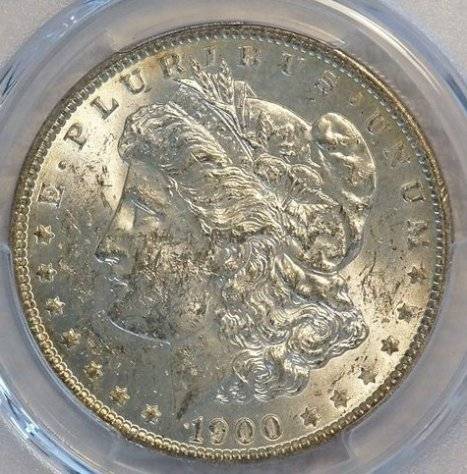 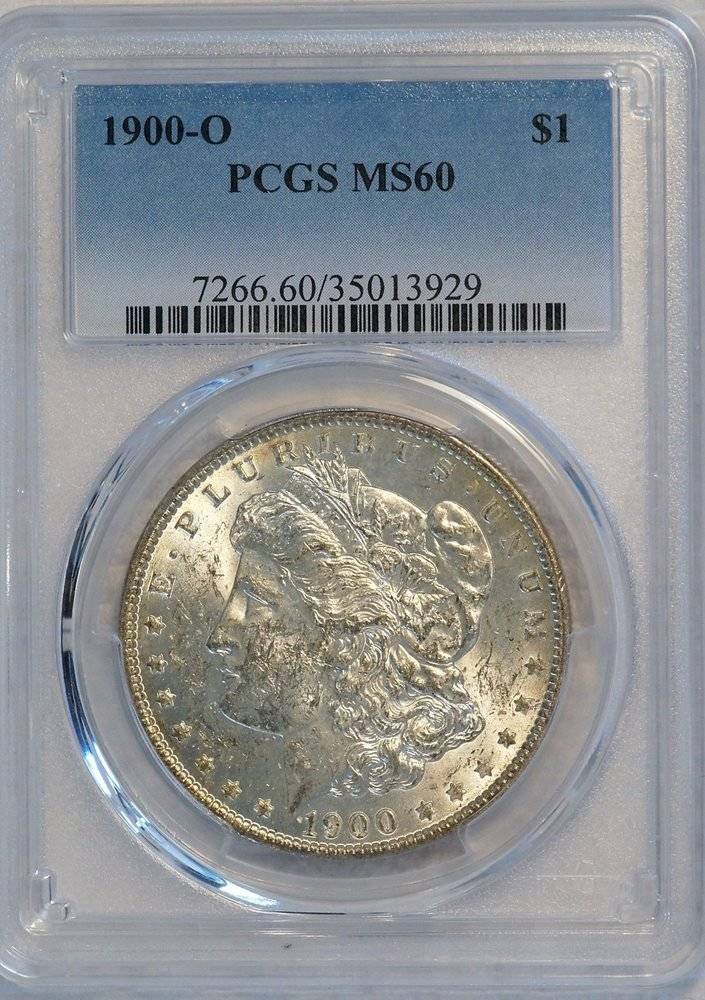 |
|
Pillar of the Community
Canada
1082 Posts |
@KauaiHawaiiGuy
YES! I would rather buy a decent AU-55 over an MS-60 almost any day. It's a meaningless numerical up-tick. The whole Sheldon numbering system needs to be revised.....
|
|
Pillar of the Community
 Canada
9897 Posts |
It's not circulated vs. uncirculated It's 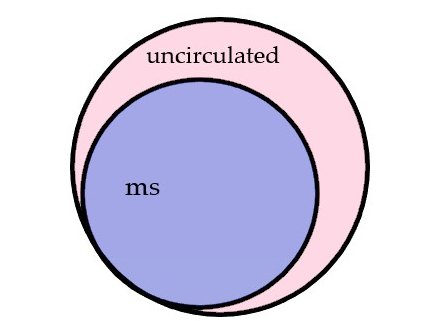 "Dipping" is not considered cleaning...
-from PCGS website
|
|
Pillar of the Community
United States
8137 Posts |
The Morgan you posted graded MS-60 because of the abundance of bag marks all over the coin. However, you look at the hair (one of the first places to show wear on Morgans), you will see that all the detail is still there, thus the coin is uncirculated. Yes, many AU-58 coins look much better than coins graded MS-60. In fact, when I was learning how to grade, I heard AU-58 being described as an MS-63 or MS-64 with a little bit of wear.
|
|
Page 2 of 2
|
Replies: 22 / Views: 3,939 |
Page 2 of 2
|








 First Page


 Posted 03/22/2020 1:26 pm


