| Author |
 Replies: 19 / Views: 2,534 Replies: 19 / Views: 2,534 |
Page 2 of 2
|
|
|
|
Moderator
  United States
107845 Posts |
Quote:
Don't confuse circulation wear with die wear. I'm not confusing the two. I a die is wearing out, meaning that it is losing material - in this case the high point of the cheek - wouldn't the cheek get higher, not flatter as the die gets more hollowed out? And if it is die wear, wouldn't we see more and at that point be called a die error or at the very least a variety? Such as the Known problems with the 1922-D weak/strong reverse (and Weak/no D) varieties. On the weak/no die problems coming from over polishing the die and filling the D with grease thus effectively removing the 'D' from the finished coin. Lets see a real conversation on this, as it can get confusing with the different ways a coin is made or mis-made as it were. |
|
Moderator
United States
107845 Posts |
additionally, seeing that the coin I have questioned above was infack at the end of a coin roll and facing out, isn't it possible that, the coin experienced wear over the years? The back side (reverse) is is really great shape as compared to the front (Obverse)
|
|
Pillar of the Community
United States
3207 Posts |
In the photo example you included, glare overwhelms Abe's cheek such that no detail can be seen there.
Coins that circulate not only get worn, they also get banged up. A circulated coin will have hits and dings on it. When frehsly minted, MS coins have no hits and dings, but most acquire some due to rough handling along the path from the coinage press to you. With practice, ciculation hits can be distiguished from those that happen at the mint and in the coin bags.
|
|
Moderator
United States
107845 Posts |
I have been collecting coins for the better part of my life (going back to the mid/late 1960's. Collecting - not bothering to learn much about them. Not until just recently when my interest perked up a lot more (maybe because of the Pandemic and had not much to do) But now I think it's time to learn and appreciate the numismatic world more.
|
|
Pillar of the Community
Canada
5420 Posts |
You are falling into a trap here .
The 1965 Lincoln is a weak strike coin with no wear and is definitely
Mint state . For most part it is quite typical for that year .
Lincolns are much like Morgan's you HAVE to learn the characteristics
of each Year and Mint to form a proper opinion .
A 1965 Lincoln is not comparable to the 1979 or 1954 shown .
Similar to Comparing an 1881S Morgan to an 1885O Morgan.
Apples and Oranges .
Great book to acquire if you wish to learn about Lincoln Cents
Is a Guide Book of Lincoln Cents by Q David Bowers .
He states ,most were struck in 1966 and that Gems are in the minority
due to quality and strike issues .
The hub dies we're wearing quite badly by the middle 60s due to
the Hi Relief characteristics of the coin . This was corrected in 1969 .
Edited by Pacificoin
01/30/2021 2:07 pm
|
|
Bedrock of the Community
United States
94367 Posts |
Well said.  |
|
Pillar of the Community
United States
1217 Posts |
Here is a photo that may show the surface of the 1965 a little better. I used my camera scope to take the photo, turning the overhead light all the way off, bringing my light source in from the top of the coin, almost flat, raised just enough to illuminate the Coin. 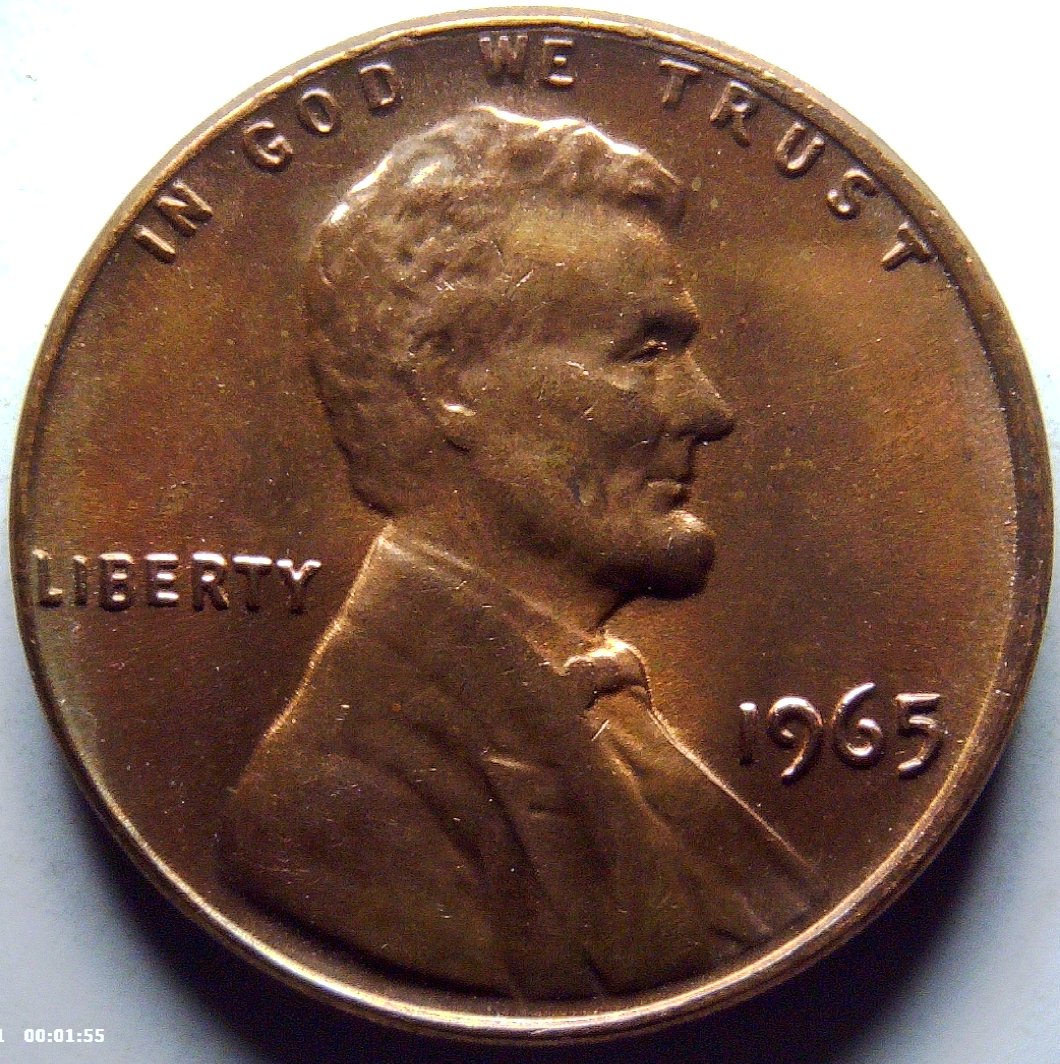 |
|
Pillar of the Community
 United States
5720 Posts |
Agree this is mint state with some strike flatness. I don't see any signs of circulation marks or wear.
|
|
Bedrock of the Community
United States
20052 Posts |
The cheek is not worn, that flatness is due to the strike being weak and high point die wear. Also, you cannot judge properly without a reverse photo. My go-to on the reverse is the cornice. One also has to consider that a circulated coin will have other signs of wear, such as loss of luster, hits and dings.
Also consider that the master a new master hub was used in 1969 because the original hubs were VERY worn by 1968. From about 1960 up, softness in the obverse design started showing and got progressively worse each year.
Edited by BadThad
01/30/2021 3:10 pm
|
|
Bedrock of the Community
United States
10065 Posts |
Liking the examples and info in this post  How much squash could a Sasquatch squash if a Sasquatch would squash squash? Download and read: Grading the graders Costly TPG ineptitude and No FG Kennedy halveshttps://ln5.sync.com/dl/7ca91bdd0/w...i3b-rbj9fir2 |
|
Moderator
United States
107845 Posts |
I agree! Finally a good conversation on grading. I thank you for the information given so far.
Lets try to keep this going.
This is valuable info for helping me grade what I have in my collection.
|
|
Pillar of the Community
United States
1217 Posts |
I just wanted to add the reverse photo of the 1965 LMC because it was mentioned. For possible future readers of this post. 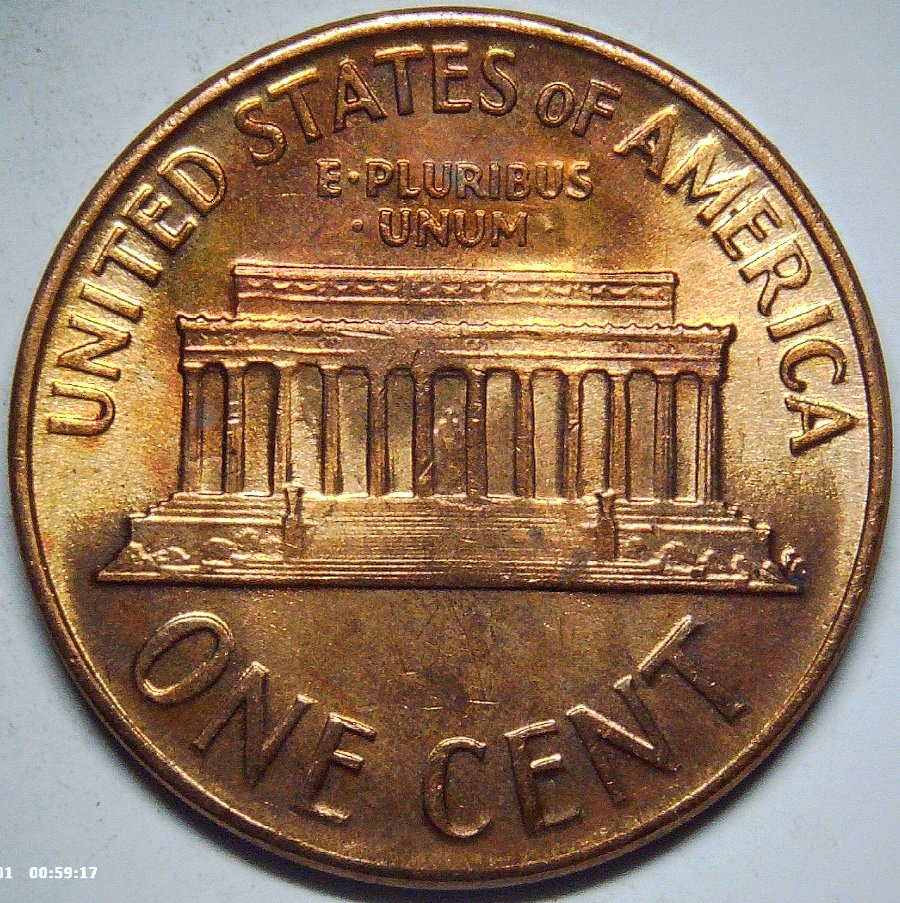 |
|
Pillar of the Community
United States
4846 Posts |
Rothery, A coin that has hundreds of bagmarks but no wear will always be an MS-60 at the lowest(or UNC details), and a coin that has almost no marks but a small amount of wear will always be an AU-58 coin at the best. It's sometimes very very hard to discern whether or not a coin has wear, so someone may say it's either AU-58 if it does or MS-60-something if it does not.
|
|
Pillar of the Community
2145 Posts |
Quote:
It's sometimes very very hard to discern whether or not a coin has wear, so someone may say it's either AU-58 if it does or MS-60-something if it does not. So it's an either or situation then.? |
|
Pillar of the Community
United States
3008 Posts |
One other idea is to look at any denomination from the cent to dollar and inquire if the particular issue has known weak strikes or other coining issues which might affect the observed grade. So for another example could be various Indian/buffalo nickels from the 20s which have known weak strikes, even for gloriously high grades. This thread is great by the way...  Edited by mrwhatisit
01/30/2021 7:12 pm
|
|
Page 2 of 2
|
Replies: 19 / Views: 2,534 |
Page 2 of 2
|








 First Page

 Posted 01/30/2021 12:55 pm


 Uncirculated American Silver Eagles


