| Author |
 Replies: 26 / Views: 2,785 Replies: 26 / Views: 2,785 |
Page 2 of 2
|
|
|
|
Pillar of the Community
United States
7600 Posts |
Quote:
I say CRACK because it is characteristic to zinc separation. It can't be because of Zinc content,considering the composition is: .950 coopper .050 tin and zinc. (minute amount of zinc) It is a lamination issue. |
|
Pillar of the Community
Canada
6244 Posts |
Lamination by metallurgical dictionary it is synonym with rolling because the name of the rolling band or machine how you want to name it (do not matter) it is "laminor".
So yes, on rolling the "blum" (the main material after melting) we can have a few defaults: Crack, delamination etc. We can not put them on the same dish.
PS. Tin and zinc are not far one from the other on rolling proprieties.
Edited by silviosi
06/11/2021 2:46 pm
|
|
Pillar of the Community
 United States
7174 Posts |
Just a nice lam. Not a cracked planchet. Not even close to a crack.
|
|
Pillar of the Community
Canada
6244 Posts |
Quote:
Not a cracked planchet. Not even close to a crack. @CUjohn: Can you elaborate why? I am curios to know from others theirs thinking's. |
|
Pillar of the Community
United States
4680 Posts |
Quote:
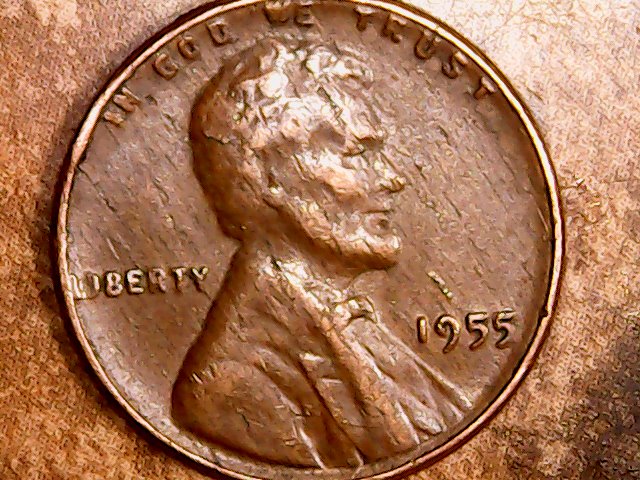
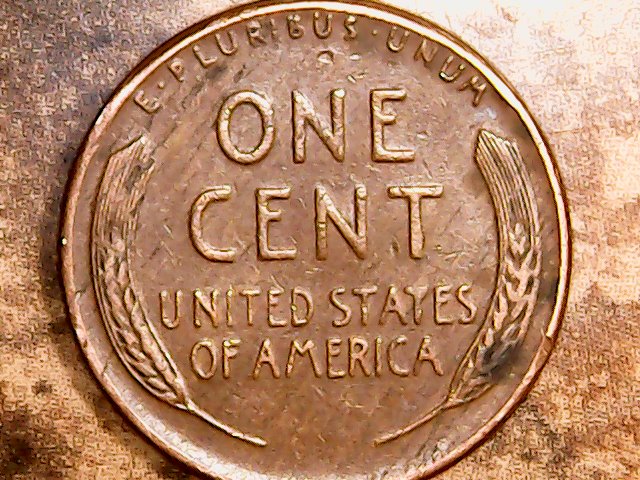
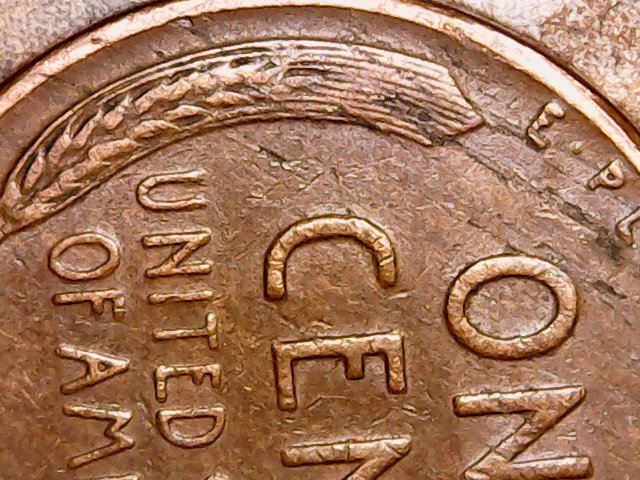
Your coin it is a cracked planchet. It seem like delamination but it is not. It is crack planchet. I can elaborate this but not necessary for this coin. This seems like the perfect coin to elaborate  One look lamination for me as well. Several points showing retained peel, noticeable on the C in CENT, above the N in UNITED, and possibly along the rim just above the U in PLURIBUS. The one above C may easily be moved with a toothpick, done carefully if you want to keep it intact. |
|
Pillar of the Community
Canada
6244 Posts |
@Ty2020b. I agree this coin is perfect to elaborate. I already posted here on the forum the definitions of the delamination, lamination and cracked metal roll, so I will not repeat now. First, lamination means unification of two different materials by different methods: like press, glue, heat, etc. Delamination the right term is the longitudinal separation of the structure of the material due to the de crystallization. Take form of the very tinny lamellas in general with two sides almost parallels, and it is characteristic to the begin of the roll where the rolling forces push the material more up so the structure will separate. If detached the exfoliated material will show clear the material structure. The crack roll or planchet is more at the end of the roll where the forces of rolling pushing the material in front and have space and less resistance, will make that the material will expand in two different directions= longitudinal and lateral, which will result in the separation of the material on vertical axe. Another cracking cause it is a poor mixt of the alloy (this case). In this case, the adjacent metals which has less resistance to the pression (strike) will simply broke their structure. On the strike another cause of cracking it is improper annealing, but this could be another topic on this forum. BACK to our coin: The appearance of the exfoliation it is PLURIBUS near the rim, but in O from ONE is clear that the material has a fail and crack due to the strike. Look at the vertical separation. No signs of the material structure is show. The missing parts on the removed and moved parts on C is due to the strike. The N was strike and the missing parts are due to strike forces, if was delamination the N will detaches easy. Any comments are welcome. 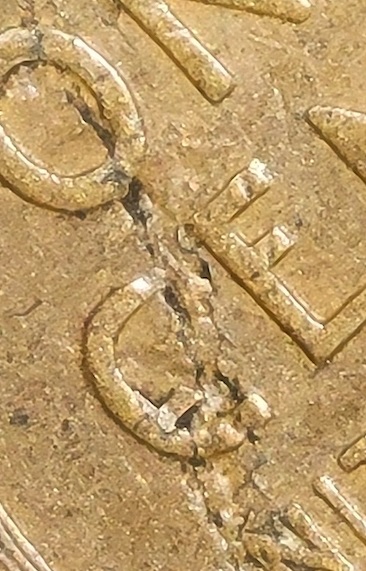 |
|
Valued Member
United States
173 Posts |
Great topic Lancek!
I have several wheat cents with similiar characterstics as your coin, which I always believed to be in the 'Lamination' family of errors.
However I am no expert, and after reading silviosi's posts explaining the physical and mechanical aspects of the metallurgy that is involved in the preparation of the metals used in the minting process, I am pretty sure my understanding of what went on with coin at the mint is far less than what I thought I knew. So I pass judgement on this coin.
I am also going to go through the similiar coins I have and re-evaluate them.
For me it is kind of hard to challange silviosi's explanation because it sounded legit but went so far over my head.
Summary: I will continue to follow this post to see where it all ends up.
Thanks for the post..
|
|
Pillar of the Community
United States
549 Posts |
I posted a coin some time ago with the same issue and explanation from Silviosi. I understand what he says and it makes sense. What I don't understand is why the coin reference sites do not state "cracking planchet or cracked planchet" as described above. It is always stated as a lamination issue and a cracked planchet is seen cracked on both sides. There is no terminology for this error except error-ref does refer to it as a improper alloy mix. Is it to scientific to be used for error references?
Edited by VestigeWolf
06/12/2021 08:23 am
|
|
Valued Member
 United States
442 Posts |
Glad I've started a healthy debate.
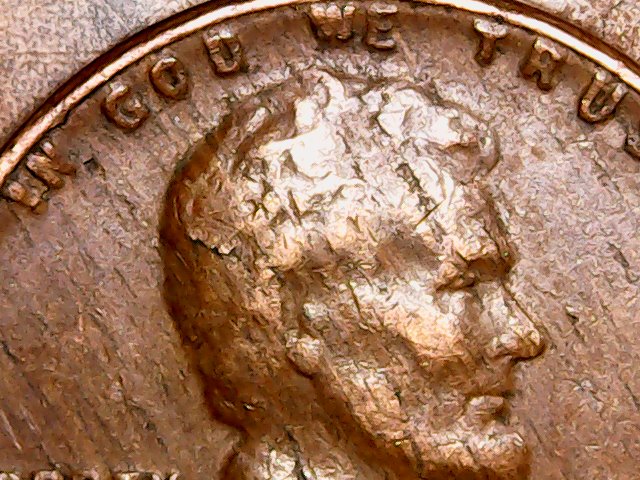
To me my first thought was cracked planchet. As the metal looks more broken apart than peeled away. Didn't really remind me of any lams that I've had. Most cracked planchet pics I looked up were larger. On both sides and could be seen on the edge. So I was leaning more towards lam. But after reading all the comments, I don't see any reason that a crack couldn't be smaller. Not very deep, and stop short of the rim.
|
|
Bedrock of the Community
United States
62064 Posts |
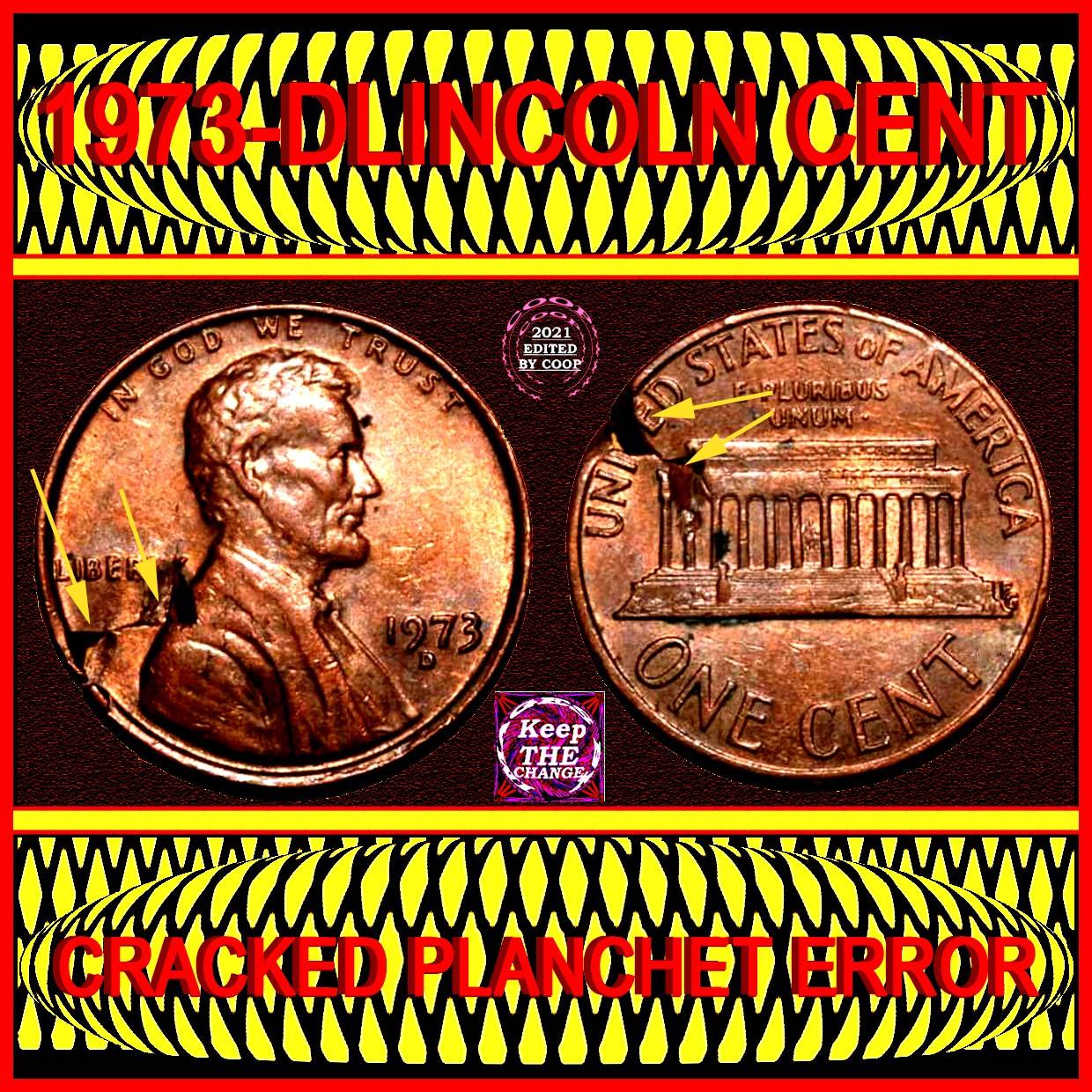 A die crack will show on just one side if one die is cracked 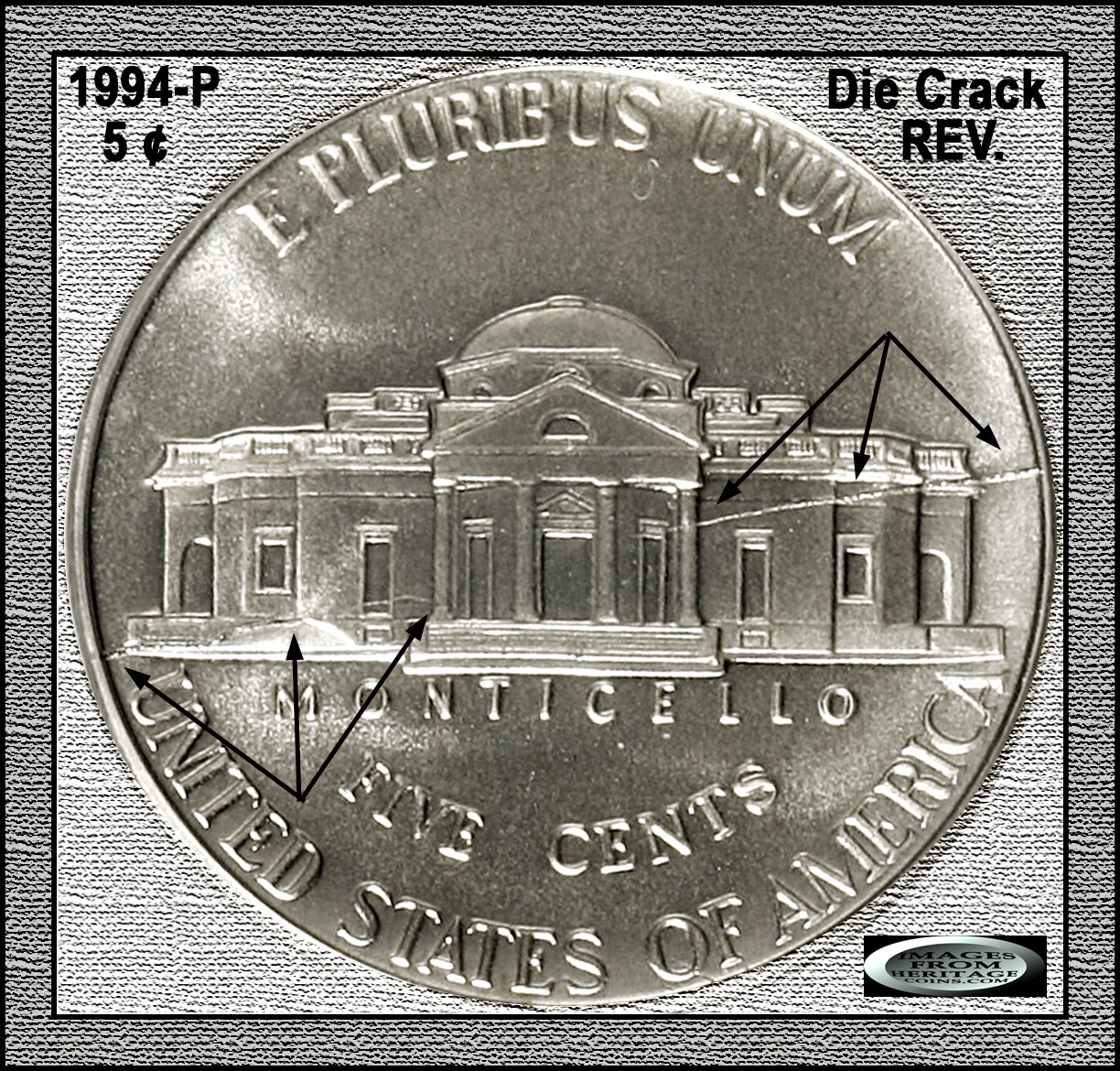 This one is actually two die cracks. They do not meet in the center yet. But this is a thin lamination. Thus it was cold roll thin. When they are deeper, the lamination area is thicker. 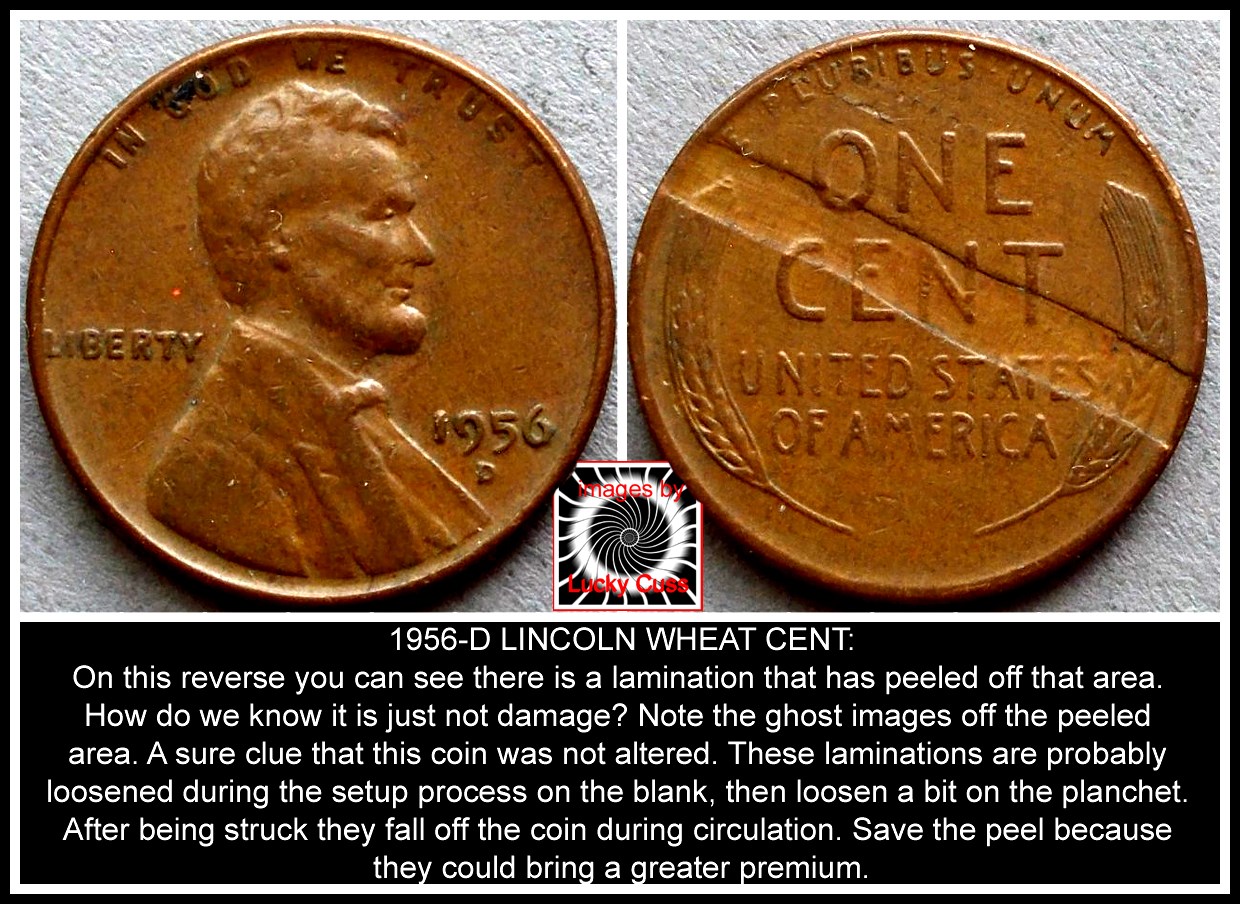 uploaded/coop/LAMINATION_PEEL_AAB.jpg[]/img] 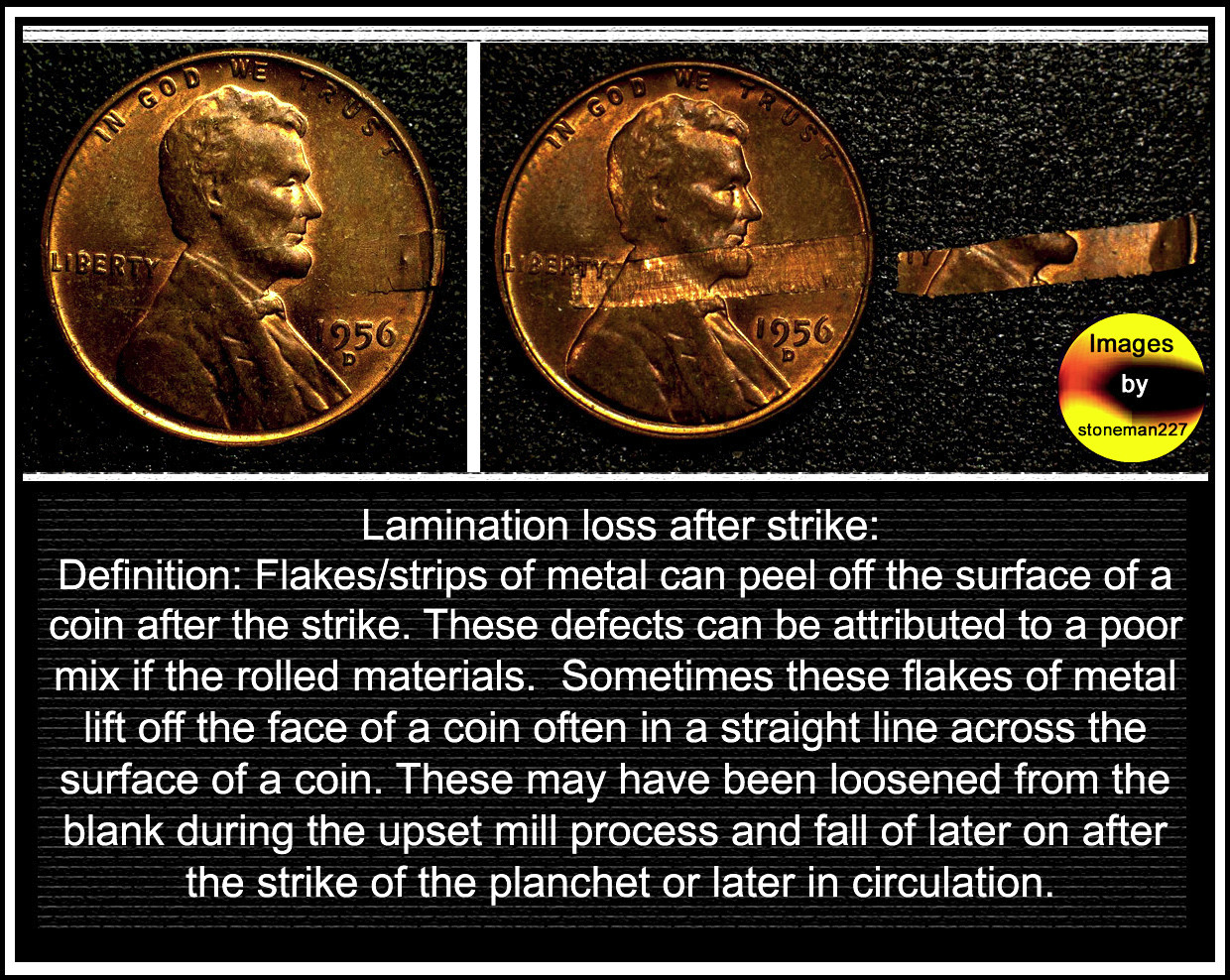 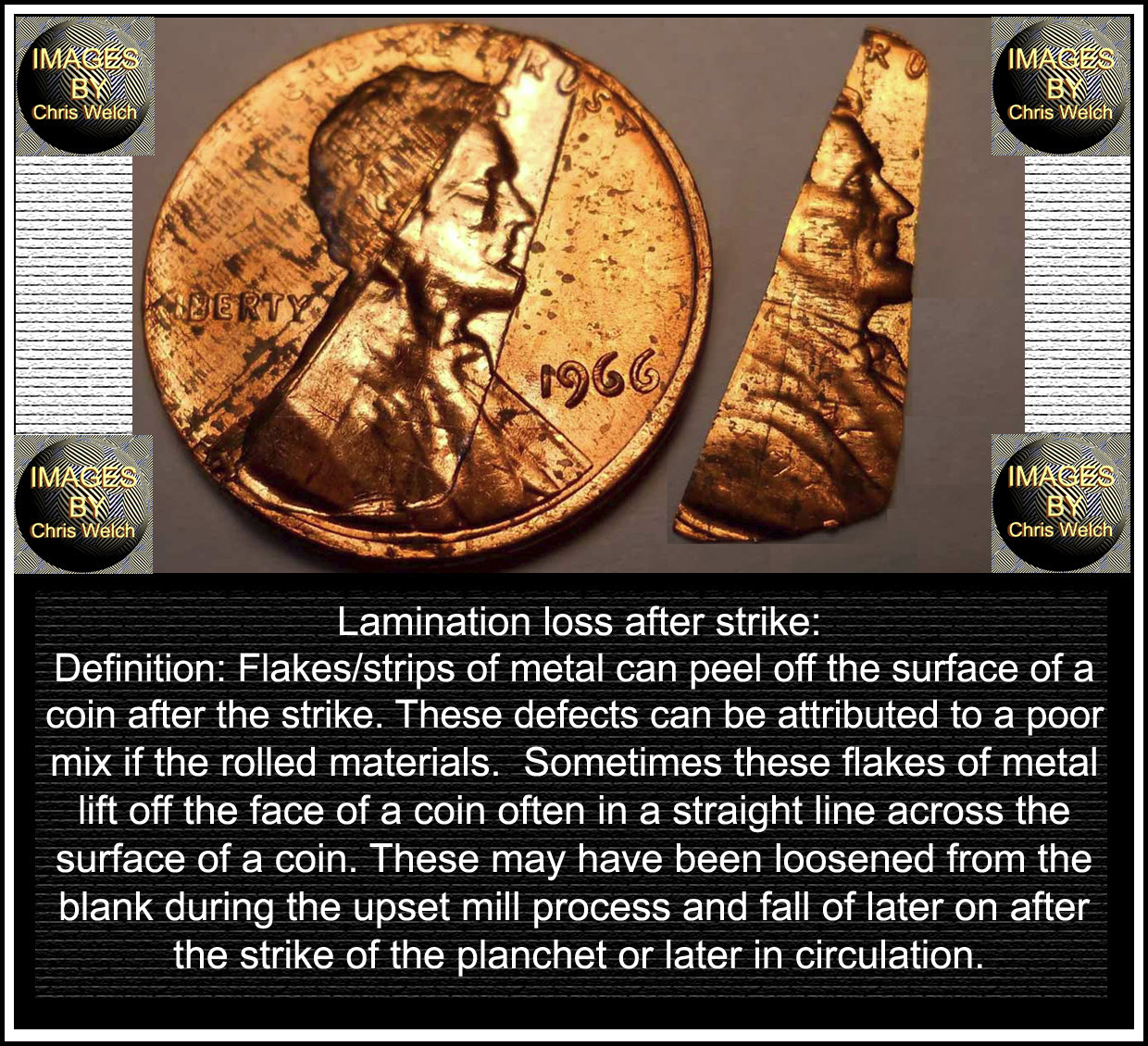 Note they always leave a ghost image of what was there. |
|
Pillar of the Community
Canada
6244 Posts |
Glad to see folks analyze my studies in cracked and delamination planchet.
Some one say it is to less Tin and Zinc. It is only 5%, but on 1 tone will be 50 KG add in the kiln to the copper (which already reach 900 deg Celsius). If not mixt well or missing melting additive could just step in the same place. It is happened sometimes but not to all melting quantity. This it is the melting problems and we have this due to the cost the mint pay for the rolls.
Second, was put the question why the sites do not mention partial crack also. This it is because from decades we do not look deeper to the problem and we still keep the early denominations and categories. It is hard to change fast because years of one name, then you will not be able to change tomorrow. I understand this and give credits to all. EX: is say Lam in fact de-lam and etc. It is just a matter of time and re-education.
One day probably I will assembly all delamination's and cracks in one presentation or give to Peter, Diamond (not see him for years) or better to our encyclopedia M.COOP.
Other point I want to say to this post it is more for the prices:
1. Delamination on my studies is find 75% more then crack planchet in all forms.
2. Partial crack was find 5 of 120 samples.
3. Improper annealing with delamination rare.
4. The most rare: semi-crack planchet with delamination (of the end of the roll) very rare. Most around 1935 to 1948. We discuss about Penny (1C)
Thanks to all and wait more ideas and observation or theories.
|
|
Pillar of the Community
United States
549 Posts |
Edited by VestigeWolf
06/12/2021 9:04 pm
|
|
Pillar of the Community
United States
7174 Posts |
Call it what you want. Try to sell it on ebay as a cracked planchet, see what happens. Coop posted what a cracked planchet is. |
|
Pillar of the Community
United States
3237 Posts |
@silviosi and @vestige wolf both coins are just lamination issues. Neither is a cracked planchet. Coop explained the difference pretty comprehensively.
|
|
Pillar of the Community
Canada
6244 Posts |
Sam and CuJohn, the collecting and marketing it is not the same things. Delamination it is at every corner but not cracked planchet. COOP say the true with out any material interest.
|
|
Page 2 of 2
|
Replies: 26 / Views: 2,785 |
Page 2 of 2
|








 First Page


 Posted 06/11/2021 2:44 pm