| Author |
 Replies: 33 / Views: 3,992 Replies: 33 / Views: 3,992 |
Page 3 of 3
|
|
|
|
Pillar of the Community
 United States
2817 Posts |
Quote:
The failure of the two "arms" of the "split" to meet in the center suggests that these are, instead, a pair of radial, antipodal die cracks. Mike, I wonder if it's possible to determine a split die based off how much the radial line has been broken? i.e. if it is broken 2/3 or 3/4 accross then at some point it's impossible for the (hammer die?) to not be split? |
|
Pillar of the Community
United States
2752 Posts |
I don't understand your question, CoinHi. Are you referring to the distance between the approaching, visible ends of the two arms? I don't see this as a useful clue to the continuity of the crack across the die face. More useful is whether one or both cracks appear close to pinching out before being lost to view.
Error coin writer and researcher.
|
|
Pillar of the Community
United States
2817 Posts |
Thanks Mike, My question was about die durability and whether a hammer die could strike intact while losing "X" amount of integrity from approaching antipodal die cracks, factoring in depth/severity of the cracks as well. This is likely unanswerable but a question that came to mind.
The bottom die crack on this coin appears to widen, instead of pinching off, before disappearing into the die subsidence. Is this of any significance?
|
|
Valued Member
United States
109 Posts |
|
|
Pillar of the Community
 United States
5898 Posts |
Can you give us a closeup of the center part of the coin?
(the shirt collar and jaw under the ear)
Try spinning the coin in the light to see if there is a crack in the center? Your full obverse image is good but you didn't have a closeup as you do of the two cracks.
Words of encouragement are one of the major food groups.
We need to consume them regularly to thrive and grow.
|
|
Pillar of the Community
United States
2752 Posts |
CoinHi, the lower crack appears to be disappearing into a minor die subsidence (sunken die) error. Such errors are often seen in conjunction with both split dies and radial, antipodal die cracks. The softer metal in the subsiding area can stop a crack from propagating.
Error coin writer and researcher.
|
|
Pillar of the Community
United States
2260 Posts |
Quote:
Can you give us a closeup of the center part of the coin? I'm curious about that location too. Then my question would be is that if there is no indication of a crack in that that area; Would it be considered a split die ? |
|
Pillar of the Community
United States
1944 Posts |
very cool coin...
nice photos - too...
|
|
Pillar of the Community
United States
2752 Posts |
There's no way to tell at this point whether the crack was continuous. Even if it was, it would only be considered a rim-to-rim die crack. It's not wide enough to qualify as a split die.
Error coin writer and researcher.
|
|
Pillar of the Community
United States
2260 Posts |
Thank you Mike for the clarification of the difference between a rim to rim crack and a split die.
|
|
Bedrock of the Community
United States
62064 Posts |
Edited by coop
08/12/2021 10:00 pm
|
|
Pillar of the Community
United States
2817 Posts |
Since the arms don't meet, Is this mislabeled or does the curved arm indicate a split? 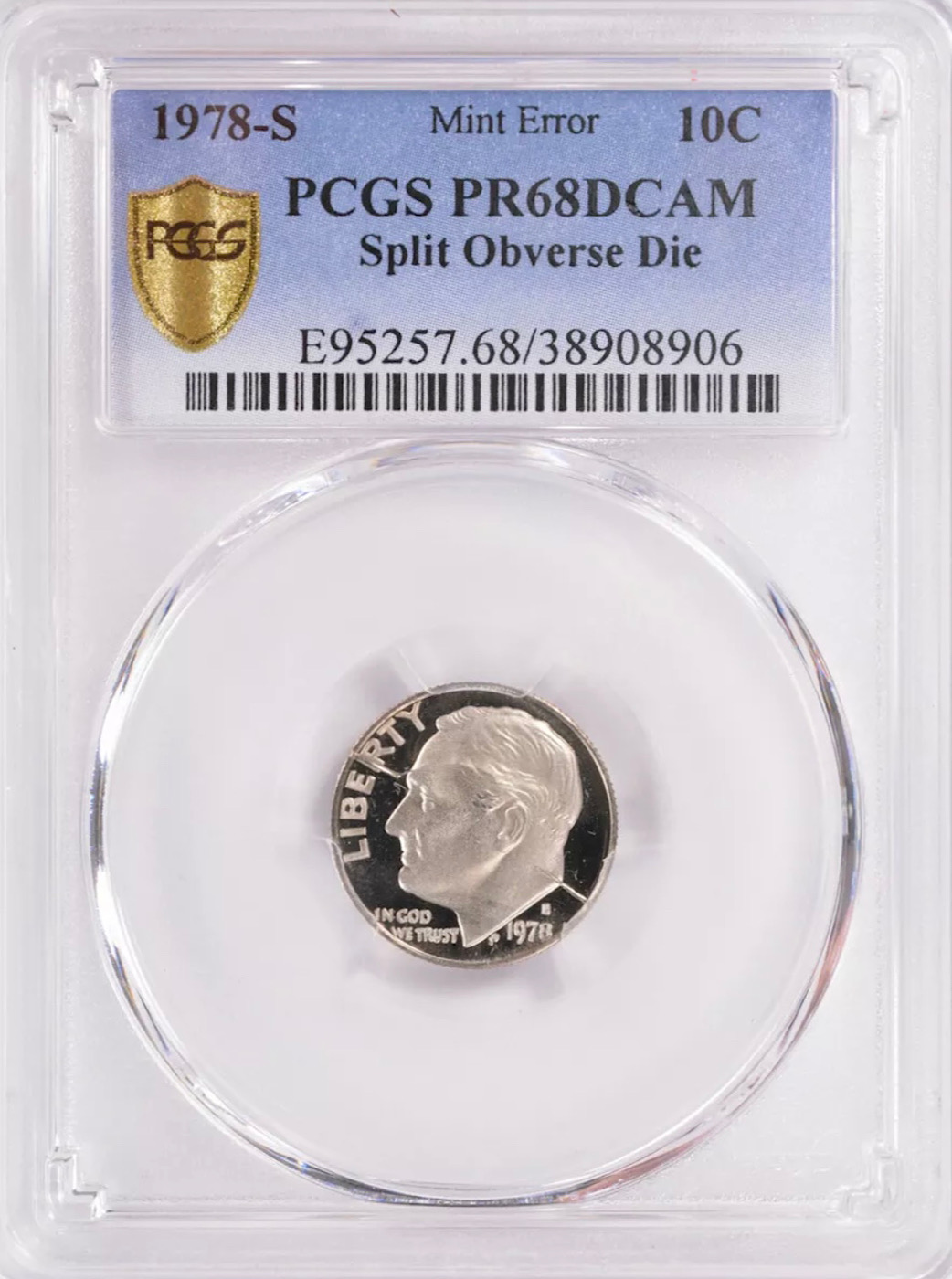 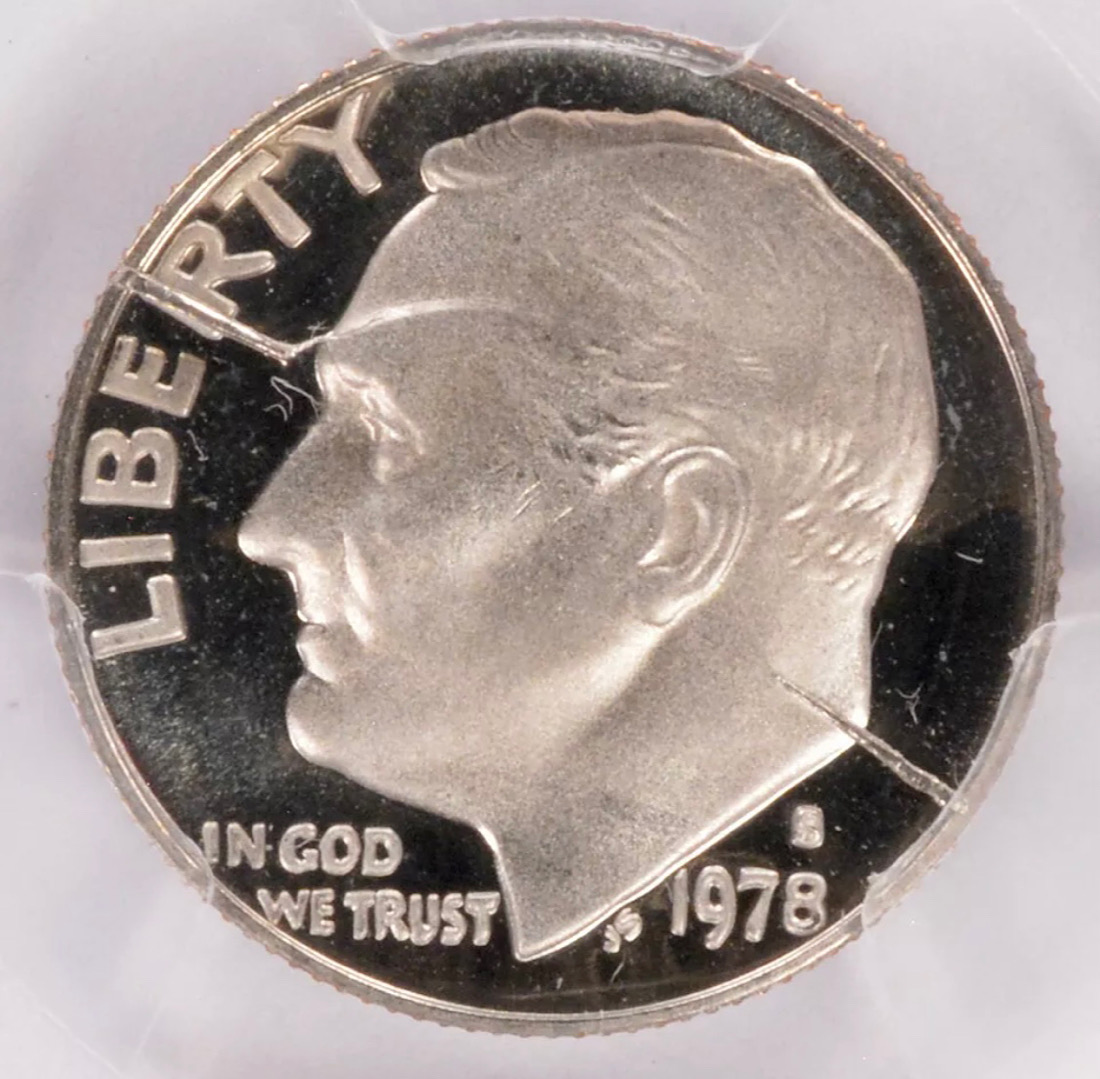 "Pride is yoked with callous behavior, as humility is with compassion." St. Gregory Palamas Top Finds - 1969-S 1c FS-101 http://goccf.com/t/477681 1976 D WQ FS-101 http://goccf.com/t/382777 - 1968 D 1c FS-801 http://goccf.com/t/422254Cool clashed dies - 1972 D 1c http://goccf.com/t/429855&SearchTerms=CCLStruck-In Rim Burr - 1969 S 1c http://goccf.com/t/425587&SearchTerms=burrFloating (Type II) Counterclash - 1978 D 1c http://goccf.com/t/434991&SearchTerms=1978 |
|
Pillar of the Community
United States
2752 Posts |
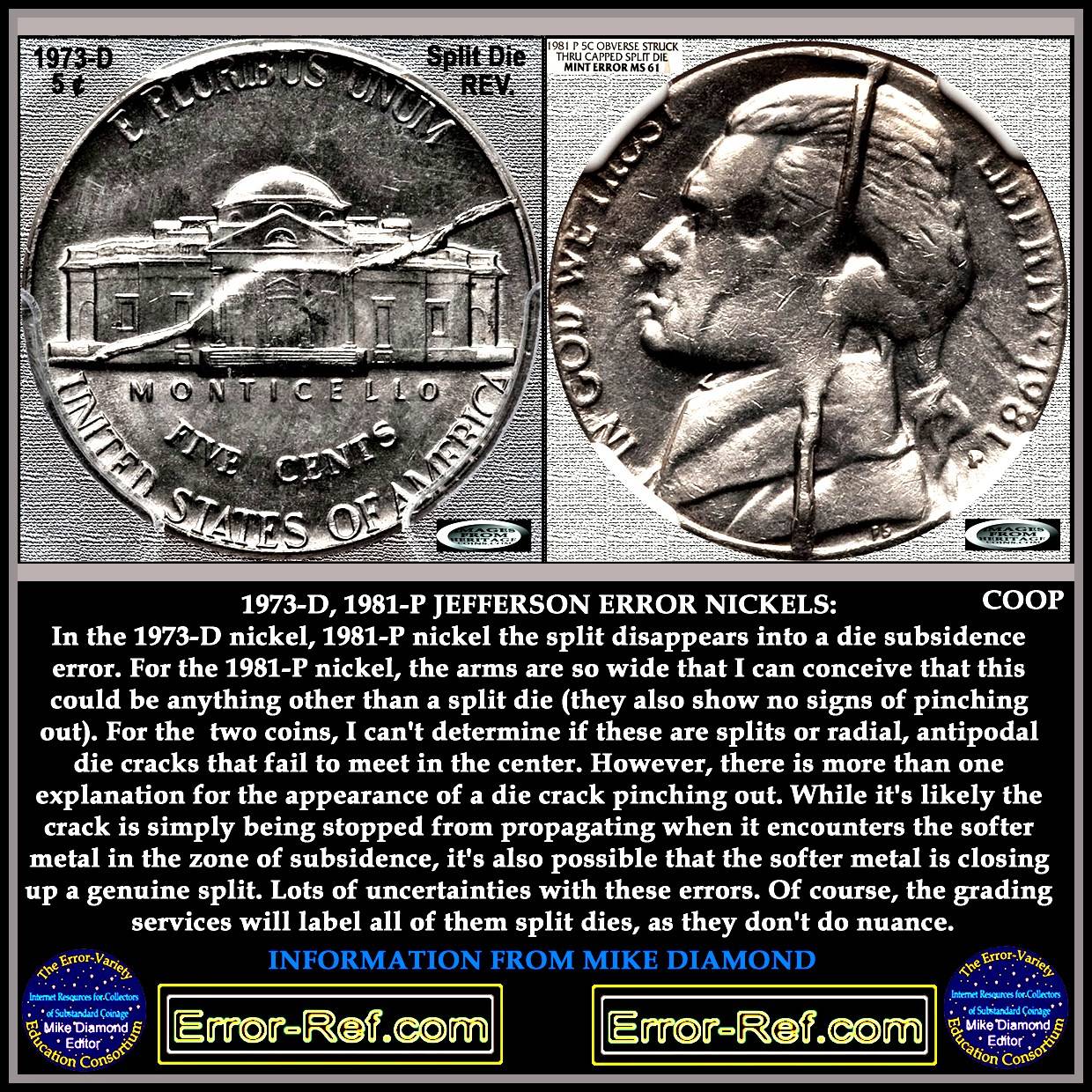
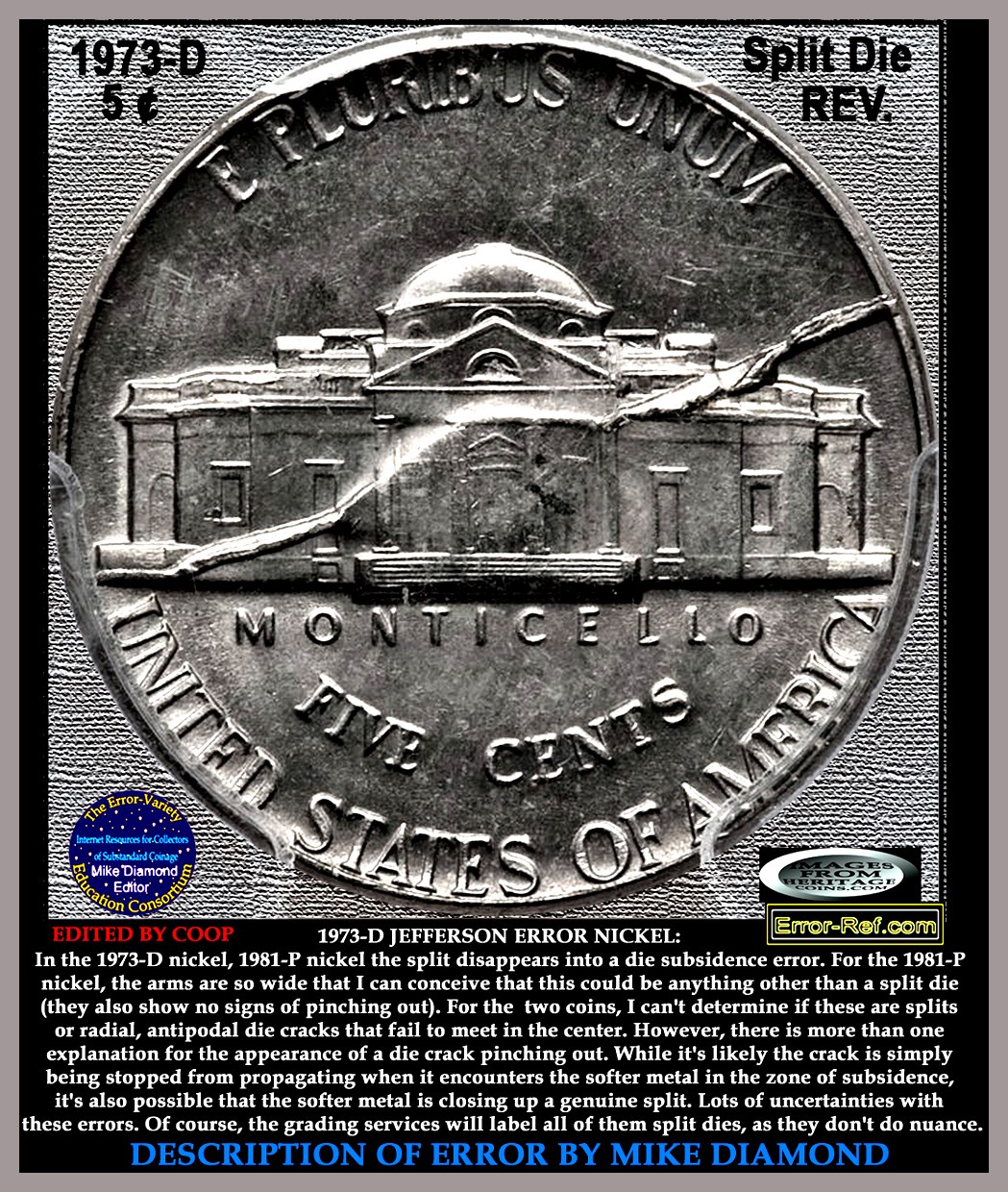
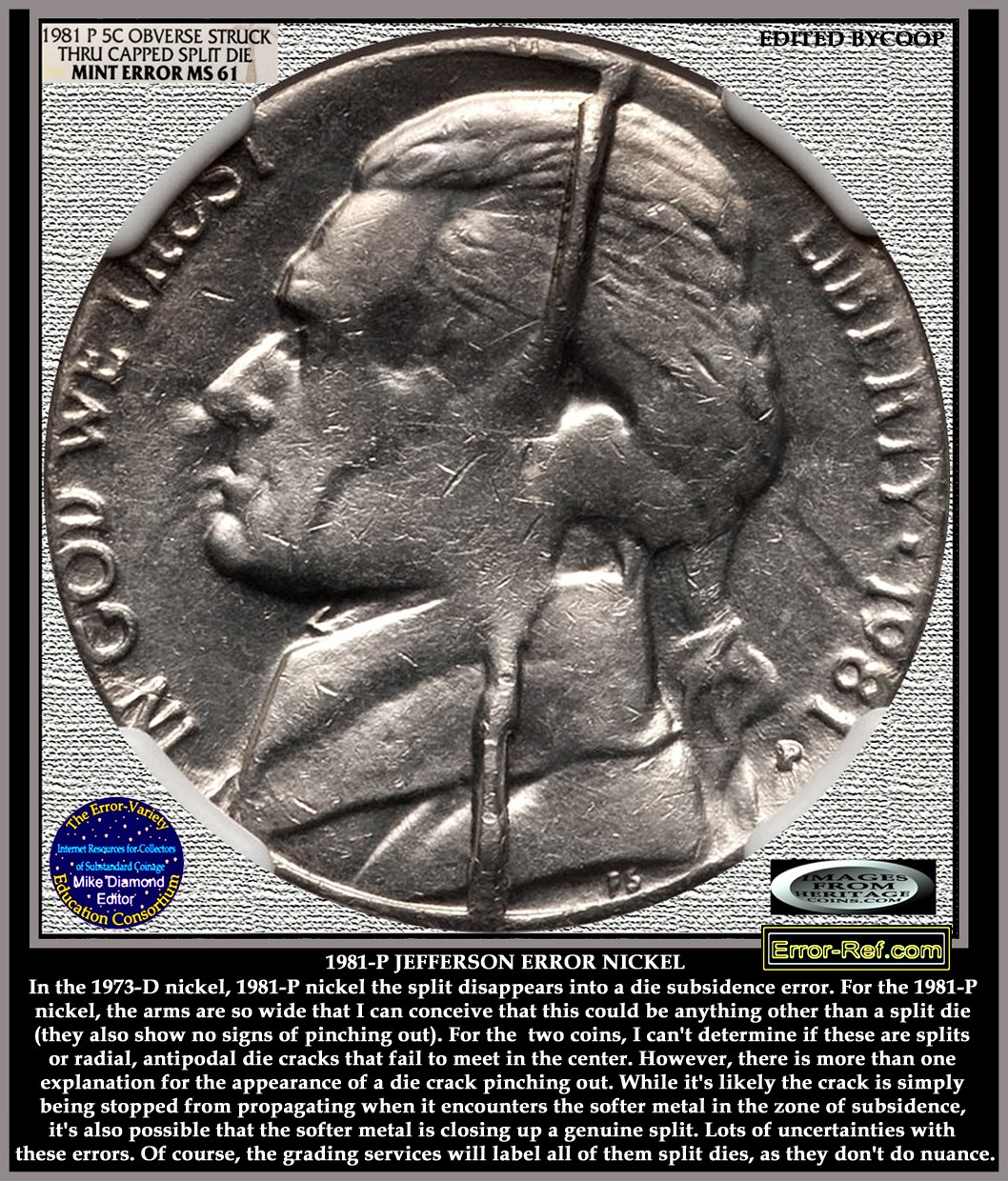
In the 1973-D nickel, 1981-P nickel, and 1978-S dime, the "arms" of the split disappear into a die subsidence error. For the 1981-P nickel, the arms are so wide that I can't conceive that this could be anything other than a split die (they also show no signs of pinching out). For the other two coins, I can't determine if these are splits or radial, antipodal die cracks that fail to meet in the center. The southeast arm in the dime is pinching out, so I suspect this is not a split. However, there is more than one explanation for the appearance of a die crack pinching out. While it's likely the crack is simply being stopped from propagating when it encounters the softer metal in the zone of subsidence, it's also possible that the softer metal is closing up a genuine split. Lots of uncertainties with these errors. Of course, the grading services will label all of them split dies, as they don't do nuance.
Error coin writer and researcher.
Edited by mikediamond
08/13/2021 08:10 am
|
|
Bedrock of the Community
United States
62064 Posts |
|
|
Valued Member
United States
399 Posts |
Amazing to fund such a unique error after all these years! Nice coin too :)
|
|
Page 3 of 3
|
Replies: 33 / Views: 3,992 |
Page 3 of 3
|








 First Page
 Previous Page

 Posted 08/11/2021 8:05 pm