| Author |
 Replies: 21 / Views: 4,025 Replies: 21 / Views: 4,025 |
Page 2 of 2
|
|
|
|
Valued Member
United States
227 Posts |
I prefer xylene to acetone, but both should work.
|
|
New Member
 United States
15 Posts |
Thanks for the prompt replies and the warm welcomes!
What do you make of the black residue on the silver shekel? PVC damage?
|
|
Pillar of the Community
United States
3013 Posts |
 with all of the above, but I can add this: That 2nd coin appears to be a Greek silver tetradrachm of Alexander the Great around 330BC.  |
|
Bedrock of the Community
United States
94367 Posts |
 to the CCF! |
|
Bedrock of the Community
United States
19660 Posts |
Acetone can also reduce the appearance of PVC. Give the coins in question a looooooong soak--a few days minimum. You can test for effectiveness over this span of time.
|
|
Pillar of the Community
United States
7067 Posts |
Quote:
2nd coin appears to be a Greek silver tetradrachm of Alexander the Great around 330BC. Melkart/eagle. Shekel of Tyre, Phoenicia. Dated PΞ = Civic Year 160 (AD 34/5). |
|
Pillar of the Community
United Kingdom
725 Posts |
The black might be a deposit from the ground, in which case it might not come off without causing damage.
|
|
Pillar of the Community
United States
1122 Posts |
I remove black deposits with a soak in distilled water and if necessary a bit of lemon juice. A wooden toothpick will do the rest. However, with the lemon, you will lose some toning.
|
|
Bedrock of the Community
Australia
21794 Posts |
Adhesive by itself easy enough to remove with acetone.
The problem is that adhesives often have sulfur in their formulation, and this can cause blackening on contact with the coin. This sort of thin surface corrosion cannot be removed with acetone.
If this coin has already had a long soak in acetone, all beneficial treatment that can be done, has already been done.
Nevertheless, the advice of travelcoin may help, but there are risks attached, partly dependent on the metal alloy.
These are also the risks that a museum curator would consider, when cleaning ancient coins after recovery from burial.
|
|
New Member
United States
15 Posts |
Thanks for your help, everyone! I'll try an acetone bath and report back the results.
|
|
Pillar of the Community
United States
1554 Posts |
The black appears to fade into purple in spots which suggests horn silver (AgCl).
|
|
New Member
United States
15 Posts |
Thank you! You comment led me to read up on horn silver. So much to learn! I'll be curious to see what the acetone will do to that coin and perhaps that'll illuminate exactly what it is. I'll do that coin in the second batch; I'm still soaking the first batch. After 12 hours, most of the adhesive has come off with some gentle rubbing with a Q-tip, but what was embedded between letters, etc., will need a longer soak. We'll see in another 12 hours.
|
|
New Member
United States
15 Posts |
Here are the results of the first batch. It was fun to discover what lay hidden under the adhesive! 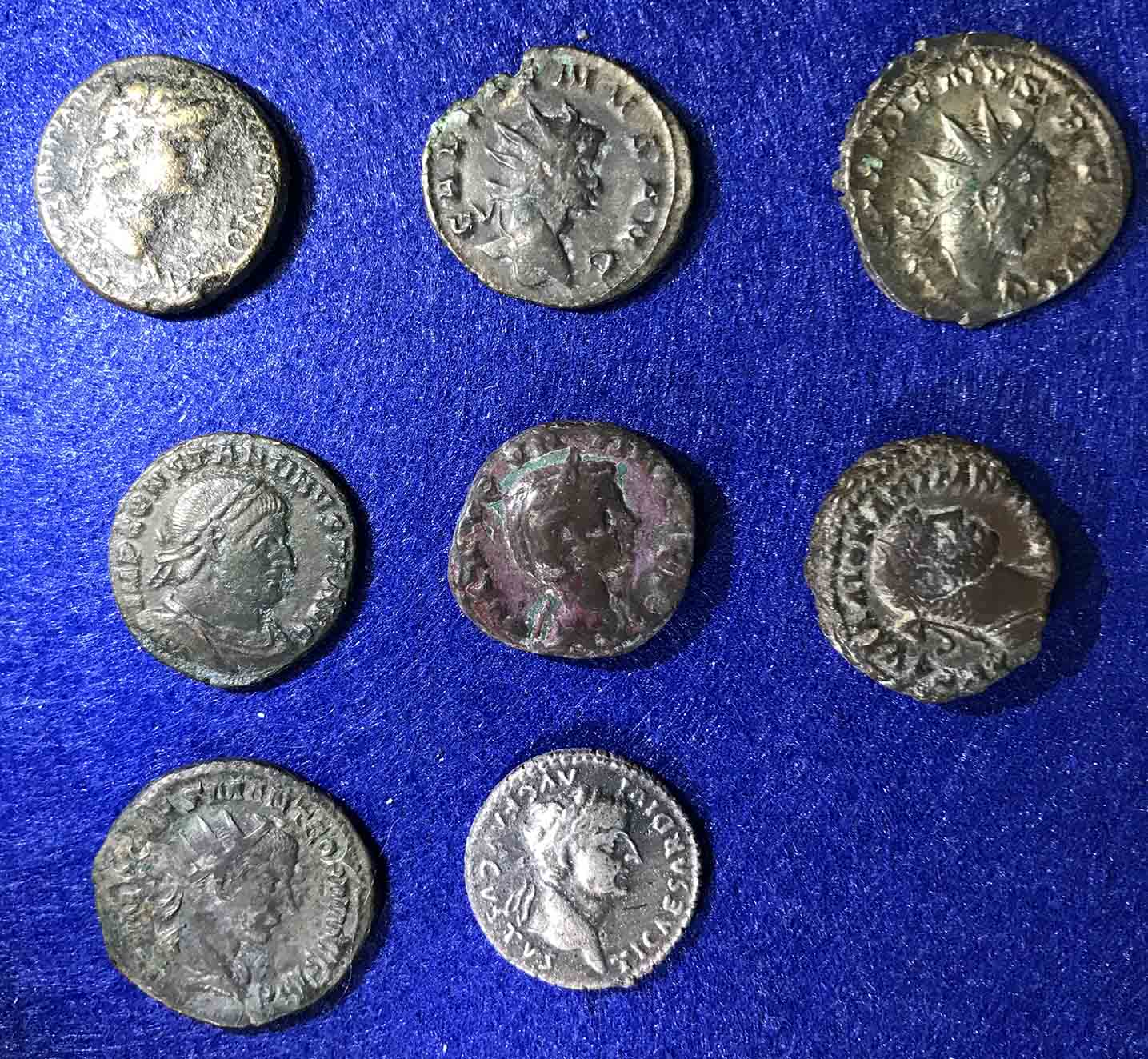 |
|
Bedrock of the Community
 United States
27514 Posts |
Wow - they're beautiful, bdcline!
Inordinately fascinated by bits of metal with strange markings and figures
|
|
Bedrock of the Community
United States
19660 Posts |
Ah yes, the wonders of acetone...
|
|
Page 2 of 2
|
Replies: 21 / Views: 4,025 |
Page 2 of 2
|





 First Page

 Posted 03/13/2023 4:49 pm


