| Author |
 Replies: 61 / Views: 24,814 Replies: 61 / Views: 24,814 |
|
|
|
|
New Member
Canada
1 Posts |
Hello Everyone. This is my first posting, as I am a new member. I have purchased a 2010 Lynx Mule Set. My number on the certificate is 8500. I hope this helps in finding the number of sets that has been produced. I have been told that the number is around the 500 mark. Thanks. Regards.
|
|
Pillar of the Community
Canada
1581 Posts |
I just got a set that is Type 2 (original post). But, the COA is oddly 07416. I'm checking with the source for whether it could have been swapped with another set.
It looks like they've paired an older specimen obverse (vertical striations) with a newer reverse (more of a speckle effect). It definitely isn't a NBU obverse.
|
|
New Member
Canada
13 Posts |
There are other scattered reports of more mules being found in the mid-7000 COA. Interesting!
|
|
New Member
Canada
19 Posts |
According to CoinWorld, November 22, 2010, volume 51, issue 2641, they have independently analyzed these coins and sets, and have determined that the coin is indeed a mule (error): "These examples of 10-cent coins struck with dies giving the coin different finishes on opposite sides seem to confirm that the Royal Canadian Mint has changed the finish on its Specimen coins. A mule coin results from a pairing of dies not intended to be used together. In this case, a die intended for the obverse of Specimen 2009 10-cent coins appears to have been joined with a reverse die for the 2010 Specimen coin." The article continues to pages 72 and 74 of that issue, from the front page it starts on. |
|
Pillar of the Community
Canada
1581 Posts |
> There are other scattered reports of more mules being found in the mid-7000 COA. Interesting!
Yes, I confirmed with the seller, and they had kept 07415 which is also a mule set. So, my set is a mule at 7416.
|
|
New Member
Canada
19 Posts |
After having sent some sets to ICCS for them to examine (a 2009, a 2010, and a 2010 one with a mule error), they have determined this coin is definitely a mule error. After having examined the coins from all 3 sets I sent, along with BU and ones from P-L sets, CoinWorld, myself, and ICCS all agree that the 2010 Mule Error Specimen 10 cent coin is specimen on both sides of the coin. All 3 of us (CW, ICCS, myself) agree that what appears to have happened (nothing is confirmed with the Mint) is a die for a previous year Specimen 10ct obverse was used with the 2010 Specimen 10ct reverse. This is not a planchet preparation issue, or a finish issue, or a packaging issue. The obverse is *NOT* BU or NuBU. It *is* definitely specimen according to industry experts at CoinWorld and ICCS, and a muling of two different dies intended for two different specimen coins. This sort of reminds me of the 1973 Large Bust mule error coin, which resulted from a previous year obverse being used on a (then) current year reverse. Gatewest has an interesting story on their website for this item detailing the recent discovery in their inventory, and that most of the ones they possibly received from the Mint in sets were sent out to customers in orders without being checked! Edited by Locutis
11/17/2010 06:47 am
|
|
Pillar of the Community
Canada
1581 Posts |
(1) CCN is still confusing the matter. The latest issue (Dec 7 - Dec 20) has an article titled: "Specimen sets contain 2010 SP-UNC mule, not NBU coin"
It is claiming the obverse is UNC (not NBU or Specimen).
And it claims the 2009 and 2010 specimen sets have the same finish (hence implying it can't be a 2009 specimen obverse).
I don't have a 2009 set, so I can't say, but there was a change in the specimen finish after 2007. The 2007 and 2010 specimen finishes are very different. From mere vertical striations to a speckle effect with striations.
(2) With regards to the 1973 LB. I've read claims that a dealer/collector cornered the market in these to cause an artificial shortage and that it is less rare than people think. Has anyone read an estimate for the number of 1973 LB?
|
|
Pillar of the Community
Canada
1164 Posts |
I have to agree with the 1973 LG bust.There is always some PL Sets on ebay and find them over priced to the volume of them out there.MS strikes are scarcer. |
|
Pillar of the Community
Canada
1581 Posts |
Canadian Coin News has FINALLY gotten it right.
The latest issue (Dec 21 - Jan 3) has "my bad" admission in the editorial, and a new story which confirms that the 10c mule is a mix of a 2010 specimen reverse with a 2009 specimen reverse.
As I have pointed out, the specimen effect is unusually subdued. As the article says "The linen will wear out on the Specimen coins"
The article says the change from 2009 to 2010 was a move from a manually applied finish to a laser created one.
|
|
Pillar of the Community
United States
2408 Posts |
That explains the grit blast phenomenon we see today. The Mint has to reduce this effect. It may be a way to mask (hide) minting defects on the relief, or a way to extend the life of the die. I just don't like the frost in recent years, it's way too intense.
|
|
Valued Member
Canada
85 Posts |
I think it requires more research to determine if it really is a mule.
|
|
Valued Member
Canada
276 Posts |
I like the blast effect :P
|
|
Valued Member
Canada
258 Posts |
My set's COA is 00749 would it be a mule or just a regular set?
|
|
Pillar of the Community
Canada
2430 Posts |
Yep!
Edited by darryldarryl
04/13/2012 10:39 pm
|
|
Pillar of the Community
Canada
2366 Posts |
Check the back of the dime. If it's all shiny it's a mule. If it's frosted around the queen it's not. This picture from ebay shows a mule. 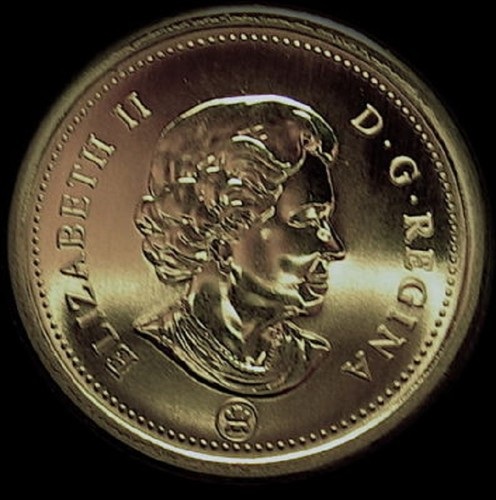 Edited by kuh_85
04/14/2012 11:20 am
|
|
|
Replies: 61 / Views: 24,814 |
|







 First Page
 Previous Page

 Posted 10/20/2010 9:11 pm


