Tonight we have a look at a coin that celebrates one of the most "commemorative worthy" events of the entire series -- the 1926 150th anniversary of the US Declaration of Independence from Britain. The coin is presented via a PCGS MS-64 example.
The 1926 Sesquicentennial coin was the second coin struck in the 1920s that featured the portrait of a living person (the 1921 Alabama was the first) -- then current US President Calvin Coolidge was featured along with George Washington on the coin's obverse.
Note: It was the first time a sitting president's image appeared on a US coin. The reverse features a nice depiction of the Liberty Bell, which was on display during the 1926 Sesquicentennial International Exposition held in Philadelphia. The coin was struck in low-relief which results in the loss of overall design details even on average struck coins and a noticeable "chatter" on Washington's cheek on a large percentage of coins. The coin was designed by
John Sinnock, the eighth Chief Engraver of the US Mint.
Read More: Commems CollectionThe 1926 Sesquicentennial half-dollar is one of the more difficult coins in the series to locate in gem (and above) mint state grades. In MS-64, the piece costs a few hundred dollars, in nice MS-65 it is a coin that can quickly hit $3,000 and beyond. The coin presented is an attractive piece with good surfaces and nice luster -- my experience suggests it is above the average for coins in this grade.
Note: I have to apologize for the coin images tonight, no matter what I did re: lighting adjustments on my scanner I could just not get an image that captured the actual look of this coin -- it likely has to do with its shallow relief and strong luster. You will have to trust me on this one, it is a very attractive coin in hand.I have only seen one MS-65 coin that I considered buying in all the time I have been searching -- most appear with unattractive toning, unattractive surfaces, a strike weaker than average or just an unappealing overall look. I won't pay premium money for a coin that does not appeal to me, so a ‘64' remains in my collection. Why did I pass on the MS-65 coin I just referenced? The dealer was looking for about $2,000 more than the
Greysheet ‘Ask' price and as beautiful as the coin was, I thought the premium was too strong. If I were presented with the coin again today, I would gladly pay the premium and marvel over the "bargain"!
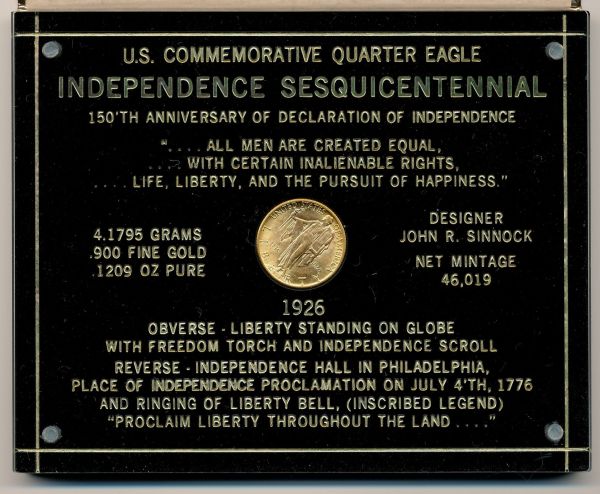
A gold $2-1/2 coin was also struck for the celebration; it was also designed by
John Sinnock. I've included an image of one that I purchased 10 or 12 years ago in a custom holder. It is a stunner in hand, and very likely would be graded as a gem if I were to submit it, but I believe it will remain in its comfortable custom-built home. I won't tell you how little I paid for it, but I will say a local dealer gave me quite a deal as he did not do much of a business in commemoratives in either silver or gold and simply wanted it gone!
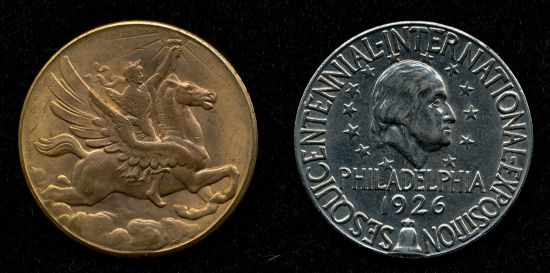
The US Mint attended the Sesquicentennial Exposition in Philadelphia in 1926 and brought along a coin press to strike souvenir medals for visitors. They struck the pieces in copper, bronze, brass and nickel -- I've included obverse/reverse images via a nickel and bronze example below.
I've also included an image of the front cover of a promotional booklet for the Exposition. I've got quite a bit of ephemera for the Exposition, but will hold off posting images unless there is a strong desire.
Enjoy!
1926 American Independence Sesquicentennial Half-Dollar -- Obverse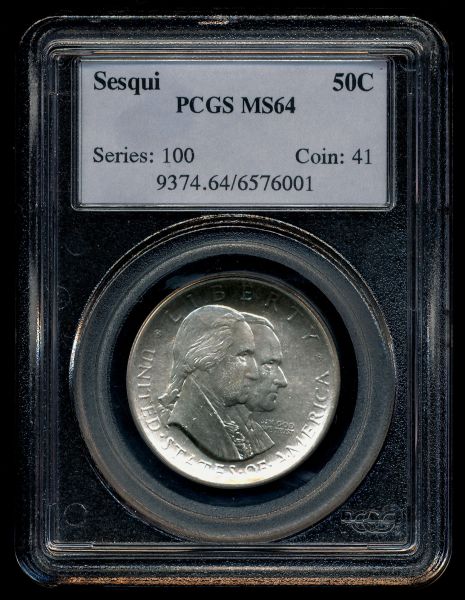 1926 American Independence Sesquicentennial Half-Dollar -- Reverse
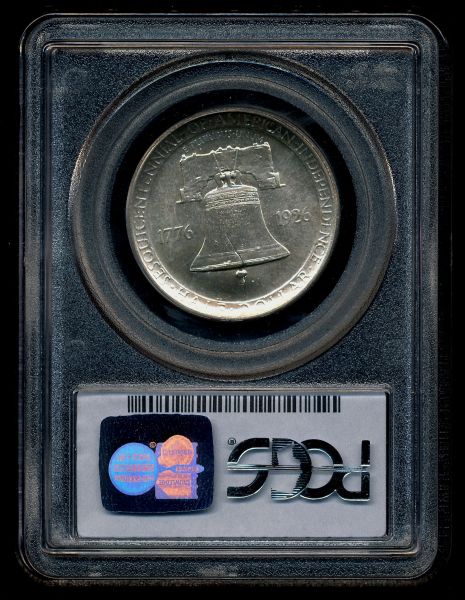 1926 American Independence Sesquicentennial Quarter-Eagle -- Obverse
 Official Exposition Souvenir Medal -- Reverse (L) / Obverse (R)
 Front Cover of Exposition Promotional Booklet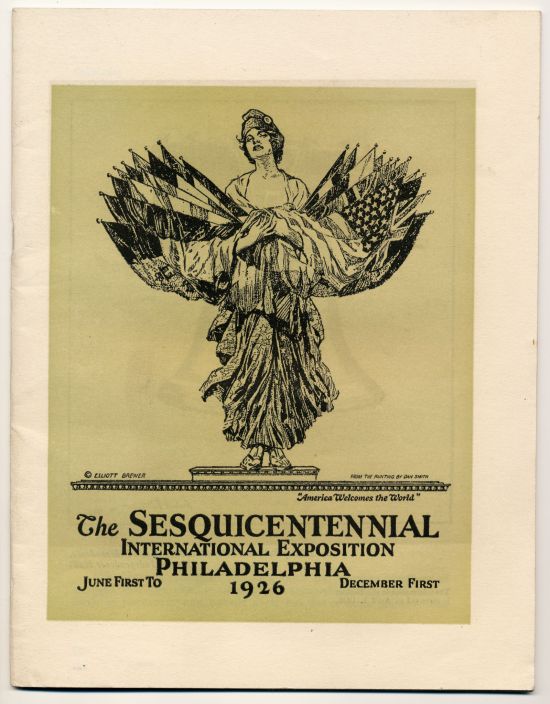







 Posted 04/30/2012 10:04 pm





