If you've ever spent time examining the way the denomination is presented on the coins of the classic commemorative series, you may have noticed that several of the coins vary from the circulation standard. For example, not all of the 50-cent coins use the contemporary US standard of "Half Dollar." Seven coins feature a nickname as part of the denomination specification -- I call these coins the "Nickname Notables."
This interesting variation began with the very first US commemorative coin -- the 1892 World's Columbian Exposition half-dollar. The obverse specifies the denomination as "Columbian Half Dollar." I've never heard it suggested (or seen it documented), but I've wondered if this was consciously done by
Charles Barber as a way to make it very clear that it was a "souvenir coin" of the Columbian Exposition vs. a standard circulating half-dollar coin. Coincidentally, the new standard dime, quarter-dollar and half-dollar coins designed by Barber were released in 1892.
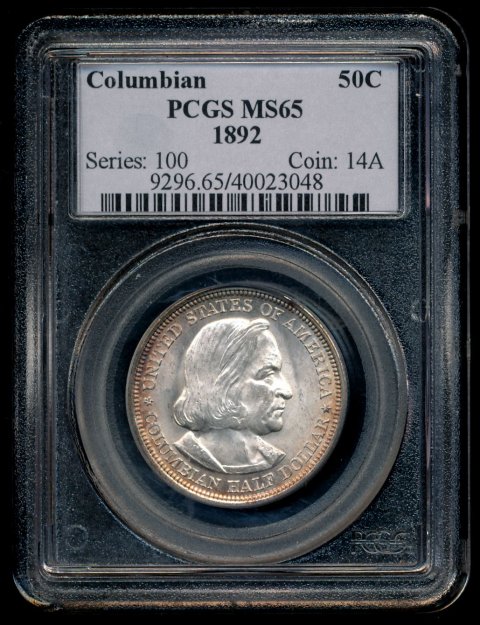
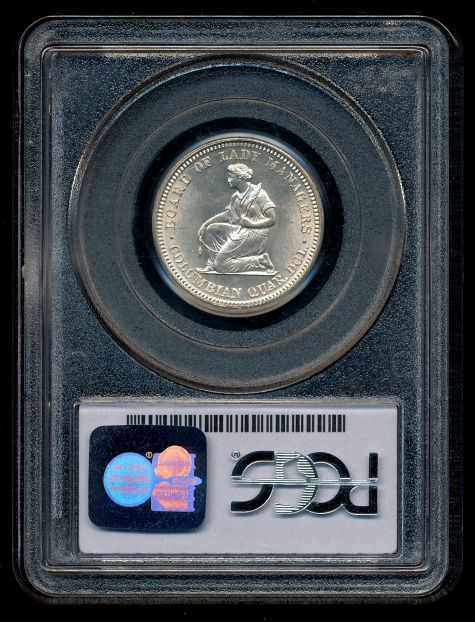
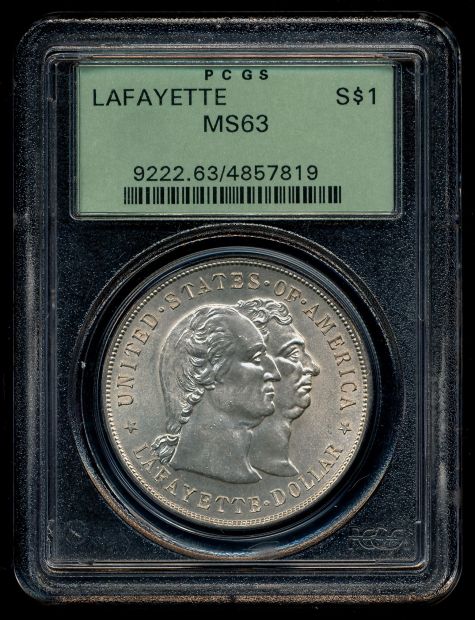
Barber used the same approach when he prepared the models for the 1893 Isabella 25-cent coin which presents its denomination as "Columbian Quar Dol" and the Lafayette silver dollar of 1900 which features "Lafayette Dollar" as its denomination vs. the more traditional "One Dollar."
Beginning with the gold commemorative dollar of 1903 for the Louisiana Purchase Exposition (another coin designed by Barber), our commemorative coins transitioned away from "nicknames" and followed the traditional manner of presenting the denomination -- "One Dollar" or "Half Dollar" -- on the coins issued.
In 1916, however, the named-denomination re-surfaced with the release of the McKinley Memorial gold dollars. The obverse of the coin (designed by 76-year old
Charles Barber) features a denomination specified as "McKinley Dollar." Chief Engraver Barber died in February of 1917.
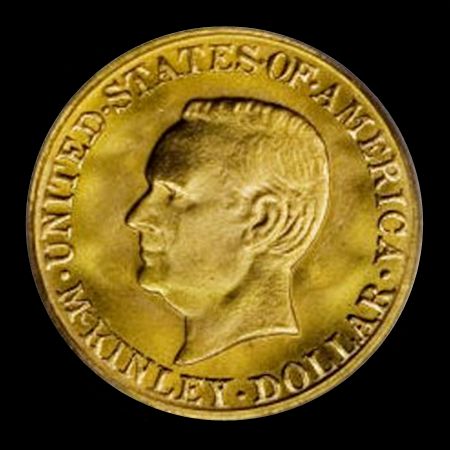 (Image courtesy of Heritage Auctions, Inc., http://www.ha.com)
A few years later, the approach continued with the "Pilgrim Half Dollar" to mark the 300th anniversary of the 1620 landing of the Pilgrims at Plymouth Rock in present-day Massachusetts; the coin was designed by Cyrus Dallin. It was soon followed by the George Morgan designed 1924 "Huguenot Half Dollar" and the Chester Beach designed 1925 "Patriot Half Dollar" to mark the 150th anniversary of the first military engagements between the American colonial militia forces and the British Army regulars (the start of the American Revolutionary War).
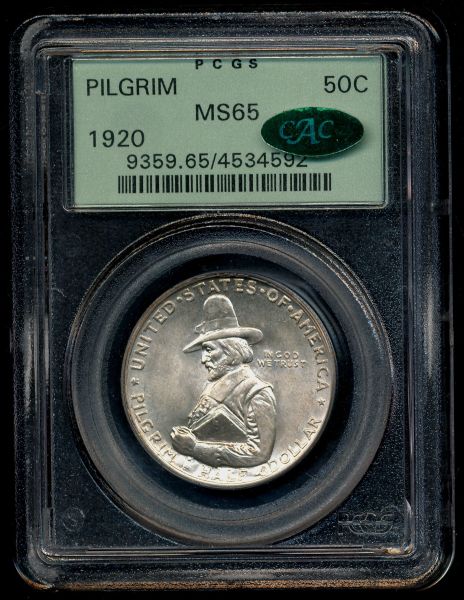
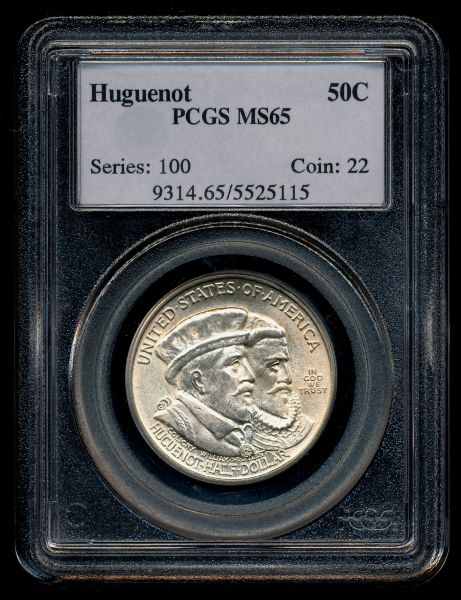
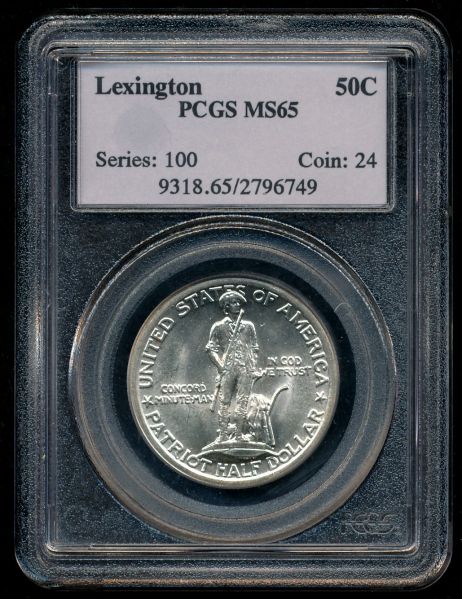
We may never know if
Charles Barber decided to specify the denomination on our first commemorative coins in a "special" way to help distinguish them from our regular circulating coinage, or if it was simply a matter of artistic expression under the less restrictive constraints of commemorative coin design; more research may someday yield a definitive answer. Either way, he was not alone in using "nicknames" on our commemorative coins as the three non-Barber issues of the 1920s attest.
One possible explanation as to why the artists chose to specify the denomination in a non-standard way is that it was an attempt to create an easy-to-remember identity for these coins as a way to increase/expand their popularity and help generate sales. "Patriot Half Dollar" certainly rolls of the tongue more easily than "Lexington-Concord Sesquicentennial Half Dollar."
In any case, I think this little subset of coins is just one of the many interesting ways of looking at our classic commemoratives!










 Posted 08/21/2012 12:30 pm


