Success doesn't just happen. It's planned for. - AnonymousThe secret of success in life is for a man to be ready for his opportunity when it comes. - Benjamin Disraeli I think it is safe to say that Horace M. Grant, the 1930s coin dealer from Providence, Rhode Island was a planner who was definitely ready when his opportunity came. But first, a bit of background...
The 1936 Rhode Island half-dollar was sponsored by the Rhode Island and Providence Plantations Tercentenary Committee, Inc. (I've previously posted some background on the coin here:
http://goccf.com/t/117071 ). The Committee arranged with the Rhode Island Hospital National Bank for it to be the primary distributor of the coins within Rhode Island; the Hospital National Bank stored the coins when delivered from the Mint and distributed them among 30 banks in the state for over-the-counter sales that began on 5 March 1936.
The Committee also allocated approximately 7,000 of the 50,000 coins struck to Horace Grant who was to be responsible for handling coin orders that had come in from collectors across the country. It quickly became clear to the coin collecting community, however, that Grant was able to secure more than his original allocation.
The "fun" began the day the coins were first offered for sale. It was almost immediately announced that due to overwhelming demand for the coins at the state's banks, the coins had sold out in a matter of hours. It was pure fabrication, but it certainly whipped the collecting community into a frenzy as the story broke.
An advertisement from Grant's Hobby Shop that appeared in
The Numismatist in April 1936 had the headline "Sold Out in Six Hours!" In the ad, you'll note that the "virtuous" Grant worked hard to fill all of the orders he received, even though it meant he allegedly had to purchase additional coins from the secondary market.
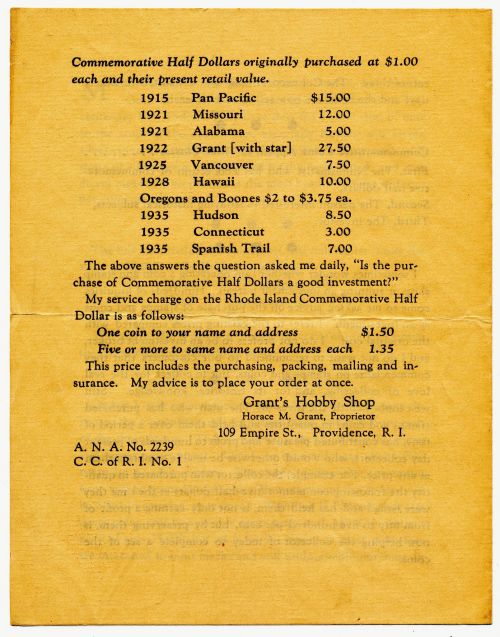
The original selling price of the coins was $1.00 over-the-counter and $1.50 via the mail, regardless of which Mint struck it. You'll note, however, the sizeable price increase for the coins in Grant's advertisement just days after their release.
It soon became clear to collectors and other dealers that the distribution of the coins was not being handled in a fair and honest way. Many original orders were either reduced or cancelled, though Grant continued to advertise having a supply of the coins for months after their release - and always at a price notably higher than issue price.
But I submit (as have others since the time) that the immediate "sell-out" and other distribution issues were planned well in advance by Grant and his connections in the sponsoring Committee, namely Arthur L. Philbrick, the Committee's Treasurer.
As evidence of this, I submit the following promo piece that Grant had made up and distributed in January 1936. While the piece can be viewed as an innocent advertisement for the coins, sentences such as "The writer predicts that the entire issue will be immediately sold." tend to jump out at the reader. As does his touting of the financial returns of other commemorative coins though he states "I do not profess to be an investment broker, and I do not want to recommend to our customers that they commercialize on stamps and coins..."
I recognize that I have the benefit of 20-20 hindsight, but as the quotes that began this post suggest - success takes planning and opportunity. I believe Grant was planning for his personal success with the opportunity provided by Rhode Island half-dollars long before the first coin was made available to the public.
Enjoy!
1936 Rhode Island Commemorative Half-Dollar - Obverse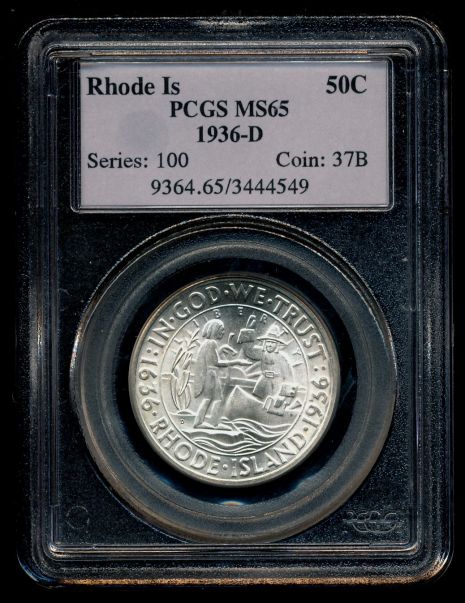 1936 Rhode Island Commemorative Half-Dollar - Reverse
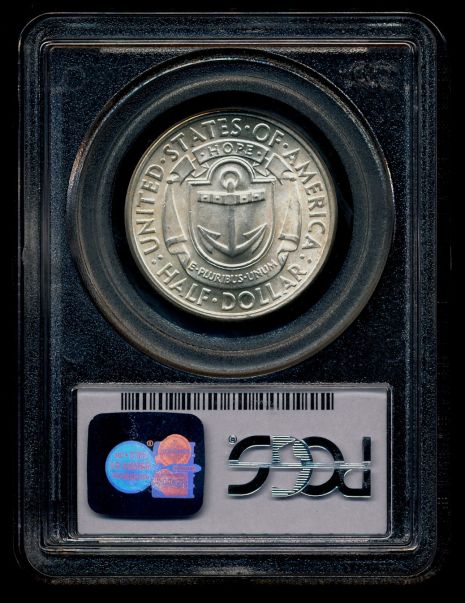 1936 Grant's Hobby Shop Promotional Flyer - Cover
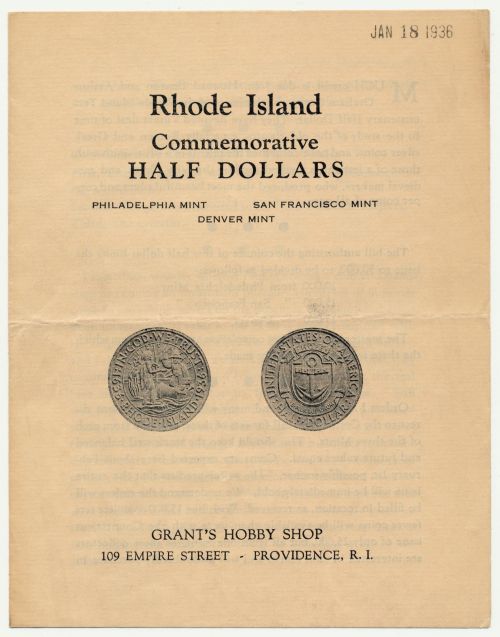 1936 Grant's Hobby Shop Promotional Flyer - Inside Left Panel
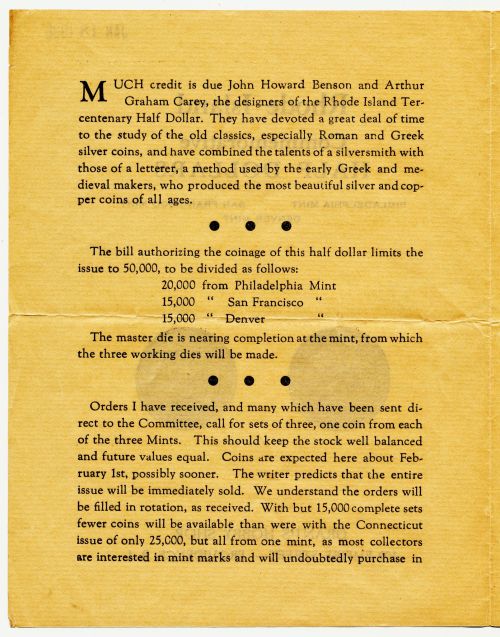 1936 Grant's Hobby Shop Promotional Flyer - Inside Right Panel
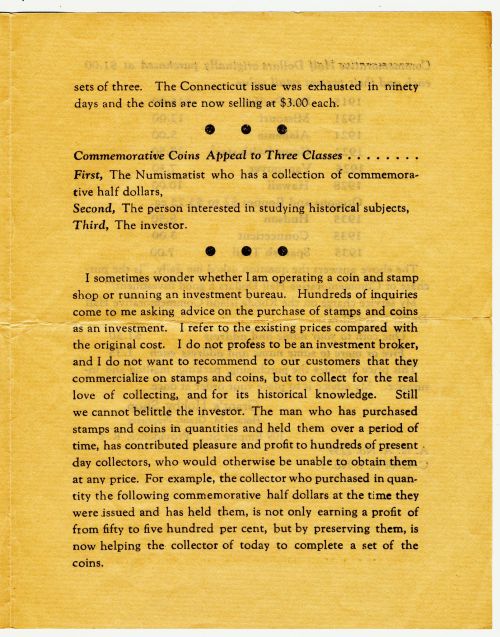 1936 Grant's Hobby Shop Promotional Flyer - Back
 1936 Grant's Hobby Shop Advertisement (The Numismatist, April 1936)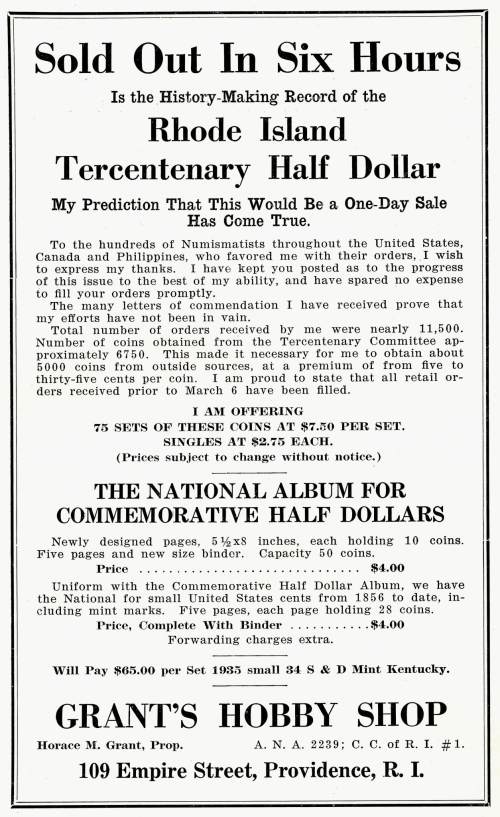









 Posted 04/04/2013 8:31 pm


