| Author |
 Replies: 24 / Views: 4,350 Replies: 24 / Views: 4,350 |
|
Valued Member
85 Posts |
I find it particularly bizarre that some people want to define what a coin is based on some subjective personal characteristics that they've presupposed are the only characteristics that are important. There's nothing honest or respectable about such a view held by those who do. So, what is a coin? My own definition is: it's typically a somewhat flat, round, pressed piece of metal with an official seal and a denominated value stamped onto it. Are the billions and billions of collector (whether mint state uncirculated finish, proof finish, or special finish) pennies, nickles, dimes, quarters, half dollars, and dollar coins minted by the U.S. Mint, coins, just because they are intended to be purchased by collectors and not put into circulation? Yes, of course. Are 20th Century, proof coins (like this one: http://www.pcgscoinfacts.com/Coin/Detail/7342 ) which arguably were intended to be purchased by collectors and not be put into circulation, coins? Yes, of course. Are modern high relief, high premium coins (like this one: https://goccf.com/t/190354 ) coins, just because they are intended to be purchased by collectors? Yes, of course these are coins. What about plastic composite coins: http://www.plasticsnews.com/article...lastic-coins Are they not coins because they don't fit into one person's very narrow definition of what a coin is supposed to look like or be made for? The point of this is just because some people want to subjectively attach only certain characteristics, that they happen to be partial toward, to a denominated round piece of metal for the purpose of personally qualifying something as a coin, the truth is, it doesn't change the fact that that personally subjective criteria doesn't make a coin not a coin. I have a liking and fascination for all coins, from ancients to modern collector coins. Each has their own charm and history, whether it be an ancient coin that was alleged to be lost at sea and never to be recovered again or a modern collectible kilo size coin that has been cherished by the family of a woman who shows her collection of kilo coins to them every time she adds to her collection of beautiful coins. What about you? Are you going to be fuming furious at top mints around the world and collectors worldwide because they view as or call coins "coins"? Are you amongst the group who dismisses coins as something else just because it doesn't fit into your personal, subjective criteria that you attach to round pieces of metal? Or are you like me in the context that you accept that coins come in many different sizes, styles, shapes, and materials and it doesn't matter if the coin never sees circulation or that it was intended to be purchased by collectors? Edited by mmissinglink
11/23/2014 6:27 pm
|
|
|
|
Rest in Peace
United States
1501 Posts |
It ain't round but it's a coin to me! 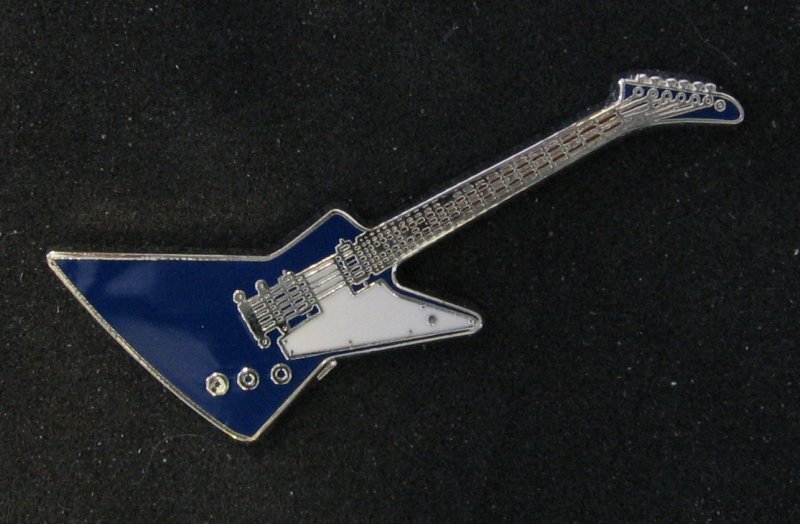 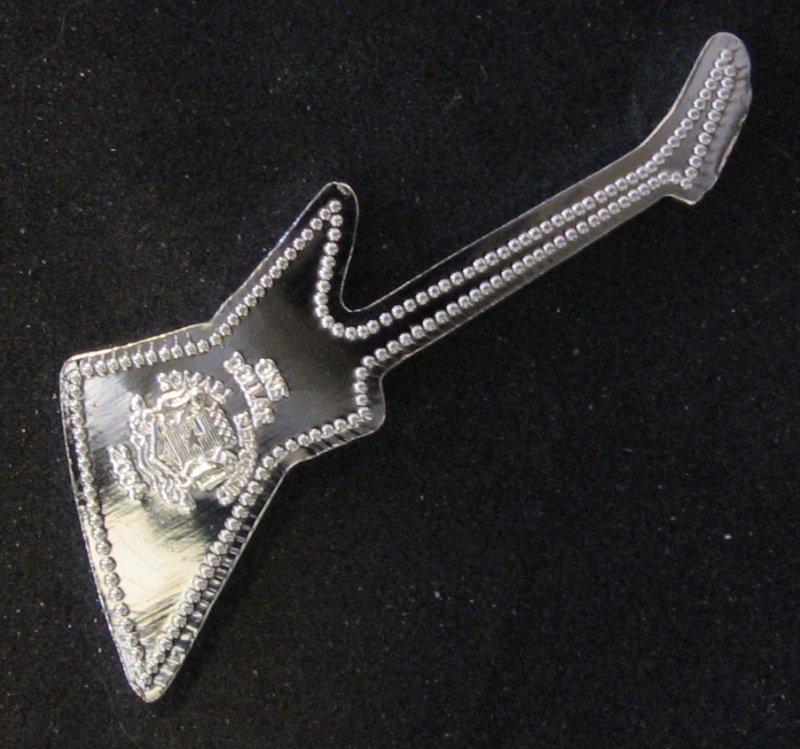 |
|
Pillar of the Community
Canada
2531 Posts |
By what measure is a "coin"? Is it a coin because someone says it is? Gets a bit philosophical.
To me, a coin is something preferably hard and big enough for you to be able to hold it (so table salt is not a coin, unless you are an ant, but seashells can be considered as a coin), that has a standardised value (either intrinsically e.g. sliver, or because someone says so e.g. Canadian MPPS coins) and can be used as an acceptable medium of exchange.
|
|
Pillar of the Community
United States
5362 Posts |
SlurExe97 You hit what I see as the correct nerve when you say: Quote:
can be used as an acceptable medium of exchange. Coins are MONEY. Without that distinctive trait a coin can be any item that carries a denomination whether or not it is or ever was actually used as money - legal money. I checked one dozen different on-line dictionaries and every single one contains a component referring to money or a related term. I also checked on line Numismatic sites and here is one definition for coin. http://cointerms.com/glossary/c_definitions.htm Quote:
coin - object usually made of flat metal. Most often it is small and round. Issued by a government as money. Usually, accepted by the community as having value. See token. Then I checked token as suggested and found: Quote:
token - Something that looks like a coin, but is not legal tender issued by an official government. For example, parking tokens, video game machine tokens, and casino tokens. Some coin collectors shy away from collecting tokens. However, there are a few small groups of serious token collectors. I think this post came about as a in-direct result of comments made regarding non-coin status of the Andorra Denar issues which lack legal monetary status. The issues of micro-nations that do not circulate as money are the kinds of items that are best placed in "Unusual World Coins" by Krause. The general description of that book describes the contents as: Quote:
The classic guide to mysterious coin issues from the realms of Fantasy, the borders of Micro-Nations, the halls of Exiled Royalty, the shady backrooms of imitators, the creative minds of numismatic promoters and the shores of Islands as yet undiscovered has grown and the market for these types is hotter than ever. I think that statement best describes what I was referring to. There was absolutely no intent to introduce a definition that is: Quote:
based on some subjective personal characteristics that they've presupposed are the only characteristics that are important.
I apologize if my earlier comments were hurtful in any way. I was merely pointing out the numismatic definition of a coin that has been used for many centuries. Coins were monetary - legal tender items. Other coin like objects were medals or tokens. Both are collectable and have a market value. The very recent introduction of the cross-over category of "Unusual Coins" is perhaps the best way to refer to these items that resemble coins but have no legal or monetary status as coins. Perhaps because I champion collecting counterfeit de-monetized coins I am a bit too touchy on the definitions issues.
Edited by swamperbob
11/23/2014 8:18 pm
|
|
Pillar of the Community
3772 Posts |
Quote:
My own definition is: it's typically a somewhat flat, round, pressed piece of metal with an official seal and a denominated value stamped onto it.
Re: 'flat' - there are wonderful ancient tetradrachmsm with plenty profile Re: 'round' - pleanty square and otherwise odd shaped coins around Re: 'metal' - there are coins made from other materials, eg porcellain Re; 'denomination' - here again there are plenty coins without a denomination inscribed Seems to me that your definition is very narrow.  |
|
Moderator
 Australia
16985 Posts |
Numismatic objects generally fall into three broad categories: coins, medals and tokens. A "coin" is an object that meets the following two criteria:
(1) it is issued by a government;
(2) it is assigned a face value and/or intended to be used in trade and commerce.
A "coin-like object" failing to meet the first criterion but meeting the second is a "token". An object that fails to meet the second criterion is a "medal", whether or not it meets the first criterion.
Now, these sharp, easily defined boundaries become fuzzy once you start narrowing down the definitions of the various terms in the criteria. What, exactly, is a "government"? Can "coins" only be issued by "real countries" and who decides which countries are "real", anyway? Who is authorized to assign face values to objects, and what do you do with objects which are assigned face values by people who are not authorized to do so? What do you do with objects which were never intended to circulate as money, but which, through necessity or confusion, ended up in circulation anyway?
The Somali "guitar coin" posted by COINAHOLIC above is an excellent example. It was issued by a private mint in America, which specifically intended to market them in America to coin collectors seeking something different, and to music/guitar fans. But they never obtained any official permission from the Somali government to make these "coins" - largely on account of their being no internationally recognized Somali government around in 2004 to ask. Somalia does not use, and never has used, a currency unit called a "dollar". It is therefore considered an "unofficial coin". But, if one were to insist that the word "coin" can only be used for legal tender objects issued by a legitimate, internationally recognized national government, then it is perfectly reasonable to call it something else. But what? "Round" is inappropriate, because, well, it's not. "Token" implies it was intended to actually circulate, which it wasn't. "Medal" is perhaps the best alternative, although such use can cause confusion because the presence of the name, date and denomination clearly make it look very "coin-like".
Don't say "infinitely" when you mean "very"; otherwise, you'll have no word left when you want to talk about something really infinite. - C. S. Lewis
|
|
Pillar of the Community
United States
5362 Posts |
In my collection I have a very nice "Unusual Coin" that was issued by Zamunda and has a picture of Prince Akeem on the obverse and the Lion of Zamunda on the reverse with the inscription Zamunda 5 Pounds 1988.
This item is a movie prop from "Coming to America" - they were authorized by Paramount Pictures and used as promotional give-aways. Zamunda does not exist and there is no legal tender issue of Zamunda Pounds.
Without a narrowed definition - would my Eddie Murphy medal be a coin?
|
|
Pillar of the Community
Canada
2531 Posts |
swamperbob, I say no. For me it has to be widely accepted by the public, not only fanbases. I would call yours a medal, since it is not widely accepted as a medium of exchange.
A token, for me, are pieces is issued privately (either by a bank, a company, someone making their own currency that can be used to purchase things in their store only and can be bought with normal money, etc) that is accepted as a medium of exchange for its target consumer.
(That didn't some out too well... I'm not in business or economics so bear with me.)
What is the point to produce a token if no one is willing to accept it as "money", something with value?
|
|
Pillar of the Community
United States
5362 Posts |
I also have been calling it a medal not a coin even though it is listed in "Unusual World Coins".
I believe only monetary items or former monetary items actually deserve the name coin.
Tokens as you say can at times have value attributed to them - sometimes temporarily and sometimes indirectly.
Medals are a more open item which is where non-monetary and never monetary items belong. This I have always believed to include things like the Denars of Andorra.
Bullion items often have meaningless denominations attached to them even by legitimate governments like the US and Canada.
|
|
Valued Member
 85 Posts |
Sap provides the most sound argument in this discussion thus far. Thank you for your views Sap. Quote:
Re: 'flat' - there are wonderful ancient tetradrachmsm with plenty profile
Re: 'round' - pleanty square and otherwise odd shaped coins around
Re: 'metal' - there are coins made from other materials, eg porcellain
Re; 'denomination' - here again there are plenty coins without a denomination inscribed
Seems to me that your definition is very narrow. Clearly you've misconstrued my actual words, conveniently leaving out this important qualifier of mine "it's typically a somewhat...". In fact, you actually are making my case because I am the one who asserts that coins are not limited to what some ultra conservative types claim they are. As for no denomination, every typical coin that I'm aware of in modern times has a denomination. Some ancients may not and I do not claim that these are not coins, simply that it's not typical for coins to not have a denomination on them. Quote:
By what measure is a "coin"? I gave my definition. I could poke holes the size of Mt Everest in your definition of a coin. Quote:
Coins are (legal) MONEY What's not legal money about modern officially (which may not necessarily be a recognizable government but some authority of the nation in question) authorized and denominated collector coins like BU U.S. nickles that will never see circulation, proof American silver Eagles that will never see circulation, 5 oz silver America The Beautiful 25 ¢ (cents) coins, and the coins in the Mint of Poland Crystal Art series? The fact is, they have legal money status in the country of issue regardless if they ever see circulation. If the guitar coins' denominated values are in fact not authorized by an officially recognized government, governing institution, authority, or entity at the time of minting / creation, then I would cast my vote as "not a coin". But these guitar coins are an example of the exception, not the rule of non-circulating denominated collector coins. The correct definition of "coin" is NOT what coins were allegedly perceived as 25 or 25000 years ago, but how well they fit into the generally accepted criteria of what a coin is TODAY. The most significant criteria as I see it, which differentiates today a coin from a token, a medal, a round, or any other similar product, is that a coin is authorized to be denominated by an official governing entity of the country which is declared on the coin. And incidentally COINAHOLIC, though I may not recognize the guitar coins as actual coins if it's true what Sap has denoted, I think they are way awesome! Rock on! Edited by mmissinglink
11/24/2014 12:37 am
|
|
Pillar of the Community
United States
5362 Posts |
The five ounce silver America the Beautiful program "coins" have a nominal face value of 25 cents but even the mint categorizes it as a bullion coin. The mint indicates their quarter dollar status is "symbolic".
So I would call them either "bullion coins" or "symbolic coins" but definitely not legal tender coins.
|
|
Valued Member
Germany
194 Posts |
I honestly do not get the point of this thread. Why it is so important whether a certain object is a coin or rather not? It appears to me that the whole discussion is a "modern" one. Until a few decades ago, there were coins, tokens and medals. "Borderline items" were few and clearly identifyable, such as commemorative coins (think US commems) or circulating medallic issues (think Spanish proclamation medals). Now we have non-circulating legal tender issues, bullion coins and fantasy coins. Is the 2014 Proof 5 dollars gold Baseball Hall of Fame coin really a coin? It is clearly never ever going to be used as a means of payment by anybody. It is unusually shaped, it is made such that you shouldn't take it out of the plastic holder it comes in, it is a denomination that does not exist in circulation, and its worth is not determined by the denomination that is stamped on it. Yet it is a legal tender issue by an existing country. Whether you like to collect modern NCLT issues from the US mint, medallic art or baseball ephemera, you will want this item. But if you are a collector of US coins, but not Mr. Eliasberg and thus in need of reducing your want list to some extent, you might decide to exclude it as a non-circulating coin. NCLT coins are merchandise produced by mints, some of which belong to the government of existing countries, others work for them, others are completely private enterprises. These products come with all degrees of authorization under coinage laws of issuing countries - one might even assign a percentage, with 100% being a proof strike of a circulating coin, 0% probably being the mentioned Zamunda coin, where the issuing authority does not even make an ironic claim for its legal existence. The case of the Somali guitar medallic coin-ish thingy, where the issuing country did not even know of it being issued under its name, might be somewhere around 10% on this scale... Do you really need a precice and all-encompassing definition of "coin" to make up your mind whether you want to include a certain item in your collection? Or are you afraid you'd be forced to take a hammer to your Baseball Hall of Fame commem if a majority of numismatists one day decide it's not a coin? |
|
Pillar of the Community
United States
1391 Posts |
Quote:
I honestly do not get the point of this thread. Why it is so important whether a certain object is a coin or rather not? Because it is a coin forum and we have all different types of collectors here, from the casual person who just collects a series by date and mint mark, to people who fall more on the numismatist/philosophical/preservation/archivist side of the scale who find these types of discussions interesting. |
|
Pillar of the Community
Canada
1118 Posts |
Well made beavers, beaver pelts and card money were all once used in Canada. Since the made beaver and beaver pelt were used by the HBC I suppose they would be tokens (all though pelts didn't have a denomination or company inscribed on them) and card money was a good for token backed by a government so that means it was a coin since the government offered to redeem it? This is the problem with early vernacular currency. What would you call a slave braclet?
|
|
Moderator
Australia
16985 Posts |
Quote:
I honestly do not get the point of this thread. Why it is so important whether a certain object is a coin or rather not? If it did not matter, then mints would not go through all the hoops they go through to get their products classifiable as "coins", either by their own government or by some "flag-of-convenience" government elsewhere. Because the mints know that if they don't call them "coins", they won't sell anywhere near as many of them, anywhere near as fast. There are far more "coin collectors" out there than there are "medal collectors" or "token collectors". The mints also know that mass-marketing something as a "coin" when it is not actually a legal tender coin can get them in court for mail fraud. Even people who consider themselves generalist numismatists and therefore collect all three classes of numismatic item, still want to know the answer to this question. I have a couple dozen "coin albums", ancient, mediaeval and modern, plus a "tokens album" and a "medals album". It therefore matters a great deal to me personally which category an object belongs to, so I know which album to put it in and (perhaps more importantly) so I know which album to go to if and when I want to find that object again. Quote:
Well made beavers, beaver pelts and card money were all once used in Canada. Since the made beaver and beaver pelt were used by the HBC I suppose they would be tokens (all though pelts didn't have a denomination or company inscribed on them) and card money was a good for token backed by a government so that means it was a coin since the government offered to redeem it? This is the problem with early vernacular currency. What would you call a slave braclet? The playing-card-money qualifies as "paper money", which is a separate issue to "coins". The tokens the HBC made, denominated in beaver-pelts, qualify as "tokens", even though the currency unit is somewhat unusual. The pelts themselves, as well as manila slave rings, katanga crosses, kissi pennies, feather-coil money, Yap rai stones, cowry shells and such like, are all classifiable as "primitive money". Most forms of "primitive money" are not considered proper "coins" and are not found in the coin catalogues. But there is a continuum, and some forms of metallic "primitive money", such as the "bullet money" from Thailand or the fish-hook-like larins of the Maldives, are close enough to proper coinage to be found in the catalogues. Numismatically, they are just as collectable as "proper coins", and whether or not you include them in your collection is a matter of personal taste. Personally I don't, simply because they're typically too large and bulky to store. My personal attitude is, "if it doesn't fit in a 2x2, I don't really want it". Don't say "infinitely" when you mean "very"; otherwise, you'll have no word left when you want to talk about something really infinite. - C. S. Lewis
|
|
Valued Member
85 Posts |
Quote:
So I would call them either "bullion coins" or "symbolic coins" but definitely not legal tender coins. My point all along has been that they (the 5 oz ATB coins) are indeed coins. As for legal tender, the 5 oz ATB bullion and collector coins are legal tender as per my reading of this: http://www.treasury.gov/resource-ce...-tender.aspx. Quote:
I honestly do not get the point of this thread. Why it is so important whether a certain object is a coin or rather not? Very, very simple - because there are rigid-minded ultra conservative types who go into rants and lambaste the rest of us for calling coins "coins". . |
| |
Replies: 24 / Views: 4,350 |
To participate in the forum you must log in or register.
 
- Help With Identification Please.
- 1969-S Lincoln Cent Machine Doubling Or Double Die Obverse
- 1999 Lincoln Cent - Die Clash
- 1809 Half Cent For Grading
- 1987 - D Lincoln Cent Grade Check
- 1987- D Lhc Possible RPM Or DDO In Date
- You Know What I Want That Final Number To Be
- Bronze Coin To Id. Greek Or Roman?
- A Ridiculously Badly Written Computer Aided Book, Coin Collecting Bible, 2024
- Liberty Head 10/11 Stars Obverse With A Sick Looking Eagle On The Reverse Holed 0.59g 13.06mm
- The Tyrant Collector - PCGS Youtube Interview
- Counterfeit Detection: ANA Video - Introduction, With Brian Silliman And Jim Robinson Ep. 1
- Counterfeit Detection: ANA Video - Mistakes, Risk Factors, And Counterfeits & Alterations, Ep. 2
- Counterfeit Detection: ANA Video - Pimples And Pits, Looking At Cast Counterfeits, Ep. 4
- Counterfeit Detection: ANA Video - What Year Is That Cent? Key Date Coins, Ep. 5
- Counterfeit Detection: ANA Video - Diagnostics Of The 3, 5, And 10 Cent Coins, Ep. 6
- Counterfeit Detection: ANA Video, Counterfeit Quarter Dollar Diagnostics, Ep. 7
- Counterfeit Detection: ANA Video, Counterfeit Classic Commemorative Coins Diagnostics, Ep. 8
- Counterfeit Detection: ANA Video, Counterfeit Silver Dollar Diagnostics, Ep. 9
- Counterfeit Detectection: ANA Video, Classic US Gold Coin Diagnostics, Ep. 10
Disclaimer: While a tremendous amount of effort goes into ensuring the accuracy of the information contained in this site, Coin Community assumes no liability for errors. Copyright 2005 - 2026 Coin Community Family- all rights reserved worldwide. Use of any images or content on this website without prior written permission of Coin Community or the original lender is strictly prohibited.
Contact Us | Advertise Here | Privacy Policy / Terms of Use
|
| Coin Community Forum |
© 2005 - 2026 Coin Community Forums |
| It took 0.44 seconds to rattle this change. |
 |
|









 Posted 11/23/2014 6:44 pm


