Your question is a good one. I will slightly re-phrase it.
Quote:
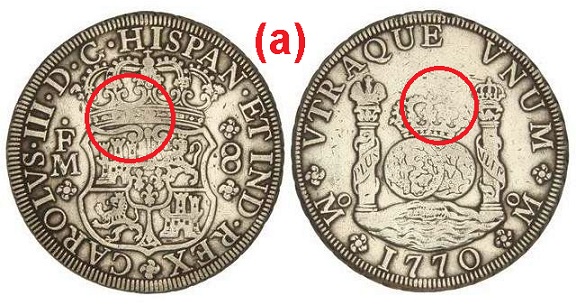
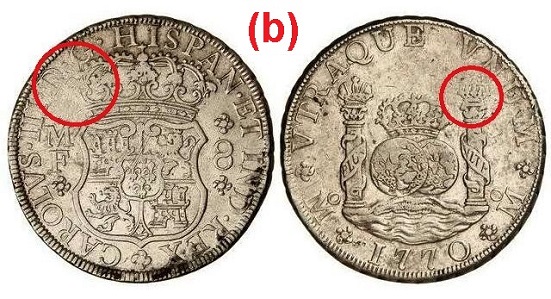
Why do some coins struck on a screw press show areas of no detail at some points while other areas show full detail?
I restated it this way because in my opinion the process of manufacture was responsible for what you are seeing.
The details were not erased while other areas were conserved - this is a situation where the detail NEVER existed.
The reason is simple - the silver flat stock from which these coins were made was rolled imperfectly on a manual rolling apparatus. The steps of the coining process started with a small ingot of silver cast at the mint. This was rolled out after heating on a small manually operated roller press. After several steps of heating and rolling a strip of silver the thickness of a coin is the result. This strip was ONE COIN WIDE in the case of a dollar.
After rolling the silver it was then drawn through a laminating slot to smooth the surfaces of the strip.
This small strip of metal was NOT always exactly uniform in thickness. The coins you have pointed out show WEAKNESS at points that are on the opposite sides of the coin in the SAME PLACE. The cause of the loss of detail was insufficient striking pressure to move the needed volume of silver into the part of the coin where the depression was located.
On a modern high pressure collared press the THREE DIES create a closed chamber in which the blank sits. When the dies come together the silver actually flows into the recesses of the die.
When there is NO collar the pressure simply does not develop.
This is why the weak spots move all over the surface of the coin and can happen anywhere. It has nothing to do with wear.
Now I want to contrast that with poorly designed dies like some early Lincoln Memorial cents where the weak spots were due to die design and depth.












 Posted 11/25/2014 8:52 pm


