Collectorlady:
Is there any way that you can take this to either a jeweler or a coin shop to have it weighed? If so, the weight should be somewhere very close to 12.44 grams if I remember correctly.
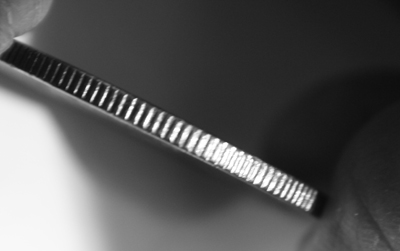
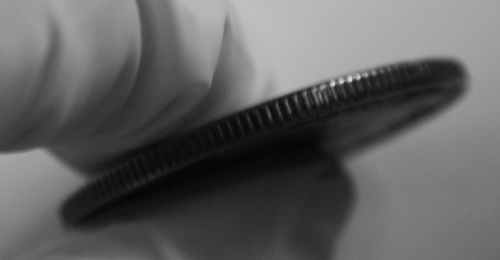
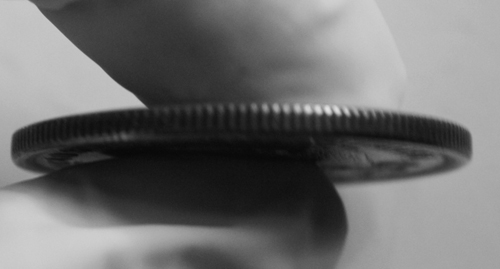
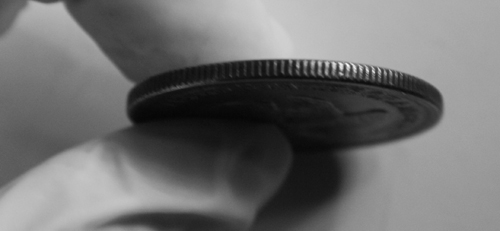
Also, if you can possibly take good photographs of the EDGE of the coin, in a couple of places, that would go a long way to help us more properly confirm what your coin is.
To all:
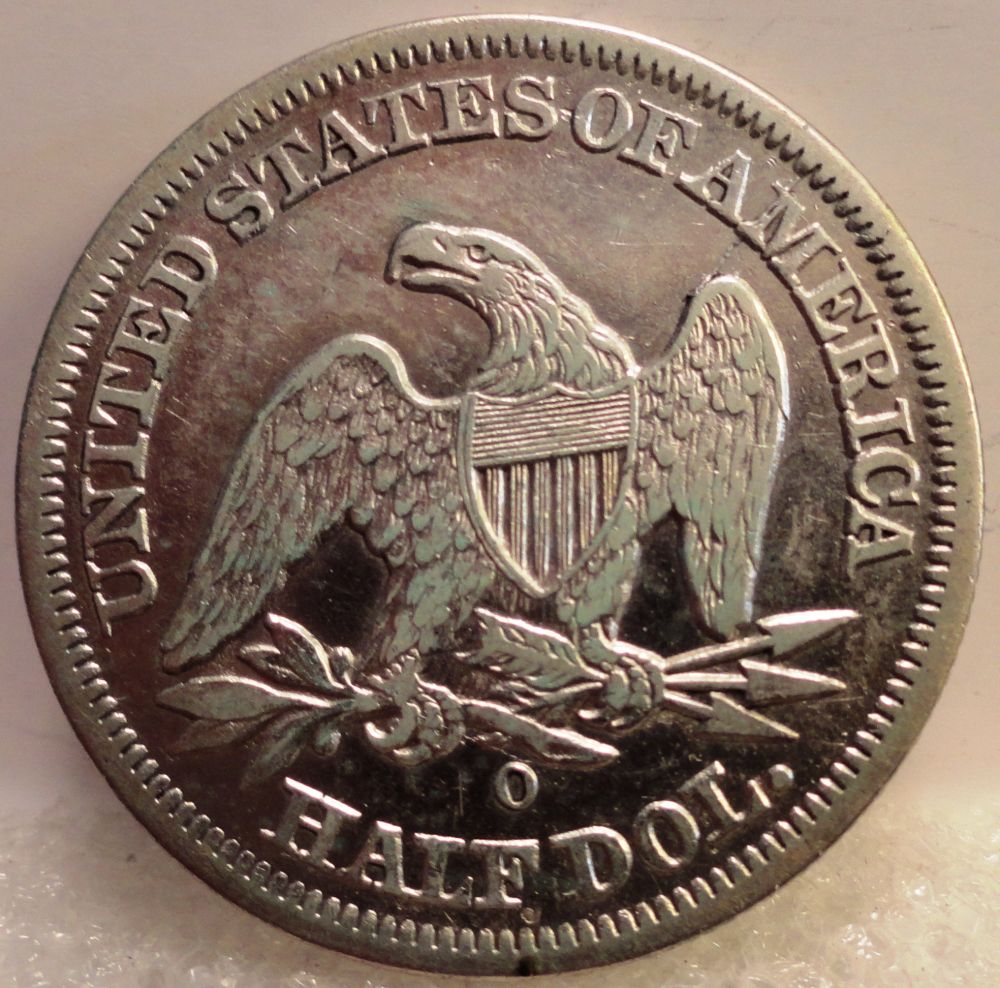
When I first looked at this coin and the reverse jumped out at me for several reasons as not being kosher, I was using a Kindle Fire and could enlarge the photos all the way down to pixel levels.
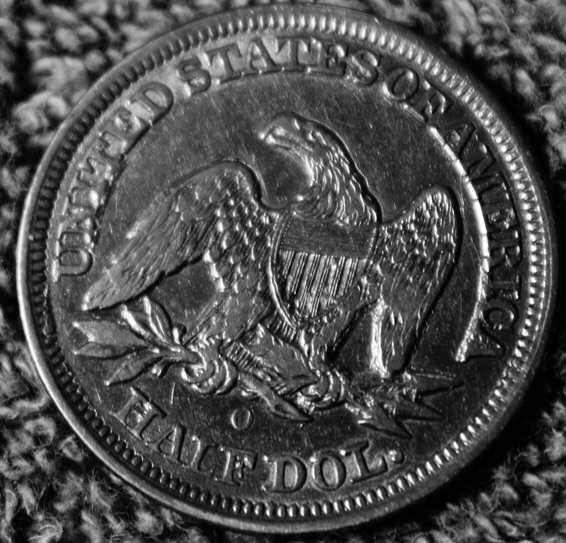
In examining the areas that I've mentioned before, several times, I see no way that there could possibly be a reason for the mint to produce the overlapped denticles at 7:00 on the reverse. Wire brushing wouldn't do that. Die Shift would not do that. Die clashing wouldn't do that. Plus, there is no way that it could have anything do to with a die crack.
My own study of CBH for 30 years and variety identification of them by Overton numbers has certainly given me a good education in both die cracks, die clashes, and the progression of those damaged dies as they continued in use. The dripping letters at the far right and far left of the legend ARE NOT DIE CRACKS - come on - LOOK at them. There is NO EVIDENCE of any crack, just those lumpy bumpy protrusions from the bottom of the letters. I've never seen any die crack on any coin that looks like that.
The Mr. Fatty Boy letters and every detail of the reverse simply cannot be from AFTER or POST mintage production. I very much understand that a wire brush would shave down the edges and make it appear as if the letters were larger. But that isn't what is happening here. Some of the details, as mentioned by Paralyse, are sharper than could be expected in those areas.
MeadowviewCollector did us a service by mentioning that one of the reverse dies had some serious problems that resulted in blotchy looking areas, and that also mentioned that it was probably from rust on the die. At first, that seemed like a possible alternative. But when you look at the HUGE blotches under some of the legend letters and on the bottom of the shield, those areas simply do not look like raised pitting that you would expect from a rusted die. Nor is there any indications in the fields of any tiny raised hills from the pits in such a die. A die that suffered enough rust to cause the big boy blotches would almost certainly have had a little pitting in the field, too - which would have been easy to identify.
Edweather: You didn't miss the suggestion of sending it to a
TPG because you were the first one to mention that as a possibility, and it would certainly answer the question, too. If that is of interest to you, CollectorLady please let us know and I'm sure we can provide you with the details of where to look to send the coin in for authentication and grading. HOWEVER, please note that even if this coin was genuine, it would probably not be worth $50, and probably a good deal less with the problems it exhibits. But you would know for sure if it was real.
In any event, I've pointed out why I think this is a cast fake several times, and I can even narrow that down to saying that it is a LOST WAX cast fake. That would exactly explain the problem seen.
I'm not trying to prove ME right and YOU wrong. I'm simply trying to use what experience I have myself to give my honest opinion, even if it differs from some of you. I do appreciate each and every alternative you've presented and I have looked at those possibilities with an open mind. But I just keep coming back to a cast coin.
CollectorLady - PLEASE send us some photos of the edge. If there is no evidence of a seam or the sanding away of such a seam and the ridges are nice and even and deep, then I'll contend that there must be some other explanation for the strange reverse die this coin exhibits.
In ending, I know there were 18 different reverse dies known for this date and mint mark, and that there was undoubtedly some progression of deterioration for some of those dies that were used extensively.
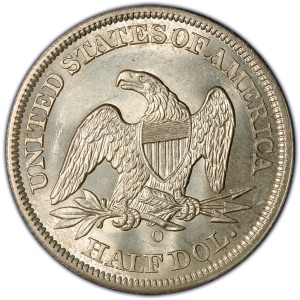
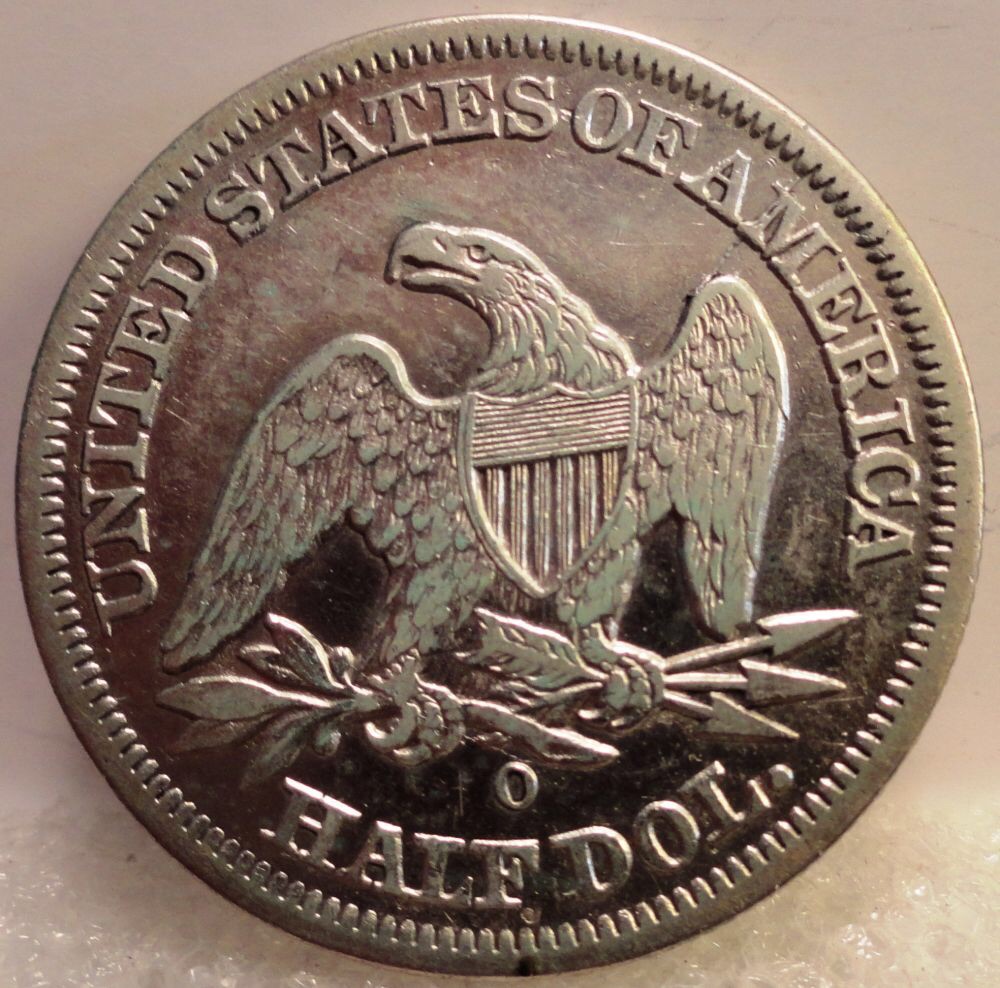
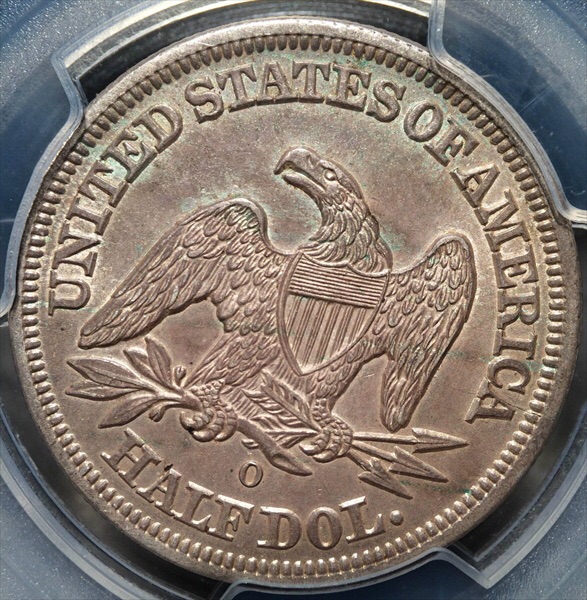
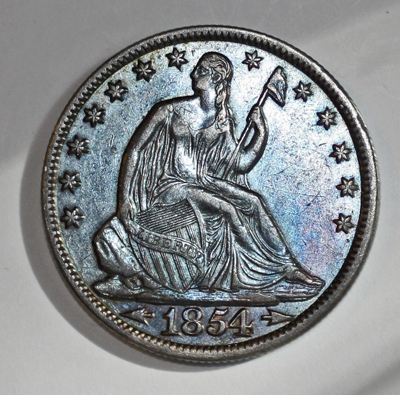
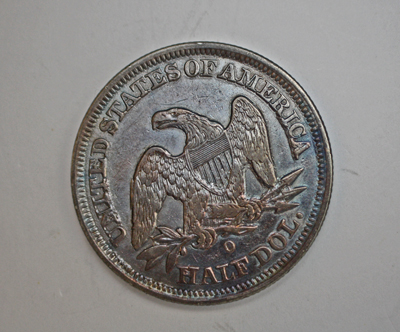
But I'll add my own 1854-O 50c Reverse from my own collection below. If you spend a second looking at this and then another second or two looking at the original pictures provided that prompted this debate, I think it will be possible to see that the first one is strange beyond reckoning:







 First Page
 Previous Page


 Posted 07/06/2015 3:01 pm




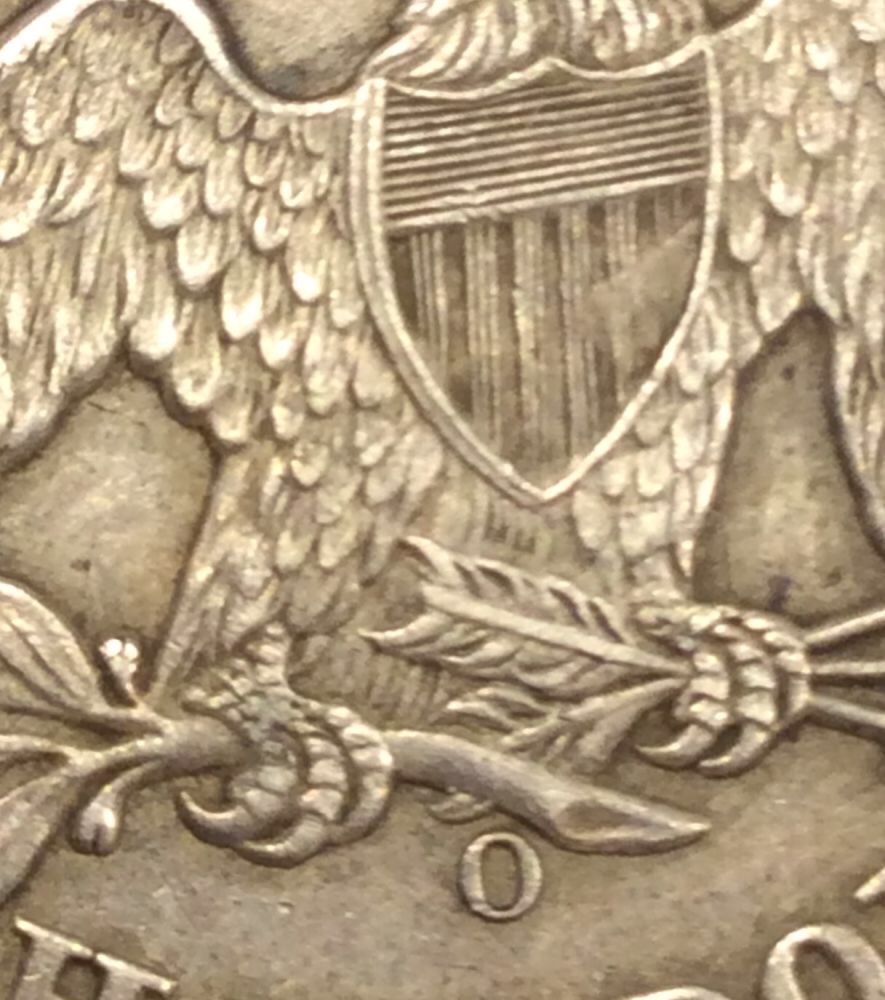
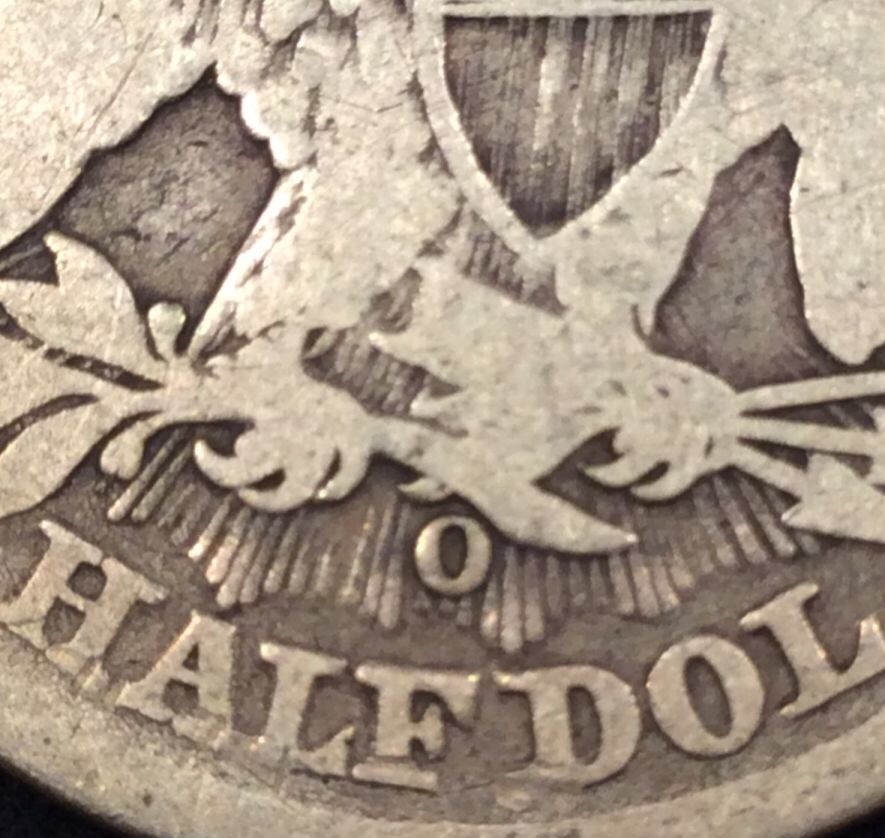
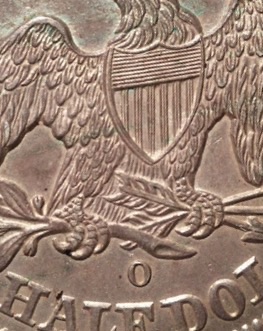
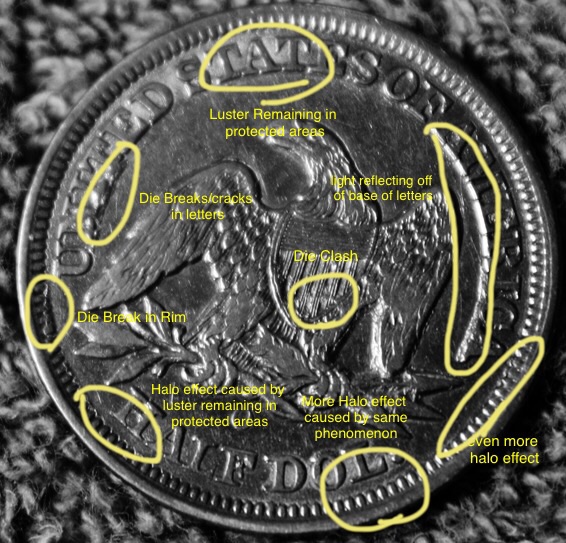



 I was just trying to prove my point using the evidence available, which can be used for future reference by anyone who needs it.


