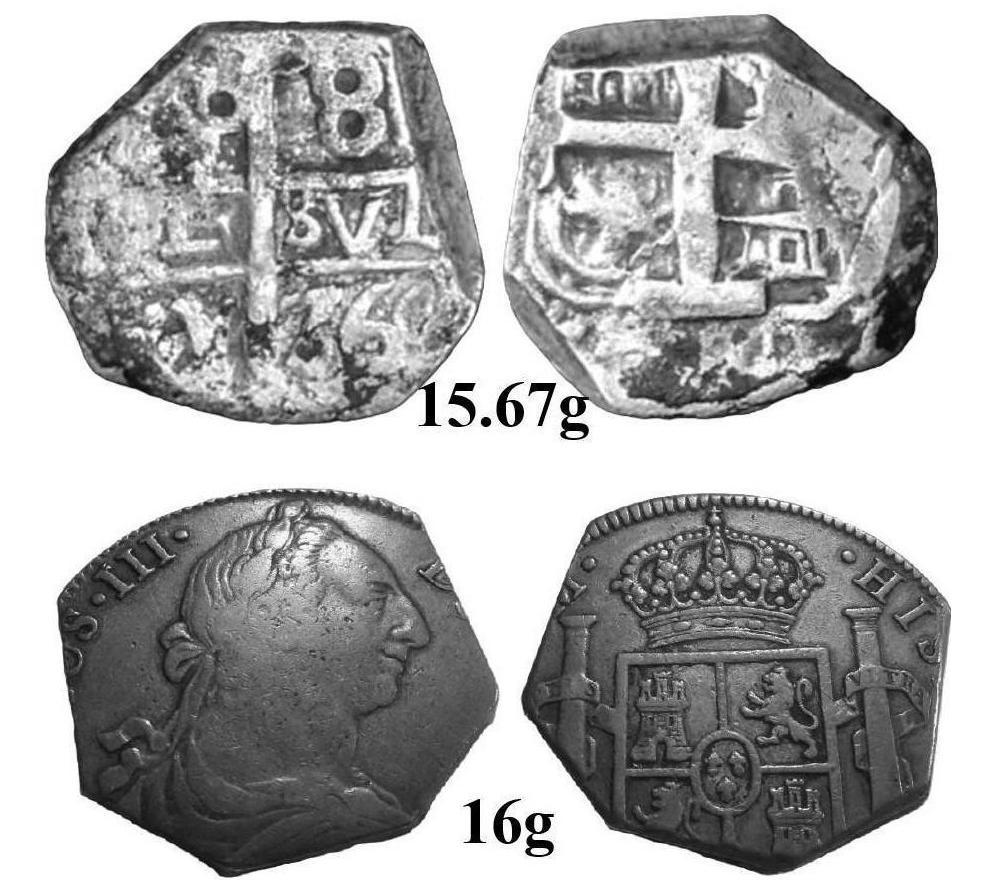
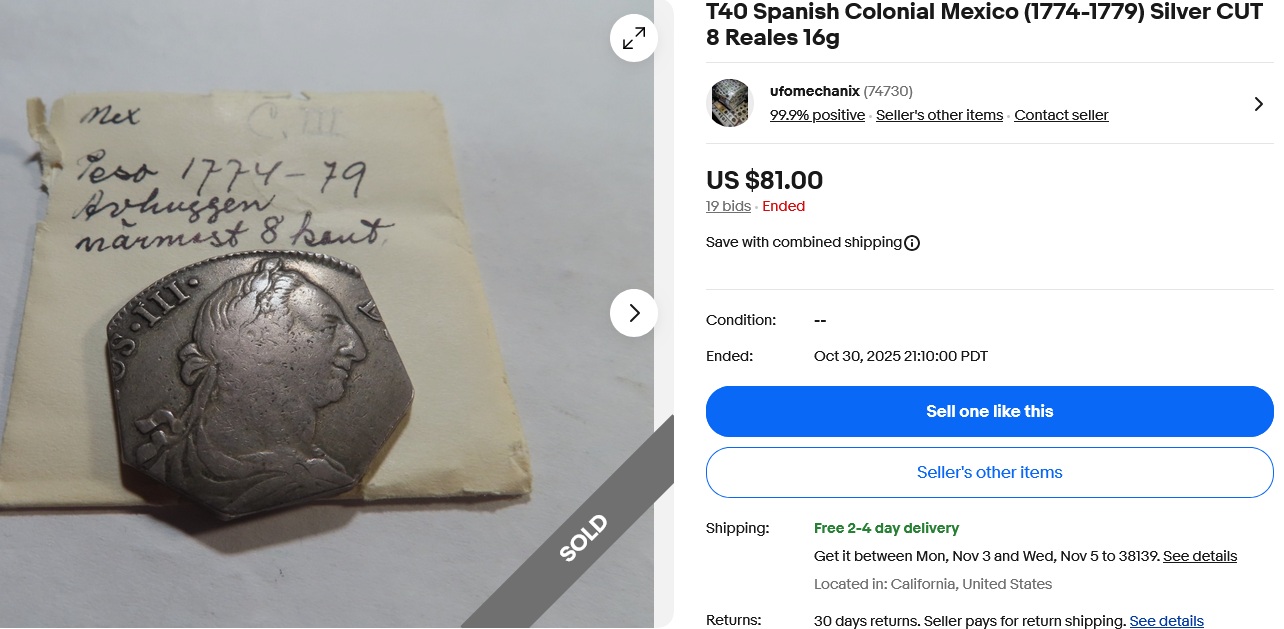
| Author |
 Replies: 78 / Views: 17,766 Replies: 78 / Views: 17,766 |
|
|
|
Pillar of the Community
United States
1962 Posts |
Quote:
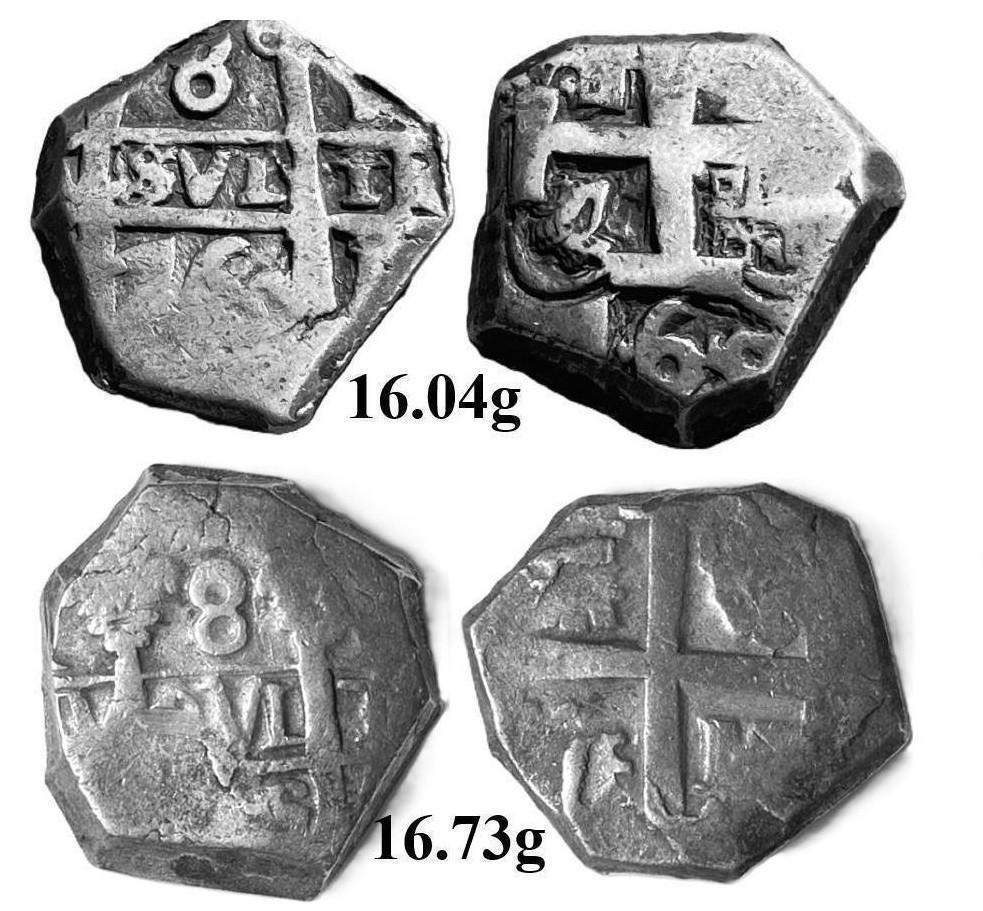
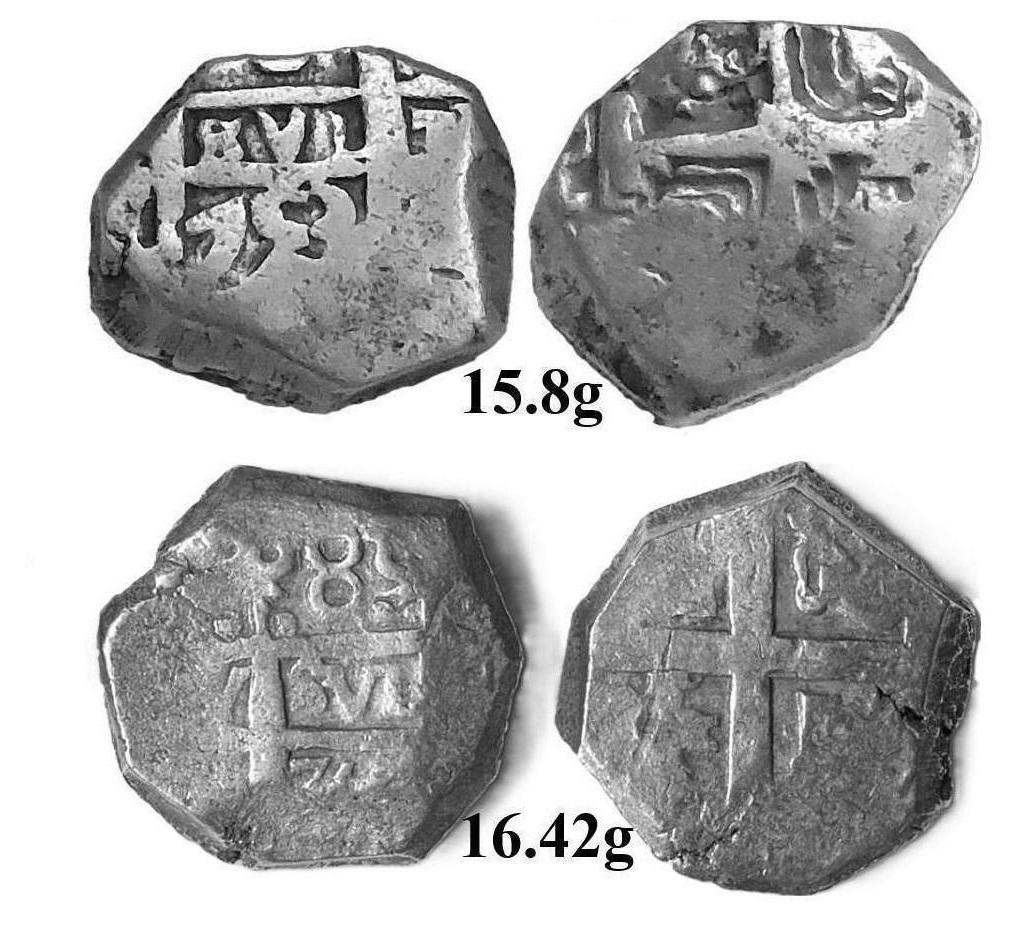
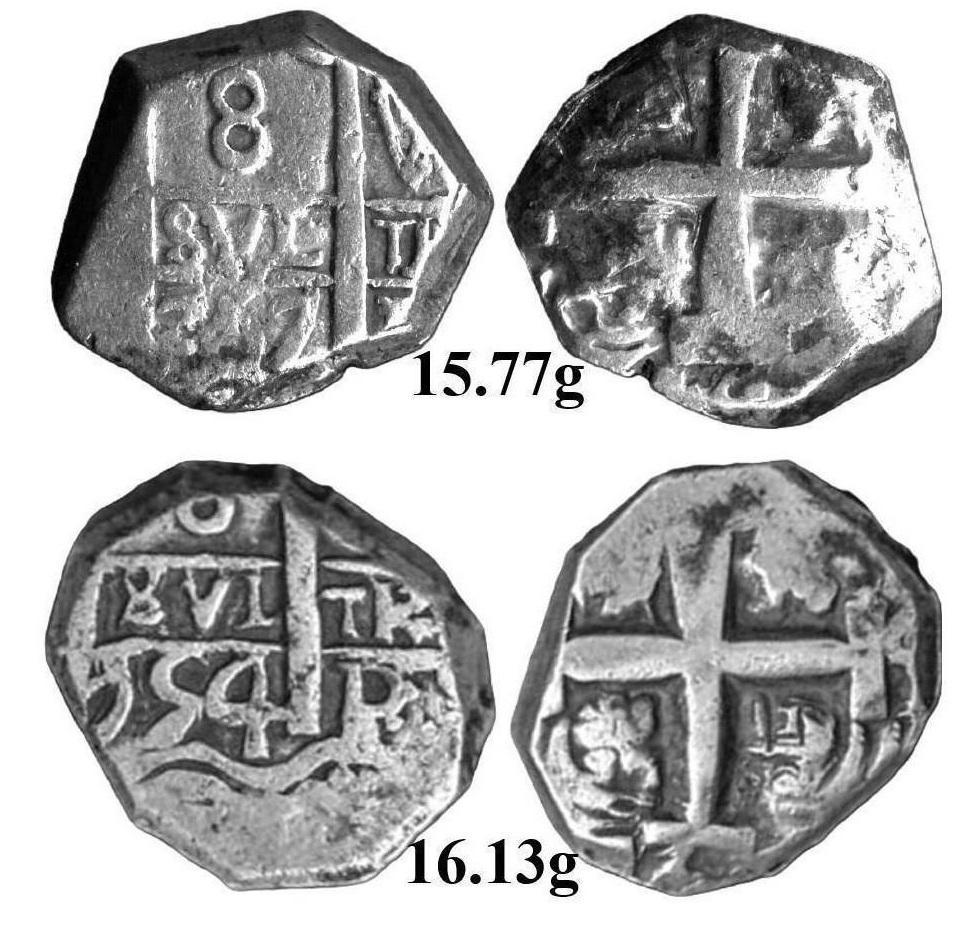
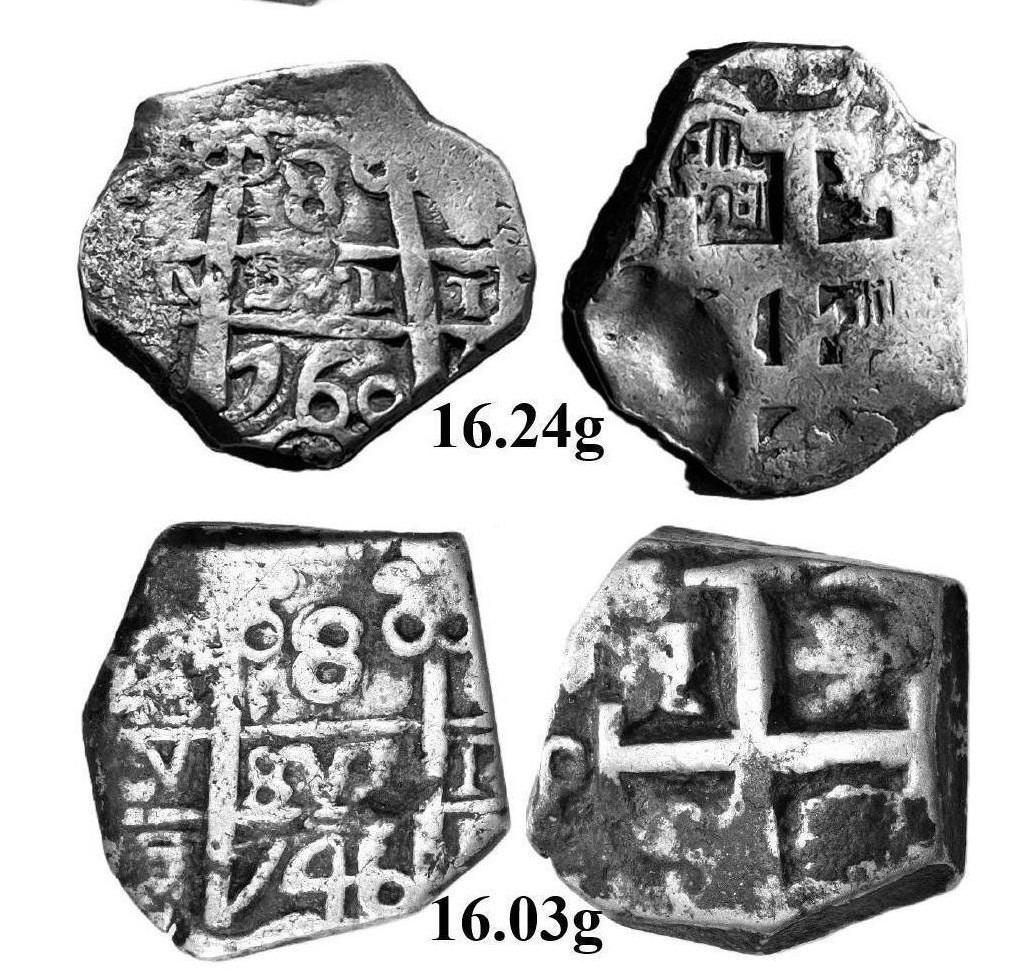
My best guess: artistic - somebody making "pirate jewellery". A) Read through the entire thread. Besides just those portraits, there are a good deal more cob 8R and 4R cut to the same standard (btwn 15-16 grams). This was being done to some monetary standard somewhere in Africa (and presumably an area where the French eventually colonized as these almost always surface out of France). Again, the original group of portraits that started this thread were stated to have come out of Oran, Algeria. Keep in mind, also, that if it was being done to modify foreign issues to a local monetary standard, you would still in theory want them to have a somewhat standard appearance. Cutting around the portrait just seems visually logical. Quote:
Hacking like this... gives you one "coin", and a bunch of silver shards not useful for anything beyond tossing in the melting pot. That's EXACTLY what would happen... an easy enough process, moreso than the capability to fabricate decent minting equipment. With Spanish coinage, particularly cobs, there are numerous examples of pieces that have had good size sections clipped off... either to try to steal silver or to adapt the pieces to a different standard. A bunch of scraps is exactly what you end up with... but at least for trade, people recognized that the cut-down coin was known good silver. |
|
Pillar of the Community
United States
1962 Posts |
A Potosi 1786 8R on ebay now, out of France as per usual: 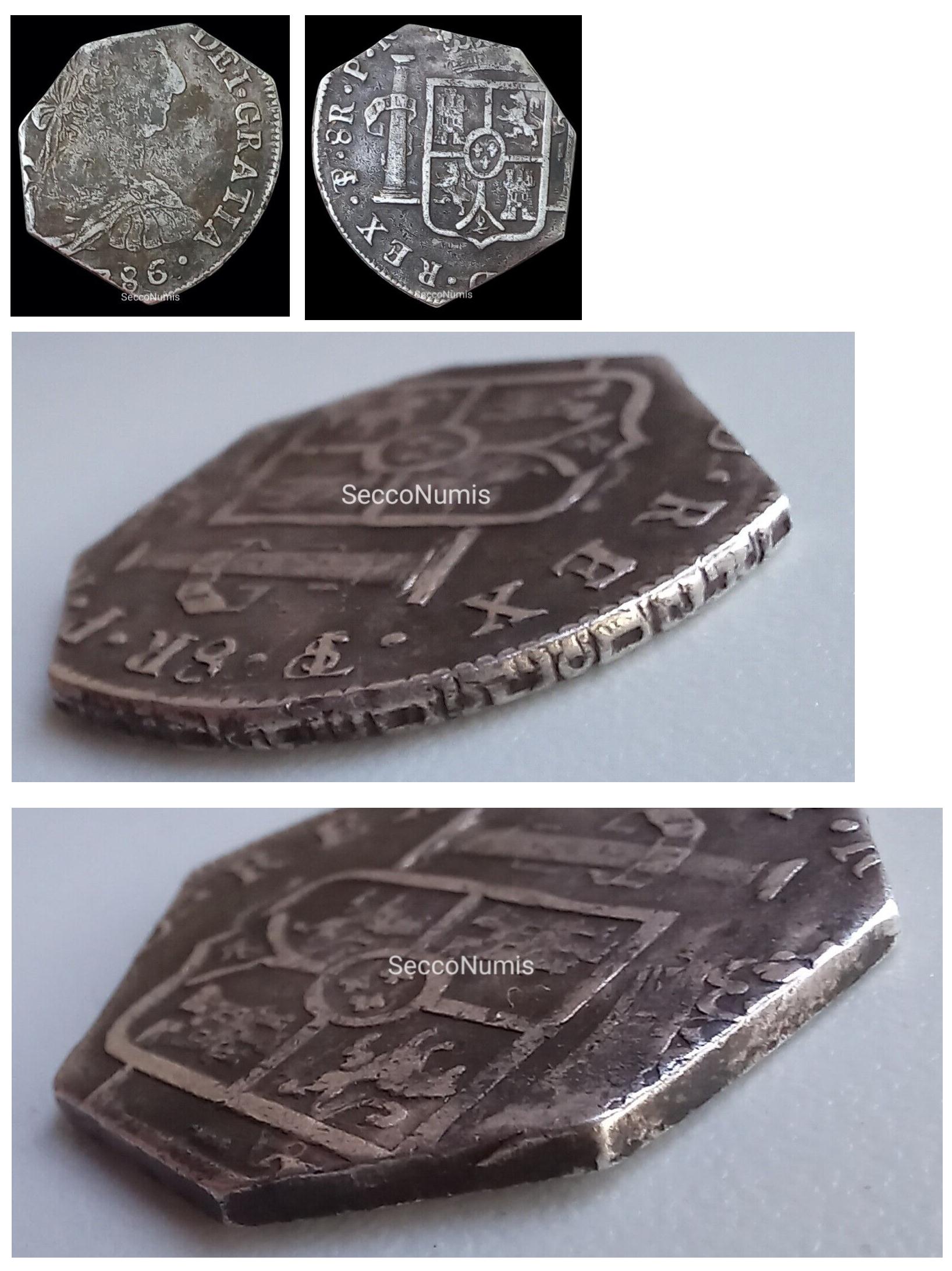 |
|
Pillar of the Community
United States
1962 Posts |
|
|
Pillar of the Community
 United States
732 Posts |
|
|
Pillar of the Community
Portugal
726 Posts |
Agree with other comments. Regular cuts let users of the coins know it is half weight,quarter weight. These irregular cuts, they do not seem practical for monetary use.
It is not impossible. But without documentation from the time about the use of such coins as money, and how they were cut, I will not believe the description of this as a north african standard. There are tons of records from these centuries in national archives. If this was used as money there will be records.
|
|
Pillar of the Community
United States
1962 Posts |
Yup, a giant numismatic fraud... where most of these pieces that surface from a great variety of sources make no mention of any (North) African attribution.
Oy...
|
|
Pillar of the Community
United States
1962 Posts |
https://coins.ha.com/itm/mexico/mex...ption-071515Heritage's best guess: Quote:
Without known documentation to confirm the existence of an official issue, these cut-down coins create a fascinating numismatic mystery that is believed to be structured around localized North African monetary standards. When studying pieces that have come to market, many from hoards (with some examples originating from Oran and Algeria), it is hypothesized that the pieces were not randomly clipped. A noteworthy pattern occurs when analyzing the clipped weights of both 8 Reales and 4 Reales Cob and/or milled issues; both are left with around 55-62% of their original official weight. After clipping, the 8 Reales is reduced to 15-17 grams of its official 27.1 grams weight while the 4 Reales is reduced to 7-8 grams of its official 13.55 grams. Furthermore, the lack of counter-stamping or a specific shape can indicate a makeshift-type of regulation where local bankers cut the coins themselves, thus following the weight of a local monetary system. Some have linked these cut-issues to the Tripoli 1773 30 Para issues (15-16 grams), that circulated in the Barbary coast of North Africa. This would coincide chronologically, as almost all the cut coins are 18th century or earlier. Overall, a fascinating riddle that is yet to be solved by historians and numismatists alike.
|
|
Pillar of the Community
United States
1780 Posts |
Edited by mrwiskers
10/26/2025 12:19 pm
|
|
Pillar of the Community
United States
1780 Posts |
..............................WELL, DANG!.....LOOKIT' WHAT I FOUND IN MY "CUT SILVER BITT" COLLECTION......: ...I picked this up on ebay recently, in a lot, along with 2 cut copper Mexican colonial pieces ... It was cut from it's original weight (6.77g) to it's present weight: 3.939g ... The angular cuts plus the reduction in weight, to 58% of it's original, coincides with these other Spanish coins (on this topic) suspected to have been trimmed to match Tripoli's coinage values, specifically, it's PARA issues ... ...anyone have any updated info in this topic?... 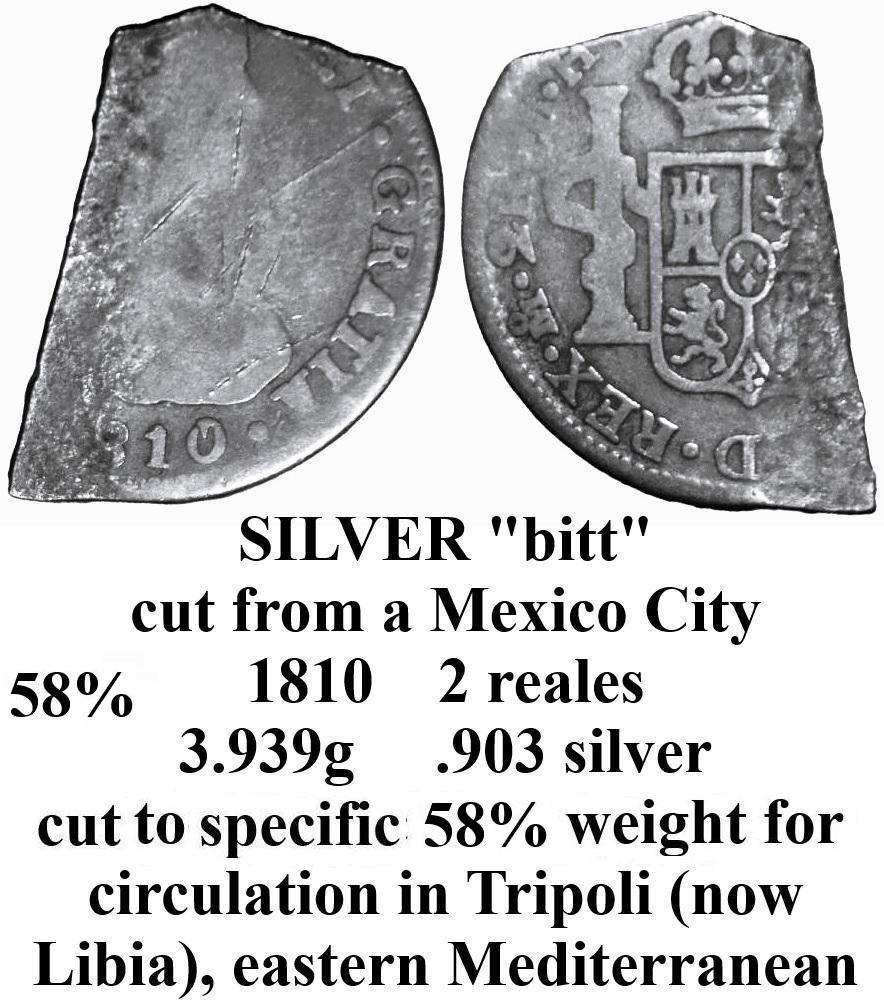 Edited by mrwiskers
10/26/2025 3:11 pm
|
|
Pillar of the Community
United States
1156 Posts |
Unless you can buy at melt why take the risk when you can also buy unclipped coins that are easier to attempt authentication.
|
|
Pillar of the Community
United States
1780 Posts |
@jgen ... Quote:
Unless you can buy at melt why take the risk when you can also buy unclipped coins that are easier to attempt authentication. ...good question. ...there's a (small) market for clipped coins ... cutting coins for change was common in an era where coin shortage & lack of banks necessitated such a practice. This was common in the 1600s--early 1800s in areas, like North America, where many other countries' coins circulated freely ... ..the origin & explanation for these "North African" clipped coins & cobs are still unsubstantiated. No one has yet produced records substantiating this theory. It is, however, unusual that so many examples have surfaced, meeting the (supposed) criteria ... ...In the case of my single clipped 2 reales, it falls within the weight reduction parameter, is angularly cut ( especially the little end piece that was clipped, as if that was the final, small cut to achieve correct weight) ...see diagram ... ...I purchased this coin in a group of cut coins, not knowing about this subject, just happened to be in a group ... 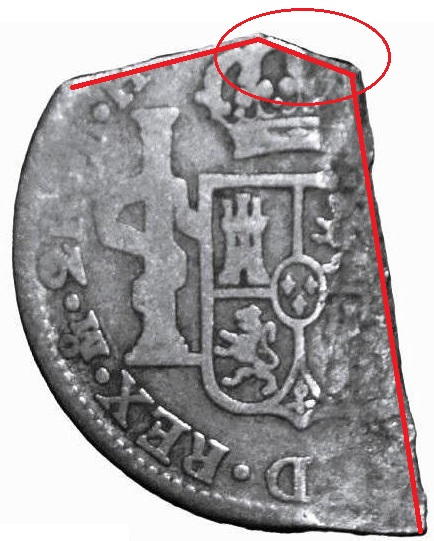 |
|
Pillar of the Community
United States
1780 Posts |
|
|
Bedrock of the Community
 United States
27514 Posts |
Nice score, mrwiskers! I've bought coins from ufomechanix - a righteous seller. There was a thread a couple years ago in which someone was griping about the "commonly asked questions" on each of their auction pages, saying it raised red flags. Having sold on ebay, I perfectly understand why they have each of those there. Inordinately fascinated by bits of metal with strange markings and figures
|
|
Pillar of the Community
United States
1780 Posts |
..Yeah Hohdo..he's a hoot! :
"Your want a description? Here's your description:
I'm selling coins and currency to serious buyers who want good deals and don't need to be coddled the entire way.If that's you, join the fun.If not, just keep on looking elsewhere because you're not worth by trouble.
Answers to common questions:
DOMESTIC Shipping is FREE, I still get Questions every single day from folks who can't seem to figure out the giant FREE SHIPPING Banner on every page. ..."
Thanks Hondo, but I didn't bid on this coin, I just tracked it, per the topic of this blog ...
I've bought 3 coins from this guy & gotten great deals each time!...
|
|
Pillar of the Community
United States
1764 Posts |
The Heritage commentary you shared highlights one of the more intriguing puzzles in colonial-era coinage. Spanish 8 Reales and 4 Reales—normally weighing 27.1 g and 13.55 g respectively—are often found clipped down to about 55-62% of their official weight. That leaves the 8 Reales at roughly 15-17 g and the 4 Reales at 7-8 g. The consistency of these reductions suggests a systematic practice rather than random damage or fraud.
What makes this especially interesting is the geographic context. Many examples have surfaced from hoards in Oran and Algeria, regions where Spanish silver was widely used but often adapted to local standards. The clipped weights align closely with the Tripoli 30 Para coinage of 1773, which weighed about 15-16 g. This suggests that local bankers or merchants may have cut Spanish silver to fit into a familiar weight system, effectively "converting" it into a locally acceptable denomination.
Another striking feature is the absence of counterstamps or standardized shapes. Unlike other regulated coinages where authorities marked or reshaped coins to certify their new value, these pieces appear to have been clipped in a more ad hoc but still consistent manner. That points to a makeshift regulatory system, likely carried out by local moneychangers rather than formal mints or governments.
Chronologically, most of these cut coins date to the 18th century or earlier, which fits the period of intense Mediterranean trade and piracy along the Barbary Coast. Spanish silver was the dominant international currency, but in regions with their own weight-based systems, adaptation was necessary. These cut-down reales may represent a hybrid monetary practice, bridging global bullion flows with local transactional needs.
For numismatists, they remain a fascinating riddle. Without documentary evidence of an official decree, we can't call them a sanctioned issue. Yet the consistency of the weights and their concentration in North African contexts strongly suggest intentional monetary adaptation. They sit at the crossroads of colonial coinage, Mediterranean trade, and localized economic improvisation.
|
| |
Replies: 78 / Views: 17,766 |







 First Page
 Previous Page


 Posted 12/04/2023 11:51 am