NGC -
Something as small as a mintmark can dramatically change the price of a coin.In numismatics, the location at which a coin was minted can mean a value difference of tens or even hundreds of thousands of dollars. For example, an 1894
Barber dime minted in Philadelphia might be worth $100. But if you give that same coin a tiny "S" for San Francisco below the wreath on the reverse, it could suddenly be worth upwards of a million dollars.
Unfortunately, when there's money to be made on such relatively small differences on coins, counterfeiters take notice. These forgers can change a coin's mintmark in multiple ways. For example, while an 1895 San Francisco or New Orleans Mint
Morgan dollar is relatively rare in its own right, the 1895 Philadelphia Morgan is the undisputed king of the
Morgan dollar series. With a mintage of only 880, all of which were proofs, this coin is expensive in all grades. Therefore, it's unsurprising that an enterprising coin doctor would attempt to remove the mintmark from a San Francisco or New Orleans issue. Such is the case with the coin below.
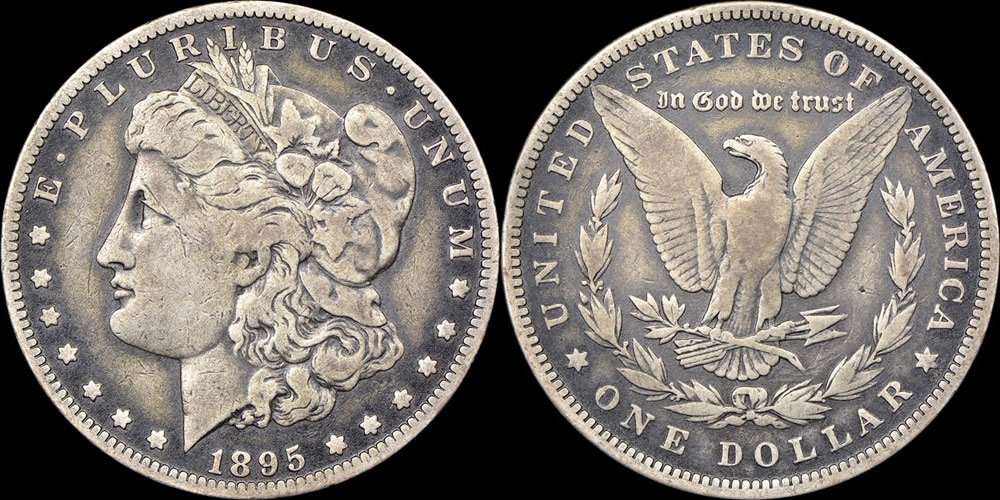
1895 Morgan dollar with removed mint markAs you can see, the coin looks decent at first glance. However, with the knowledge that there were about 1,000 times as many 1895-S and 1895-O
Morgan dollars struck, one must be mindful to check the mintmark area. When you do, you will notice that there is an area of disturbed metal and tool marks where the mintmark would normally be. This coin has been altered and taught someone a very expensive lesson.
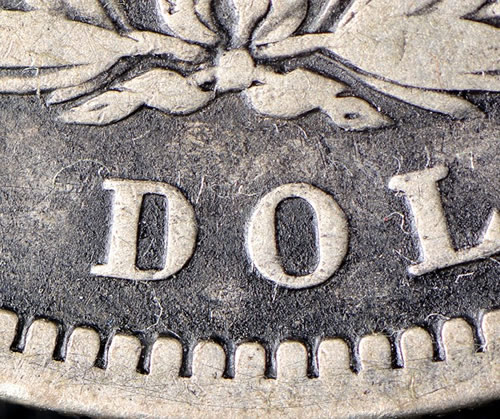
Close-up of removed mint mark on 1895 Morgan DollarIn other cases, the counterfeiter will add a mintmark that wasn't there before. They can accomplish this in a multitude of different ways. The first we will discuss is the most common. It involves gluing a fake mintmark to the coin. This is usually the least convincing type. As you can see on the 1889-CC
Morgan dollar below, there is a clear discoloration around the Carson City "CC" mintmark below the wreath on the reverse. This discoloration is due to a foreign substance, likely some sort of adhesive, being present underneath the mintmark. There was once even a case of a 1909-S VDB being submitted to NGC for grading that had its "S" mintmark fall off in the flip. I suppose the counterfeiter should have used a stronger adhesive!
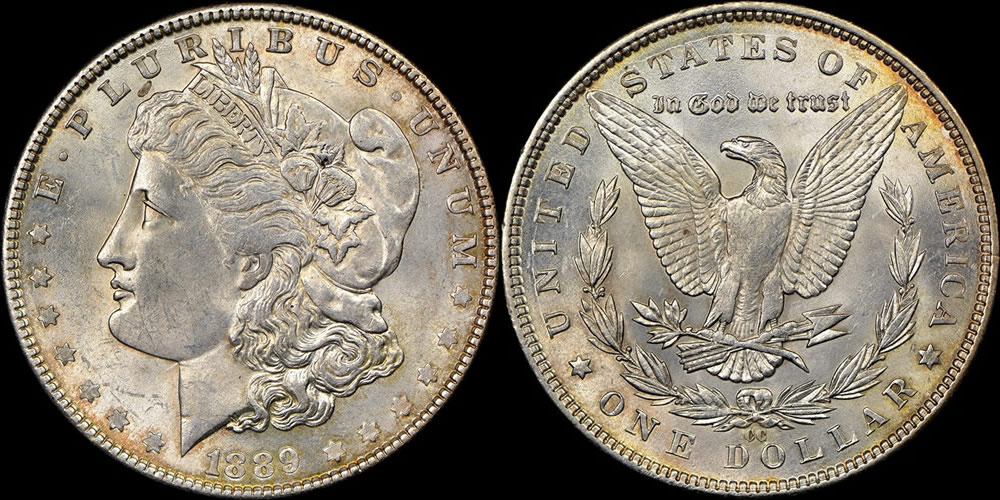
1889-CC Morgan dollar with added "CC" mint mark
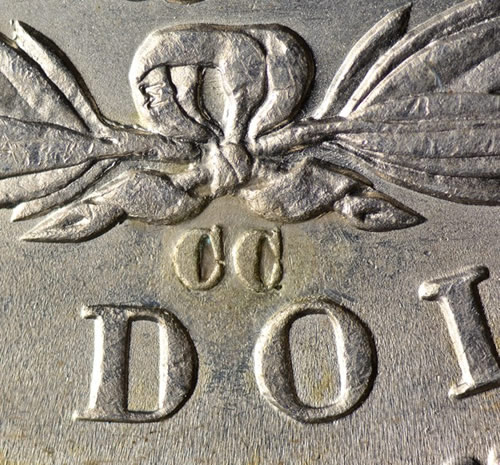
Close-up of added "CC" mint markAnother type of added mintmark, known as embossing, can often be much more deceptive. In this case, a hole is drilled into the edge of a coin. A specialized tool, usually made from needle-nose pliers, is then inserted into this tiny hole until it is directly underneath the place where the mintmark should be. Then, the tool is closed, pushing metal up to form a mintmark on the surface of the coin. This often creates a very realistic looking mintmark.
Embossed mintmarks are most often found on
Buffalo nickels, as they have a thick, smooth edge with a mintmark very close to the rim of the coin. The smooth edge leads to a much easier repair for the counterfeiter, and the short distance to the mintmark means less drilling as well. However, skilled forgers are now able to alter reeded-edged coins as well. For example, the 1889-S
Morgan dollar below started its life as an 1889-P.
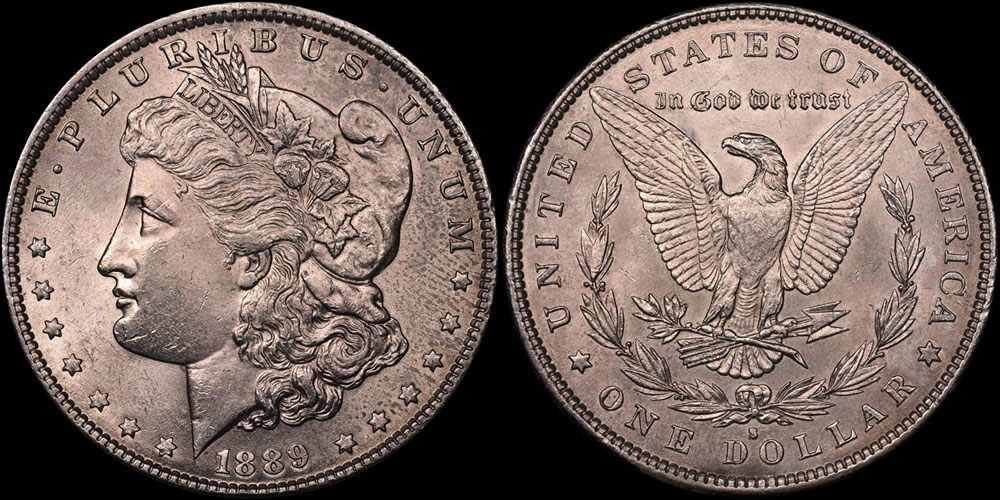
1889-S Morgan dollar with added "S" mint mark
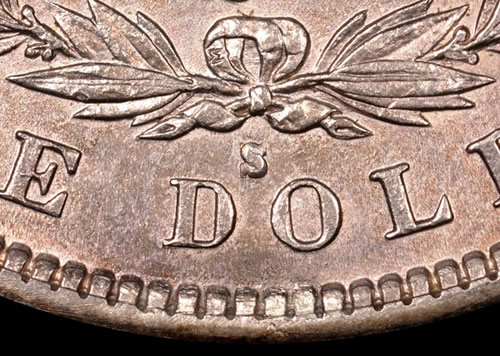
Close-up of added "S" mint mark
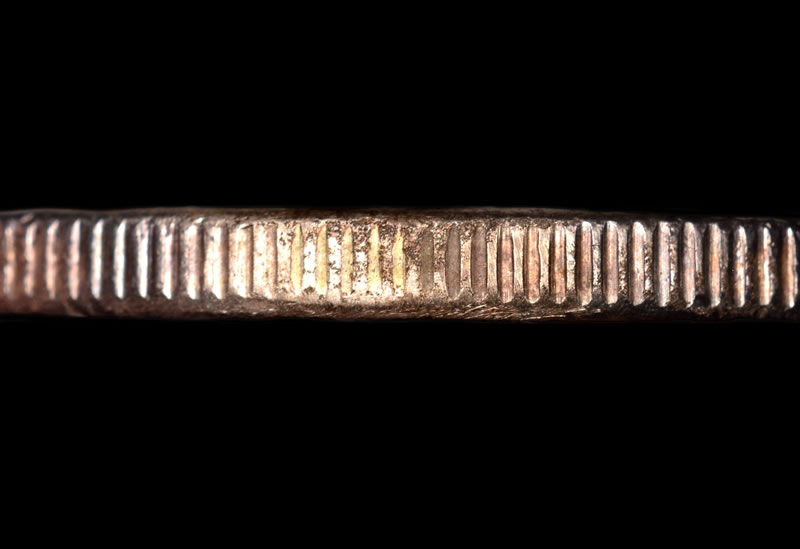
Close-up of the edge of the 1889-S Morgan dollar
directly below mint mark areaAs you can see from the close-ups, the mintmark itself looks pretty decent. However, the edge is where you can see something is amiss. The dark spot right in the center of the image is the spot at which the forger drilled into the coin. Tool marks on the bottom edge of the rim help bring attention to the area as well. They were likely caused by the counterfeiter removing extra molten metal that had gotten on the edge.
When something as small as a mintmark can change the price of a coin by thousands of dollars, it is important to be diligent and know the possibility that alterations do occur. A collector looking to buy a rare coin should research what actual examples look like. If you are not completely confident in your own abilities, a coin graded by NGC is always guaranteed to be authentic.
Read More: Counterfeit Detection Series 









 Posted 02/10/2016 2:05 pm





