Back in 1985, companion bills were introduced in the US House of Representatives by Representative Richard Howard Stallings (D-ID) and in the US Senate by Senator Frank Hughes Murkowski (R-AK) that called for a five-year program of commemorative silver dollars and gold $10 coins (i.e., gold eagles) honoring "great American scientists and their accomplishments." The program would have run from 1986 to 1990.
The proposed legislation did not define "American scientist" so it's not clear if honorees would have been required to be American-born or if they would have qualified by having made their major contributions while living in the United States.
The bills directed the Mint to strike a silver dollar and a gold eagle during each program year (i.e., two coins per year), with each coin honoring a different scientist. The program would have yielded 10 different commemorative coin designs over its life! The obverse of each coin was to feature a portrait of the scientist being honored, with the reverse presumably left to record his/her major scientific achievements.
The scientists to be honored on the coins were not specified in the bills; the selection task was legislatively delegated to the Secretary of the Treasury in consultation with the National Academy of Sciences (NAS) and the National Science Foundation (NSF).
Both coins were to be minted in accordance with traditional specifications for
US coinage. The silver dollars were to be 1.5 inches (i.e., 38.1 millimeters) in diameter, have a weight of 26.73 grams and feature a 0.900 fine silver composition. The gold eagles were to be 1.06 inches (i.e., 27 millimeters) in diameter, weigh 16.718 grams and be 0.900 fine gold by weight.
The series appears to have been proposed as a successor to the gold American Arts Medallions program. That series included five half-ounce and five one-ounce gold medals that honored American painters, sculptors, authors, singers/musicians, actors and an architect. The medals were struck by the US Mint between 1980 and 1984
The "Arts" program was created to enable Americans to buy US-made gold bullion rather than foreign gold (South African gold Krugerrands had become very popular). As such, pricing for the medals was adjusted on a daily basis to reflect the changing market price of gold. This created a very cumbersome ordering process which required customers to call a dedicated program telephone number to determine the day's selling price of each medallion and then put their payment in the mail that was postmarked on the same day. This difficult process was a major factor in the program never achieving the sales levels that were predicted at its launch. (Another was the fact that they were medals and not coins - most collectors/investors prefer coins!)
The Stallings-Murkowski proposal corrected the medal vs. coin issue, but it appears to have retained the unwieldy ordering process as the bills specified a sales model that would again require a calculation of the selling price on a daily basis. The bills specified that "prices may not be less than the fair market value of the silver or gold content of the coin (as appropriate) at a time not earlier than the day before the sale plus the costs of minting, distributing, promoting, and marketing the coins." The language, in fact, is essentially the same as what appeared in the legislation for the American Arts Medallions program that was signed into law by President Jimmy Carter in 1978. This proved to be a major obstacle to approval for the bills.
In addition to the costs components listed above, the selling price of each coin was also to include a surcharge. The silver dollars were to carry a surcharge of $7 per coin and the gold eagles were to have a $35 surcharge per coin. All surcharges were to be deposited into "the general fund of the Treasury for the purpose of reducing the public debt."
The bills featured an interesting twist regarding annual mintages for each coin. The bill specified that the Secretary of the Treasury was to estimate the potential sales for each coin at the start of each year and then make the estimates public. The annual mintage estimates would have served as maximum limits because the bills specifically prohibited the Secretary from producing more coins than were originally estimated; a lower number could be produced, however. I have to believe that the Secretary and his team would have come up with some rather high annual estimates to ensure they could maximize sales each year.
Each bill was referred to the appropriate committee in its chamber, but neither bill was reported out for a vote. And so, America's top scientists would have to be recognized in other ways. Two American scientists - Benjamin Franklin and Thomas Edison - were later honored on US commemorative coins.
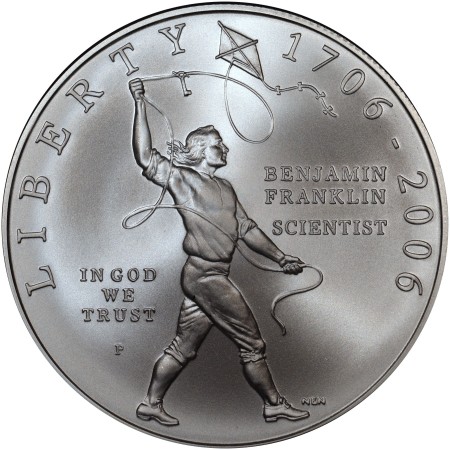
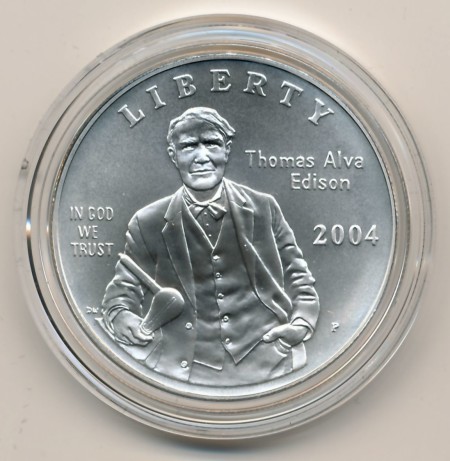
Of course, shortly after these bills were introduced, Congress debated and passed bills that would create the US gold and silver bullion "Eagle" programs that were launched in 1986. The Mint changed its sales model for these coins by dropping its previous direct-to-consumer model and selling instead to a limited number of large national distributors who would then assume the risk/reward potential of the ever-changing bullion markets.
It's fun to imagine potential honorees for the coins. If we stick to scientists who were not alive in 1985, names such as Benjamin Franklin, Albert Einstein, Alexander Graham Bell, George Washington Carver, Rachel Carson, Nikola Tesla, John James Audubon and Thomas Edison are just some that come to mind.
Who would you have liked to see honored?










 Posted 06/04/2016 02:13 am


