| Author |
 Replies: 61 / Views: 7,325 Replies: 61 / Views: 7,325 |
|
|
|
Bedrock of the Community
United States
12477 Posts |
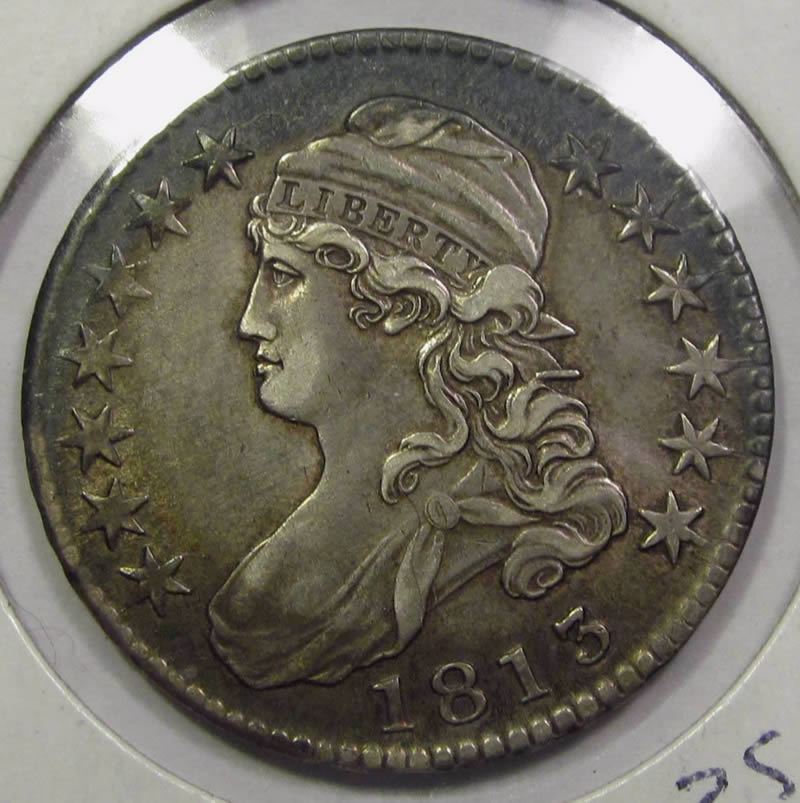
I was hoping you'd post a higher resolution version of your avatar, @hadleydog. That's a beautiful coin!  In Memory of Crazyb0 12-26-1951 to 7-27-2020
In Memory of Tootallious 3-31-1964 to 4-15-2020
In Memory of T-BOP 10-12-1949 to 1-19-2024
|
|
Pillar of the Community
Canada
1267 Posts |
Thank you, spruett. I feel very fortunate to have been given the opportunity to aquire this piece.  Edited by hadleydog
07/20/2018 03:51 am
|
|
Pillar of the Community
United States
8715 Posts |
Your coin in your avatar is fantastic, hadleydog. And yes, I am a fan of toned coins or coins with "crusty" and original surfaces.  Edited by SilverDollar2017
07/20/2018 10:12 am
|
|
Pillar of the Community
United States
1475 Posts |
Quote:
Correct color progression, elevation chromatics, textile and the pull-away effect are beyond their capabilities. This is very helpful statement determining NT & AT. I usually stay away from coins with exotic toning since I can't tell if it is AT or NT. Perhaps, I can apply this logic from now on  |
|
Valued Member
United States
314 Posts |
hadleydog wrote: Quote:
Back to the original topic. Just because a coin appears to have black toning does not necessarily equate to terminal or end toning. IF THERE IS LUSTER PRESENT, it has not reached that stage.
It makes sense, if you think about it. Terminal toning is when the toning has ceased to provide a protective layer on the coins original surfaces, and starts to actually eat into those surfaces....thus impeding the luster.
Flat black? Flat brown? Terminal. Is there a fairly simple way that you can explain how the toning goes from being "a protective layer," as you call it, into being something that "actually eat(s) into those surfaces"? It seems to me that it would be a progression, rather than a shift. To put it another way, isn't "good toning" essentially a corrosive thing from the beginning, but it just hasn't started to do visible damage to the coin surface yet? How can it be protective, then corrosive, if it's the same thing? Forgive me if this is a stupid question; I'm no scientist. |
|
Pillar of the Community
United States
1706 Posts |
|
|
Pillar of the Community
 United States
3479 Posts |
Quote:
To put it another way, isn't "good toning" essentially a corrosive thing from the beginning, but it just hasn't started to do visible damage to the coin surface yet? How can it be protective, then corrosive, if it's the same thing? Forgive me if this is a stupid question; I'm no scientist. It can't. Coins with corrosion have been exposed to certain environmental conditions for extended periods of time. Think coins dug out of the ground. Placed in a air tight TPG holder will for the most part stop the toing progression. I have coins from when I was a kid that already had corrosion. 30 years later sitting around in 2x2's, they show no further corrosion. They look the same as the day I found or purchased them. The only exception would be a bunch of common wheat cents that were kept loose on the bottom of a metal lockbox. Those all developed verdigris. That's why I'm skeptical of this term and for the most part, everyone's explanations up to this point. Those 2 Seated dollars both have cobalt blue/purple toning with traces of luster when placed under harsh light. It still sounds like BS made up word probably created by an obscure dealer/s to make themselves sound more sophisticated and knowledgeable. Edited by MikeF
07/20/2018 11:48 pm
|
|
Pillar of the Community
United States
3479 Posts |
@Acesking, how someone would describe that beautiful half dollar as having terminal toning is beyond me.
|
|
Pillar of the Community
Canada
1267 Posts |
Quote:
Is there a fairly simple way that you can explain how the toning goes from being "a protective layer," as you call it, into being something that "actually eat(s) into those surfaces"? It seems to me that it would be a progression, rather than a shift. To put it another way, isn't "good toning" essentially a corrosive thing from the beginning, but it just hasn't started to do visible damage to the coin surface yet? How can it be protective, then corrosive, if it's the same thing? Forgive me if this is a stupid question; I'm no scientist. A very good question. I'm strapped for time tonight so let me quote another collector and I'll get back to this when I can. Quote: As opposed to gold, silver is a highly reactive element. When exposed to the environment it will react with a number of contaminants to form tarnish. Sometimes this is attractive, especially when a thin film of tarnish reflects (refracts) light in a certain way. All sorts of pretty colors can result and the exact color depends (mostly) on the thickness of the tarnish layer. Once the tarnish forms, it is more difficult for contaminants to attack the metallic silver underneath the toning layer. The toning itself forms a protective layer and acts as a partial barrier to further toning. Some coins tone more nicely than others (Morgans tone beautifully and Peace dollars don't). This is probably due to the specific alloy, surface treatments prior to striking, or the exact crystalline structure of the surface on a molecular level. Different designs and die surface preparations result in different strain hardening of the coin's surface. The problem with dipping is that the protective layer is stripped away, leaving fresh, raw surfaces. In many cases even freshly struck coins originally left the mint with some sort of surface layer - oils, oxides, leftover chemicals from acid baths, etc. Putting the coin back in the environment with raw surfaces invites a second round of aggressive attack. Sometimes this works out (nice secondary toning) and sometimes it goes sideways (ugly secondary toning). Either way, the original surfaces are slowly disappearing, along with the microscopic flow lines that are responsible for luster. Anything that speeds this up is harming the coin. That's why originality is so highly praised by those who value true protection and conservation of the coin. |
|
Bedrock of the Community
United States
12477 Posts |
Quote:
I'm strapped for time tonight so let me quote another collector For the sake of clarity, who are you quoting and where can it be found? In Memory of Crazyb0 12-26-1951 to 7-27-2020
In Memory of Tootallious 3-31-1964 to 4-15-2020
In Memory of T-BOP 10-12-1949 to 1-19-2024
|
|
Pillar of the Community
Canada
1267 Posts |
Quote:
For the sake of clarity, who are you quoting and where can it be found? I came across it on the NGC boards. I don't frequent that site often enough to know the name behind the avatar (hence I could not attribute it), but it was well written and conveyed rather concisely what I was trying to say. |
|
Pillar of the Community
United States
1706 Posts |
Quote:
@Acesking, how someone would describe that beautiful half dollar as having terminal toning is beyond me. I agree, but many would see how dark it is and pass on it. Looks perfect to me.  Another one..... 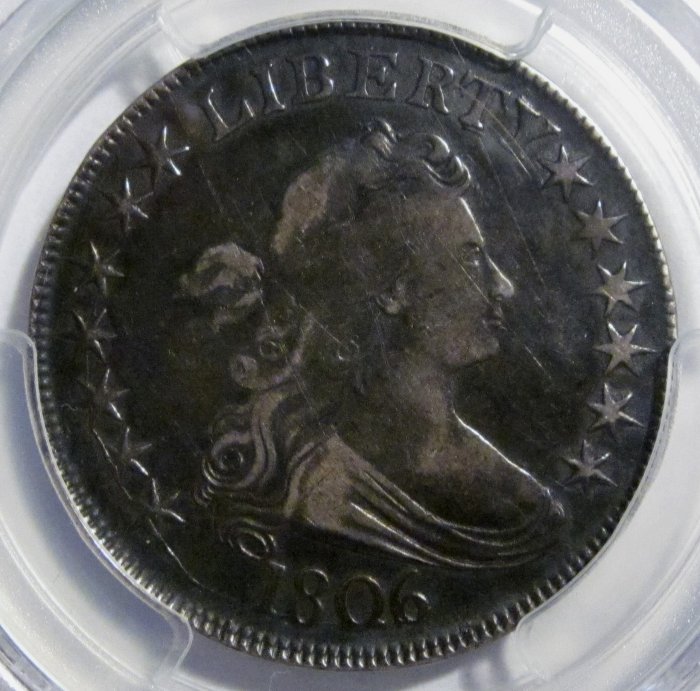  |
|
Valued Member
United States
314 Posts |
Thanks to those who replied to my question.
|
|
Pillar of the Community
United States
1261 Posts |
I've never used the term "terminal toning" and haven't seen or heard it used much. I wouldn't get too hung up on it. To me it's just toning, whether attractive, ugly, rainbow, mottled, dark, ebony, bullseye, light golden, etc., etc. In fact, toning can be described in so many different ways that just saying "terminal" is probably the least valuable and descriptive way to describe it.
Edited by chesterb
07/21/2018 3:03 pm
|
|
Pillar of the Community
United States
3479 Posts |
What about this one? Would you describe it has having end stage toning? Terminal toning? What say you good fellows? 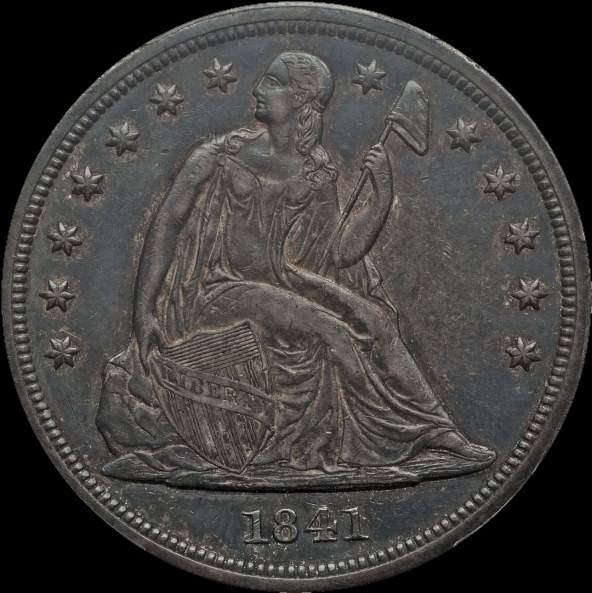 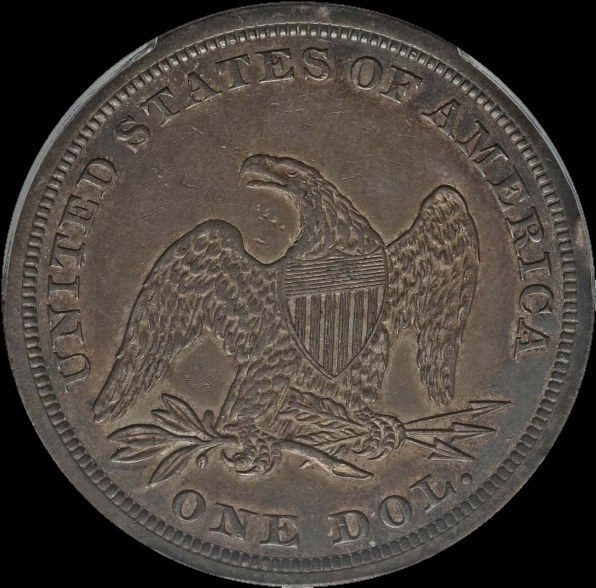 |
| |
Replies: 61 / Views: 7,325 |






 First Page
 Previous Page


 Posted 07/20/2018 03:46 am