1792 CENT Washington Roman Head Cent PR65 Red and Brown NGC. CAC. Baker-19, Breen-1249, W-10840, R.6. Ex: "Col." E.H.R. Green. 197.5 grains, 99% copper per NGC metallurgical tests. The edge is lettered UNITED STATES OF AMERICA. The dies of the Roman Head cent, a product of Obediah Westwood's Birmingham Mint, are attributed to the talented young engraver John Gregory Hancock. Walter Breen gave Hancock's life dates as 1775-1815 in his Complete Encyclopedia and described him as a "juvenile engraving prodigy." However, Forrer's Biographical Dictionary of Medalists suggests that those dates were his active years of engraving: "Medallist and die-sinker of the latter part of the eighteenth century and first two decades of the nineteenth, circ. 1775-1815." His son, also John Gregory Hancock (born 1791) was described as a prodigy who was engraving tokens at the age of eight or nine years. If the elder Hancock was born in 1775, he was just 16 years old when his son was born. Birmingham records indicate that John Gregory Hancock and Sarah Ward were married in 1780, suggesting that the elder engraver was likely born a couple of decades earlier, perhaps around 1760.
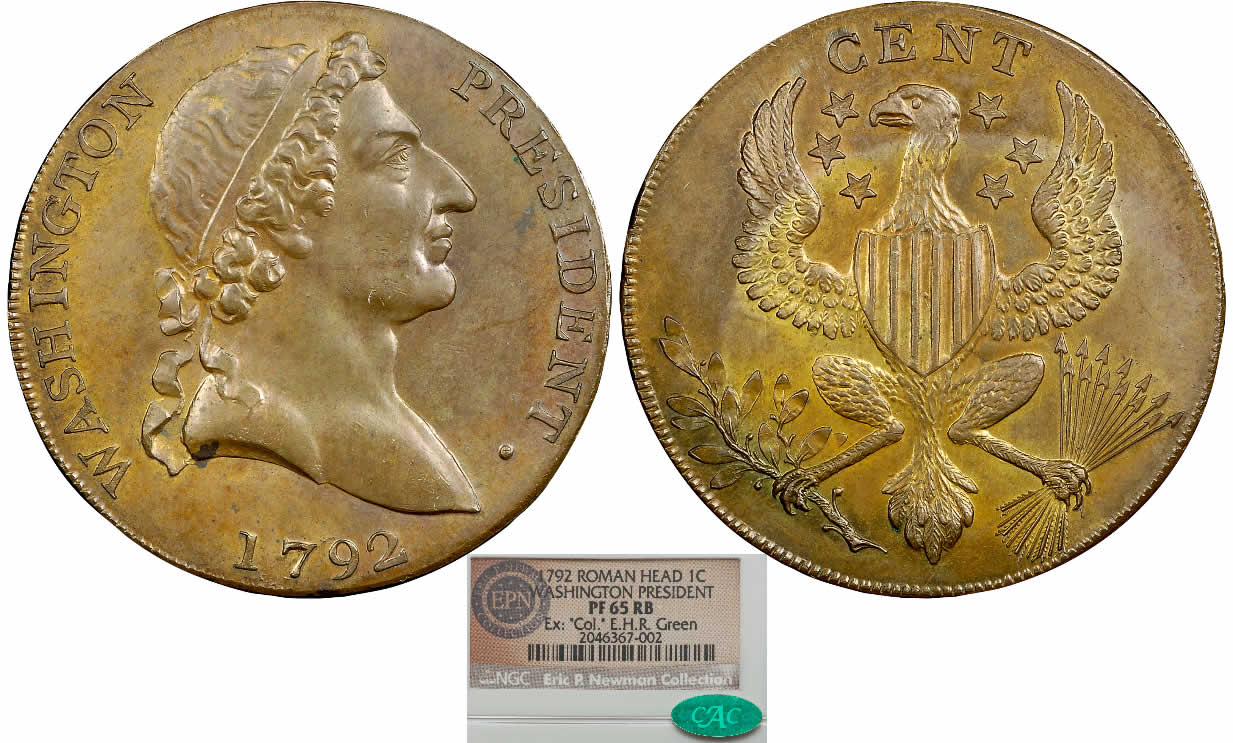
It is known that President Washington objected to the appearance of his likeness on the Federal coinage. However, the Senate version of the Mint Act called for "an impression or representation of the head of the president of the United States." The House of Representatives, apparently ceding to Washington's wishes, changed the wording to call for "an impression emblematic of liberty." As the Getz pattern followed the designs of Hancock's earlier Washington cents, this piece appeared as a response, although opinions of its purpose differ.
Read More: Coin of the Day Series










 Posted 03/03/2021 3:15 pm


