PCGS - The
Sacagawea dollar was released in 2000 to great fanfare. The so-called "Golden Dollar," a copper-core coin cladded in manganese brass, heralded a new chapter in the United States dollar coin saga. Over the previous three decades the United States had tried multiple times to resurrect a circulating dollar, first in 1971 with the
Eisenhower dollar, then in 1979 with the
Susan B. Anthony dollar. The latter was retired in 1981 but reprised for a brief encore in 1999 to fill a growing void in bank vaults that were becoming depleted of existing dollar coinage.
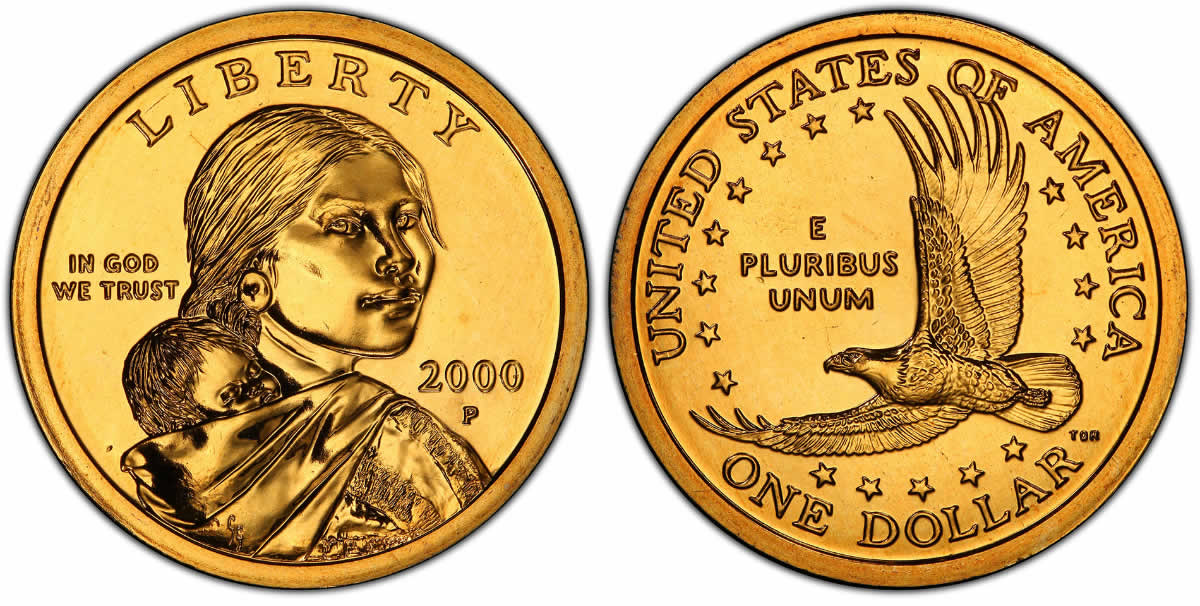 2000-P SAC$1 Goodacre Presentation, PCGS SP69
The
Sacagawea dollar ultimately failed to capture the nation's interests, let alone catch on as a circulating coin. But it wasn't for lack of trying on the part of the United States Mint. Unlike its
Susan B. Anthony dollar predecessor, the
Sacagawea dollar was visually distinctive and in no way looked like anything else being produced by the United States Mint in the late 1990s and early 2000s. The coin also had its artistic merits, thanks to a gorgeous obverse design featuring the namesake Shoshone woman Sacagawea and her young infant son, Jean Baptiste; the obverse by renowned artist Glenna Goodacre was coupled with a soaring reverse design of an American eagle by
Thomas D. Rogers.
Perhaps the only thing holding the
Sacagawea dollar back from circulation success was a losing battle against the long-established $1 banknote - the very entity that fended off both the
Eisenhower dollar and
Susan B. Anthony dollar a generation earlier. Americans clearly seem to have a preference for folding money, and when given the option between the $1 bill or a dollar coin the paper buck won out every time against modern efforts to replace it with dollar coinage.
Read the Entire Article 








 Posted 03/18/2021 4:09 pm


