Something special for my 6,000th post!Among the 58 different designs of the US classic silver and gold commemorative coin series (not counting circulation issues), there is a subgroup of coins that feature named/identified foreign-born individuals within their designs. In most cases, the individual depicted was born outside of colonial America / the United States and never traveled to America. Some, however, were born in another country, spent time in colonial America / the United States then left at some point and either returned home or moved to some other country. Still others were born in another country, traveled to America and chose to stay.
This list presents these "foreign" US commemorative coins.
1892 World's Columbian Exposition Half Dollar - Christopher Columbus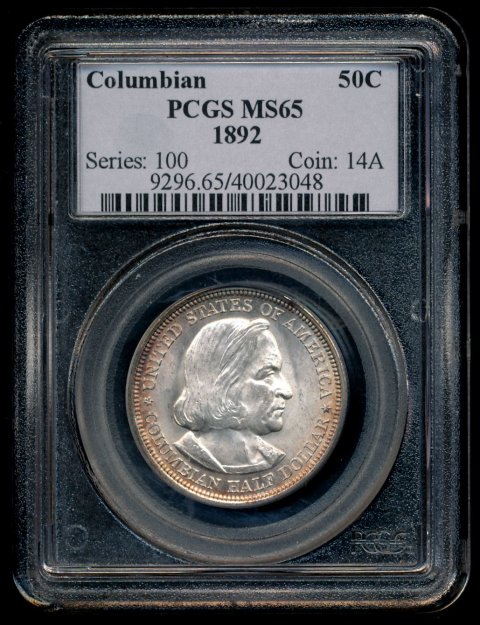
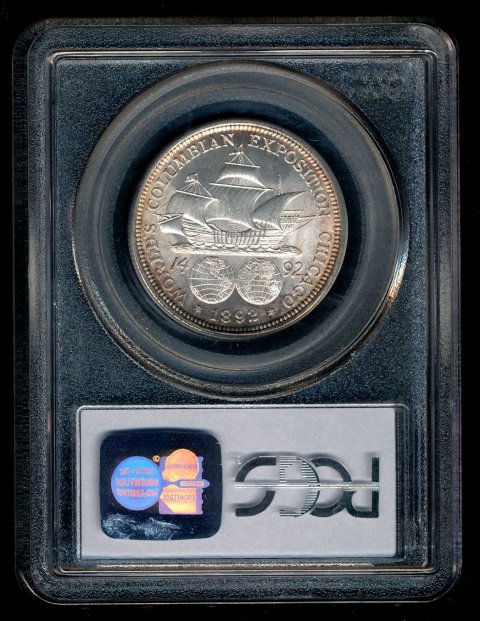 Category: Foreign-born, explored New World, returned home.
The first foreign individual to be featured on a US commemorative coins was Christopher Columbus, the Italian navigator/explorer; he is presented on the obverse of the US' first official commemorative coin, the 1892 World's Columbian Exposition half dollar. Even though his portrait might not have been based on a confirmed circa 1492 painting or drawing, the aim of the coin's design was to present a representative view of Columbus (obverse) along with his flagship, the
Santa Maria (reverse), in celebration of the 400th anniversary of Columbus' first voyage to the New World - on this objective, the coin was successful. The coin was issued to help financially support the staging of the World's Columbian Exposition in Chicago.
Columbus never set foot on continental North America (or on land that would ultimately become the continental United States), he did, however, land at present-day Puerto Rico during his Second Voyage (now an unincorporated territory of the United States that is classified as a Commonwealth). Columbus landed on the island in 1493; thereafter, it was colonized by Spain. He also sighted the present-day Virgin Islands (part of which are a current US Territory) during his Third Voyage, he did not go ashore, however, due to an attack by native islanders when his ships anchored in an island harbor.
1893 World's Columbian Exposition Quarter Dollar - Queen Isabella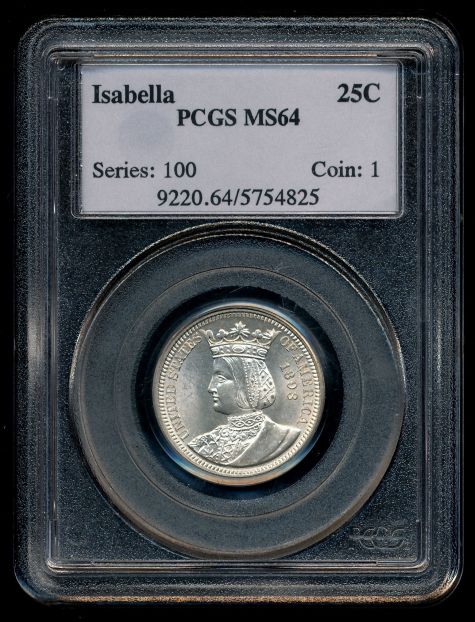
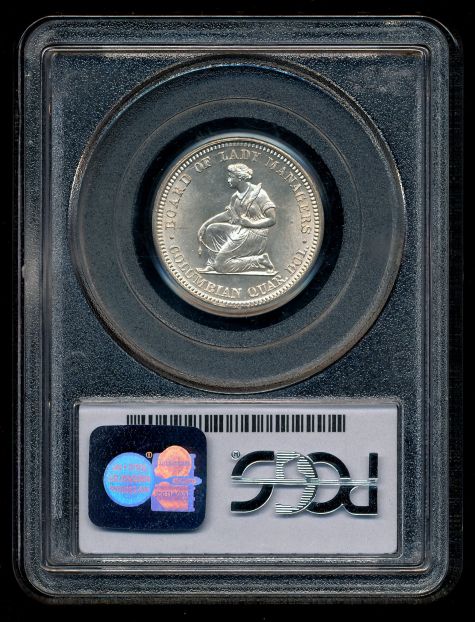 Category: Foreign-born, never visited.
The second coin was also issued in support of the World's Columbian Exposition, specifically for the Exposition's Board of Lady Managers. Spanish Queen Isabella is to be found on the obverse of the commemorative quarter of 1893. Net proceeds from sales of the coins were used to help fund women's programs and functions at the Exposition. The coin was one of only two commemorative quarters of the classic era, the other being the circulating 1932
Washington quarter.
1900 Lafayette Memorial Dollar - Marquis de Lafayette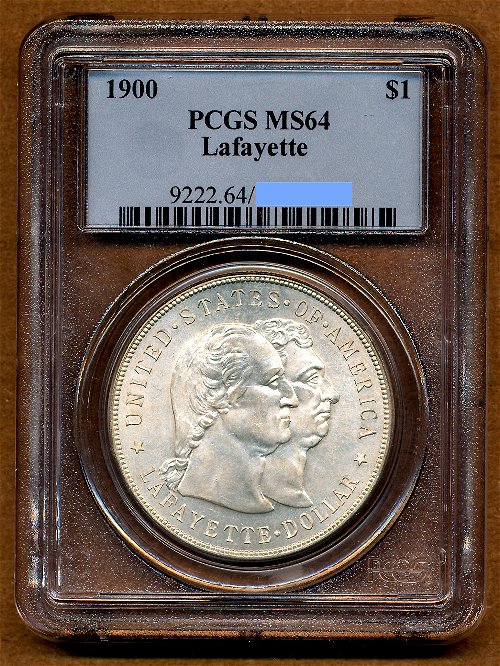
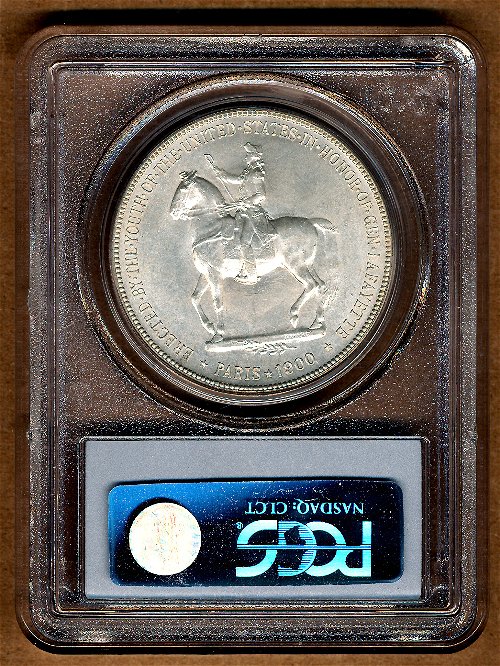 Category: Foreign-born, came to America, stayed temporarily. (He had a VERY productive stay!)
The third personality on the chronological list is Frenchman Yves Roch Gilbert du Motier, Marquis de Lafayette. General Lafayette, supporter and military hero of the American Revolution. He is featured on the obverse as well as the reverse of the first US commemorative silver dollar. The coin was dated "1900" though it was struck in December 1899. The Mint has maintained that the "1900" seen on the reverse of the coin is part of its inscription and indicates the year the Paris Exposition was held vs. the coining date. If this is true, the coin is officially dateless - the only coin of the series to be so!
1920 Pilgrim Tercentenary Half Dollar - William Bradford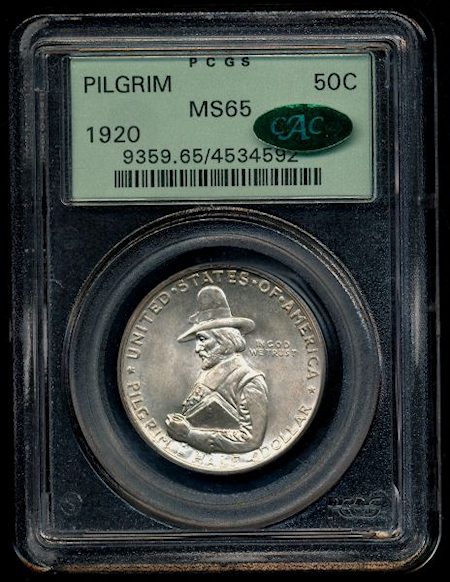
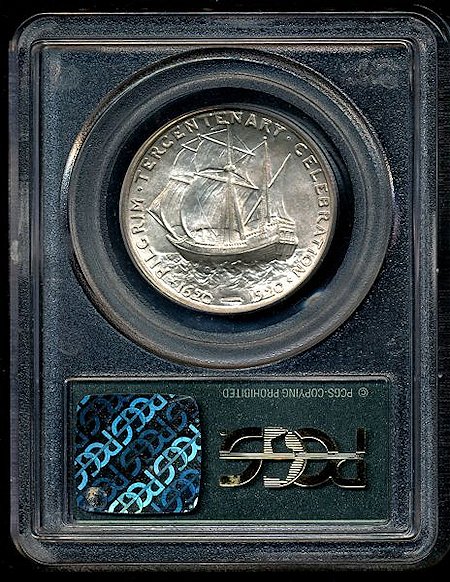 Category: Foreign-born, came to America, stayed permanently.
The obverse of the 1920-21 Pilgrim Tercentenary half dollar features a portrait of William Bradford, a key figure in the earliest days of the Plymouth Colony. He was a signer of the Mayflower Compact (the first governing document of the colony) and served multiple terms as governor of the colony.
Bradford was born in March 1590 in Austerfield, West Riding of Yorkshire, England. He traveled to America on the
Mayflower in 1620 and wound up staying in Plymouth (aka Plimoth) Colony until his death in May 1657.
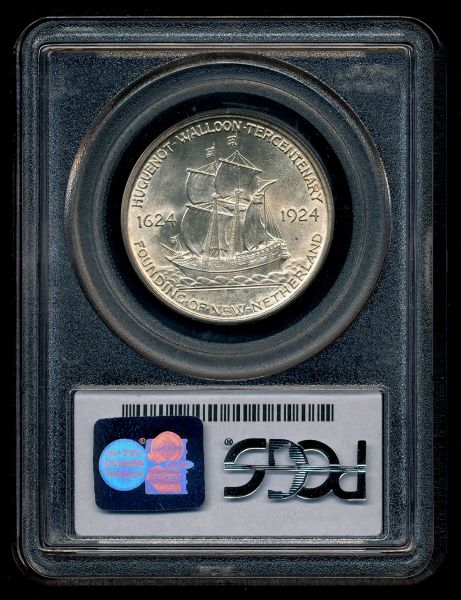
1924 Huguenot-Walloon Tercentenary of Founding of New Netherland Half Dollar - Admiral Coligny and William the Silent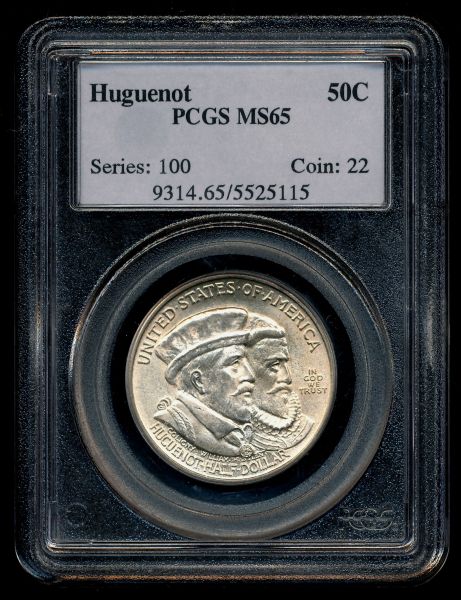
 Category: Foreign-born, never visited.
For the fourth coin, we jump to 1924 and the half dollar to mark the 300th anniversary of New York via settlement by the Huguenots and Walloons; they were sponsored by the Dutch. The obverse of the coin features portraits of Frenchman Admiral Gaspard de Coligny and Dutch nobleman William the Silent. Though neither was part of the 1624 settlement efforts - they had died many years before - the Huguenot-Walloon New Netherland Commission considered both of the men to be important catalysts for the 17th century New Netherland settlement efforts of the Huguenots and Walloons.
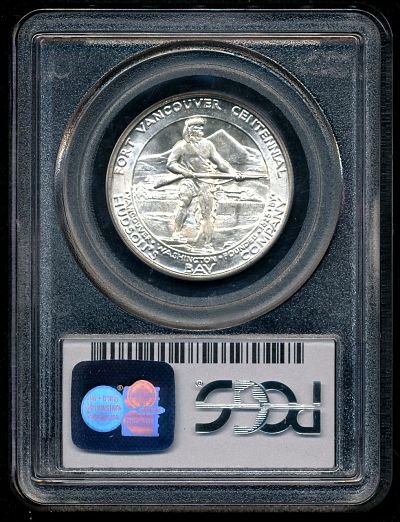
1925 Fort Vancouver Centennial Half Dollar - John McLoughlin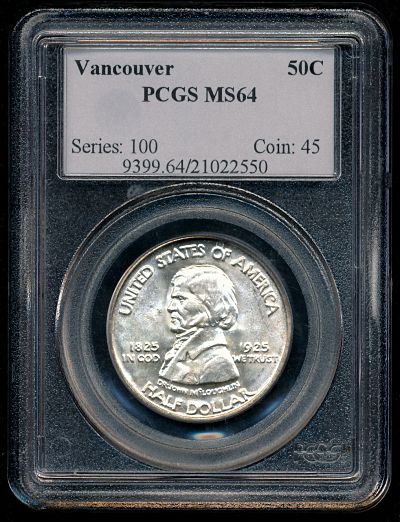
 Category: Foreign-born, came to America, stayed permanently.
Canadian-born Dr. John McLoughlin is depicted on the obverse of the 1925 half dollar issued to commemorate the 100th anniversary of the establishment of Fort Vancouver in the Oregon Territory (present-day State of Washington) by the Hudson's Bay Company (HBC).
The fort was built in 1825 to serve as the HQ for the company's fur trade operations throughout the region. Dr. John McLoughlin, born in Quebec, Canada on October 19, 1784, established the fort and served as its HBC Chief Factor (general manager) until he retired in 1846. He moved, with his family, to Oregon City. He came to enjoy his time in Oregon's Willamette Valley so much, that he became a US citizen in 1849. McLoughlin died just over a decade later on September 3, 1857, while still living in Oregon City.
1928 HawaiIan Sesquicentennial Half Dollar - Captain James Cook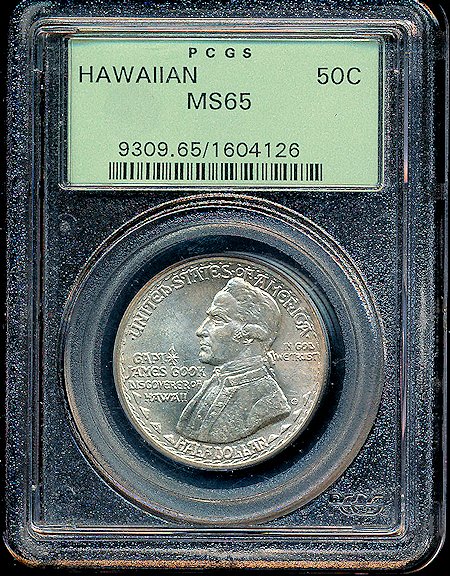
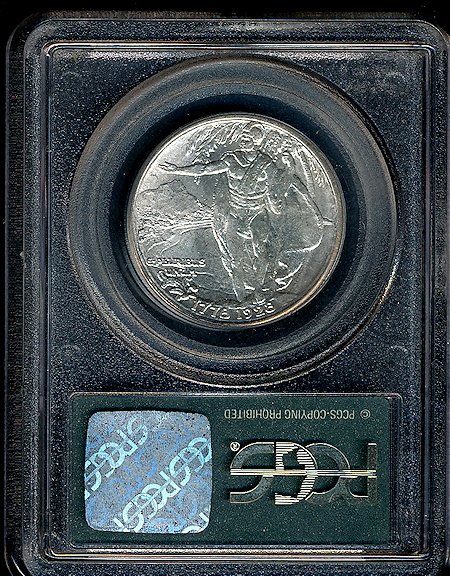 Category: Foreign-born, never visited. (The islands visited by Cook were in no way connected to the US at the time of his visit.)
Next up is the British citizen Captain James Cook. Cook is featured on the 1928 Hawaiian Sesquicentennial half dollar; the coin was issued to commemorate the 150th anniversary of the European discovery of Hawaii. Cook came upon the islands during his third and final voyage (1776-1779). He opened communications with the local inhabitants of Hawaii in 1778 before heading north for the west coast of North America. He had hopes of finding a Northwest Passage around the American continent. He was unsuccessful at finding such a passage, and returned to Hawaii in early 1779 where he was eventually killed by Hawaiian natives on February 14, 1779.
The reverse of the coin depicts a Hawaiian warrior chief with his hand raised and stretched out in welcome. The figure is referred to in generic, unnamed terms by the reference books, but I believe it is King Kamehameha I. You can read about why I believe such here:
The 1929 Hawaiian Chieftan.
I will be posting Part II tomorrow! 









 Posted 07/08/2021 1:28 pm


