Thomas Alva Edison (1847-1931) is one of the United States' most accomplished and celebrated inventors - he received nearly 1,100 US patents for his work. His many inventions include: the first commercially-viable incandescent lamp (i.e., light bulb), the phonograph, the automatic telegraph, the movie camera and viewer, the alkaline battery, an electricity distribution system and the stock ticker (to name just a few). Edison's first invention was the electrographic vote recorder that made it easier for votes in the US Congress to be tallied.
Thomas Alva Edison Portrait - Circa 1915-1920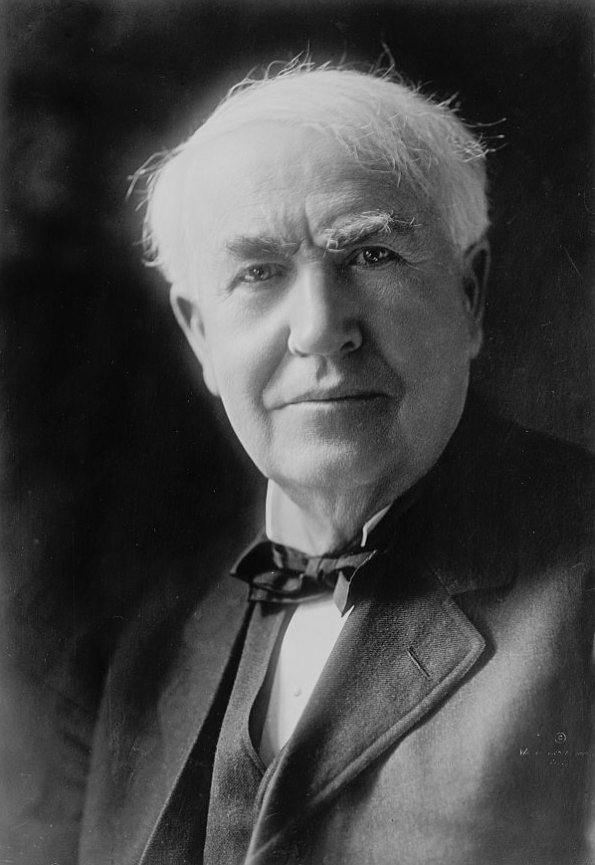 Image Credit: Library of Congress, Prints and Photographs Division, https://www.loc.gov/photos. Public Domain.
The world celebrated the 50th anniversary of Edison's development of the first commercially-viable (i.e., durable) incandescent lamp/light bulb with great fanfare in 1929. The impact of reliable electric light bulbs and other electrical devices was being increasingly felt throughout the world. In the US, the 50th anniversary was marked with a commemorative US Post Office Department two-cent stamp, plus many private-sector souvenir items.
1929 US Thomas Alva Edison Commemorative Stamp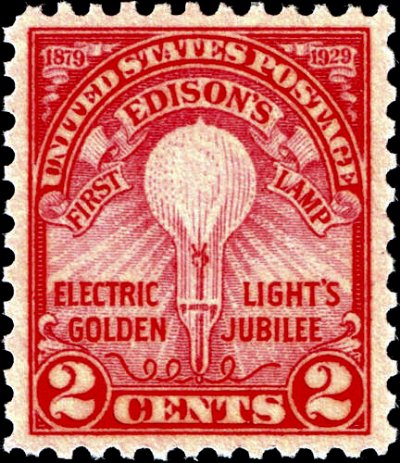
As the 75th anniversary approached in 1954, a privately-sponsored Light's Diamond Jubilee Committee was formed in New York City; it set about to commemorate Edison's achievement for a new generation. Among its activities was the commissioning of a "Light's Diamond Jubilee" commemorative medal. The bronze, three-inch medal was designed/sculpted by Bruno Mankowski and was struck by the Medallic Art Company of New York. The issue price for the medal was $3.50, with sales being administered by the Committee.
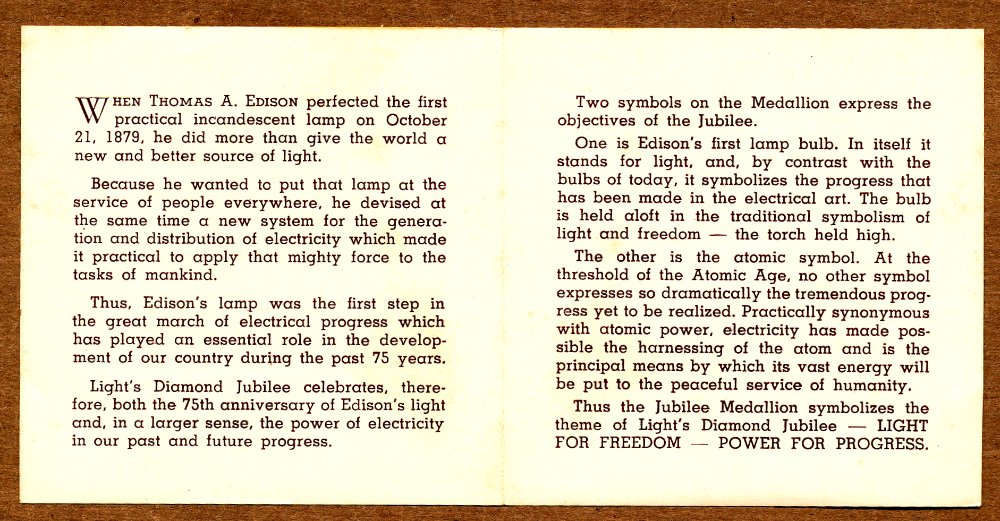
The leaflet that came with the medal explains the medal's design elements and their symbolism (see below), so I won't restate it. I've wondered, however, about a statement made in the medal's leaflet; it reads "electricity has made possible the harnessing of the atom and is the principal means by which its vast energy will be put to the peaceful service of humanity." Interesting comment, considering the use of atomic energy in the two bombs that devastated Japan and brought World War II to its conclusion. I realize the target of the statement was the peaceful use of nuclear power plants in the future, and that the bombs that dropped on Japan were a different technology, but WWII was still a "fresh" memory for many and a proper distinction by those encountering the medal could not be guaranteed.
1953 Electric Light's Diamond Jubilee Commemorative Medal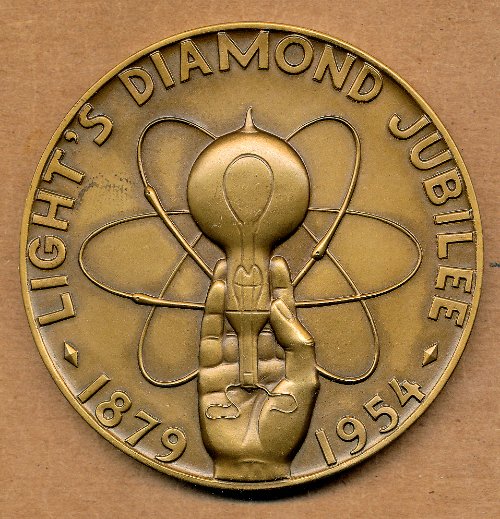
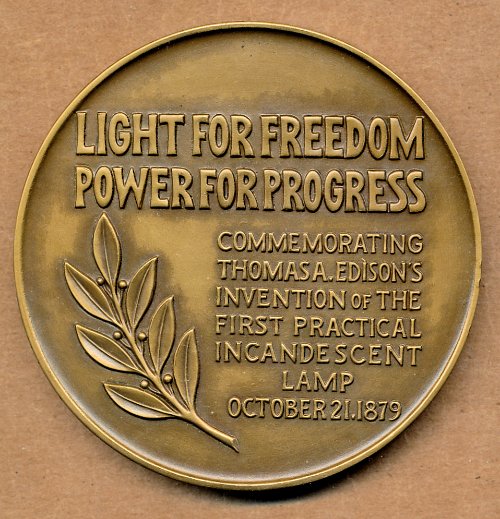 1953 Electric Light's Diamond Jubilee Commemorative Medal - Informational Leaflet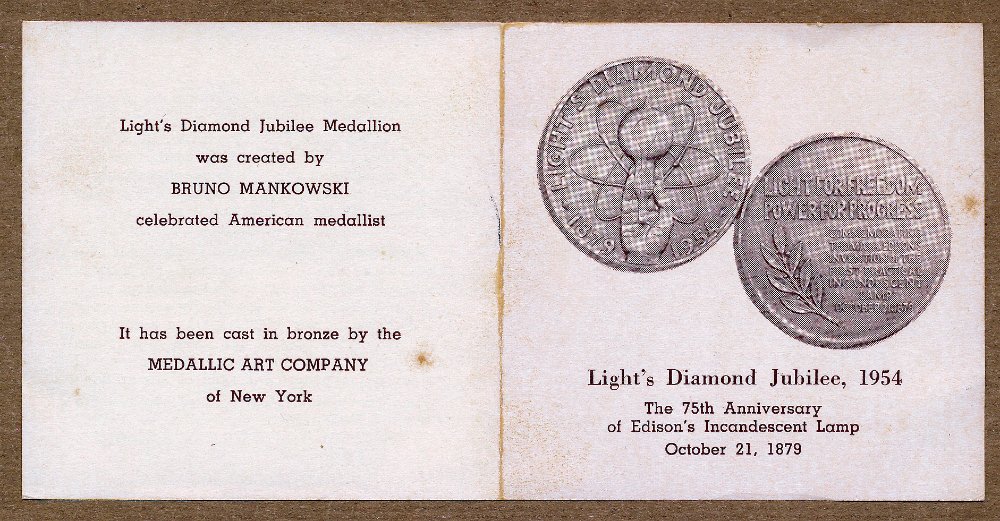
The US Mint struck a commemorative silver dollar for the 125th Anniversary of the light bulb, you can check out my post about it here:
-
2004 Thomas Alva Edison Collector's Set




 Posted 11/04/2021 09:10 am





