The effort to secure the 1936 Cleveland, OH Centennial / Great Lakes Exposition Half Dollar was initiated with the introduction of semi-companion bills in the House of Representatives and Senate in March 1936.
I say "semi-companion" because the bills introduced in each chamber had many common provisions, but they also had their differences (companion bills are generally duplicate/identical bills). For example, the House bill, introduced by Representative Robert Crosser (D-OH), specified that the coins were to be struck at the Philadelphia, Denver and San Francisco Mints while the Senate bill, introduced by Senator Robert Johns Bulkley (D-OH), simply stated "at the mints of the United States." A case of semantics more than potential outcome, but a difference nonetheless.
Another difference was the date to be featured on the coin. The Senate bill did not include any language regarding the coin's date, while the House bill specified "dated 1936 and/or 1937."
Among the common provisions shared by the two bills were the specified maximum mintage - "not more than fifty thousand" - and the Cleveland Centennial Commemorative Coin Association being named as the coin's sponsor/beneficiary.
Combining the specific naming of all the three US Mint facilities and the allowable 1936 AND 1937 dating, it isn't difficult to imagine that Representative Crosser was seeking legislation that would have allowed for P/D/S sets to be produced in 1936 and 1937. With the precedent set by the recent Daniel Boone Bicentennial coins, an unbalanced mintage of 15,000 from Philadelphia and 5,000 each from Denver and San Francisco in 1936 and the same again in 1937 seems very plausible - especially in light of the coin's distribution being managed by Thomas G. Melish, a coin dealer with a reputation for manipulating coin issues for personal gain to the detriment of collectors (Melish was also behind the questionable 1936 Cincinnati half dollar).
Crosser's bill was referred to the House Committee on Coinage, Weights, and Measures, but was never reported out. The Senate bill was referred to the Senate Committee on Banking and Currency which reported it with a recommendation to pass, but with substitute language. The substitute included the standard provisions that the Committee had adopted: coins from only one mint, coins of a single design, coins bearing a single year/date, coins issued within one year of the bill's enactment and a minimum order size of 5,000 coins.
The Senate passed the bill as amended by the Committee and sent it on to the House for its consideration. Once it was received in the House, the bill was referred to the Committee on Coinage, Weights, and Measures. The Committee reported the bill favorably but with minor amendments. The House Committee wanted to ensure that a minimum of 25,000 coins would be struck by adding language that established such a minimum mintage and also raised the minimum order from 5,000 to 25,000.
As the Great Lakes Exposition was set to open in June 1936, the amended bill was brought up in the House under emergency measures to expedite its consideration. The amended bill was quickly passed by the House without debate and sent back to the Senate for its concurrence with the House amendments. The Senate concurred without debate.
President Franklin Delano Roosevelt signed the coinage bill into law on May 5, 1936.
An attempt was made in 1937 to get 25,000 additional coins authorized with a small "1937" added to coincide with second season (in the summer of 1937) of the Exposition. The proposed measure failed to gain support (see link below).
1936 Cleveland, OH Centennial / Great Lakes Exposition Half Dollar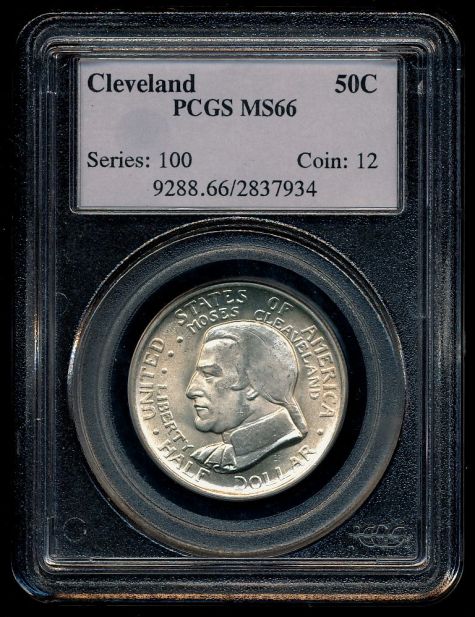
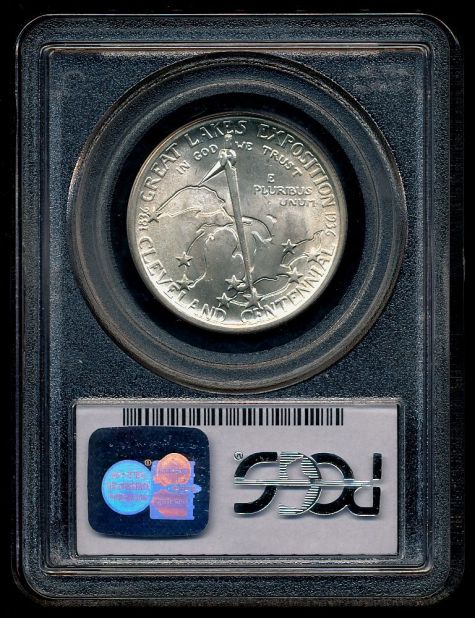
For more on the Cleveland half dollar, see:
-
1936 Cleveland, OH Centennial & Great Lakes Exposition-
1936 Cleveland, OH Centennial & Great Lakes Exposition - Ephemera-
1936 Cleveland, OH Centennial & Great Lakes Exposition - Ephemera II-
What If? 1937 Cleveland, OH CentennialFor other of my posts on commemorative coins and medals, have a look at:
Commems Collection. 









 Posted 03/22/2022 3:00 pm


