A half dollar "in commemoration of the late Commodore John Barry. United States Navy, in conjunction with the "Barry Day" celebration in Philadelphia (September 13, 1937) which occurs during the one hundred and fiftieth anniversary of the signing of the Constitution" was proposed in 1937 on behalf of the Irish War Veterans, U.S.A.
Commodore John Barry, United States Navy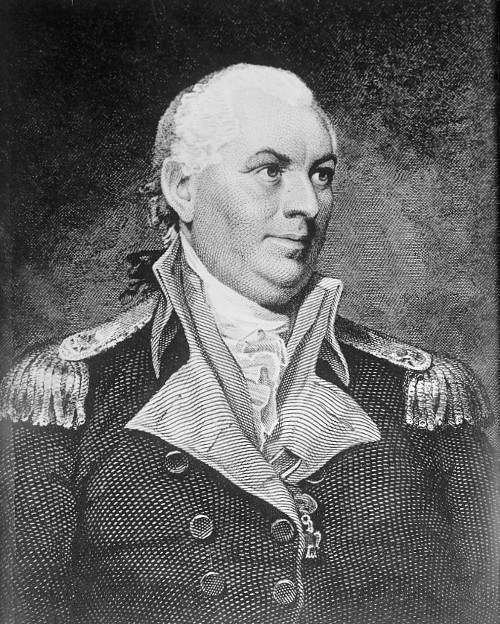 (Image Credit: Library of Congress, Prints and Photographs Division. Public Domain.)
Commodore John Barry was an Irish-born (1745) sailor who began his maritime-focused life on his uncle's fishing boat as a young boy. He emigrated to the American colonies in 1760 and soon worked for a ship building company in Philadelphia. He spent several years as a captain of merchant vessels based in Philadelphia, traveling back and forth to Europe, the islands of the Caribbean and other ports.
Barry strongly supported America's drive for independence and volunteered his service at the start of the American Revolution. He served as a Captain in the Continental Navy, during which he compiled an outstanding record of victories over British ships. After the War, he was named the Commodore of the United States Navy. He was considered "The Father of the American Navy" by his contemporaries and historians today consider him one of the US' most important early naval figures.
The coin bill proposed 25,000 silver half dollars of standard specifications. The bill allowed for the coins to be struck at all US Mint facilities, did not specify a year to be placed on the coins and did not include an expiration date for coining authority. As with other failed proposals I've chronicled, this combination allowed for P/D/S sets to be minted in multiple years.
The Irish War Veterans, U.S.A. was the only group eligible to secure/purchase the coins from the Mint, and were to use net proceeds from coin sales "in furtherance of a National Home for Irish War Veterans and to conduct 'Barry Day' services in every State and to finance this and other patriotic and welfare work." Quite an ambitious "to do" list for the proceeds from a single coin!
The coin bill was introduced in the House of Representatives by Michael Joseph Stack (D-PA) in May 1937. It was immediately referred to the House Committee on Coinage, Weights, and Measures. The Committee, however, never reported the bill and it subsequently died from lack of action.
Considering Barry's accomplishments and service to the early days of the United States, I would have supported this one becoming a reality.







 Posted 08/19/2022 12:21 pm





