The Lynchburg, VA Half Dollar was created by the 74th Congress via a bill introduced in February 1936 by Senator Carter Glass (D-VA). The bill sought half dollar coins "in commemoration of the one hundred and fiftieth anniversary of the issuance of the charter to the city of Lynchburg, Virginia."
The bill called for the striking of up to 10,000 coins at a single US Mint facility and were all to bear the date "1936" regardless of when they were struck. The minimum order size for the coins was set at 5,000 and the coining authority was to expire one year after the bill's enactment. The sponsor of the coinage was the Lynchburg Sesqui-Centennial Association. All such provisions were in line with the policy previously outlined by the Senate Committee on Banking and Currency, though the proposed mintage figure was lower than what was preferred.
As would be expected, the bill was referred to the Committee on Banking and Currency upon its introduction. Its conformity with Committee policy made it a simple matter to be reported out without amendment and with a recommendation to pass. The Senate then took the bill up for consideration, but offered an amendment before passing it. The amendment involved raising the mintage for the coin to 20,000 vs. the original 10,000. The amendment was agreed to and then the revised bill was read a third time and passed without debate.
The bill was sent to the House, where it was referred to the House Committee on Coinage, Weights, and Measures; no issues were raised by the House Committee. When it came time for the House to consider the amended Senate bill, Representative Robert Fleming Rich (R-PA) rose to comment on the large number of commemorative coin bills that had been introduced in the present session of Congress and jokingly warned of "Democratic inflation" in the form of coinage bills; Democrats held the majority in the House, 322 seats to 103, so Republicans had few opportunities for jokes!
Rich did not object to the Lynchburg bill, however, and so it was considered via Unanimous Consent. The House quickly passed the Senate bill without amendment. The bill was then examined and signed in each chamber before being sent to the President for approval. US President Franklin Delano Roosevelt signed the Lynchburg, VA Sesquicentennial Half Dollar bill into law on May 28, 1936.
The coins were struck at the Philadelphia Mint in September 1936 and delivered to the Sesqui-Centennial Association the same month. They were placed on sale for $1.00 each and quickly sold out. The amendment to strike 20,000 coins vs. 10,000 proved to be a good thing for collectors. It's not hard to imagine the Association wishing it had asked for more coins (30,000 perhaps?), as the quick sellout definitely gives the impression that demand exceeded supply and that money was left on the table!
1936 Lynchburg, VA Sesquicentennial Half Dollar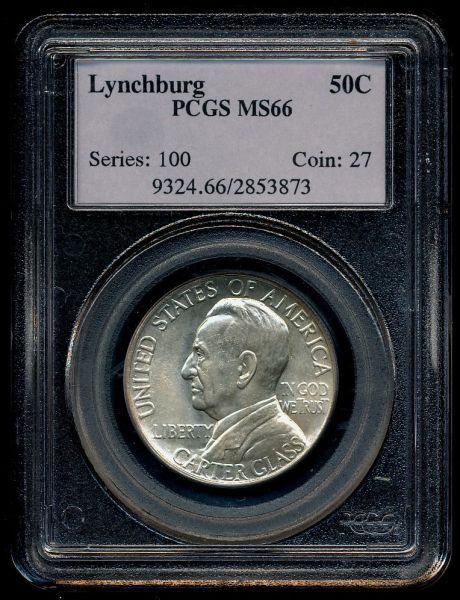
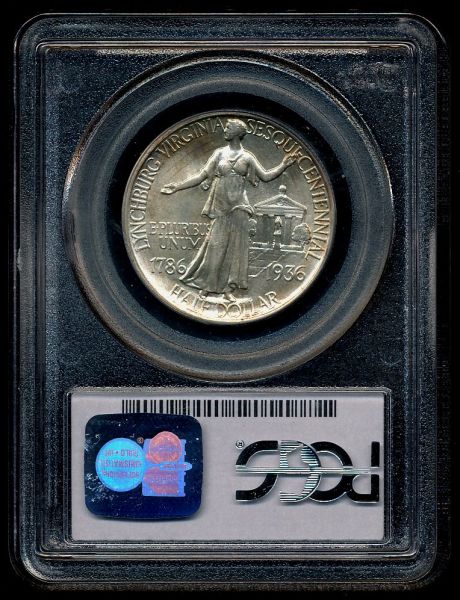
For more of my topics on commemorative coins and medals, including more on the history and design of the Lynchburg half dollar, see:
Commems Collection.







 Posted 09/22/2022 2:20 pm