Continuing the account of the debate on the 1923 Monroe Doctirne Half Dollar in the House of Representatives...I recommend giving Part I a read first: 1923 Monroe Doctrine - A Lengthy Debate - Part I.Two weeks after its initial consideration and debate regarding the Monroe Doctrine coin bill, the House returned to its Unanimous Consent Calendar and the bill was once again presented for consideration. Representative Lineberger was not part of the discussion this time out - my guess is that his lack of understanding of the purpose for the coin and ineffective previous defense of the coin bill was used by interested colleagues to "suggest" he remain on the sidelines.
This time, Representative William Henry Stafford (R-WI) rose, reserved his right to object to the bill, and sought an explanation as to why commemorative coin bills should be approved, stating: "I would like to have the gentleman who reported the bill give some reason why we should keep on making exceptions."
Representative Blanton responded to Stafford's question, argued that it was not just a local Los Angeles event/coin and offered his support for the bill and for the coin's use in helping to finance the exposition vs. asking the Government for money. Stafford pounced on this statement, stating: "Two weeks ago, when this bill was first being considered, I stated the very argument that the gentleman is now advancing, that I would rather have them obtain the funds to meet the expenses through the premium derived from the sale of these coins than to call upon Congress for an appropriation." This was the major mistake made by Lineberger when presenting the coin bill two weeks earlier.
Albert Henry Vestal (R-IN), Chairman of the House Coinage Committee, then stated that the precedent for commemorative coins to be requested by a local organization for celebration of a national event was well-established and that the Monroe Doctrine bill was nothing new. Stafford accepted Vestal's explanation, indicated that he had no objection to the bill as a fundraiser and added "I would rather have them get the money in that way than to call on Congress for a fund." Stafford withdrew his objection, and the bill was cleared for further consideration.
At that point, Vestal requested that the Senate companion bill - already passed in the Senate - be substituted for the House bill. There was no objection to his request, and the House passed the Senate bill without further debate. The House bill was Laid on the Table.
US President Warren G. Harding signed the bill into law on January 24, 1923.
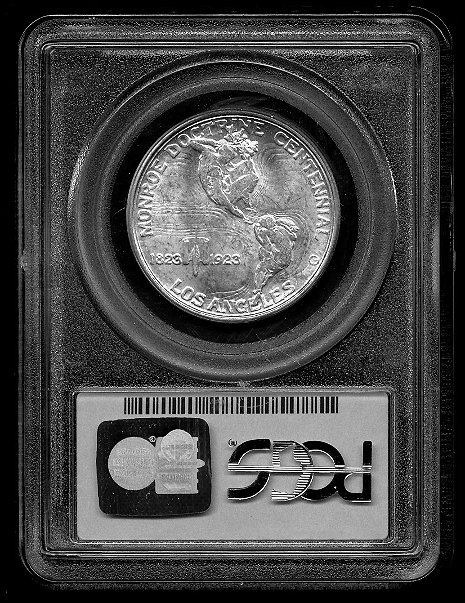
1923 Monroe Doctrine Centennial Half Dollar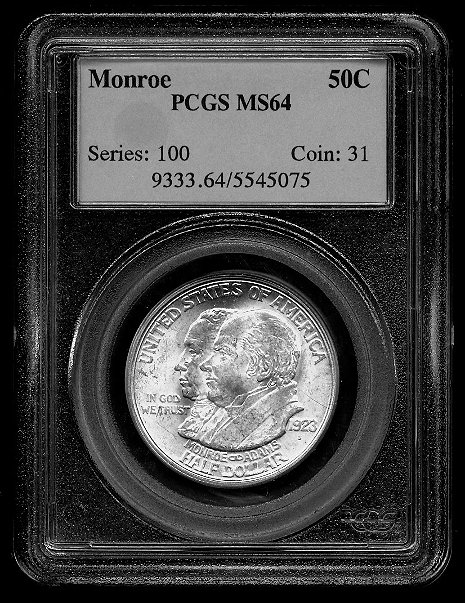
Part I of this story can be found here:
1923 Monroe Doctrine - A Lengthy Debate - Part I
For more of my topics on commemorative coins and medals, including more on the history and design of the Monroe Doctrine half dollar and the Motion Picture Exposition, see:
Commems Collection.










 Posted 10/12/2022 12:28 pm


