Sydney J. Philips promoted his proposal for the Booker T. Washington - George Washington Carver half dollar (to replace/succeed the 1946-51 Booker T. Washington Birthplace Memorial half dollars) by touting the new coin's objectives in fighting communism among the US' African-American population. This effort did not begin, however, with the BTW-GWC coin.
As the 1951 commemorative half dollars for the BTW Birthplace Memorial were being struck in January at the Mints in Philadelphia, Denver and San Francisco, Philips and the Memorial's Trustees were hard at work planning promotional events for its latest coins.
The Trustees voted to designate 50% of the proceeds from sales of the 1951 BTW coins to aid in the fight against Communism. Philips believed that a primary weapon in America's fight against Communism was education and had already set up two trade schools in Virginia (in Franklin County at the Birthplace site and in Roanoke) to teach industrial and agricultural skills to African-Americans. Philips believed that training African-Americans in job skills would lead them to become more productive members of the US work force which, in turn, would make them less susceptible to communist propaganda. Some of the net proceeds from coin program sales went to supporting the schools and other of the Memorial's educational initiatives.
The Memorial also decided to distribute nearly 600 of the new coins to national political figures to help build support for its programs
First Coin: US President Harry S. Truman (1945-53)
Second Coin: Nasrollah Endezam, President of the United Nations General Assembly (Fifth Session, 1950-51)
48 Coins: one for each of the 48 states (presumably the Governor's office of each State)
534 Coins: Members of 82nd (1951-53) Congress - 96 Senators, 435 Representatives, 2 Delegates (Alaska, Hawaii), 1 Resident Commissioner (Puerto Rico)
Note: Other than for the first two presentation coins, I have not found verified reports stating that the State and Congress coins were consecutive strikes from the first batch. They may have been, but I can't guarantee it.Based on Philips' skills as a promoter/marketer, it seems the distribution of coins to the 82nd Congress might have been a tool he used to "grease the gears" for his next coin proposal - amending the BTW coin Act to authorize BTW-George Washington Carver half dollars. The bill calling for the BTW-GWC coins was introduced just a few months later, in March 1951, and was signed into law on September 21, 1951 (all of the amendment discussions took place during the 82nd Congress).
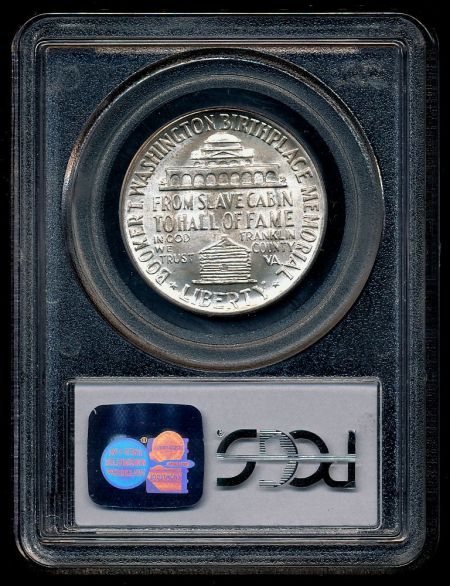
1946 Booker T. Washington Half Dollar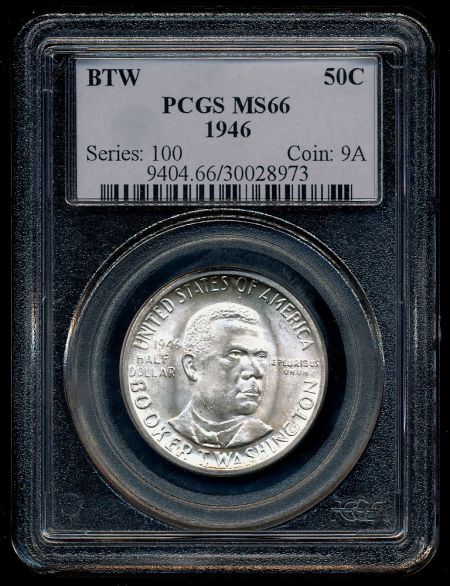
For more of my topics on commemorative coins and medals, including more on the history and design of the Booker T. Washington half dollars, see:
Commems Collection.







 Posted 10/23/2022 5:17 pm





