PCGS -
Counterfeit Detection is a continued fight as advancing technology gets into the wrong hands. This is certainly a point epitomized in the recent appearance of a counterfeit piece posing as a 1972 Doubled Die Obverse
Lincoln Cent, which was submitted to PCGS for grading.
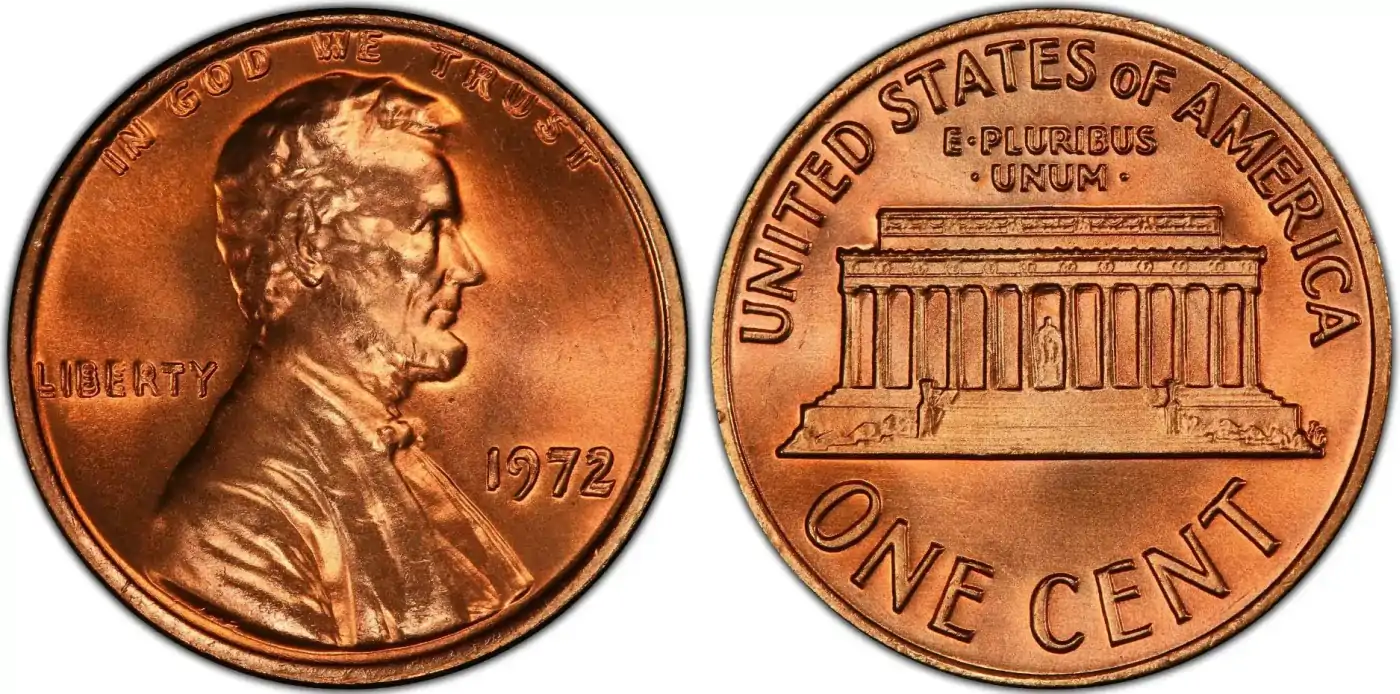 Genuine 1972 Doubled Die Obverse Cent, PCGS MS67+RD. Courtesy of PCGS TrueView. Click image to enlarge.
 In 1969, the United States Mint modified the obverse design of the
Lincoln Cent; as a result, the design transfer from that of the hub to the die became unacceptable for coinage production due to failure in transfers. To remedy this, the United States Mint removed lugs from the dies and hubs to allow for a deeper transfer in die creation. As a result of this removal, the dies could more easily spread and create doubled impressions, known as doubled dies. Several major doubled dies error coins would follow with notable 1969-S, 1970-S, and 1972 Lincoln Cents. After the release and discovery of the major doubled die obverse in 1972 the lugs were replaced around the hubs and dies, and strong doubled die errors would become much rarer.
In 1972 people discovered a significant error on some of their cents. Strong doubling could be seen with minimal magnification on the date, "LIBERTY," and on "IN GOD WE TRUST." With this treasure waiting to be found, searching 1972 Cents would eventually lead to finding an additional nine other doubled dies being listed for 1972 circulation-issue cents in the Cherrypicker's Guide to Rare Die Varieties. The strongest and first variety FS-101, or Die 1, became even more desirable with it being listed in the addition to the A Guide Book of
United States coins, often known as "The
Red Book." Being a major variety with a significant value over face, some counterfeits would follow.
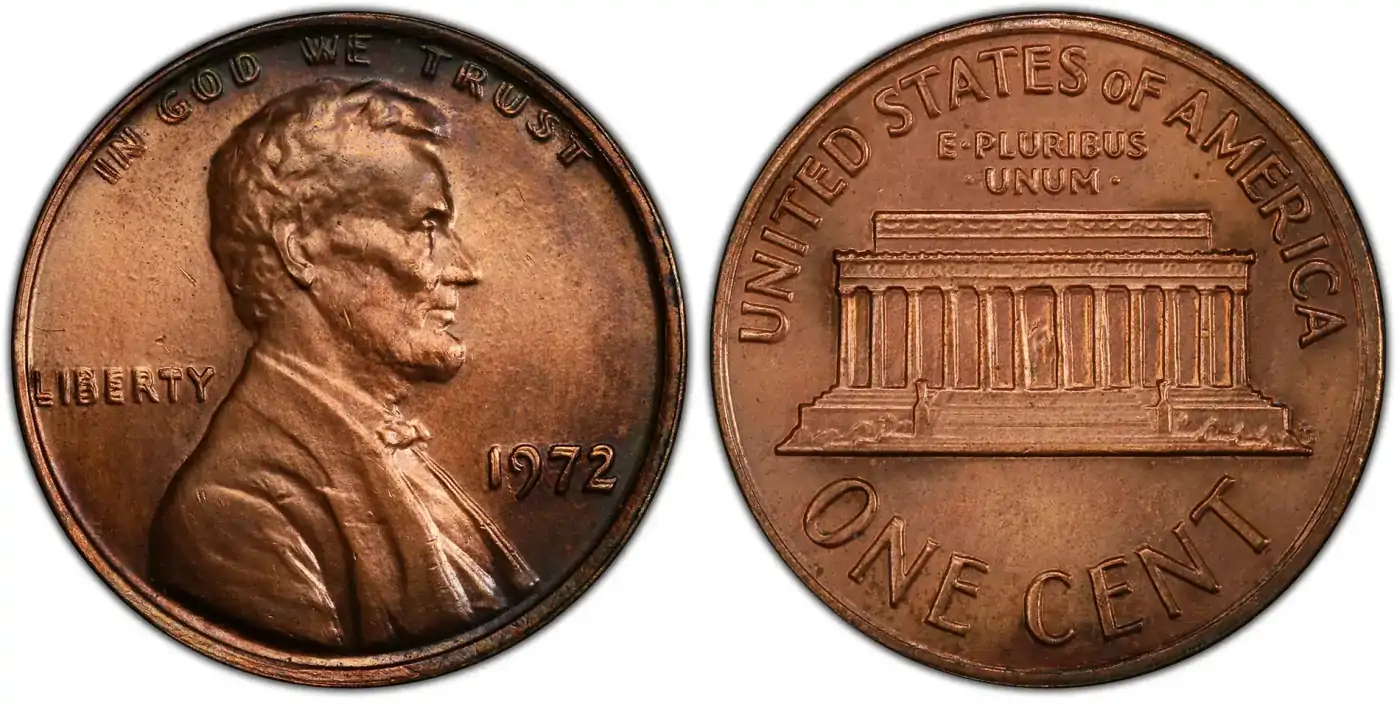 Counterfeit 1972 Doubled Die Obverse Cent. Courtesy of PCGS. Click image to enlarge.
Until recently, the easiest way to verify not only the dies for the 1972 Doubled Die Obverse
Lincoln Cent as die #1 but also that the coin was genuine was to check for a small die gouge on the reverse above the letter "D" of "UNITED." However, technology has resulted in even this diagnostic being transferred on this most recent counterfeit. Using the transfer die method of using a real coin to produce dies, this new counterfeit has all the diagnostics that genuine pieces have. If one did not make the effort to look carefully, this piece would fool many collectors and dealers who would, at a quick glance, pass it off as a cleaned example. Yet the counterfeiters made a significant error in the coin's production, which proves it's counterfeit.
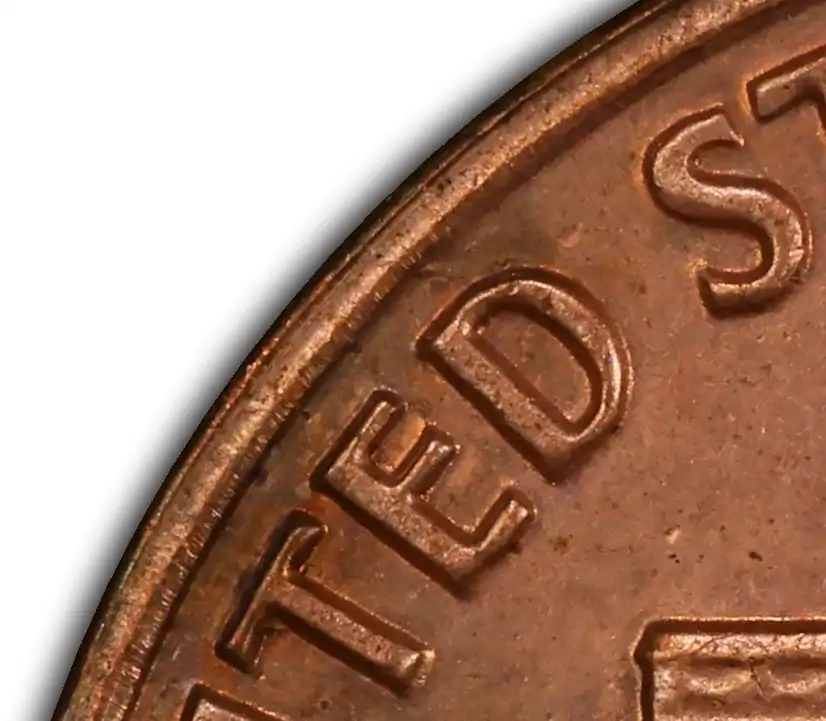 Close up on the transferred die gouge above the "D" of "UNITED." Courtesy of PCGS. Click image to enlarge.
The counterfeit coin was made using a previously struck
Lincoln Cent as its host planchet. While this practice has been used for several years in the production of high-quality counterfeits in Chinese coins as well as some United States large cents and other issues, it is the first time of note seeing it on a
Lincoln Cent. What the counterfeiters failed to recognize is that the host coin chosen for the planchet was the incorrect metal for the 1972
Lincoln Cent, with a 1983 cent being used. In 1972 the Lincoln cents were produced in a 95% copper, 5% zinc composition bearing a standard weight of 3.11 grams.
In 1982 the coins were changed to a copper-plated zinc format with a weight of 2.5 grams. This counterfeit weighing in at 2.5 grams is an obvious problem for its authenticity. The counterfeiters did make every effort to try to line up the design to prevent the under type from being seen. However, if one were to look close at the date the shadow of the under date can be seen with a clear "8" under the "7" and remains of the "3" under the "2."
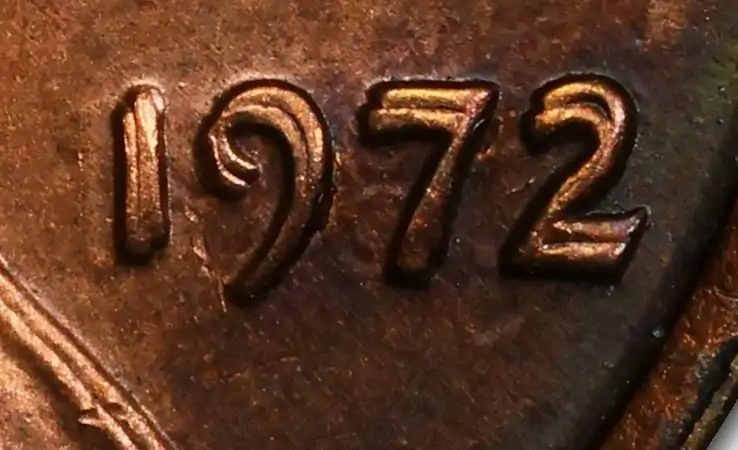 Close up on the date showing the under date of 1983. Courtesy of PCGS. Click image to enlarge.Read More: Counterfeit Detection Series
 Check out 1972 Doubled Die Obverse Lincoln Cents on ebay
.










 Posted 01/17/2024 7:45 pm





