Martin Luther King, Jr. (MLK) was assassinated on April 4, 1968 in Memphis, Tennessee. He was in Memphis to support the city's striking sanitation workers in a planned march on April 8. Upon exiting his room at the Lorraine Motel, he was shot in the head by a single bullet, generally believed to have fired by James Earl Ray, and died approximately one hour later.
Martin Luther King, Jr at Press Conference - Circa 1964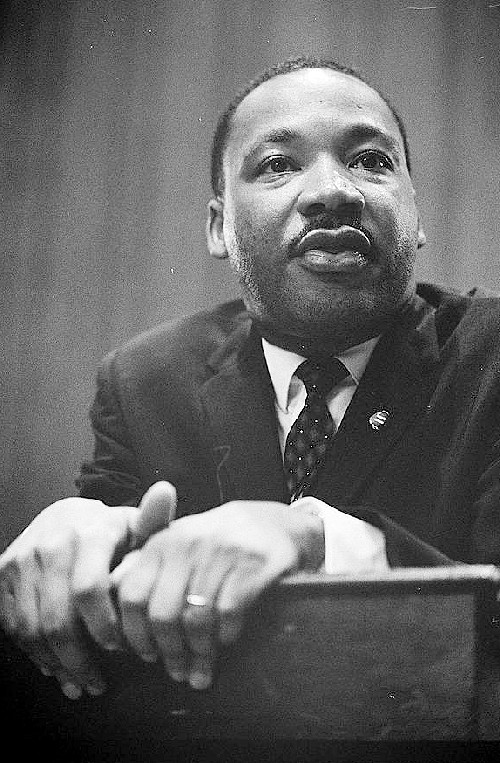 (Image Credit: Library of Congress, Prints and Photographs Division. Public Domain.)
In the days that followed, the Civil Rights leader - who advocated for peaceful solutions to racial (and other) issues - was honored across the nation with school and business closings, event postponements and a large funeral service in Atlanta, Georgia. Several members of King's family, including his wife - Coretta Scott King - participated in the planned sanitation workers' march to honor his memory.
For in-depth information on Doctor Martin Luther King Jr., his life and legacy, I suggest checking out:
-
Stanford University: The Martin Luther King, Jr. Research and Education Institute.
Within a month of King's assassination, three companion bills (two in the House of Representatives and one in the Senate) were introduced. Each called for "50-cent pieces in recognition of the outstanding services of the Reverend Doctor Martin Luther King, Junior, to the cause of the individual rights and the equality of men." The House bills were introduced by John Conyers, Jr. (D-MI) and William Donlon Edwards (D-CA), the Senate bill by Hugh Doggett Scott, Jr. (R-PA) on behalf of himself and a list of co-sponsors that eventually grew to nine. Each of the bills was referred to its chamber's respective Committee on Banking and Currency.
When introducing his bill in the Senate, Mr. Scott offered: "The loss of Dr. King leaves a great void in our society, but we all know that he will never be forgotten. He stood for the highest of American ideals and fought for them until he drew his last breath on earth. He fought for jobs; he fought for housing; and he fought for education. More importantly, though, Dr. Martin Luther King, Jr. was relentless in his pursuit of equality for all men, black and white."
None of the coin bills, however, were reported by the referred Committee and thus were never brought up for consideration and vote in the designated chamber. Representative Conyers tried again in the next session of Congress, but his effort yielded the same result.
MLK has been the subject of multiple commemorative coin proposals in the years since these original efforts, but, as of yet, none have made it to Public Law. Congress did honor MLK with a Congressional Gold Medal in 2004, however, with bronze duplicates available for sale to the general public.
2004 Martin Luther King, Jr. Congressional Gold Medal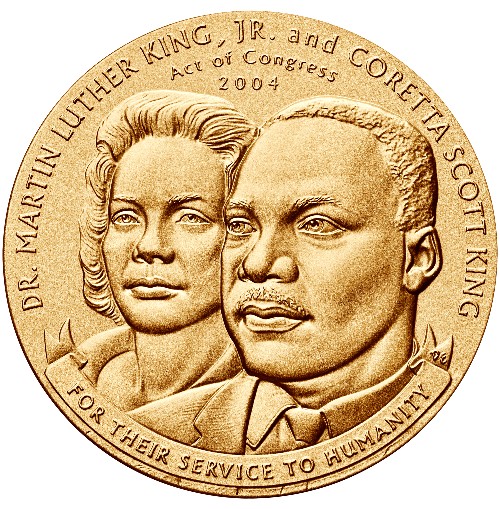
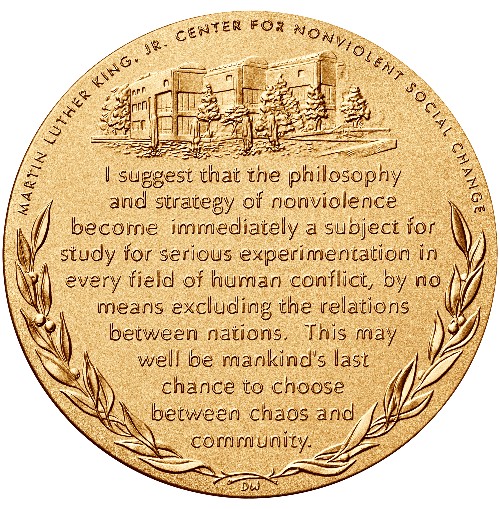 (Image Credit: US Mint Media Image.)
For other of my topics on commemorative coins and medals, including many more What If? stories, see:
Commems Collection.







 Posted 04/16/2023 09:10 am





