| Author |
 Replies: 12 / Views: 4,742 Replies: 12 / Views: 4,742 |
|
|
Valued Member
United Kingdom
289 Posts |
I have a selection of European crown sized coins that are all badly rusted. Before they are consigned to the bin I wondered if there is any way to shift or partially remove the rust ?
I have tried soaking in vinegar, surface cleaning solution and even acetic acid but no real effect. Coins can't be damaged any more than they are so I don't mind trying something else just to see what happens.
Any ideas ?
Thanks.
Brian.
|
|
|
|
Bedrock of the Community
United States
94367 Posts |
How about a few images so we can see what you're up against?
|
|
Pillar of the Community
 Canada
9910 Posts |
Cupro-Nickel does not rust.
Vinegar should remove the tarnish, but may damage the coins.
Were going to need to see some examples.
"Dipping" is not considered cleaning...
-from PCGS website
|
|
Bedrock of the Community
United Kingdom
19104 Posts |
I've often had to clean British cupro-nickel detector finds just so that I can spend them! I find that rubbing them between my fingers in sand or fine grit in water works. I wouldn't try it on anything for my collection but this is an Isle of Man 50p before and after treatment! 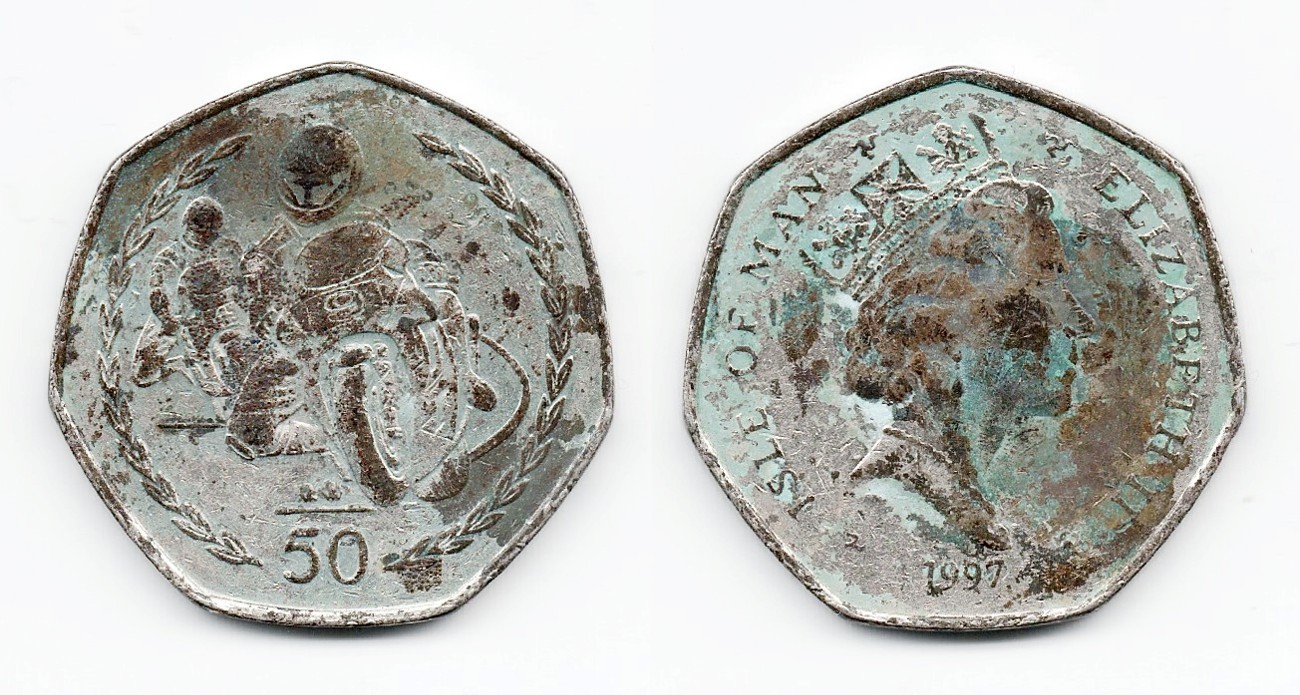 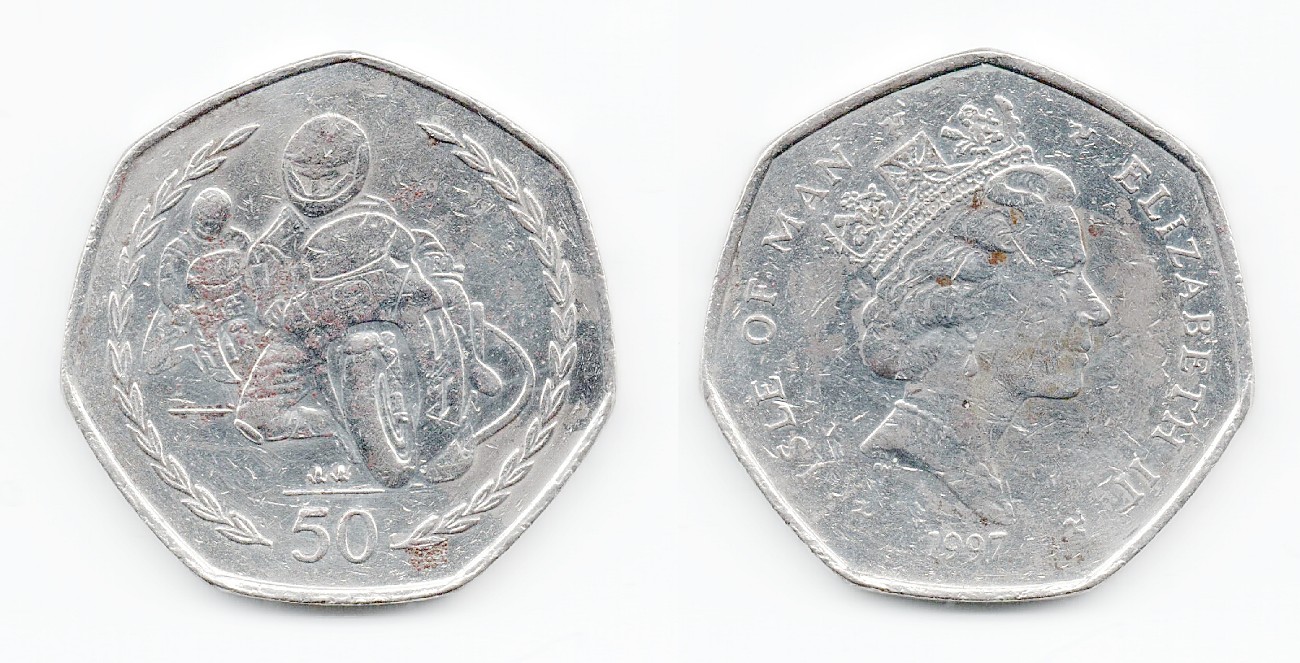 |
|
Moderator
 United States
109351 Posts |
nice job on that 50p clean up Rob.
|
|
Moderator
United States
109351 Posts |
So, can we get some images JBL?
would love to see what you have.
|
|
Moderator
Australia
17023 Posts |
Vinegar = impure acetic acid, so it shouldn't surprise that those two treatments produced the same negative result.
I would suggest ammonia. It might turn the coin a funky orange colour, but the corrosion ought to disappear. Lye (sodium hydroxide) solution ought to have a similar effect. The advantage of strongly alkaline solutions is that, unlike acids, they won't attack uncorroded metal.
Don't say "infinitely" when you mean "very"; otherwise, you'll have no word left when you want to talk about something really infinite. - C. S. Lewis
|
|
Valued Member
 United Kingdom
289 Posts |
OK, now morning in the UK so I can take pictures. Here are a couple of them. Thanks for all the suggestions so far by the way . Cheers Brian. 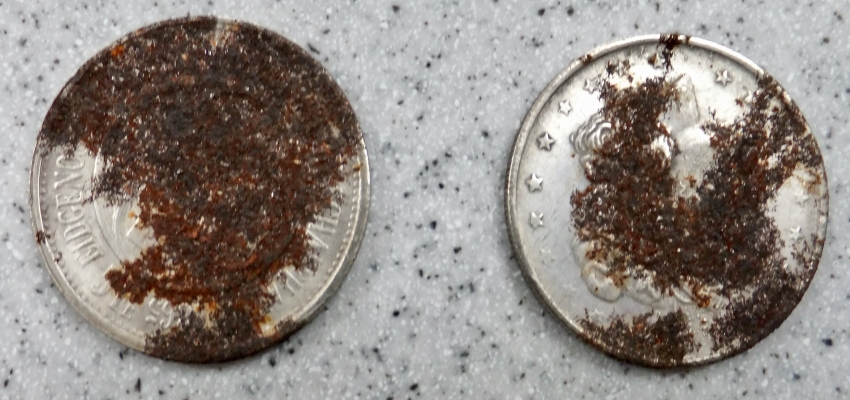 |
|
Moderator
Australia
17023 Posts |
That's... not typical cupronickel corrosion.
Just to check: the coins don't stick to a magnet, do they?
Don't say "infinitely" when you mean "very"; otherwise, you'll have no word left when you want to talk about something really infinite. - C. S. Lewis
|
|
Valued Member
United Kingdom
289 Posts |
Yes, they all stick to a magnet, quite firmly.
|
|
Moderator
Australia
17023 Posts |
Then they're not cupronickel - they're steel replicas. And the brown stuff is actual rust.
Don't say "infinitely" when you mean "very"; otherwise, you'll have no word left when you want to talk about something really infinite. - C. S. Lewis
|
|
Valued Member
United Kingdom
289 Posts |
Thanks, the fact that they are replicas doesn't surprise me judging by the state of them. I knew that they were not silver.
I will have a cleaning play with them for the fun of it.
Cheers
Brian.
|
|
Moderator
Australia
17023 Posts |
Anything that takes rust away ought to do the trick - but it'll need to be quite corrosive or abrasive. Rust on iron or steel coins is much worse than corrosion on more noble metals, it tends to totally destroy the design underneath it. This reminds me of the time when someone visited our coin club meeting with some " Morgan dollars" they'd picked up in Vietnam. I happened to have my coin-testing neodymium supermagnet at the meeting, and offered to test his coins with my magnet to see if they were silver. CLANG. Darn things stuck to the magnet so fast they nearly took my fingers off. Don't say "infinitely" when you mean "very"; otherwise, you'll have no word left when you want to talk about something really infinite. - C. S. Lewis
|
| |
Replies: 12 / Views: 4,742 |
|







 Posted 05/28/2023 4:50 pm


