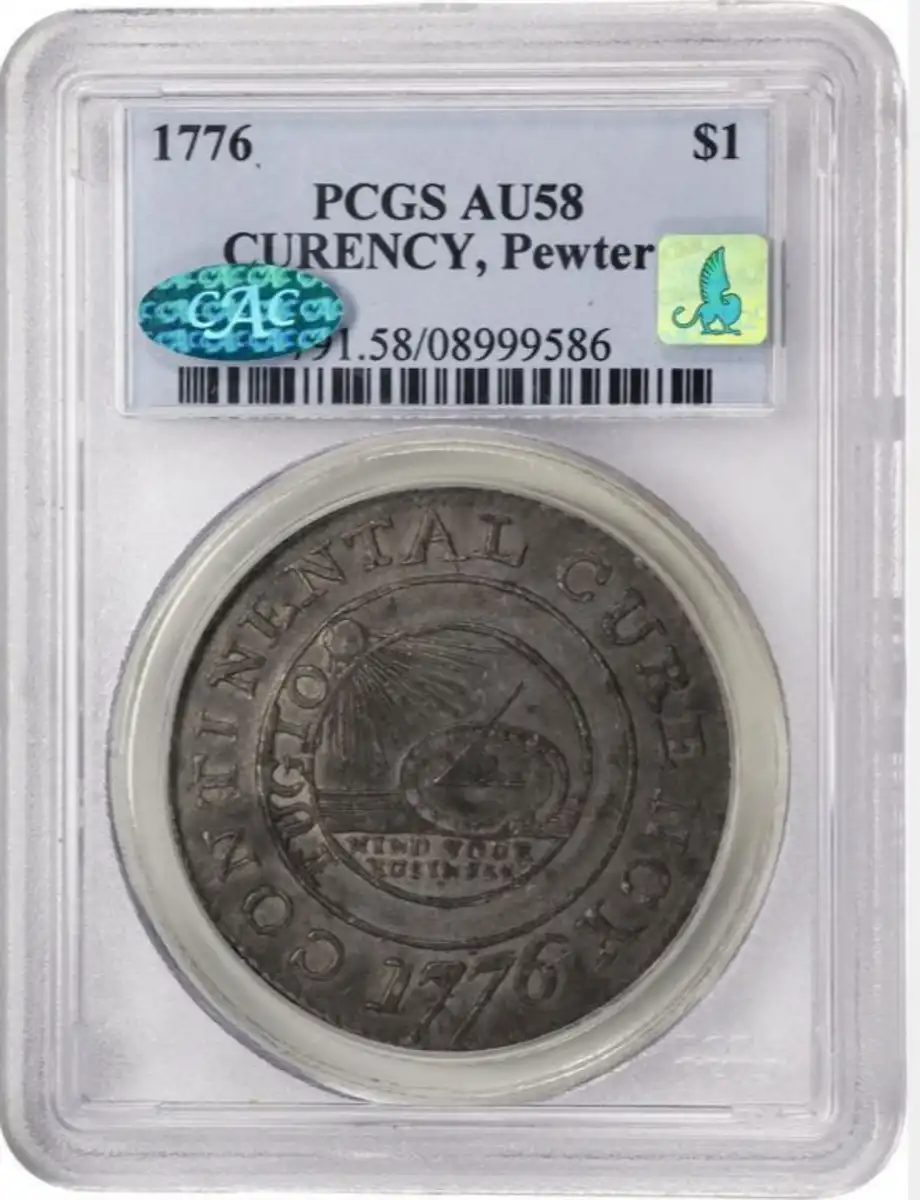
Have wanted one of these for a while. Was fortunate to pick one up today. Easy to look this one up online so, as is customary, please refrain from revealing the grade if you have seen it. Thoughts on grade? Thanks!

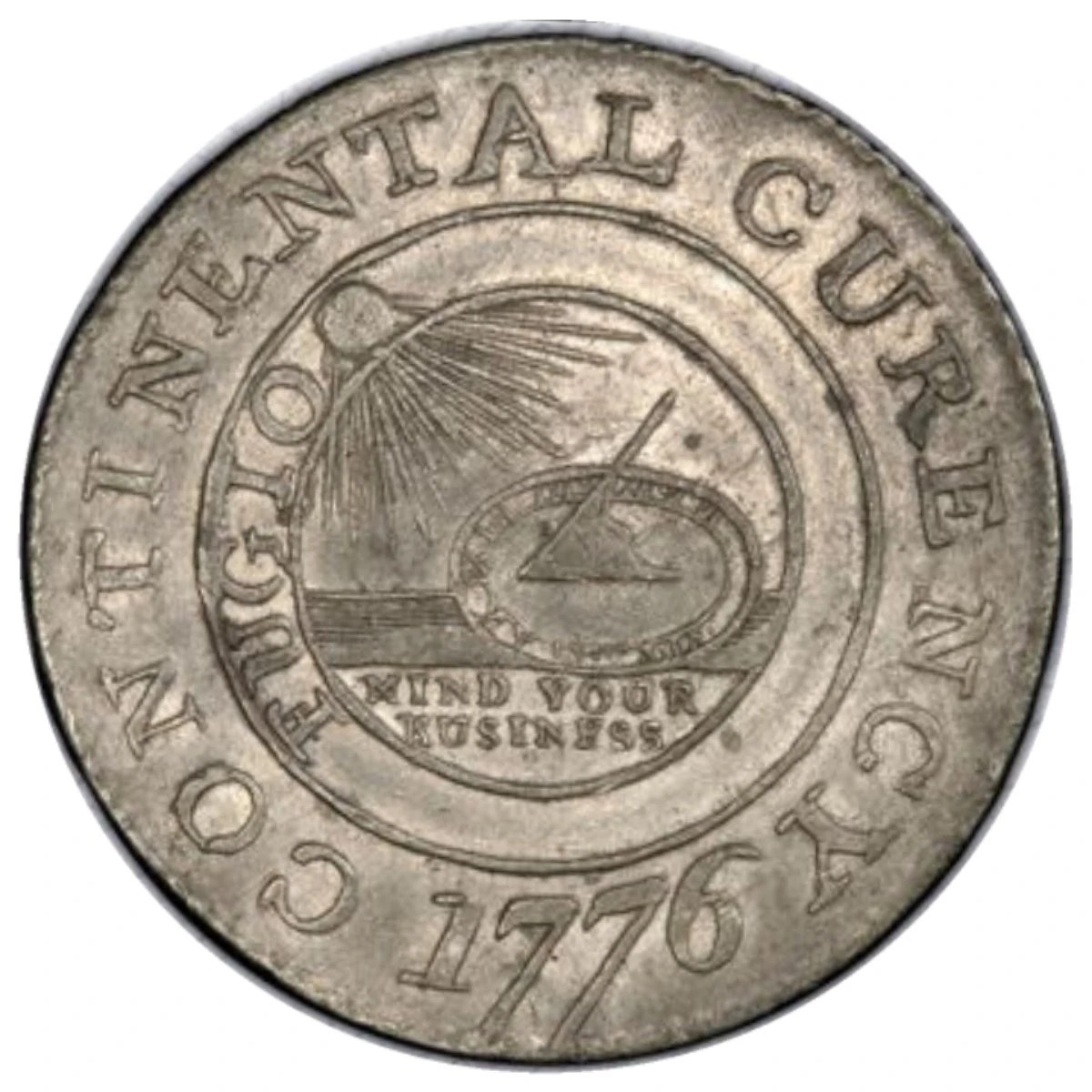
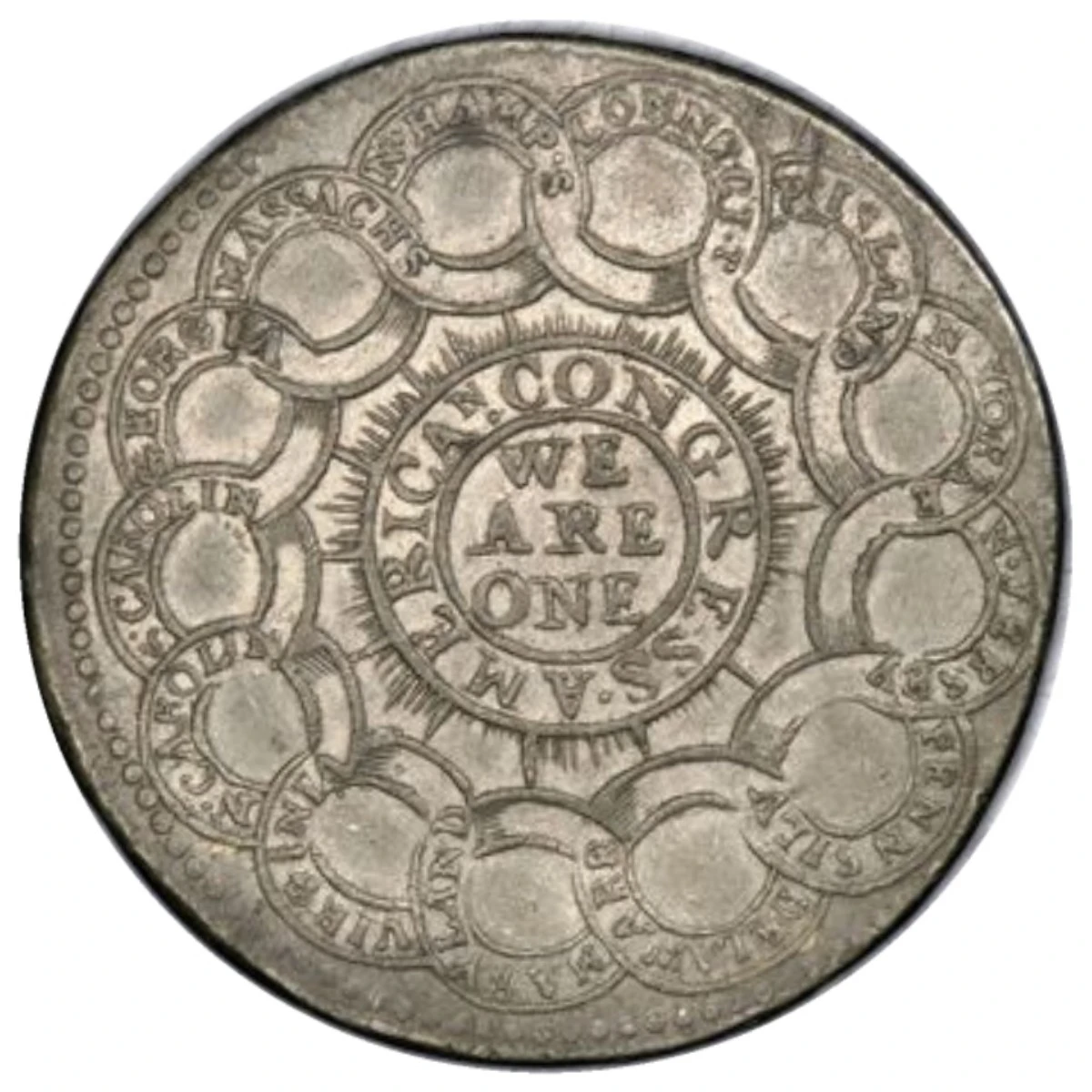
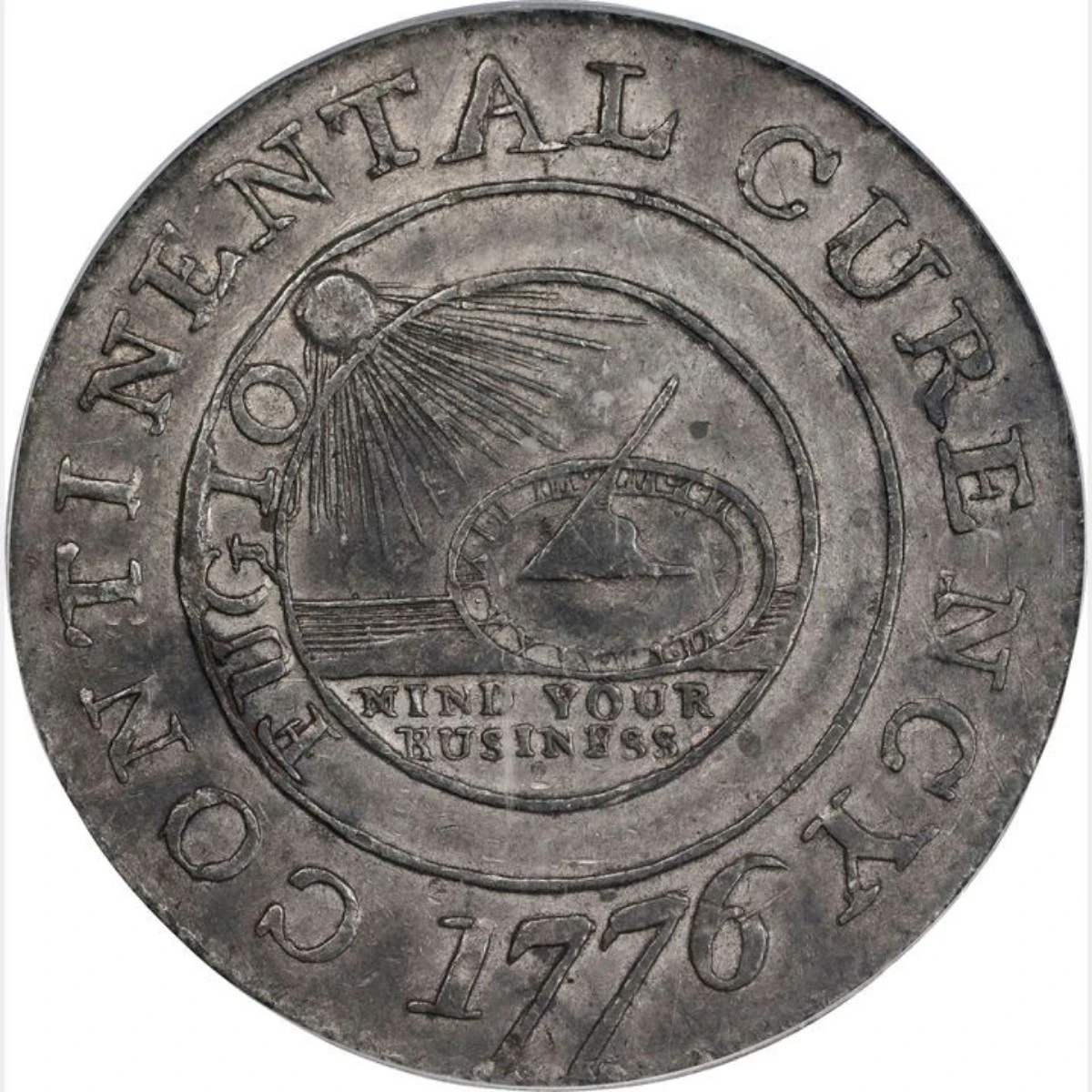
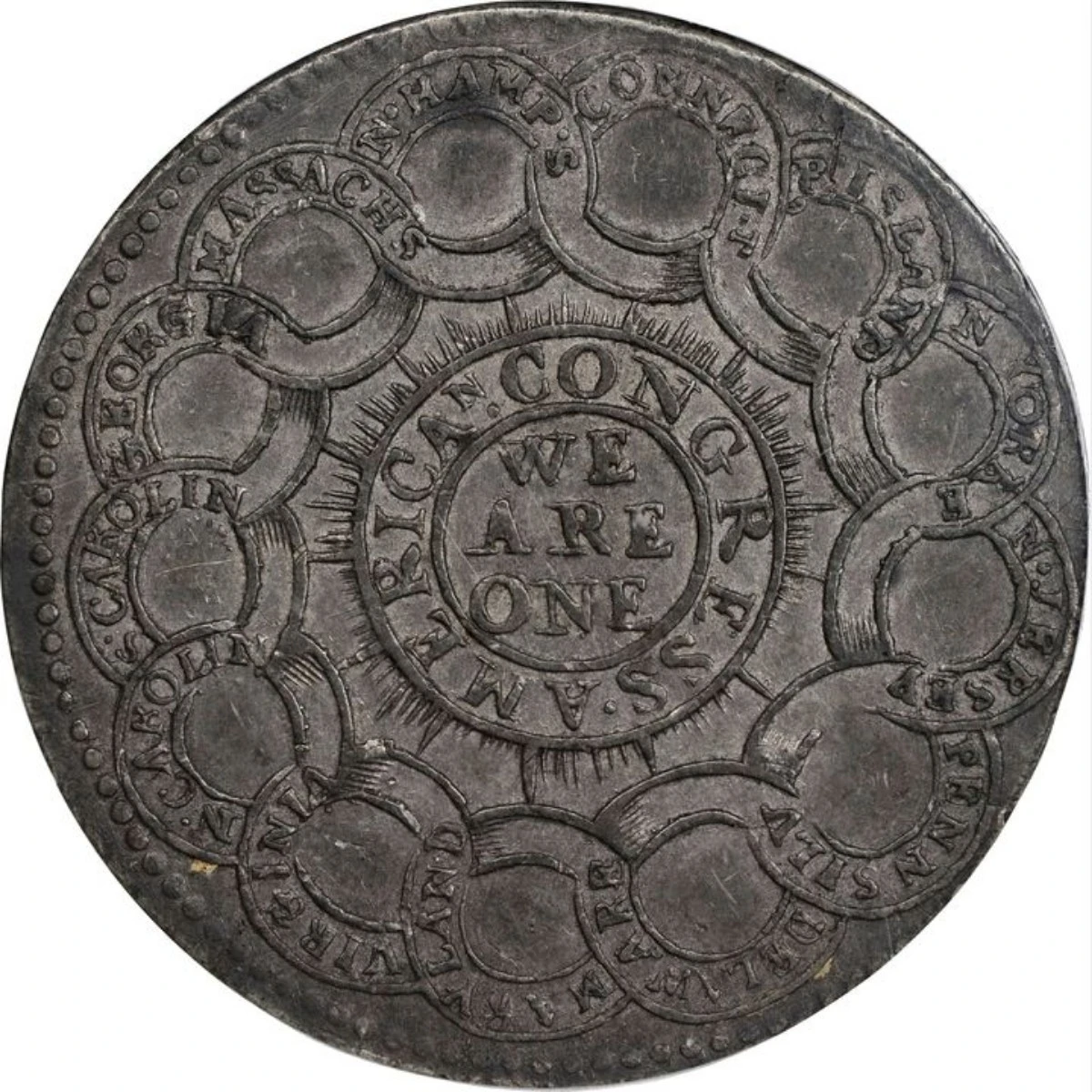
Now for the long spiel from the StacksBowers cataloguer.
A handsome and thoroughly appealing example of this historic and ever popular early American-related issue. Rich pewter gray patina dominates both sides, with the obverse also revealing a few swirls of warmer steel gray in isolated areas. The definition is uniformly bold over all devices, and the surfaces are exceptionally smooth for the type.
The Continental dollar is an enigmatic type for which no specific documentation detailing its origin has ever been found. Numismatic scholars have been able to piece together a story that, up until recently, had become the generally accepted version of events. According to this story, resolutions passed by the Continental Congress on February 17, 1776, and May 9 of the same year provided for the issuance of paper money in various denominations, including a $1 note. Resolutions passed later in the year on July 22 and November 2, however, omitted the $1 note. Based on these facts and supported by the existence of these coins, it was theorized that the Continental Congress intended these pieces to serve in lieu of the $1 note beginning in the latter half of 1776. The vast majority of surviving examples are struck in pewter, as here, although a few silver and brass impressions are also known. It was easy to conclude that pewter was the intended composition of such a coin, as the coins would have been fiat money without intrinsic backing, as the notes were. In addition, the fledgling government did not have a significant treasury reserve. Elisha Gallaudet was identified by Eric Newman as the likely maker based on convenient circumstantial evidence. He was a New York City engraver of the period who was known to have been involved in production of New York paper money issues of the 1770s and thus clearly a prime candidate.
The earliest known published record of the Continental dollar came, oddly enough, in the German book Historical and Genealogical Almanac, or Yearbook of the Most Remarkable New World Events for 1784 by Matthias Christian Sprengel. Despite the date in the title, the book was published in 1783, the captions for its illustrations rendered in German for the benefit of its target audience. Two illustrations were used to represent the new American nation: one depicting the famous Libertas Americana medal and the other the equally iconic Continental dollar. The caption provided for the obverse of the Continental dollar was AMERICANISCHE LANDES MUNTZE, which roughly translates into "American Country Money." The publisher actually wrote to Benjamin Franklin requesting illustrations to use in the book, although with no record of Franklin's reply the exact origin of Sprengel's illustrations remains unknown.
A few years later, in 1786, Bishop Richard Watson's Chemical Essays (Volume IV) also mentioned the Continental dollar. Watson was a professor of chemistry and divinity at Cambridge sanctioned by the British Crown. After discussing the "gun money" issues of King James III, Watson writes:
The Congress in America had recourse to the same expedient; they coined several pieces of about an inch and a half in diameter, and of 240 grains in weight; on one side of which was inscribed in a circular ring near the edge - Continental Currency, 1776 - and within the ring a rising sun, with - fugio - at the side of it, shining upon a dial, under which was - Mind your business. - On the reverse were thirteen small circles joined together like the rings of a chain, on each of which was inscribed the name of some one of the thirteen states; on another circular ring, within these, was inscribed - American Congress - and in the central space - We are One.
Although the authors of these early publications obviously believed that the Continental dollars were coins of American manufacture, no documentary evidence was provided to substantiate this claim. In fact, it is the lack of documentary evidence authorizing the issue of these pieces in the records of the Continental Congress that has long troubled numismatic researchers.
As convincing as the traditional story of these pieces seems, and as tempting as it is to assign primary source status to the Sprengel and Bishop Watson accounts because they date to the 1780s, modern research and a two-part article by Erik Goldstein and David McCarthy entitled "The Myth of the Continental Dollar" published in the January and July 2018 editions of The Numismatist challenge the long accepted theories surrounding these coins. They discovered that a long string of early Americans - people who were actually in a position to provide concrete facts about these pieces - went on the record to mention that they had never seen or heard of such a thing as a Continental dollar coin. Paul Revere and Josiah Meigs both went on the record within a decade of the end of the American Revolution to correct Bishop Watson's report that the pewter "dollar" was an American coin. In the December 12, 1788 issue of The New Haven Gazette, which he owned and published, Meigs, who at the time was New Haven's city clerk, boldly rebuked Bishop Watson's conclusion:
The following extract from the learned Bishop Watson's Chemical Essays Vol. 4. Page 136. shews how easily strange errors are introduced into the writing of even careful men when they write on any subject relative to distant countries--It is probable that some workman amused himself with copying one of the small bills emitted by Congress, into a die or mould, and then impressed or cast a piece of Pewter such as the Bishop has described.--If the author of that work should publish a future addition, it is hoped that clause will be omitted.
Goldstein and McCarthy also quote Paul Revere's correction to Bishop Watson's conclusion about the Continental dollar, which the famous Boston silversmith and American patriot sent in a letter dated February 21, 1790:
In perusing your valuable Chemical Essays vol. 4 page 136, you make mention of pewter money coined by the American Congress, and give a description of it. The very great pleasure which I have received from the perusal of those volumes and the exceeding good character I have heard of you, from some of your countrymen, as a Man and for fear some person of consequence, has not endeavored to set you right in that piece of History; I have enclosed you two pieces of money, one of them printed under the direction of the American Congress, the other I am not so fully assured of; as they both answer to your description, except the metal, I have sent them, supposing, if you were not possessed of them before, they might be acceptable to you as curiosities.
As for pewter money struck in America, I never saw any. I have made careful enquiry, and have all the reason in the world to believe that you were imposed upon by those who informed you.
As the most significant American coin collector of the 18th century, Pierre Eugene Du Simitiere, a Philadelphian, was also ideally placed to understand the true origin and status of the Continental dollar. Before his death in 1784, he amassed every kind of rare and common American coin then available, including seven Higley coppers that he scrupulously sketched in his inventory book. In November 1779 the Congress officially proposed naming him "Historiographer of the Congress of the United States," with a salary paid in Continental Currency and a three-year contract to write the Congress' official history. Du Simitiere, a numismatist and daily observer of the Congress, not only never owned a Continental dollar, but he described it in his notes as "a coin of the size of a crown, with devices and Mottos, taken from the continental money, Struck't in London on Type-Metal and dated 1776." In truth, there was literally not a single American better equipped to know its story than he.
Du Simitiere was just the first of many pioneering numismatists who never owned or saw a Continental dollar, and who denied its American provenance. Matthew A. Stickney began collecting in 1823. He traded his Immune Columbia piece to the United States Mint in 1843 to get a brand-new 1804 dollar. His acquisition of his first Continental dollar came a full decade later, while on a trip to England. Joseph B. Felt was a leading American antiquarian when he wrote his Historical Account of Massachusetts Currency in 1839. He noted the 1786 account of Bishop Watson in Chemical Essays, quoted above, and acted incredulous that Watson believed the Continental dollar to be an American coin:
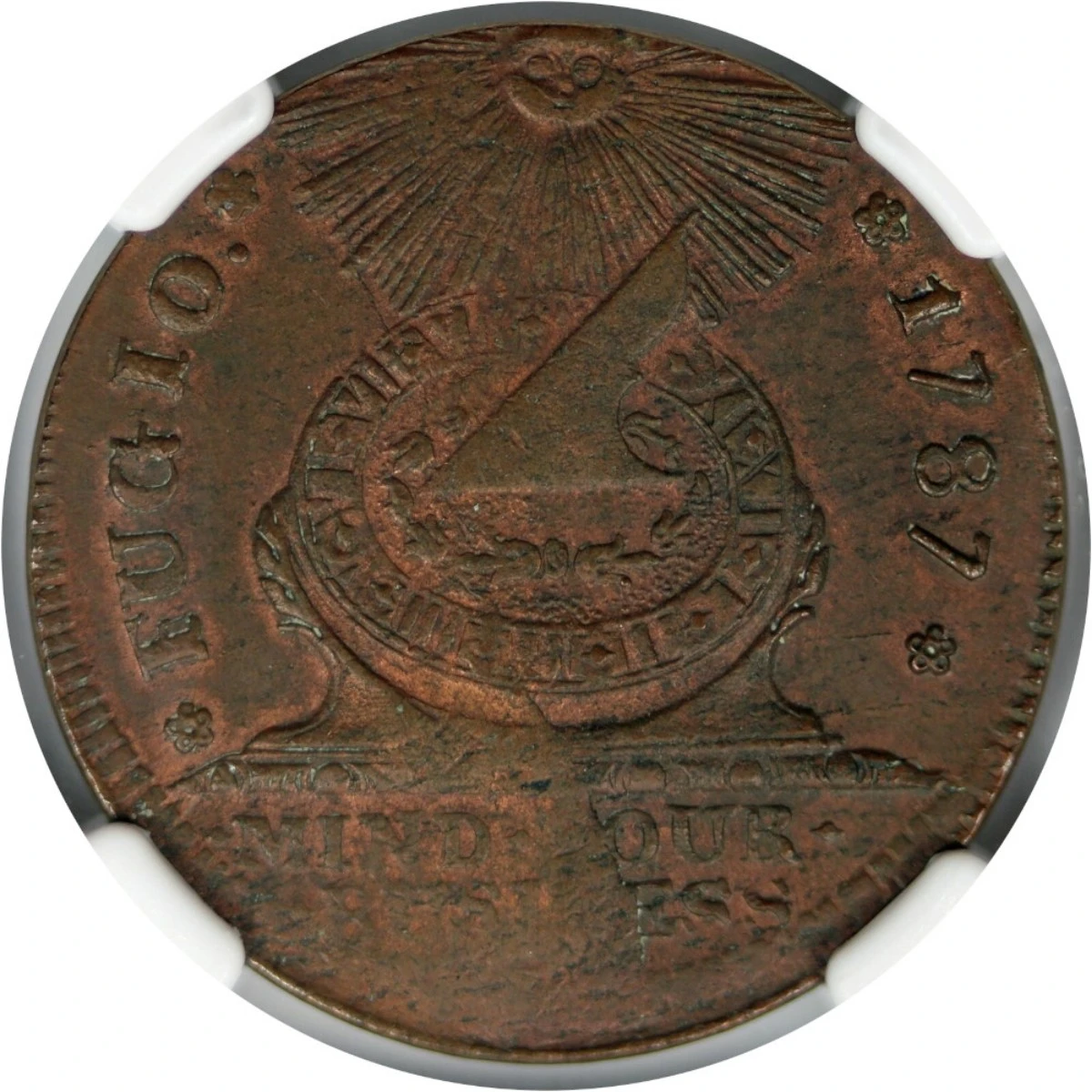
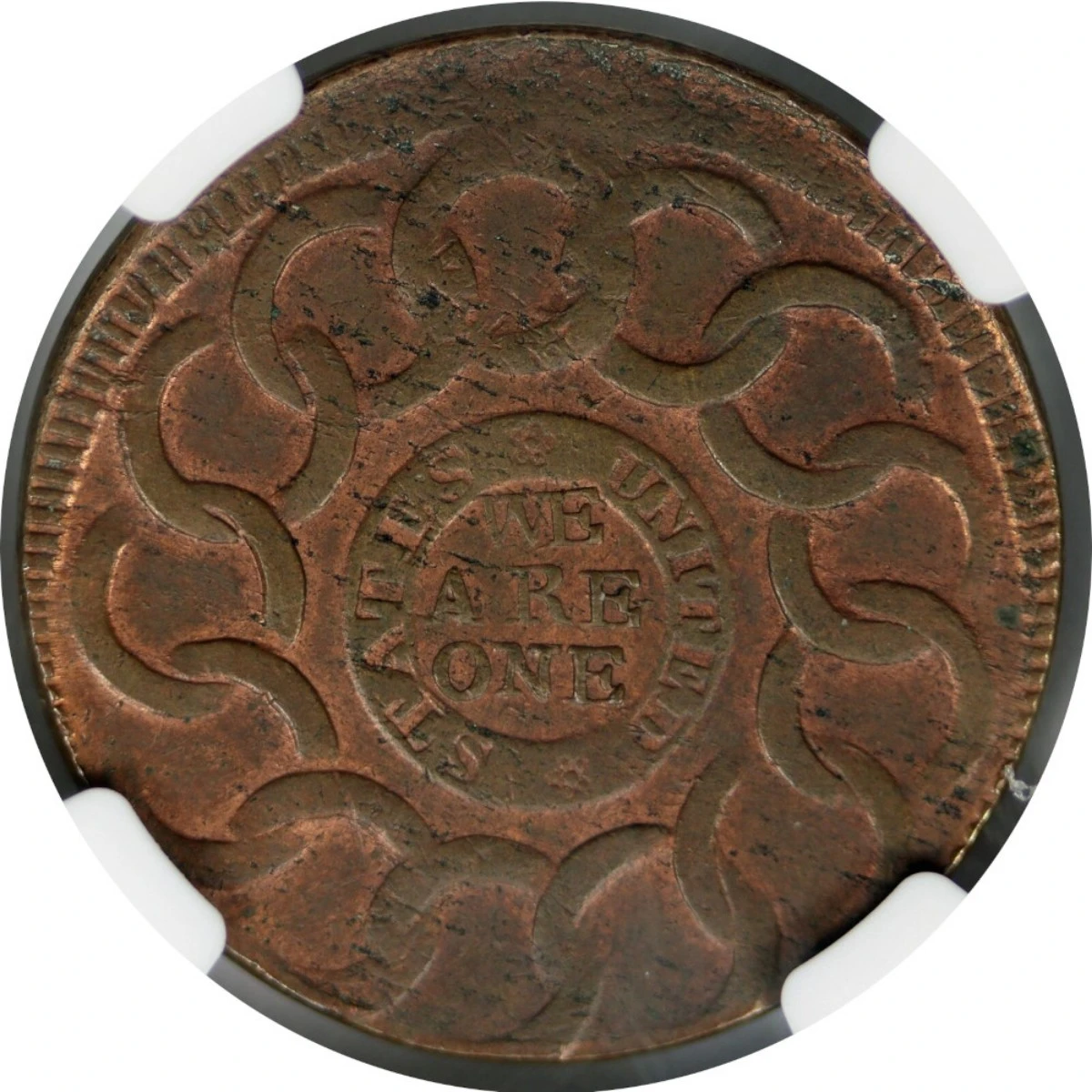
It will be perceived that such a description was similar, in several respects, to that on the copper coin, which Congress ordered, in 1787, to be issued. The preceding coin, so particularly mentioned by Bishop Watson, has no reference made to it in the Congress Journals.
Jeremiah Colburn never saw or heard of one until Matthew Stickney showed him his, as he noted in his column in Historical Magazine in 1857. Colburn noted "no coins were ever in circulation, as currency, of this type, but copies of the Medal are extant struck in white metal." And Sarah Sophia Banks, the London numismatist whose father was the world's most renowned scientist of his day, purchased her Continental dollar new upon issuance, logging its acquisition in her pre-1790 inventory books with the notes "Congress Dollar. 1776. never current, struck on speculation in Europe, for sale in America." In sum, those who were there knew the score: the Continental dollar was a London-made medal, made with designs inspired by Continental Currency, not a coin made by the Continental Congress.
Perhaps the most persuasive document is the paperwork Sarah Sophia Banks preserved with her "Congress Dollar." The two best known American-reference medals of 1783, the year the Continental dollar appears to have been struck, were initially sold with what the French called an "explication," a simple handbill or flyer explaining the designs, what they meant, and where they came from. The Libertas Americana medal was sold with one. Betts-610, the usually pewter medal coined to celebrate the Treaty of Paris, was also sold with one. And so, too, was the Continental dollar. Banks preserved hers, and it reads just as other contemporary explications do, explaining the motifs, "representing the Paper Currency of a Dollar....the Thirteen Colonies united like a Chain....the Date, 1776, is the time they declared Independency."
As David McCarthy noted in greater detail in a more recent article published in the August 2022 edition of The Numismatist, the handbill advertised "'these American Medals at Six-Pence Each,' followed by a careful description of the Continental dollar, ending with the words, 'the Letters E.G. Fecit, its maker's Name.'" McCarthy, following a discovery by collector Ed Hohertz, built a strong case to identify the diesinker as German engraver Elias Gervais. McCarthy offered stylistic and circumstantial links to Gervais, who was the engraver at the mint in Cologne in the 1770s and used both E.G and E.G. F. as signatures on his dies.
That the Continental dollar was intended as a medal and not a coin, and that it was struck in Germany (i.e. the Holy Roman Empire) in 1783 instead of an unknown American location in 1776, changes very little in the scheme of things. The Libertas Americana medal was coined in Paris but is consistently rated as among the most desirable American numismatic collectibles; the Continental dollar should not forfeit a similar place in the hearts of American collectors. It remains scarce, attractive, historic and valuable. It's a piece that Paul Revere - no man of letters, typically - felt passionately enough about to write a missive to the Bishop of London. And it's a piece that all of us grew up looking at and wanting to own, just as every generation of American collector since 1823 has. Indeed, the inclusion of a premium quality Continental dollar, as here, will continue to help define the difference between an average and outstanding collection of early American types.
Provenance: From our Baltimore Auction of June 2011, lot 232; our Rarities Sale of February 2016, lot 73.









 Posted 06/16/2026 4:07 pm