The story of the Alamo is an iconic element of US history. The tale of how James Bowie, William B. Travis and David "Davy" Crockett, along with approximately 200 other Texan and Tejano fighters, fought superior-in-number Mexican troops - under the command of General Antonio López de Santa Anna - in an attempt to defend the Alamo - a Spanish mission in San Antonio - and further the cause of Texas' independence - the Texas Revolution!.
Texas formally declared its independence on March 2, 1836 in Washington-on-the-Brazos, at a time when the Alamo in San Antonio was under siege by Mexican troops.
The Battle of the Alamo was comprised of two phases: 13-day siege and brief, 90-minute fight; the siege began on February 23, 1836, the fight took place at dawn on March 6, 1836. (1836 was a leap year, and thus included February 29th on the calendar, hence 13 days vs. 12 days between February 23rd and March 6th.) The outnumbered Alamo defenders were ultimately defeated by the Mexican troops and the Alamo was captured; all of the defenders were killed in the battle (by most accounts). As a result, San Antonio was again under Mexican control.
The defeat did not stop the drive for independence by Texans, however, and "Remember the Alamo!" became a rallying cry for the remainder of the fight. Texas achieved recognized independence from Mexico on April 21, 1836 following the Battle of San Jacinto - a decisive victory over Mexican troops by Texan fighters.
The Alamo Mission Church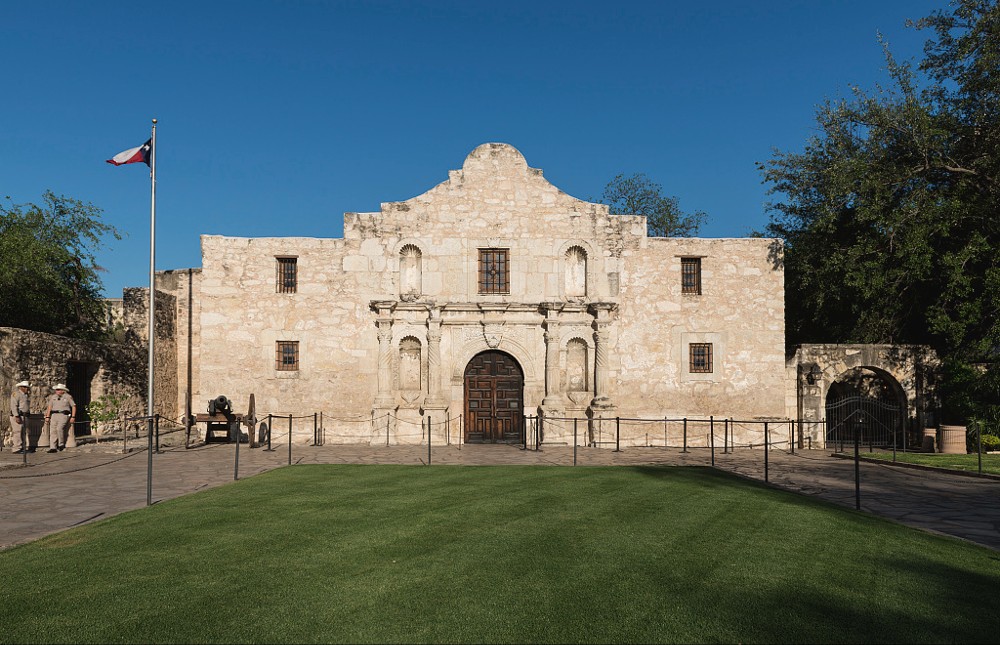 (Image Credit: Library of Congress, Prints and Photographs Division.)
In November 1983, Jonas Martin Frost (D-TX), on behalf of himself and 24 co-sponsors, introduced the "Alamo Commemorative Coin Act." The bill was intended to authorize a silver half dollar with a "design emblematic of the one hundred and fiftieth anniversary of the battle of the Alamo." (The bill closely followed the language of the bill/Act for the 1982 George Washington Birth 250th Anniversary Half Dollar.) The Alamo bill was introduced on the last day of the First Session of the 98th Congress - the House and Senate adjourned later in the day. (The Second Session of the 98th Congress began on January 23, 1984.)
Note: A classic-era half dollar commemorating the "Heroes of the Alamo" was proposed in 1937 - you can read more about it Here.Per the bill, the Secretary of the Treasury was to determine the obverse and reverse designs for the coin, with the caveat that such designs needed to be "emblematic of the one hundred and fiftieth snniversary of the battle of the Alamo,"and that they incorporate the usual mottoes and inscriptions: "Liberty", "In God We Trust", "United States of America" and "E Pluribus Unum".
A maximum mintage of 10 million coins was specified, but the Secretary of the Treasury was to determine the actual mintage, based on "the needs of the public." The coins were to be of standard specifications for a traditional silver US half dollar (i.e., 0.900 fine silver/0.100 copper, 12.5 grams in weight and 30.6 millimeters in diameter.) No reference to the coin's edge was included in the bill's language, but it seems likely that the edge would have been reeded as on other US half dollar coins.
Note: As a point of comparison, the silver 1982 George Washington Birth 250th Anniversary Half Dollar also had a specified maximum mintage of 10 million coins. A total of 7.1 million units were sold between the available proof and uncirculated versions.Authority for minting the Alamo coin was set to begin on October 1, 1984 and terminate on December 31, 1986 - just over two years. Regardless of when struck, the coins were to bear the date "1986".
Each coin was to include a surcharge of no more than 20% of the costs associated with production and distribution of the coin. Based on pricing for the 1982 Washington Half Dollar, this would likely have led to an issue price in the $10 to $12 range per Alamo coin.
The Alamo half dollar did not have a private sponsor/beneficiary. All surcharge proceeds were to be deposited in the Treasury's General Fund for the purpose of being used to reduce the National Debt.
The coin bill was referred to the House Committee on Banking, Finance and Urban Affairs; it was not reported out. The bill's support likely lost momentum during the break between the First Session and Second Session of the 98th Congress, when the bill "sat" waiting for Congress to reconvene.
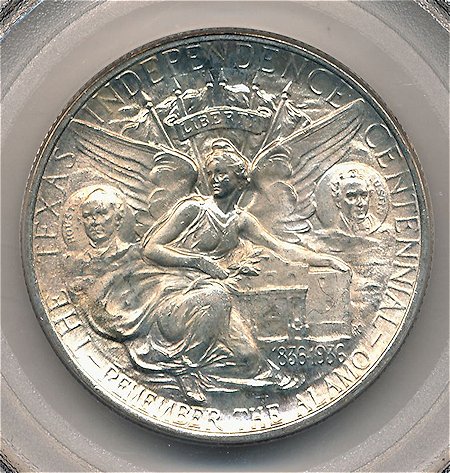
Collectors seeking an Alamo-related commemorative coin can look to the 1934-38 Texas Independence Centennial commemorative coin program - it features a small depiction of the Alamo on its reverse.
Fo more, see:
-
The Alamo on the Texas Independence Centennial Half Dollars1934 Texas Independence Centennial Half Dollar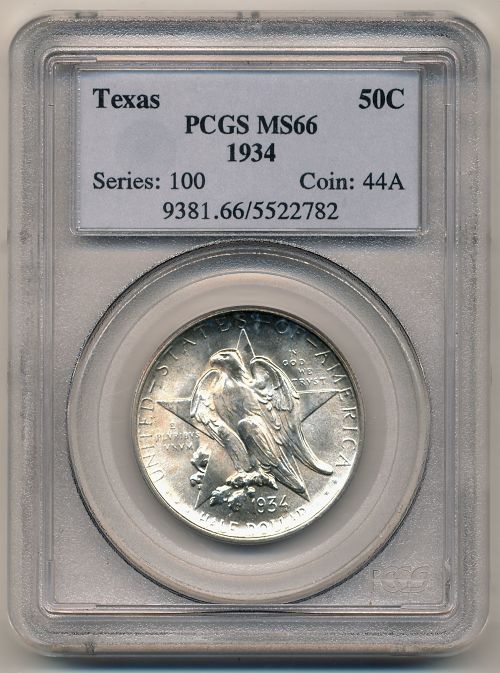
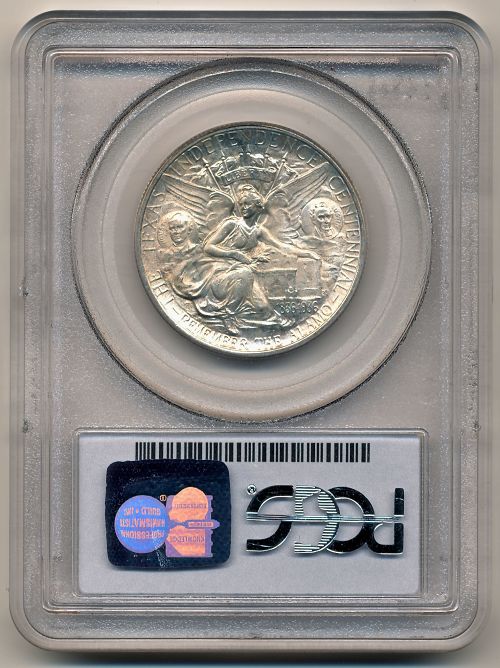
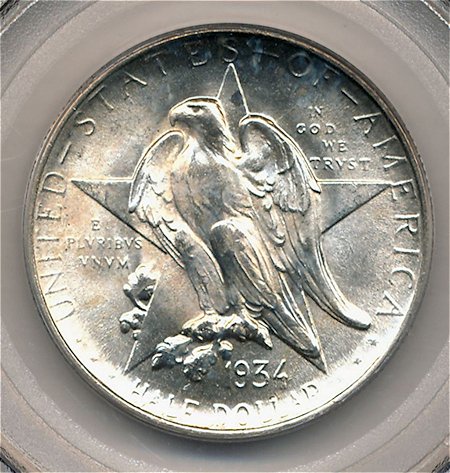
For more of my stories about commemorative coins and medals, includin more on the Texas half dollar, see:
Commems Collection.







 Posted 06/06/2024 10:23 am





