There's no doubt the 1926-39 Oregon Trail Memorial Half Dollar is one of, if not the most, popular coins of the classic US commemorative coin series. Its superlative designs stand out among the crowd, and every time I post about the coin, one or more CCF'ers will respond with comments about their admiration of/affection for the coin and its design.
I've mentioned previously that one of the Oregon Trail's more interesting background notes is the fact that the coin doesn't commemorate a specific date or person. But a related commemorative coin issued in 1943 would have been a different story!
When the US Congress brought an end to previously-authorized, open-ended, multi-year commemorative coin programs in 1939, it prevented the Oregon Trail Memorial program from capitalizing on the opportunity to mark the centennial, in 1943, of the first wagon train to arrive in Oregon via the Trail (in 1843).
In 1941, the Oregon Legislature appropriated $15,000 for the Oregon State Highway Commission to publicize the 1943 Oregon Centennial events. The celebrations were to mark the first wagon train to reach Oregon along with the establishment of the area's first Provisional Government at Champoeg.
In early 1943, the Oregon Legislature created the Old Oregon Trail Centennial Commission as an advisory board to the Highway Commission. The Centennial Commission was created via an Act approved by the newly-inaugurated Governor - Earl Wilcox Snell - on January 28, 1943.
The Highway Commission had not initiated a commemorative coin effort following its centennial appropriation, and no coin proposal was forthcoming after the Centennial Commission was put in place. Efforts were more philatelic in nature, but ultimately proved unsuccessful.
As the US was in the midst of World War II in 1943, and the war's outcome was still unsure (though favoring the Allies), it's understandable that members of Congress were not pushing commemorative coinage bills at the time. And so, no coin proposal for the Old Oregon Trail Centennial was introduced.
If a proposal had been introduced and approved, it would possibly have featured a design that rivaled the original Oregon Trail Memorial coin. How could I say such a thing? Well, in 1923, noted artist-sculptor Avard Tennyson Fairbanks, while an art-sculpture instructor at the University of Oregon, was asked by the Old Oregon Trail Association (OOTA) to develop a logo for the organization.
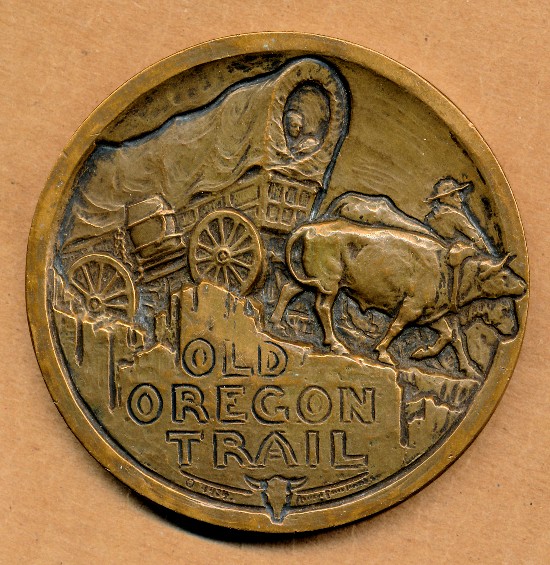
Following that commission, in 1924, Fairbanks created a large-format, uni-face plaque themed for the "Old Oregon Trail" based on the logo he created - Fairbanks's design was inspired by the trips of Ezra Meeker over the Oregon Trail as a young man migrating to the American Northwest, and then again later in life to raise awareness and funds to preserve it.
Fairbanks' large-format design was bold and powerful and, I believe, his talent could have brought the same level of excitement that
James Earle Fraser and
Laura Gardin Fraser brought to the design of the Oregon Trail half dollar. Fairbanks' plaque design depicts a man driving an ox team over difficult terrain with his wife and baby riding in their covered wagon.
The OOTA plan was to use the design on markers along the trail, but only two - in Seaside, Oregon and Baker City, Oregon - were installed at the time (a few have been added in modern times).
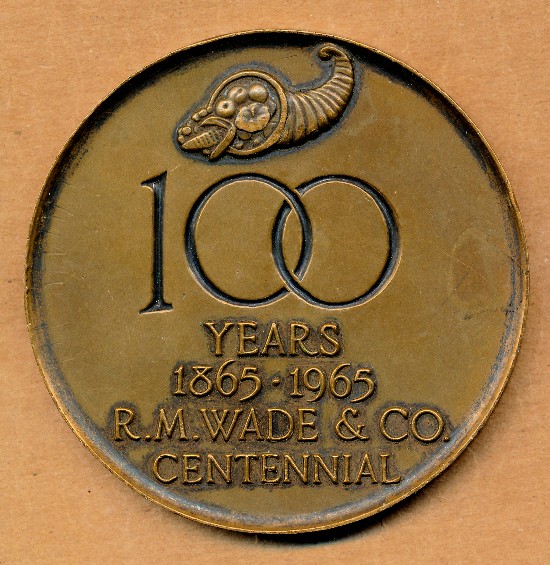
Medallic Art Company (MACO) has created commissioned commemorative medals with Fairbanks' design (or a variation on it) on the obverse and a sponsor-driven design on the reverse. Shown here is one such medal; the reverse commemorates the centennial of RM Wade in 1965. (RM Wade is an Oregon-based company with "a rich history of distribution of farm equipment and the manufacture of irrigation systems in the Northwest;" (RM Wade Company web site). The Company has ties - through its founder Robert Marshall Wade - to the Oregon Trail - a 15-year-old Wade went west on the Trail with his family in 1850.)
Avard Fairbanks - "Old Oregon Trail" Design on RM Wade Medal]/b]
I find Fairbanks' design full of character. I would have liked to have seen what he could have done on the smaller medium of a coin (presumably a half dollar).
IMO, the 1943 centennial of the Old Oregon Trail was a missed opportunity to commemorate an important milestone in the opening of the American West to widespread settlement.
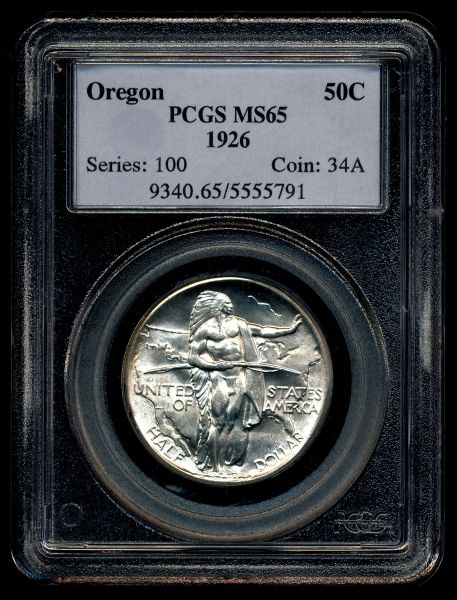
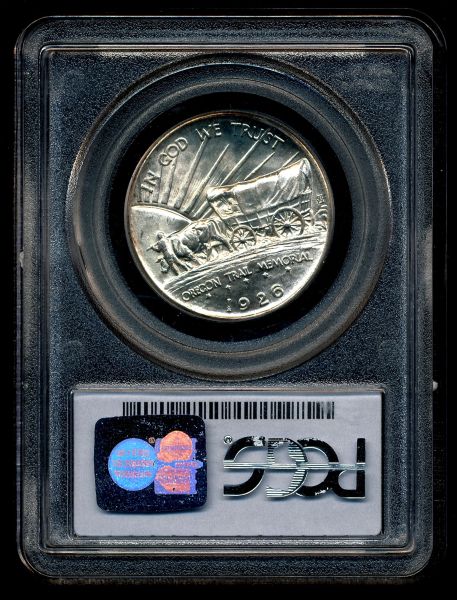
Here's one of my examples of the Oregon Trail Memorial Half Dollar, a 1926 coin from the Philadelphia Mint:
1926 Oregon Trail Memorial Half Dollar
For more of my stories about commemorative coins and medals, including more on the Oregon Trail half dollars and Congress' action to stop certain commemorative programs, see: [b]Commems Collection.







 Posted 07/07/2024 09:45 am





 The Bronze Medal is Awesome Too........


