On several occasions, in response to one of my "Congress" posts, a comment was made about how polite/cordial the members of Congress appear to have been "back in the day." I agree with such comments, but also know that individual members of Congress were not above the dissemination of a bit of "misinformation" when it suited them.
Case in point, John Joseph Cochran (D-MO) and the House of Representatives' consideration of a bill to authorize the 1936 Long Island Tercentenary Half Dollar.
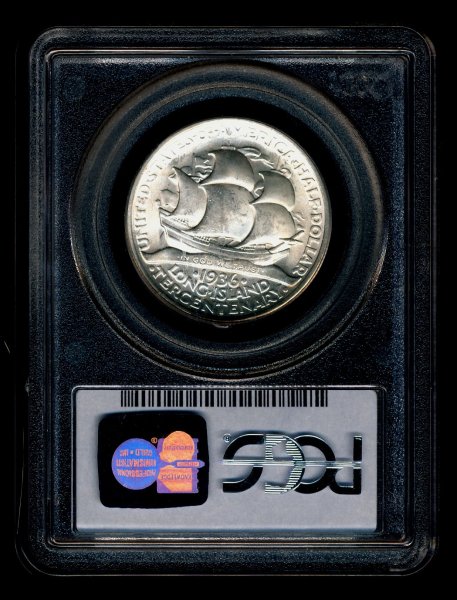
1936 Long Island Tercentenary Half Dollar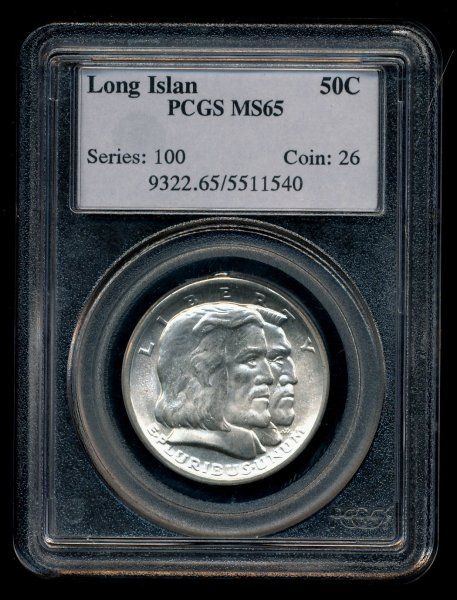
As originally drafted, the House bill allowed for an unlimited number of Long Island coins to be struck at multiple Mint facilities (a minimum of 100,000 coins were to be struck) across multiple years without a minimum number of coins required by any order.
The House passed this version of the bill and sent it to the Senate for its consideration. Once received, the bill was referred to the Senate Committee on Banking and Currency. The Senate Committee reported the measure favorably, but completely replaced the original House bill text with a substitute; the substitution was considered an amendment. The Senate passed the amended bill and sent it back to the House for concurrence.
(For details on Congress' handling of the bill, see:
1936 Long Island Tercentenary - House Vs. Senate.)
Representative Cochran, acting on behalf of the coin's original sponsor - John Joseph Delaney (D-NY) - requested the House consider the Senate-amended bill via unanimous consent. The Clerk read the bill and it was then opened for consideration/discussion; Bertrand Hollis Snell (R-NY) was the only Representative to raise a question.
This is when things got a bit "slippery."
"The SPEAKER. Is there objection to the request of the gentleman [Cochran]from Missouri?
"Mr. SNELL. Will the gentleman explain this amendment?
"Mr. COCHRAN. It is simply a strengthening of the phraseology of the bill to make more certain that there shall be no cost to the Federal Government.
"Mr. SNELL. Is that all there is to it?
"Mr. COCHRAN. That is all.
"The SPEAKER. Is there objection to the request of the gentleman from Missouri?
"There was no objection.
"The Senate amendment was agreed to. A motion to reconsider was laid on the table."Cochran's characterization of the Senate's changes was wholly inaccurate! The Senate amendment did not include new phareseology "to make more certain that there shall be no cost to the Federal Government" - it had essentially the same language as the original House bill regarding this.
Cochran completely skipped over the fact the Senate amendment limited mintage to a single date ("1936"), coined at a single Mint facility and that it required minimum orders of 5,000 coins. As commemorative coin legislation was not the most important topic in Congress, Cochran was not challenged further on potential differences between the House and Senate versions of the coin bill, and the Senate-amended version was passed in the House without further discussion.
A case of "Smile politely, and lie through your teeth?" Do so, and few, if any, will raise a question! (To include members of the US Congress!)
For more of my topics on commemorative coins and medals, including other Long Island half dollar stories, see:
Commems Collection.









 Posted 11/03/2024 11:27 am


