During the final stages of the Long Island Tercentenary coin's design process, in June 1936, Representative John Joseph Delaney (D-NY) of Brooklyn (the coin's sponsor in the House of Representatives), offered a glowing assessment of the coin's designs: "Engraving experts of the Government and Washington coin collectors who have seen blue prints of the Tercentenary money piece tell me it is one of the most beautiful and artistic money souvenirs ever coined by Uncle Sam... it is a coin all Brooklynites and all Long Islandites can cherish for years." (I was unaware that coin's had blue prints!)
In November 1936, the Long Island Tercentenary Committee reported that about 70,000 of the authorized maximum of 100,000 of its half dollars had been sold to that point. (The coins had been received in August 1936) The Committee was disappointed in the sales figure, and lamented the fact that Brooklyn (aka Kings County), with its (at the time) ~3 million residents had "been inexcusably remiss in embracing the opportunity to purchase its quota of the half dollars."
The Committee reported that Queens, Nassau and Suffolk counties (the other three of Long Island's four counties) were responsible for 50,000 of the 70,000 sold leaving just 20,000 to be accounted for by Brooklyn; all figures were rounded by the Committee and did not account for sales to non-Long Island resident buyers. A look at circa 1936 Long Island populations for Queens, Nassau and Suffolk counties reveals: Queen's population at the time was ~1.1 million, Nassau County's was ~410,000 and Suffolk County's was ~405,000.
The combined population of Queens, Nassau and Suffolk Counties totaled ~1.915 million in 1936, which is approximately ~39% of Long Island's total population (~64% of Brooklyn's population). The three counties, however, accounted for ~71% of overall Long Island Tercentenary half dollar sales. (From another angle, the other three counties, though with a smaller overall population, purchased 250% of the amount of coins purchased by Brooklyn - a disappointing per resident ratio for sure.)
It appears Brooklyn residents weren't feeling the same "love" for the island's roots as their more eastern Long Island brethren! I'd venture a guess to say they considered themselves more a part of New York City vs. the eastern tip of Long Island and thus weren't as compelled to purchase the commemorative coin. (Note: Queens was/is also a borough of New York City.)
1936 Long Island Tercentenary Half Dollar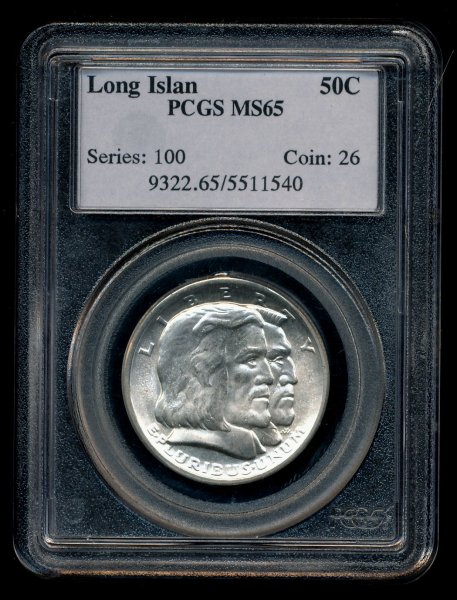
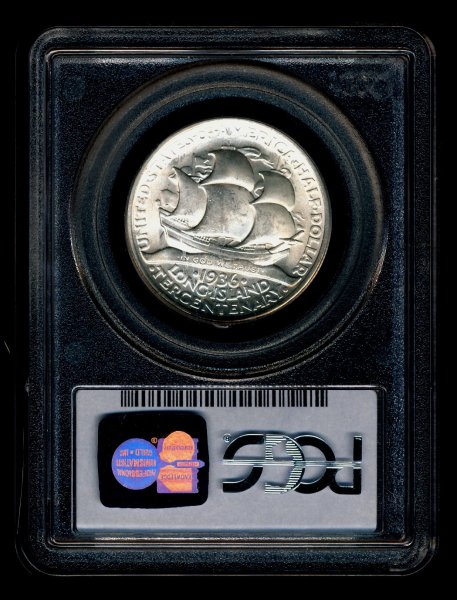
Appeoximately 11,000 additional half dollars were ultimately sold by the Committee after its November report (before sales were closed in April 1937); just over 18,000 coins were returned to the Mint to be melted. Brooklyn did not "come to the rescue" in terms of coin sales, and, apparently, not enough "Long Islandites" desired a "cherished" coin souvenir.
For more of my posts about commemorative coins and medals, including other Long Island coin stories, see:
Commems Collection.










 Posted 06/23/2025 09:53 am


 Hope this shed light on Our Long Island....


