After not seeing success with their first Bill of Rights coin program bills - (see
What If? 1991-92 Bill of Rights Three-Coin Program) - Representative Paul B. Henry (R-MI) and Senator Edward M. Kennedy (D-MA) tried again with revised coin bills introduced in July and August, 1990, respectively.
Their new bills had notable changes. The first was the expansion of the statement of intent of the bills, the new bills included specific reference to James Madison, calling for coins "in commemoration of James Madison and the bicentennial anniversary of the signing of the Bill of Rights." vs. just "in commemoration of the Bill of Rights."
The biggest change in the new bills was the reduction of the originally-proposed three-coin coin program - Gold Half Eagle, Silver Dollar and Copper-Nickel (CuNi) Clad Half Dollar - to one featuring just a Silver Dollar. Up to 1,500,000 Silver Dollars were requested in the new bills (vs. up to 2,000,000 in the previous bills).
The design provisions were also modified, specifying that the designs were to "be emblematic of James Madison and the bicentennial of the adoption of the first ten Amendments to the Constitution of the United States, known as the Bill of Rights." The new bills did not include a requirement for the designs to be specifically emblematic of "one or more of the first ten Amendments to the Constitution" - a more "overall" approach was outlined for their Bill of Rights coverage.
The authorization period was also updated, partly due to the later date of the bills' introductions. IMO, however, the new dates are historically more meaningful. The authorization period opened on December 15, 1991, the bicentennial anniversary of the adoption of the Bill of Rights, and extended through December 31, 1992. Two-hundred years prior, 1792 was an important year for the Bill of Rights: in that year, the adoption of the ratified amendments saw widespread public announcement and printed copies of the amendments were distributed to State legislatures.
The previous per coin surcharge of $7 remained, as did the sponsor/beneficiary of the surcharges - the James Madison Fellowship Program.
Representative Henry's bill was referred to the House Committee on Banking, Finance, and Urban Affairs, with a further referral to its Subcommittee on Consumer Affairs and Coinage. Senator Kennedy's bill was referred to the Senate Committee on Banking.
As with the previous bills, the new coin bills did not advance out of Committee. These bills were the last James Madison/Bill of Rights coin attempts in the 101st Congress. The 102nd Congress saw renewed efforts, however!
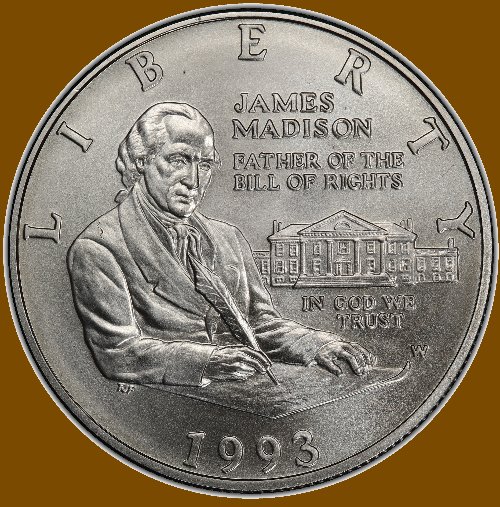
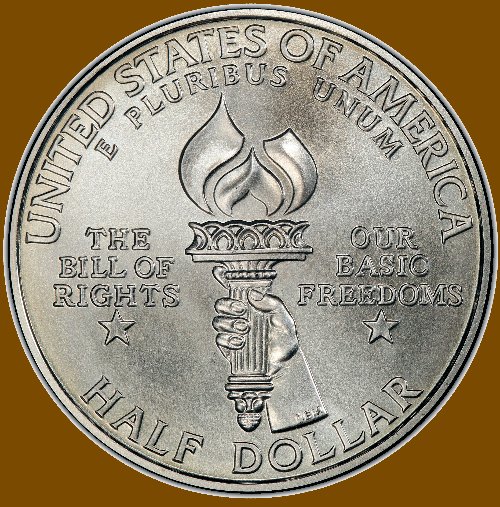
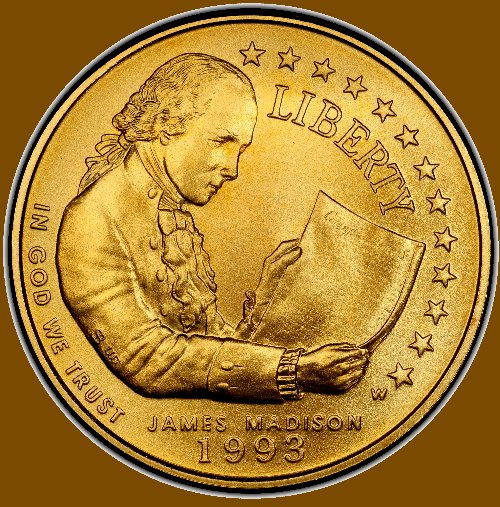
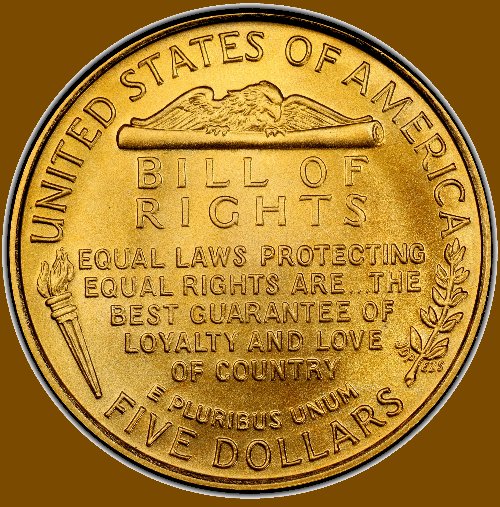
Here's the Silver Dollar from the enacted 1993 James Madison/Bill of Rights coin program to help imagine an alternate scenario:
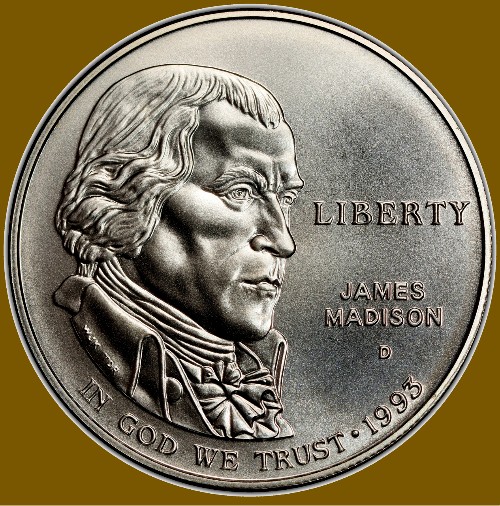
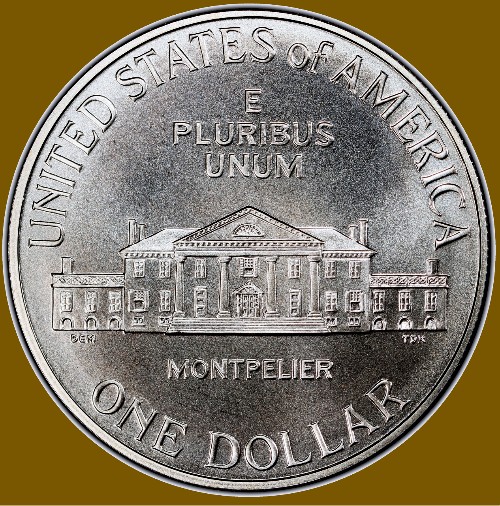
As typical, I went with the Uncirculated version for my collection.
For other of my posts about commemorative coins and medals, including more about the James Madison/Bill of Rights coins, see:
Commems Collection




 Posted 11/10/2025 11:20 am