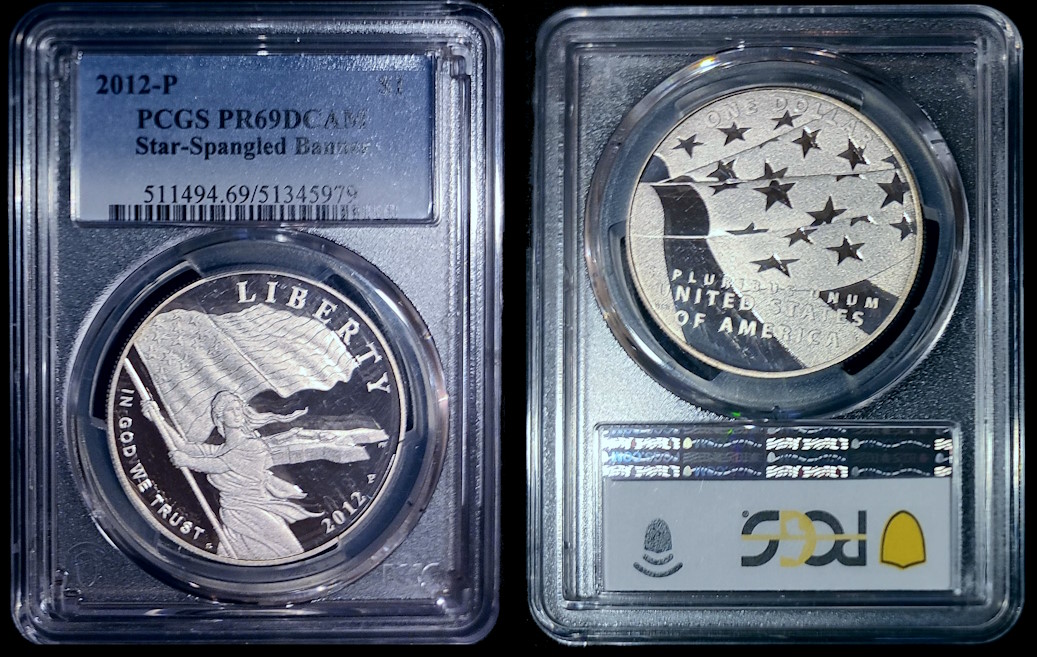
Before I jump into the details about each of the SSB program's coins, I wanted to share a
commems "Finding" that I believe helps provide additional context for the coin program:
(7) Though ubiquitous today at public events, especially sporting contests, the effort to get Francis Scott Key's Star-Spangled Banner recognized as the US National Anthem was not easy or quickly realized. Formal efforts began in Congress as far back as at least 1914, with bills and/or resolutions introduced in either the Senate or House in multiple consecutive Congresses. Though he was not the first, Representative John Charles Linthicum (D-MD) took up the charge in the 1920s and was very persistent in his efforts. His efforts in the House, and beyond, eventually led to the National Anthem bill becoming law in 1931.I bring this up to reinforce the fact that the 2012
Star-Spangled Banner coin program commemorated the 200th Anniversary of the writing of the poem/song, not its adoption as the US National Anthem - it was just the 81st Anniversary of the adoption in 2012.
And now, on to the coins...
Silver Dollar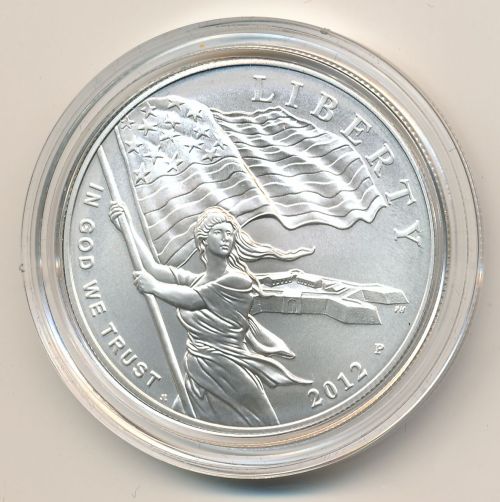
 Obverse Design:
 The Silver Dollar obverse features
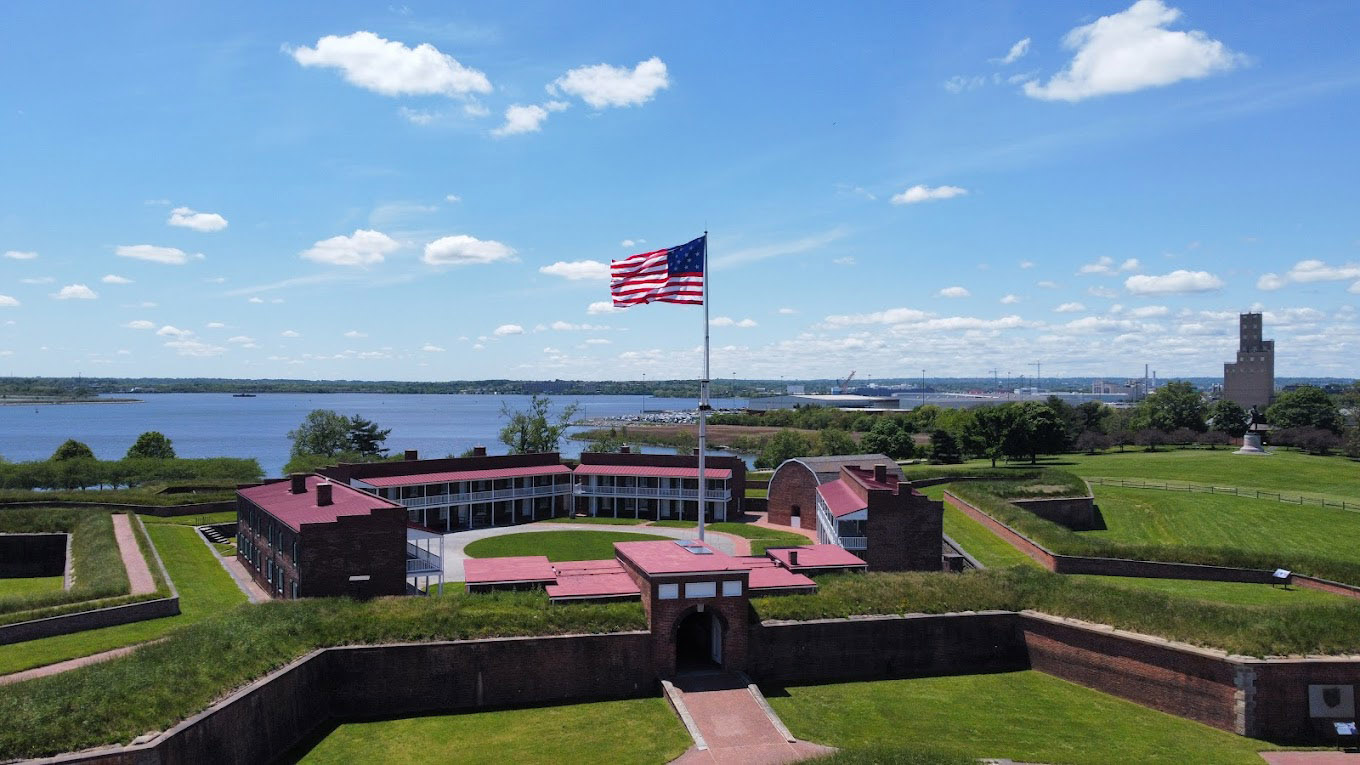
Lady Liberty waving a 15-Star flag - the type of flag flown at Baltimore's Fort McHenry at the time of the British bombardment; Fort McHenry is depicted in the background..
Obverse Designer: Joel Iskowitz (Phebe Hemphill, Sculptor)
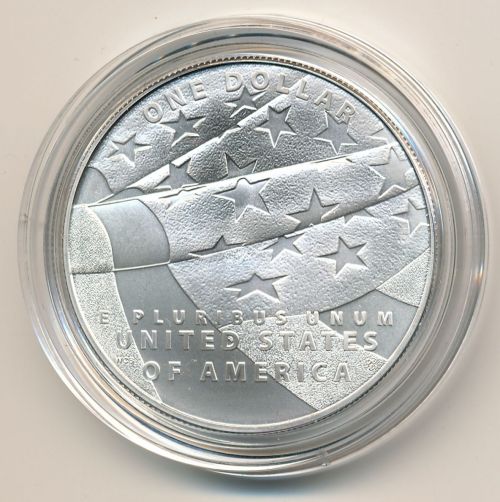
Reverse Design: The coin's reverse is a bit abstract. It presents a waving US Flag, but from a zoomed-in perspective focused on the flag's canton (aka Union) and stars.
Reverse Designer: William C. Burgard III (Don Everhart, Sculptor)
Gold Half Eagle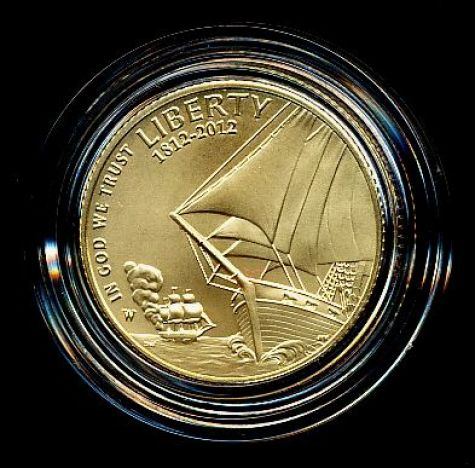
 Obverse Design:
 The Gold Half Eagle ($5) presents a War of 1812 naval battle scene (post battle) on its obverse. An American sailing ship is seen in the foreground, with a damaged and smoking British ship retreating in the background.
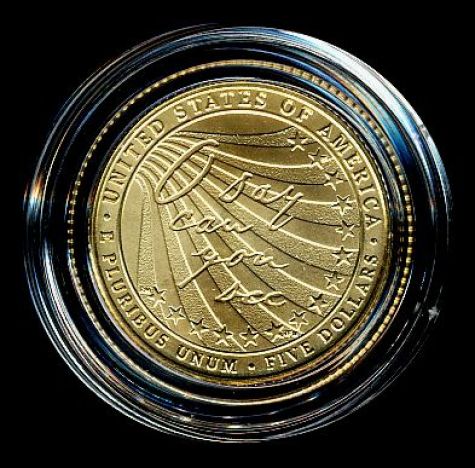
Obverse Designer and Sculptor: Donna WeaverReverse Design: The Gold Half Eagle ($5) reverse, as on the Silver Dollar, is a bit abstract. It features 15 flowing stripes (reminiscent of the 1812 flag) along with 15 stars at the rim between the 1 o'clock and 8 o'clock positions. The image is meant to be symbolic of the circa-1812 US Flag. On the stripes are seen the first few words of the
Star-Spangled Banner - "O say can you see" in lettering meant to be Francis Scott Key's handwriting.
Reverse Designer: Richard Masters (Joseph Menna, Sculptor)
Those who prefer literal depictions / photo-realism in their coin designs tend not to be big fans of the SSB coin reverse designs, but those who enjoy a bit more artistic "license" in coin designs tend to appreciate them more.
The program's coins did not prove to be overly popular. The Gold Half Eagle sold a total of 25,305 coins (18,299 Proof; 7,006 Uncirculated), and the sales of the Silver Dollar totaled 210,660 (168,981 Proof; 41,679 Uncirculated). The overall program total was 235,965 coins. Looking at the sales from the perspective of percent of authorization: the Gold Half Eagle sales hit ~25% and the Silver Dollar sales hit ~42%. Neither level met expectations.
Surcharges collected amounted to just under $3 million out of a potential $8.5 million.(~35%).
The Silver Dollar had a Pre-Issue Price of $49.95 and Regular Issue Price of $54.95 (Proof) and $44.95/$49.95 (Uncirculated). Pricing for the Gold Half Eagle was updated each week based on current spot prices and made use of the Mint's precious metal pricing schedule. At release, the prices were $529.30 (Proof) and $519.30 (Uncirculated). After Pre-Issue pricing expired, the Proof version of the gold coin was set to be $5 higher than that of the Uncirculated version.
If you haven't already done so, make sure to have a look at the first part of this story:
2012 Star-Spangled Banner Bicentennial - In CongressFor other of my posts about commemorative coins and medals, including more about modern US commemorative coinss, see:
Commems Collection




 Posted 12/13/2025 12:29 pm