DL20K The correct edge for a Republican 8R is "engrailed". The designs resemble an arc that crosses the width of the edge with a dot or point at the center. The easiest visual description I can think of is a series of brackets {{{{{{{{{{{{{{{{ or a parenthesis where you can envision a small dot at the center. In some edge designs, the dot is a separate feature - in others it is solidly connected to the arc.
But each of the branch mints had a SLIGHTLY DIFFERENT PATTERN which also varied over time. So variation in the design is NORMAL but variation on ONE COIN is not and should be closely examined. The edge design can at times be used to diagnose the mint and era and it can also be used to diagnose cases of forgery.
It is this THIRD SIDE of the coin that I always start with when I review a coin. It actually tells a lot about how and when the coin was made. I can often diagnose a forgery from the edge design alone, but I never stop there. One thing I have learned over time us to LEARN. These coins have a lot to say and the variation can teach us a lot. I am constantly learning even after 50 years of collecting 8Rs that there is always something new to be learned.
The edge design was applied by a two die machine BEFORE the coin was struck in an open sided screw press. Over time this machine evolved from a manual one-at-a-time operation to a steam powered multiple blank operation. The frequency of doubled or even tripled edge application increases over time but is rarely seen on manually edged coins (too much work). The conversion to mechanized edging took place in large measure in the era after Maximilian. In the same way, the simple manual screw press evolved into a steam powered press and ultimately some experiments with collared strikes.
The edge designs started in 1823 as rather crude designs, but over time they rapidly evolved into a very standardized pattern at each mint. The design still changed over time, mint by mint, as new designs were introduced but it was not until all die manufacture was standardized in Mexico City that all the edges matched starting in 1887. Very early copies can show some segment to segment variation BUT normally segments that vary in size or shape are a bad sign and MAY point to a counterfeit. Counterfeit edges run from nearly perfect to absolutely hideous. If you encounter a very odd looking edge - with segment to segment size variation or one where the edge moves side to side (wavy) you should check the coin more much more closely.
Simple straight reeds were first used on Mexican Pesos in 1866, but the 8R coins never adopted a reeded edge. There are a few scarce trial strikes of Late Republican issues with Reeded edges but 99.999% of reeded edge 8Rs encountered on
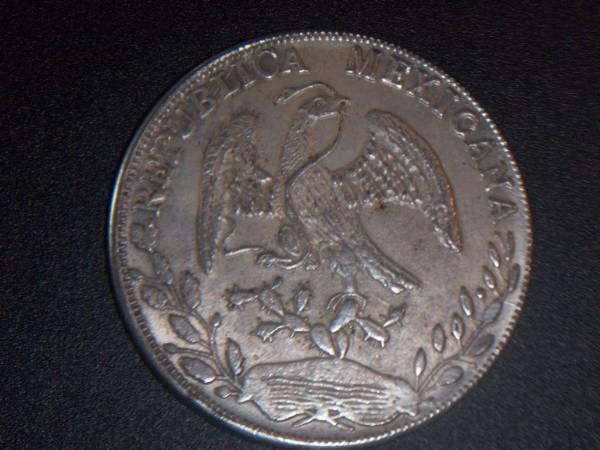
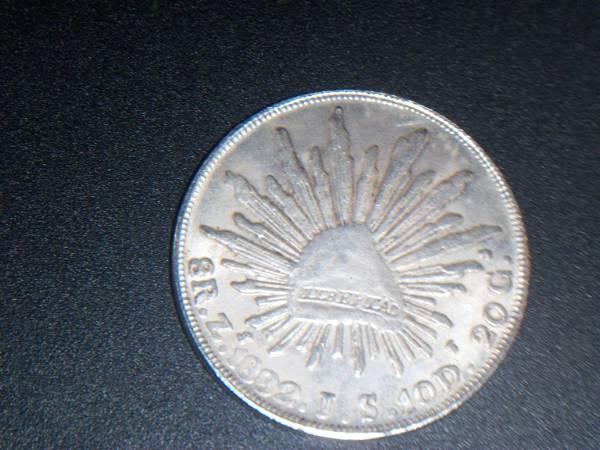
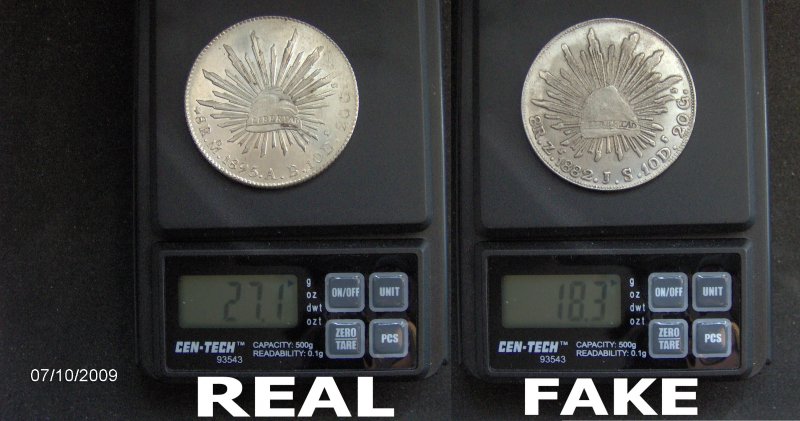
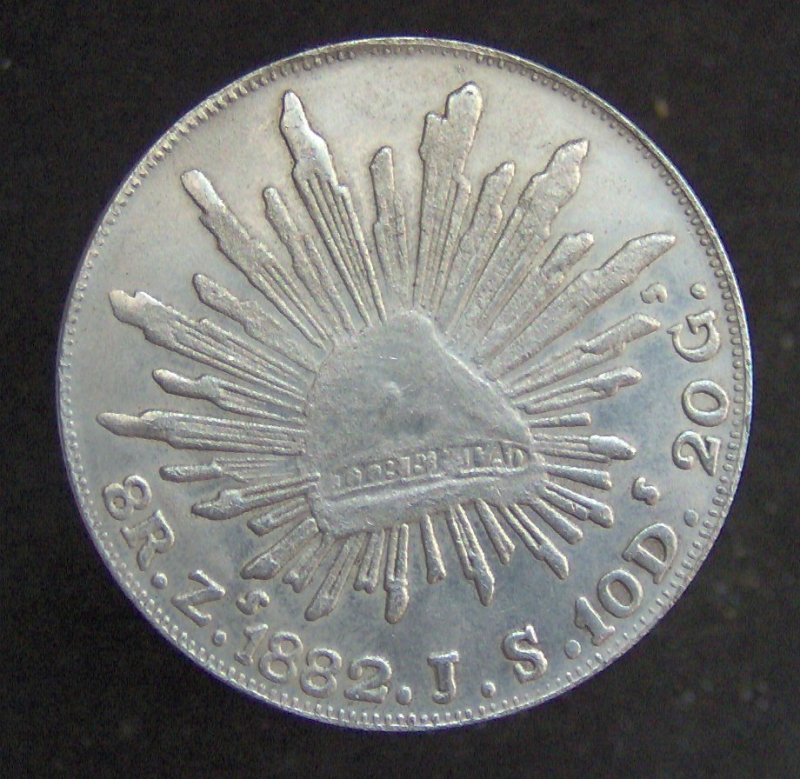
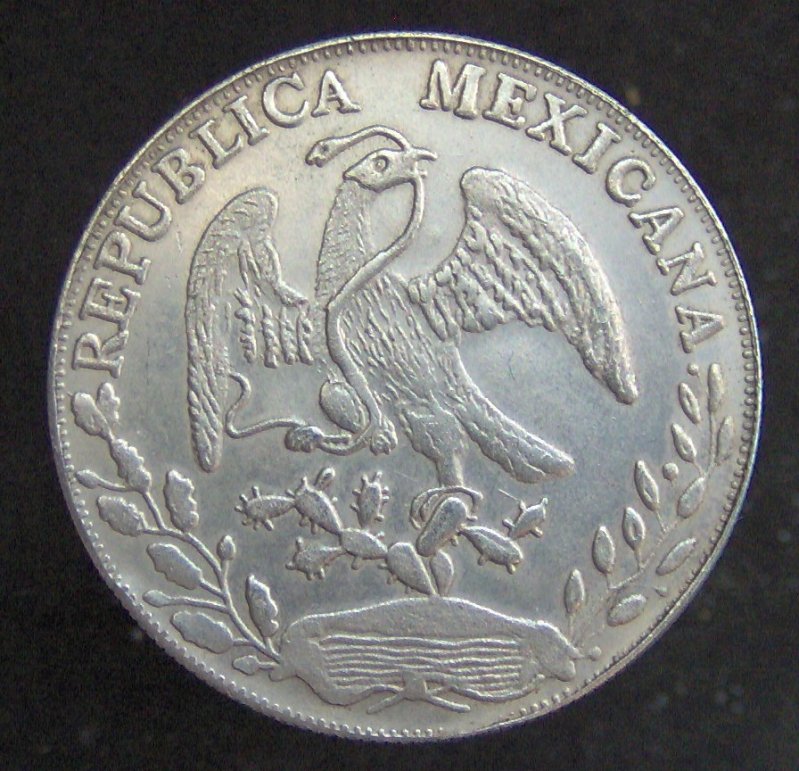
ebay and in coin shows are COUNTERFEIT. The coin that started this post is one of the WORST.
Thomcollects Color can and often does point to a forgery, but there are ways to alter color so that it is NOT ALWAYS a reliable diagnostic. I have a few instances of this.
A Sheffield Plate coin will have exactly the correct color when struck and will keep the correct color until the surface layer wears off.
A debased silver coin that uses copper as the alloy metal can have it's color corrected by bathing it in an acid that eats some of the copper out of the surface layer leaving the color corrected. The same treatment done to a REAL silver alloy coin can make the color wrong by doing the same thing and removing too much color. The color of 90% silver coins is not the same as PURE SILVER. The 10% copper alloy makes the color change. That is why electroplated coins have the distinctive "dark" look.
There are many things that can happen to a real coin that can change it's color. This environmental damage effect is sometimes good - causing rainbow toning but most often is detrimental.
Color - like the edge is a good factor to take into account but it is not something that can be used as proof positive without some other factors coming into play.













 Posted 07/22/2009 10:08 pm


