Quote:
... I ask because I'm not sure it's a proper set...
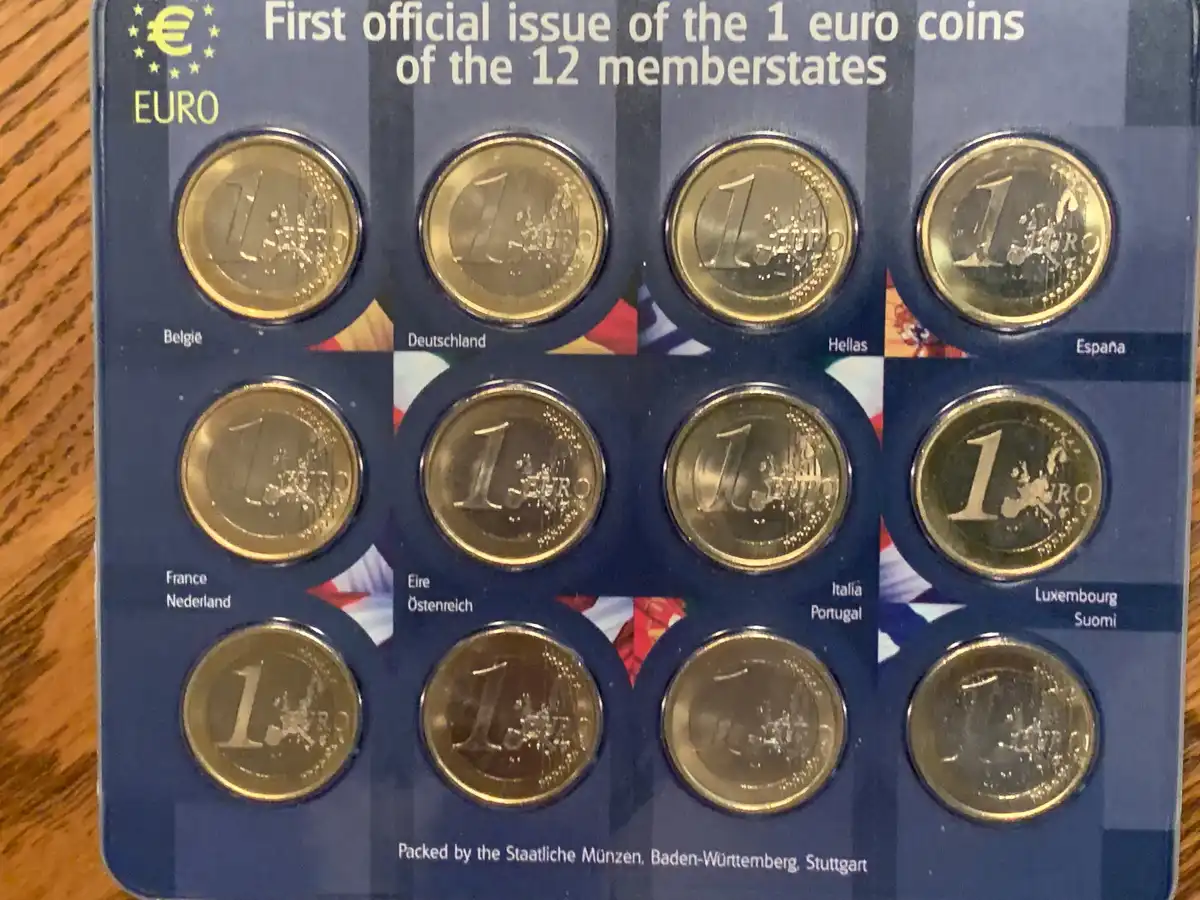
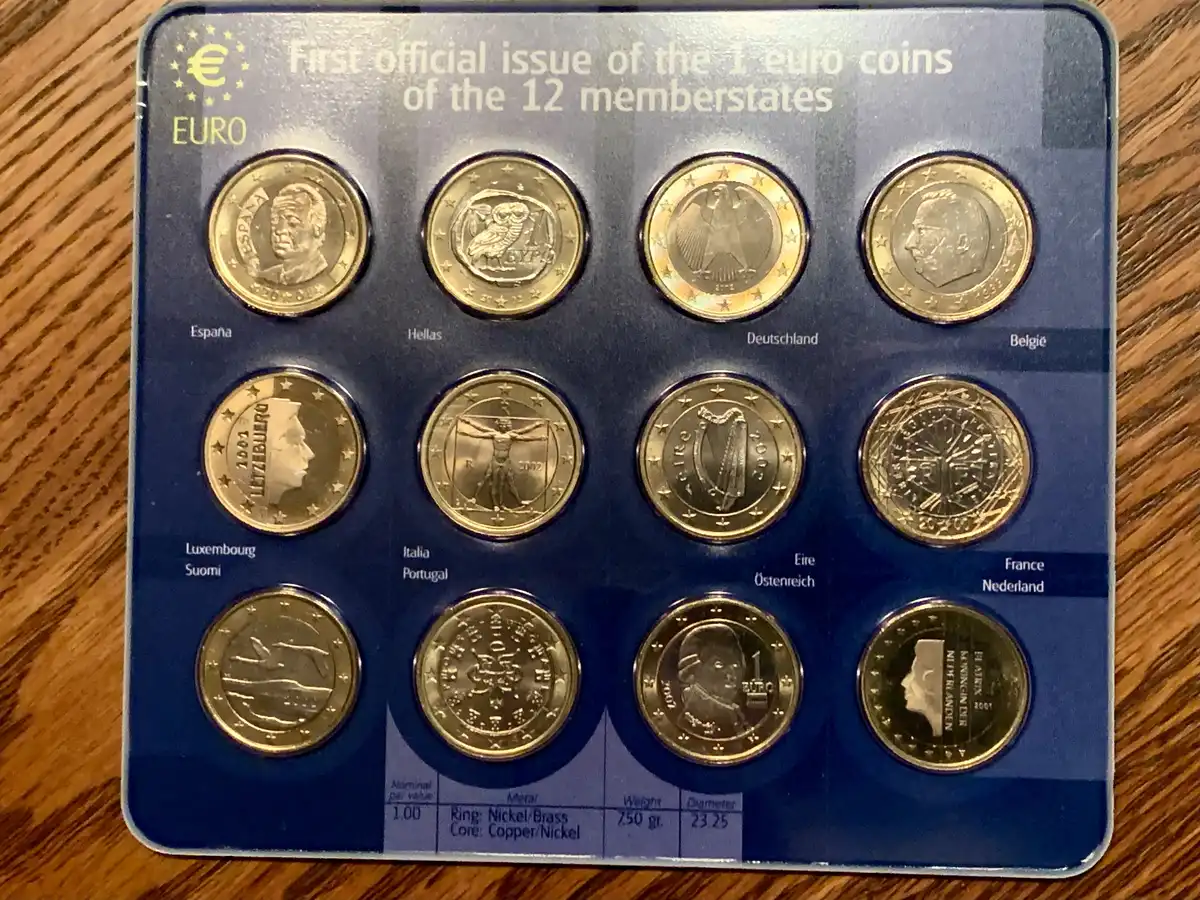
Although the set was produced by a euro-striking government mint, it is not an "official set" as there is no "official set" of euro coins, since each separate member-state is responsible for issuing its own sets of coins. Thus, every "one coin from every country" set out there is an "unofficial set". The Stuttgart Mint is in effect acting much like a coin dealer, in acquiring coins in bulk from other countries and assembling those coins into their own sets alongside the coins they made themselves.
That being said, because there's no such thing as an "officla set" like this, a set made by one of the actual mints is about as close as you'll get to having such an "official set". But I'd strongly suppose there was no premium on a set like this.
Quote:
...some coins look proof or proof like while others look like circulation coins...
I suspect what you're seeing here is simply the difference in production methods and philosophies between the different national mints that are producing euro coins. SOme prefer highly polished finish, some prefer a more matte-like finish.
Quote:
The dates also range from 1999-2002 I thought they should all be the same date.
And no, they aren't the same dates, different countries had different ways of dating their coins for the Euro. Some did the date they were minted, others did the date they'd be released.
The dates vary, as not all 12 member states issued their first 1 euro coin in 1999. 5 Countries issue their coins in 1999, and 7 issued theirs in 2002. Other states which weren't the first 12, also issued coins around that time. Monaco in 2001, San Marino & the Vatican in 2002.
However your set is not a true first issue set, as I can see at least 2 coins in the set that are not the first year. The France coin is 2000 & The Netherlands coin is 2001, both of which issued their 1st 1 euro in 1999.The situation here with the "pre-dated euros" is more complex than that. Essentially, what you're seeing here is the result of different national laws within the European Union. Five of the twelve countries - the ones named above, namely France, the Netherlands, Belgium, Spain and Finland, all have laws (or at least a strong cultural expectation) requiring that coins bear the date they were actually struck, not some hypothetical future-release date.
Once the decision to launch the euro was finalized and the euro was launched as a "virtual" or "electronic-only" currency in 1999, every country knew they needed to mass-produce euro coins for a few years leading up to 1 January 2002, in order to have enough coins in the stockpile to supply the economy for the transition period after the launch of the physical currency on January 1 2002. Some countries could "lie" about when their euro coins were made, but those five countries were unable to do so.
In other words, a large proportion of the coins dated "2002" from the other seven countries would have actually been struck in 1999, 2000 or 2001. Which is of course why that date is still by far the most common date you find in change for many of those countries.
Greece is a special case, as it is the only one of the "founding 12" to not have been an original signatory of the 1992 Maastricht treaty establishing the Euro - Greece did not join the euro until 2001, when the Euro was still only a virtual currency. But this meant that Greece only had one year to produce it's quota of coins, rather than the 3 years everybody else had, which is why a large proportion of Greece's opening coinage was struck outside of Greece, hence the various mintmarks found on 2002 Greek coins.
Don't say "infinitely" when you mean "very"; otherwise, you'll have no word left when you want to talk about something really infinite. - C. S. Lewis










 ***
***


 Posted Yesterday 8:05 pm


