A few tidbits about the 1936 coin featuring Roger Williams...Tidbit #1The legislation for the Rhode Island Tercentenary half dollar was a two-coin Act that authorized "the coinage of 50-cent pieces in commemoration of the one hundred snd fiftieth anniversary of the founding of the city of Hudson, New York, and of
the three hundredth anniversary of the founding of the city of Providence, Rhode Island, respectively. (Emphasis added.)
So, the "Rhode Island" should more correctly be referred to as the "Providence." The City and State are intimately linked, however.
Roger Williams founded Providence in 1636 on the mainland; in 1638 Portsmouth was founded and in 1639 Newport was founded - the later two settlements were established on Aquidneck Island. Warwick followed in 1642 on the mainland.
In 1644, Aquidneck Island was officially established as "the Ile of Rods or Rhod-Island".
In 1663, King Charles II of England granted a Royal Charter that formally established the Colony of Rhode Island and Providence Plantations - it incorporated the original settlements (mainland and Aquidneck Island alike).
(Source: Web site of Rhode Island Secretary of State.)For more on the connection, see:
-
1936 Rhode Island Tercentenary - Where's Providence?Tidbit #2John Howard Benson and Arthur Graham Carey share the design credits for the 1936 Providence, Rhode Island commemorative half dollar; both were of Newport, Rhode Island.
The pair worked on the coin designs in the stone-cutting shop founded by John Stevens. Stevens' business was established in 1705, and moved to its current location on Thames Street in Newport, RI at the time of the American Revolution. The business (and location) was purchased by Benson in 1926.
The John Stevens Shop is still in business today offering "the design and execution of one of a kind inscriptions in stone." The Benson family continues to own the business.
To learn more about the John Stevens Shop, see:
-
The John Stevens ShopTidbit #3A few notes about the design elements included on the coin:
- The depiction of Roger Williams on the coin's obverse is meant to be symbolic of
Liberty.- The Native American is depicted with his hand facing down - a gesture representing "good."
- Roger Williams' raised hand indicates the traditional friendly greeting of Europeans (and others) and represents his intents.
- The sun seen on the obverse is meant to be symbolic of "the sun of Religious Liberty."
- The "Anchor of Hope" and the ribbon with "HOPE" inscribed on the coin's reverse are representative of the State and its authority.
Tidbit #4Co-designer John Howard Benson placed a pair of the just-received "Rhode Island" commemorative half dollars in the window of the
Daily News (Newport, RI) in late February 1936.
Benson, and his design partner Arthur Graham Carey, had each received eight of the coins at a special ceremony at the Rhode Island Hospital National Bank - the bank serving as the coin's responsible financial partner - in Providence a few days earlier; the coins were presented by Royal B. Farnum, Director, Rhode Island School of Design. Arthur L. Philbrick, Vice Chairman and Treasurer of Tercentenary Committee, Inc. presided at the ceremony.
The display preceded the launch date for sales of the coin by about a week. The coins were placed on sale on March 5, 1936.
It was stated at the time, that the coins given to Benson and Carey would be the only examples "given away." (I'll bet a nickel that there were others!)
Tidbit #5 - BONUSWhen the Providence, Rhode Island Tercentenary Half Dollar was issued, the full name of Rhode Island was "The State of Rhode Island and Providence Plantations." In November 2020, voters in the State approved a Referendum that dropped "and Providence Plantations" from the full name.
1936 Providence, Rhode Island Tercentenary Half Dollar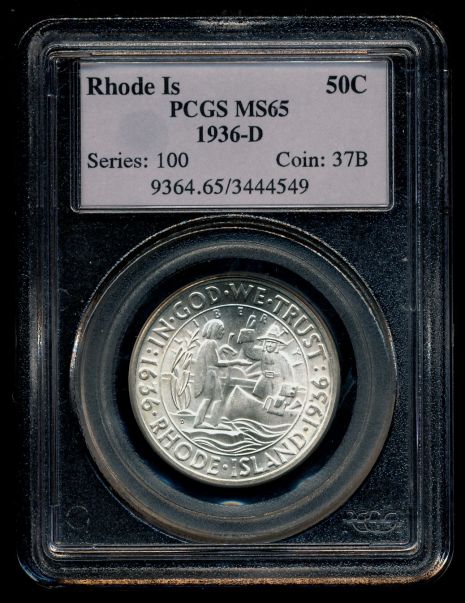
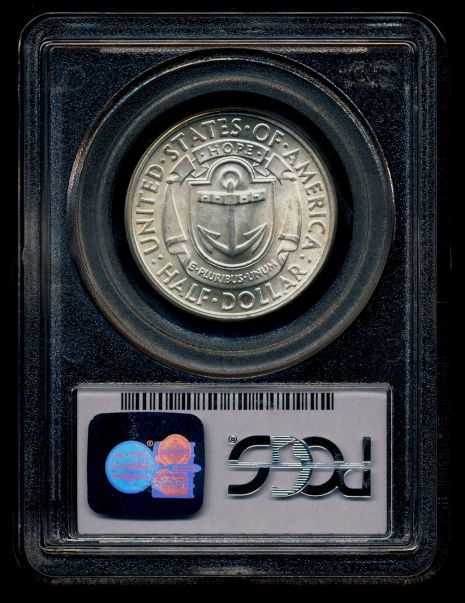
For other of my posts about commemorative coins and medals, including more about the Rhode Island half dollar and other Historical Tidbits stories, see:
Commems Collection 






 Posted Today 17M ago


